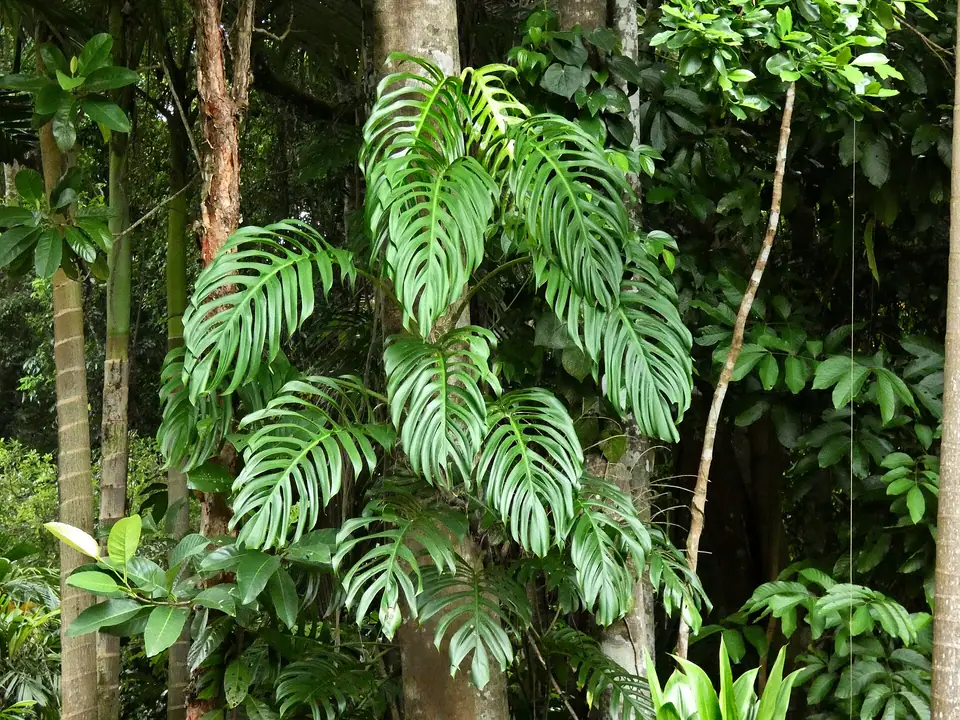


How to Grow and Care for Dragon-Tail Plant
Epipremnum pinnatum
Written by Emilio Marruso · last checked
Toxic to: Cats, Dogs, People · Why
At a glance
This easygoing climbing vine thrives in bright, indirect light and is happy indoors, where it trails 8–10 feet long. A houseplant fertilizer every other month in spring and summer keeps it growing, and you can start new plants from stem cuttings. Just go easy on the water: too much leads to root rot, so let this green beauty stay on the dry side.
- Sun
Bright, indirect light or partial shade
What the sources say (2)
Light: Bright, indirect sunlight; partial shade
This plant prefers bright, indirect sunlight, warm temperatures, and moderate humidity.
— Epipremnum pinnatum (Cebu Blue, Centipede Tongavine, Dragon-Tail Plant, Silver Vine, Taro Vine, Tibatib) | North Carolina Extension Gardener Plant Toolbox [1] Light: Partial Shade (Direct sunlight only part of the day, 2-6 hours)
— Epipremnum pinnatum (Cebu Blue, Centipede Tongavine, Dragon-Tail Plant, Silver Vine, Taro Vine, Tibatib) | North Carolina Extension Gardener Plant Toolbox [1] - Water
Don't overwater: too much water brings diseases and root rot
- Cold
Survives winters down to 30 °F (−1.1 °C)
Half hardy: mild winters or an unheated greenhouse · USDA 10a · RHS H3 · Z10
What the sources say (2)
Hardiness, coldest zone: 10a [winter low −1.1 to 1.7 °C (30 to 35 °F)]
USDA Plant Hardiness Zone: 10a, 10b, 11a, 11b
— Epipremnum pinnatum (Cebu Blue, Centipede Tongavine, Dragon-Tail Plant, Silver Vine, Taro Vine, Tibatib) | North Carolina Extension Gardener Plant Toolbox [1] Hardiness, warmest zone: 11b [winter low 7.2 to 10 °C (45 to 50 °F)]
USDA Plant Hardiness Zone: 10a, 10b, 11a, 11b
— Epipremnum pinnatum (Cebu Blue, Centipede Tongavine, Dragon-Tail Plant, Silver Vine, Taro Vine, Tibatib) | North Carolina Extension Gardener Plant Toolbox [1] - Feeding
Houseplant fertilizer every other month in spring and summer
What the sources say (3)
When: Spring and summer
Yellow leaves: Often caused by overwatering or low fertility. Correct by fertilizing with a houseplant fertilizer every other month during the spring and summer.
— How to Grow Pothos Indoors (Epipremnum spp.): Care, Cultivars, and Common Problems | Home & Garden Information Center [6] How often: Every other month during spring and summer
Yellow leaves: Often caused by overwatering or low fertility. Correct by fertilizing with a houseplant fertilizer every other month during the spring and summer.
— How to Grow Pothos Indoors (Epipremnum spp.): Care, Cultivars, and Common Problems | Home & Garden Information Center [6] Mineral fertilizers: A houseplant fertilizer
Yellow leaves: Often caused by overwatering or low fertility. Correct by fertilizing with a houseplant fertilizer every other month during the spring and summer.
— How to Grow Pothos Indoors (Epipremnum spp.): Care, Cultivars, and Common Problems | Home & Garden Information Center [6] - Pruning
Prune in spring or early summer
What the sources say (1)
Pruning: Spring or early summer
Prune the foliage in the spring or early summer to maintain the plant's size and shape.
— Epipremnum pinnatum (Cebu Blue, Centipede Tongavine, Dragon-Tail Plant, Silver Vine, Taro Vine, Tibatib) | North Carolina Extension Gardener Plant Toolbox [1] - Pests
Watch for mealybugs, scale, thrips and spider mites; root rot from overwatering
What the sources say (2)
Pests: mealybugs, scale, thrips, spider mites
Monitor for mealybugs, scale, thrips and spider mites. Overwatering will cause fungal and bacterial diseases which can lead to root rot.
— Epipremnum pinnatum (Cebu Blue, Centipede Tongavine, Dragon-Tail Plant, Silver Vine, Taro Vine, Tibatib) | North Carolina Extension Gardener Plant Toolbox [1] Diseases: fungal and bacterial diseases, root rot
Monitor for mealybugs, scale, thrips and spider mites. Overwatering will cause fungal and bacterial diseases which can lead to root rot.
— Epipremnum pinnatum (Cebu Blue, Centipede Tongavine, Dragon-Tail Plant, Silver Vine, Taro Vine, Tibatib) | North Carolina Extension Gardener Plant Toolbox [1] - Size
Vines grow 8–10 ft long indoors
What the sources say (1)
Mature height: 243.8-304.8 cm (8-10 ft) of vine length indoors; 609.6-1981.2 (20-65 ft) in native habitat
This species has very sturdy vines that can reach 20 to 65 feet long in its native habitat. Indoor plants can reach about 8 to 10 feet in length.
— Epipremnum pinnatum (Cebu Blue, Centipede Tongavine, Dragon-Tail Plant, Silver Vine, Taro Vine, Tibatib) | North Carolina Extension Gardener Plant Toolbox [1] - Propagation
Make new plants from stem cuttings
What the sources say (1)
Propagation: Stem cuttings
Repotting may be required about every 2 to 3 years. Propagate with stem cuttings.
— Epipremnum pinnatum (Cebu Blue, Centipede Tongavine, Dragon-Tail Plant, Silver Vine, Taro Vine, Tibatib) | North Carolina Extension Gardener Plant Toolbox [1] - Containers
Grows well in pots and indoors
What the sources say (2)
In containers: Yes
#houseplant #creeping #problem for cats #interesting leaves #container plant #hanging baskets
— Epipremnum pinnatum (Cebu Blue, Centipede Tongavine, Dragon-Tail Plant, Silver Vine, Taro Vine, Tibatib) | North Carolina Extension Gardener Plant Toolbox [1] Indoors: Yes
The cultivars are easy to grow and low maintenance houseplants.
— Epipremnum pinnatum (Cebu Blue, Centipede Tongavine, Dragon-Tail Plant, Silver Vine, Taro Vine, Tibatib) | North Carolina Extension Gardener Plant Toolbox [1] - Safety
Toxic to people, cats and dogs if eaten: irritates mouth and throat, causes drooling and vomiting
Overview
Epipremnum pinnatum is a climbing, evergreen herbaceous perennial in the arum family, native from India and Southeast Asia to Australia. [1] It prefers bright, indirect sunlight, warm temperatures and moist, well-drained soil, and is propagated by stem cuttings. [1] The plant is toxic if ingested to cats, dogs and humans because of calcium oxalate crystals. [1]
This record is incomplete: the sources we read do not cover every field yet.
Not yet covered by our sources: Watering
Dragon-Tail Plant care
How to water Dragon-Tail Plant
Watering
The sources give different values depending on region, zone or growing conditions.
What each source says
According to Clemson Extension: Allow the soil to dry between waterings
What the sources say (1)
According to Clemson Extension: Soil should be allowed to dry between each watering. Make sure to thoroughly water the plant so that water will reach all the roots.Watering notes
The sources give different values depending on region, zone or growing conditions.
What each source says
According to NC State Extension: Soil should be moist, well-drained; overwatering causes fungal and bacterial diseases that can lead to root rot
According to Clemson Extension: Allow the soil to dry completely before watering
What the sources say (4)
According to NC State Extension: The soil should be moist, well-drained, and rich in organic matter with a slightly acidic pH.According to Clemson Extension: Water: Allow the soil to dry completely before wateringThe soil should be moist, well-drained, and rich in organic matter with a slightly acidic pH.Overwatering will cause fungal and bacterial diseases which can lead to root rot.How much light Dragon-Tail Plant needs
Bright, indirect sunlight; partial shade
What the sources say (2)
This plant prefers bright, indirect sunlight, warm temperatures, and moderate humidity.Light:
Partial Shade (Direct sunlight only part of the day, 2-6 hours)How much cold Dragon-Tail Plant can take
Hardiness, coldest zone
10a [winter low −1.1 to 1.7 °C (30 to 35 °F)]
What the sources say (1)
USDA Plant Hardiness Zone:
10a, 10b, 11a, 11bHardiness, warmest zone
11b [winter low 7.2 to 10 °C (45 to 50 °F)]
What the sources say (1)
USDA Plant Hardiness Zone:
10a, 10b, 11a, 11bWhere to grow Dragon-Tail Plant
Indoors
Yes
What the sources say (1)
The cultivars are easy to grow and low maintenance houseplants.In containers
Yes
What the sources say (1)
#houseplant #creeping #problem for cats #interesting leaves #container plant #hanging basketsHow to propagate Dragon-Tail Plant
Stem cuttings
What the sources say (1)
Repotting may be required about every 2 to 3 years. Propagate with stem cuttings.How to grow Dragon-Tail Plant
The plant
Life cycle
perennial
What the sources say (1)
Epipremnum pinnatum or Dragon-Tail Plant is a climbing, evergreen herbaceous perennial in the arum family (Araceae).Family
Araceae
What the sources say (1)
Epipremnum pinnatum or Dragon-Tail Plant is a climbing, evergreen herbaceous perennial in the arum family (Araceae).Mature height
243.8-304.8 cm (8-10 ft) of vine length indoors; 609.6-1981.2 (20-65 ft) in native habitat
What the sources say (1)
This species has very sturdy vines that can reach 20 to 65 feet long in its native habitat. Indoor plants can reach about 8 to 10 feet in length.Pests and diseases
Pests
mealybugs, scale, thrips, spider mites
What the sources say (1)
Monitor for mealybugs, scale, thrips and spider mites. Overwatering will cause fungal and bacterial diseases which can lead to root rot.Diseases
fungal and bacterial diseases, root rot
What the sources say (1)
Monitor for mealybugs, scale, thrips and spider mites. Overwatering will cause fungal and bacterial diseases which can lead to root rot.Fertilizing
When
Spring and summer
What the sources say (1)
Yellow leaves: Often caused by overwatering or low fertility. Correct by fertilizing with a houseplant fertilizer every other month during the spring and summer.How often
Every other month during spring and summer
What the sources say (1)
Yellow leaves: Often caused by overwatering or low fertility. Correct by fertilizing with a houseplant fertilizer every other month during the spring and summer.Mineral fertilizers
A houseplant fertilizer
What the sources say (1)
Yellow leaves: Often caused by overwatering or low fertility. Correct by fertilizing with a houseplant fertilizer every other month during the spring and summer.Signs of deficiency
Yellow leaves (also caused by overwatering)
What the sources say (1)
Yellow leaves: Often caused by overwatering or low fertility. Correct by fertilizing with a houseplant fertilizer every other month during the spring and summer.Dragon-Tail Plant pests and problems
Pests
Symptom: Mealybugs, scale, thrips and spider mites may appear
What to do: Monitor the plant for these pests
What the sources say (1)
Monitor for mealybugs, scale, thrips and spider mites.
— Epipremnum pinnatum (Cebu Blue, Centipede Tongavine, Dragon-Tail Plant, Silver Vine, Taro Vine, Tibatib) | North Carolina Extension Gardener Plant Toolbox [1] Overwatering
Symptom: Overwatering causes fungal and bacterial diseases that can lead to root rot
What the sources say (1)
Overwatering will cause fungal and bacterial diseases which can lead to root rot.
— Epipremnum pinnatum (Cebu Blue, Centipede Tongavine, Dragon-Tail Plant, Silver Vine, Taro Vine, Tibatib) | North Carolina Extension Gardener Plant Toolbox [1]
Remedies
Each remedy shows what official sources say about it; traditional remedies without an official source are marked as such. Harmful ones are listed so you know to avoid them.
Treating the plant
mealybugs
pruning infested stems Works
How: Prune infested branches and destroy heavily infested plants.
Control mealy bugs by pruning infested branches and removing and destroying heavily infested plants.
— planttalk.colostate.edu [7] What the evidence says Control mealy bugs by pruning infested branches and removing and destroying heavily infested plants.
— planttalk.colostate.edu [7]
Is Dragon-Tail Plant toxic to pets?
Reported by the source, quoted verbatim. This is not medical or veterinary advice: if a person or an animal may have eaten this plant, contact a poison control centre or a veterinarian.
If ingested, this plant is toxic to cats, dogs, and humans. Symptoms include mouth and throat irritation, drooling, vomiting, difficulty breathing, and swallowing.
[1]- Poisonous parts
Causes Contact Dermatitis: No Poison Part: Leaves Stems
[1]- Toxic principle
Poison Toxic Principle: Calcium oxalate crystals
[1]- Symptoms
Symptoms include mouth and throat irritation, drooling, vomiting, difficulty breathing, and swallowing.
[1]- Severity
Poison Severity: Medium Poison Symptoms: If ingested, this plant is toxic to cats, dogs, and humans.
[1]
Calendar
Pruning
Spring or early summer
What the sources say (1)
Prune the foliage in the spring or early summer to maintain the plant's size and shape.Months as given by the sources, which are mostly from the United States (northern hemisphere). In the southern hemisphere they shift by about six months.
Similar plants
- Pothos Epipremnum aureum
- Anthurium Anthurium andraeanum
- Arrowhead Plant Syngonium podophyllum
- Arum Arum maculatum
- Black Calla Arum palaestinum
- Blushing Philodendron Philodendron erubescens
- Calla Lily Zantedeschia aethiopica
- Chinese Evergreen Aglaonema commutatum
Sources
Every value above is quoted from these documents. Links lead to the original publisher.
- Epipremnum pinnatum (Cebu Blue, Centipede Tongavine, Dragon-Tail Plant, Silver Vine, Taro Vine, Tibatib) | North Carolina Extension Gardener Plant Toolbox · plants.ces.ncsu.edu, consulted
- Dragon-Tail Plant - Epipremnum pinnatum | North Carolina Extension Gardener Plant Toolbox · plants.ces.ncsu.edu, consulted
- Tibatib - Epipremnum pinnatum | North Carolina Extension Gardener Plant Toolbox · plants.ces.ncsu.edu, consulted
- Taro Vine - Epipremnum pinnatum | North Carolina Extension Gardener Plant Toolbox · plants.ces.ncsu.edu, consulted
- Cebu Blue - Epipremnum pinnatum | North Carolina Extension Gardener Plant Toolbox · plants.ces.ncsu.edu, consulted
- How to Grow Pothos Indoors (Epipremnum spp.): Care, Cultivars, and Common Problems | Home & Garden Information Center · hgic.clemson.edu, consulted
- planttalk.colostate.edu · planttalk.colostate.edu
Written by Emilio Marruso · last checked