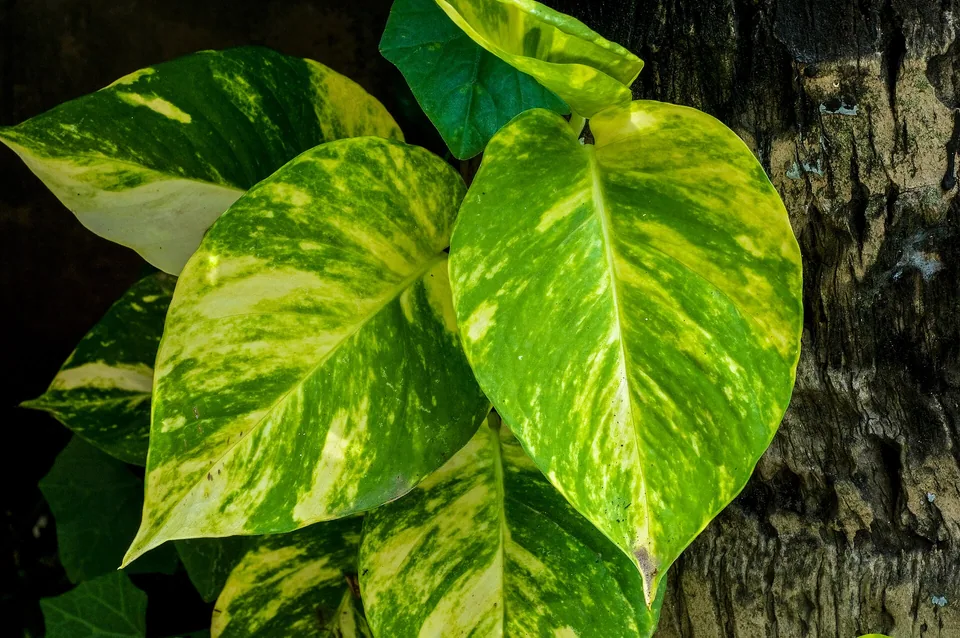
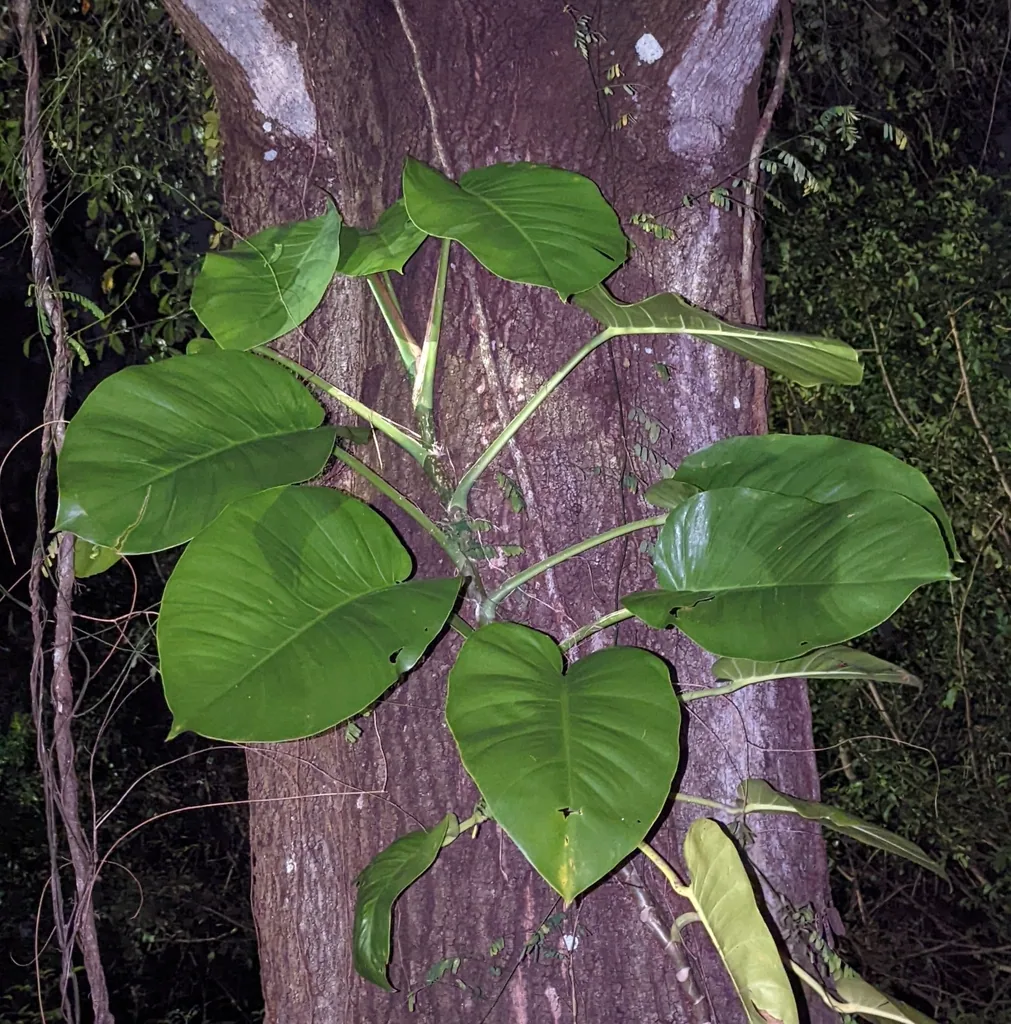
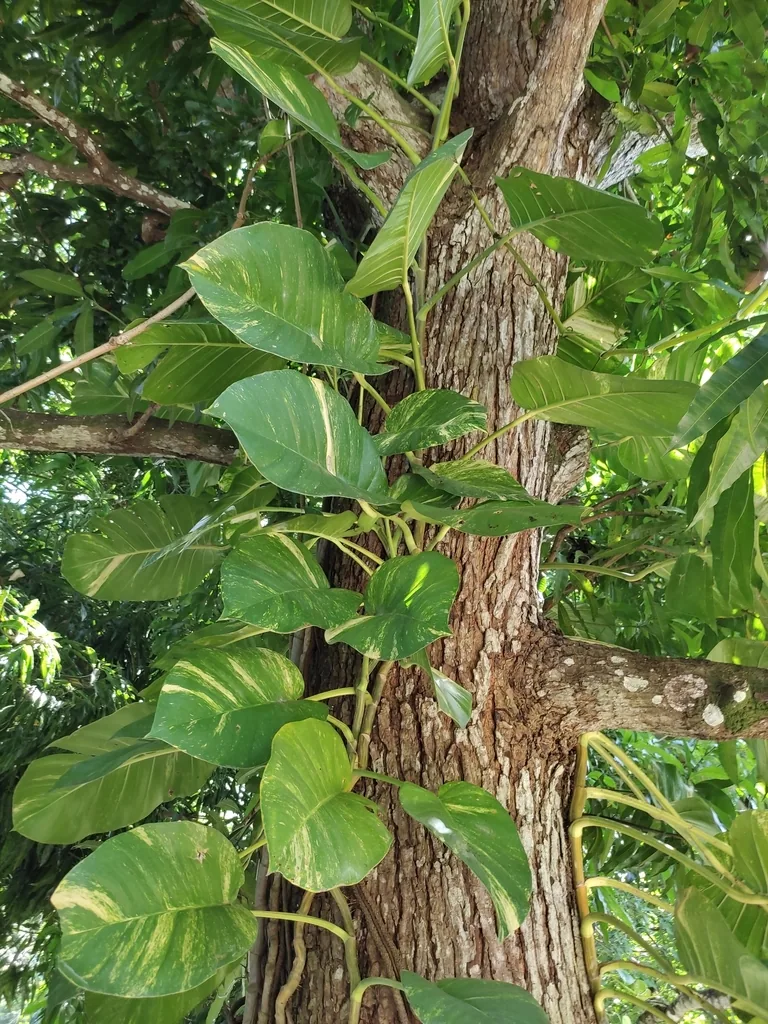
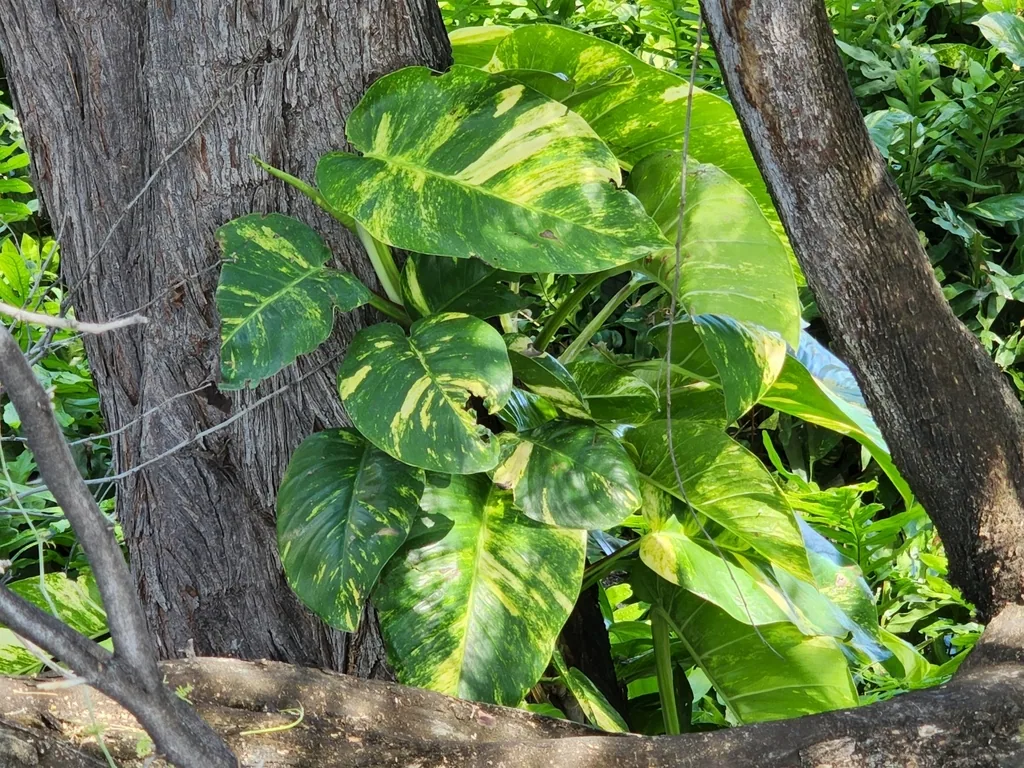

Cómo cultivar y cuidar Potus
Epipremnum aureum
Escrito por Emilio Marruso · última revisión
Tóxica para: Gatos, Perros, Personas · Por qué
De un vistazo
El potos es una planta de interior muy agradecida que crece feliz dentro de casa y en maceta. Dale luz intensa pero indirecta, aunque también aguanta con poca luz, y no te pases con el riego: prefiere quedarse seco antes que encharcado. Además, es facilísimo sacar plantas nuevas: un esqueje de tallo con un nudo echa raíces en agua o tierra en 3 a 4 semanas.
- Sol
Luz intensa e indirecta, sin sol directo; aguanta poca luz, pero las hojas pierden su color
Qué dicen las fuentes (3)
Luz: Luz brillante e indirecta; sobrevive en poca luz; evita el sol directo
It prefers bright, indirect light and survives for long periods in low light.
— Epipremnum aureum (Devil's Ivy, Devil's Vine, Golden Pothos, Ivy Arum, Marble Queen, Pothos, Taro Vine) | North Carolina Extension Gardener Plant Toolbox [1] Pothos prefer bright, indirect light but will tolerate lower lighting conditions.
— How to Grow Pothos Indoors (Epipremnum spp.): Care, Cultivars, and Common Problems | Home & Garden Information Center [5] Place pothos in an area with moderate to bright light and average room temperatures between 60° and 80° F. Avoid direct sun.
— Pothos as a Houseplant [4] - Riego
Mejor seco que encharcado: el exceso de agua pudre las raíces
Qué dicen las fuentes (3)
Notas sobre el riego: El exceso de riego provoca pudrición de raíces; es mejor mantenerla demasiado seca que demasiado húmeda; evita el exceso de agua después de trasplantar
Too much water will lead to root rot, one of only a few problems with this plant. Too little water may lead to leaves temporarily drooping.
— Pothos as a Houseplant [4] Pothos is better kept too dry than too wet - a valuable trait for busy offices, non-gardening friends, or just those busy times of the year.
— Pothos as a Houseplant [4] Provide some new soil, and don't overwater. Excess water upon repotting adds additional stress to this plant.
— Pothos as a Houseplant [4] - Frío
Aguanta inviernos de hasta −1,1 °C (30 °F)
Semirrústica: inviernos suaves o invernadero sin calefacción · USDA 10 · RHS H3 · Z10
Qué dicen las fuentes (2)
Rusticidad, zona más fría: 10 [mínima invernal de −1,1 a 4,4 °C (de 30 a 40 °F)]
This species is only hardy in zones 10 to 12, so it is always grown as a houseplant or seasonal annual in the Midwest.
— Pothos, Epipremmum aureum – Wisconsin Horticulture [2] Rusticidad, zona más cálida: 12 [mínima invernal de 10 a 15,6 °C (de 50 a 60 °F)]
This species is only hardy in zones 10 to 12, so it is always grown as a houseplant or seasonal annual in the Midwest.
— Pothos, Epipremmum aureum – Wisconsin Horticulture [2] - Suelo
Un sustrato que drene bien
- Abonado
Abono equilibrado para plantas de interior; el exceso acumula sales y ennegrece las puntas de las hojas
Qué dicen las fuentes (4)
Abonos minerales: Fertilizante equilibrado para plantas de interior
For best growth, fertilize pothos with a balanced houseplant food monthly through the winter and every two weeks throughout the rest of the year.
— Pothos as a Houseplant [4] Correct by fertilizing with a houseplant fertilizer every other month during the spring and summer.
— How to Grow Pothos Indoors (Epipremnum spp.): Care, Cultivars, and Common Problems | Home & Garden Information Center [5] Evitar: El exceso de fertilizante, que acumula sales en el suelo
Blackening of the leaf margins or tips can be caused by overwatering, inadequate watering, or excess fertilizer (because of buildup of salts in the soil).
— Pothos, Epipremmum aureum – Wisconsin Horticulture [2] Signos de exceso: Márgenes o puntas de las hojas ennegrecidos por la acumulación de sales en el suelo, a menudo con hojas amarillentas
Blackening of the leaf margins or tips can be caused by overwatering, inadequate watering, or excess fertilizer (because of buildup of salts in the soil). Discoloration is often accompanied by leaves becoming yellow.
— Pothos, Epipremmum aureum – Wisconsin Horticulture [2] - Plagas
Cochinillas algodonosas, cochinillas y araña roja; el exceso de riego provoca podredumbre de raíz
Qué dicen las fuentes (5)
Plagas: cochinillas harinosas, cochinillas, arañitas rojas
The most common insect pests infesting pothos in homes are mealybugs and scale .
— Pothos, Epipremmum aureum – Wisconsin Horticulture [2] Spider mites occasionally infest pothos and can easily be controlled with thorough cleaning and frequent applications of insecticidal soap.
— Pothos, Epipremmum aureum – Wisconsin Horticulture [2] Pothos are generally pest-free when kept indoors, but may be affected by common houseplant pests such as spider mites and mealybugs.
— How to Grow Pothos Indoors (Epipremnum spp.): Care, Cultivars, and Common Problems | Home & Garden Information Center [5] Enfermedades: pudrición de la raíz
Root rots , with symptoms of brown or nonexistent roots, are most often due to overwatering.
— Pothos, Epipremmum aureum – Wisconsin Horticulture [2] Root rot: Common houseplant issue caused by overwatering or poorly draining soil. Using a well-draining soil mix and proper watering practices will help prevent root rot.
— How to Grow Pothos Indoors (Epipremnum spp.): Care, Cultivars, and Common Problems | Home & Garden Information Center [5] - Atención
Un cambio brusco de mucho calor a temperaturas suaves puede dejar manchas marrones en las hojas
Qué dicen las fuentes (1)
Calor: Un cambio brusco de temperaturas muy altas a moderadas puede causar manchas marrones dispersas en el centro de las hojas, especialmente en plantas de crecimiento suave y vigoroso.
Low temperatures or abrupt change from very high temperatures to moderate temperatures can cause scattered brown patches, usually located in the center of the leaf, especially if plants are succulent and growing vigorously.
— Pothos, Epipremmum aureum – Wisconsin Horticulture [2] - Multiplicación
Los esquejes de tallo con un nudo enraízan en agua o tierra en 3–4 semanas; mejor en primavera y verano
Qué dicen las fuentes (8)
Propagación: Esquejes de tallo (enraizados en agua, tierra o vermiculita), acodo aéreo y división de raíces al trasplantar
Pothos is easily propagated from cuttings or by air-layering. The vines root in water or vermiculite within 3 to 4 weeks
— Pothos, Epipremmum aureum – Wisconsin Horticulture [2] Propagate through root division during its annual repotting.
— Pothos as a Houseplant [4] Stem cuttings can be easily rooted when placed in soil or water, but they should have at least one node to root properly.
— How to Grow Pothos Indoors (Epipremnum spp.): Care, Cultivars, and Common Problems | Home & Garden Information Center [5] Esquejes: Esquejes de tallo con al menos un nudo, enraizados en tierra, agua o vermiculita; enraízan en 3 a 4 semanas y los brotes comienzan a crecer en 1 a 2 semanas en condiciones cálidas; más exitosos desde la primavera hasta el verano. También acodo aéreo y división al trasplantar.
Stem cuttings can be easily rooted when placed in soil or water, but they should have at least one node to root properly.
— How to Grow Pothos Indoors (Epipremnum spp.): Care, Cultivars, and Common Problems | Home & Garden Information Center [5] The vines root in water or vermiculite within 3 to 4 weeks and buds can start to grow in 1 to 2 weeks under warm temperatures.
— Pothos, Epipremmum aureum – Wisconsin Horticulture [2] Propagation through stem cuttings is more successful during the growing season from spring through summer.
— Pothos as a Houseplant [4] Pothos is easily propagated from cuttings or by air-layering.
— Pothos, Epipremmum aureum – Wisconsin Horticulture [2] Propagate through root division during its annual repotting.
— Pothos as a Houseplant [4] - Maceta
Crece bien en maceta y en interior
Qué dicen las fuentes (2)
En maceta: Sí
Epipremnum does well in a hanging basket to show off its graceful vines, or in a regular pot centered on a plant stand.
— Keep it in the pot – control your pothos - UF/IFAS Extension Charlotte County [6] En interior: Sí
In our area it can be planted as an annual outdoors, such as in hanging baskets, but is most widely grown indoors as a potted plant with trailing vines
— Pothos, Epipremmum aureum – Wisconsin Horticulture [2] - Seguridad
Toda la planta es tóxica para personas, perros y gatos; la savia puede irritar la piel
Resumen
El poto es una planta de interior de follaje colgante o trepadora que prefiere luz brillante e indirecta y tolera poca luz. [5] Se riega cuando el suelo se ha secado, ya que el exceso de riego causa pudrición de raíces. [4] El poto se propaga fácilmente a partir de esquejes de tallo. [2]
Citado en inglés, como en la fuente.
Cuidados
Riego
Riego
Las fuentes dan valores distintos según la región, la zona o las condiciones de cultivo.
Lo que dice cada fuente
Según NC State Extension: Deja que el sustrato con buen drenaje se seque entre riegos
Según Clemson HGIC: Deja que el suelo se seque por completo antes de regar
Según UW-Madison Extension: Deja que las plantas se sequen un poco; riega solo cuando la superficie del suelo esté seca
Según Penn State Extension: Riega cuando el suelo esté seco
Qué dicen las fuentes (7)
Según NC State Extension: let the well-drained potting medium dry out between watering.Según Clemson HGIC: Allow the soil to dry completely before wateringSegún UW-Madison Extension: allow plants to dry out slightly and be watered only when the soil surface is dry.Según Penn State Extension: Water when the soil is dry. Too much water will lead to root rotlet the well-drained potting medium dry out between watering.Soil should be allowed to dry between each watering. Make sure to thoroughly water the plant so that water will reach all the roots.Water when the soil is dry. Too much water will lead to root rot, one of only a few problems with this plant.Notas sobre el riego
El exceso de riego provoca pudrición de raíces; es mejor mantenerla demasiado seca que demasiado húmeda; evita el exceso de agua después de trasplantar
Qué dicen las fuentes (3)
Too much water will lead to root rot, one of only a few problems with this plant. Too little water may lead to leaves temporarily drooping.Pothos is better kept too dry than too wet - a valuable trait for busy offices, non-gardening friends, or just those busy times of the year.Provide some new soil, and don't overwater. Excess water upon repotting adds additional stress to this plant.Luz
Luz brillante e indirecta; sobrevive en poca luz; evita el sol directo
Qué dicen las fuentes (3)
It prefers bright, indirect light and survives for long periods in low light.Pothos prefer bright, indirect light but will tolerate lower lighting conditions.Place pothos in an area with moderate to bright light and average room temperatures between 60° and 80° F. Avoid direct sun.Clima y frío
Rusticidad, zona más fría
10 [mínima invernal de −1,1 a 4,4 °C (de 30 a 40 °F)]
Qué dicen las fuentes (1)
This species is only hardy in zones 10 to 12, so it is always grown as a houseplant or seasonal annual in the Midwest.Rusticidad, zona más cálida
12 [mínima invernal de 10 a 15,6 °C (de 50 a 60 °F)]
Qué dicen las fuentes (1)
This species is only hardy in zones 10 to 12, so it is always grown as a houseplant or seasonal annual in the Midwest.Dónde cultivarla
En interior
Sí
Qué dicen las fuentes (1)
In our area it can be planted as an annual outdoors, such as in hanging baskets, but is most widely grown indoors as a potted plant with trailing vinesEn maceta
Sí
Qué dicen las fuentes (1)
Epipremnum does well in a hanging basket to show off its graceful vines, or in a regular pot centered on a plant stand.Propagación
Esquejes de tallo (enraizados en agua, tierra o vermiculita), acodo aéreo y división de raíces al trasplantar
Qué dicen las fuentes (3)
Pothos is easily propagated from cuttings or by air-layering. The vines root in water or vermiculite within 3 to 4 weeksPropagate through root division during its annual repotting.Stem cuttings can be easily rooted when placed in soil or water, but they should have at least one node to root properly.Cultivo
La planta
Ciclo de vida
perenne
Qué dicen las fuentes (1)
Pothos is a low-maintenance, herbaceous perennial, broadleaf evergreen houseplant in the arum family (Araceae) grown for its glossy, green or variegated leaves on cascading stems.Familia
Araceae
Qué dicen las fuentes (1)
Pothos is a low-maintenance, herbaceous perennial, broadleaf evergreen houseplant in the arum family (Araceae) grown for its glossy, green or variegated leaves on cascading stems.Altura adulta
Las fuentes no coinciden:
Plagas y enfermedades
Plagas
cochinillas harinosas, cochinillas, arañitas rojas
Qué dicen las fuentes (3)
The most common insect pests infesting pothos in homes are mealybugs and scale .Spider mites occasionally infest pothos and can easily be controlled with thorough cleaning and frequent applications of insecticidal soap.Pothos are generally pest-free when kept indoors, but may be affected by common houseplant pests such as spider mites and mealybugs.Enfermedades
pudrición de la raíz
Qué dicen las fuentes (2)
Root rots , with symptoms of brown or nonexistent roots, are most often due to overwatering.Root rot: Common houseplant issue caused by overwatering or poorly draining soil. Using a well-draining soil mix and proper watering practices will help prevent root rot.Abonado
Cuándo
Las fuentes no coinciden:
Fertilize every other month except when the plant is dormant in the winter.
[1]Correct by fertilizing with a houseplant fertilizer every other month during the spring and summer.
[5]For best growth, fertilize pothos with a balanced houseplant food monthly through the winter and every two weeks throughout the rest of the year.
[4]
Frecuencia
Las fuentes no coinciden:
Fertilize every other month, except during the winter when the plant is not actively growing.
[2]Fertilize every other month except when the plant is dormant in the winter.
[1]For best growth, fertilize pothos with a balanced houseplant food monthly through the winter and every two weeks throughout the rest of the year.
[4]
Abonos minerales
Fertilizante equilibrado para plantas de interior
Qué dicen las fuentes (2)
For best growth, fertilize pothos with a balanced houseplant food monthly through the winter and every two weeks throughout the rest of the year.Correct by fertilizing with a houseplant fertilizer every other month during the spring and summer.Evitar
El exceso de fertilizante, que acumula sales en el suelo
Qué dicen las fuentes (1)
Blackening of the leaf margins or tips can be caused by overwatering, inadequate watering, or excess fertilizer (because of buildup of salts in the soil).Signos de carencia
Hojas amarillas (también causadas por exceso de riego)
Qué dicen las fuentes (1)
Yellow leaves: Often caused by overwatering or low fertility. Correct by fertilizing with a houseplant fertilizer every other month during the spring and summer.Signos de exceso
Márgenes o puntas de las hojas ennegrecidos por la acumulación de sales en el suelo, a menudo con hojas amarillentas
Qué dicen las fuentes (1)
Blackening of the leaf margins or tips can be caused by overwatering, inadequate watering, or excess fertilizer (because of buildup of salts in the soil). Discoloration is often accompanied by leaves becoming yellow.Distancias
Entre plantas
Las fuentes dan valores distintos según la región, la zona o las condiciones de cultivo.
Lo que dice cada fuente
en contenedores: Planta varios esquejes enraizados juntos en una sola maceta
Qué dicen las fuentes (1)
en contenedores: The vines root in water or vermiculite within 3 to 4 weeks and buds can start to grow in 1 to 2 weeks under warm temperatures. It is best to plant several rooted cuttings together in a single pot.Raíces
Sistema radicular
Trepadora por raíces: raíces aéreas adhesivas que se forman en cada nudo del tallo y se adhieren a los soportes, con raíces que se agarran desde los nudos y entrenudos y raíces de alimentación abundantes.
Qué dicen las fuentes (2)
Plants also produce adhesive aerial roots as they climb into the canopy, with clasping roots arising from nodes and internodes, and prolific feeding roots.Create a moss-covered totem, and with gentle guidance, the pothos vine will attach to the totem using its adhesive aerial roots. These aerial roots develop at each node of the stem.Propagación
Esquejes
Esquejes de tallo con al menos un nudo, enraizados en tierra, agua o vermiculita; enraízan en 3 a 4 semanas y los brotes comienzan a crecer en 1 a 2 semanas en condiciones cálidas; más exitosos desde la primavera hasta el verano. También acodo aéreo y división al trasplantar.
Qué dicen las fuentes (5)
Stem cuttings can be easily rooted when placed in soil or water, but they should have at least one node to root properly.The vines root in water or vermiculite within 3 to 4 weeks and buds can start to grow in 1 to 2 weeks under warm temperatures.Propagation through stem cuttings is more successful during the growing season from spring through summer.Pothos is easily propagated from cuttings or by air-layering.Propagate through root division during its annual repotting.Calor y sequía
Calor
Un cambio brusco de temperaturas muy altas a moderadas puede causar manchas marrones dispersas en el centro de las hojas, especialmente en plantas de crecimiento suave y vigoroso.
Qué dicen las fuentes (1)
Low temperatures or abrupt change from very high temperatures to moderate temperatures can cause scattered brown patches, usually located in the center of the leaf, especially if plants are succulent and growing vigorously.Problemas
Pudrición de raíces y ennegrecimiento de los bordes de las hojas
Síntoma: Raíces marrones o inexistentes; ennegrecimiento de los bordes o puntas de las hojas, a menudo con amarillamiento.
Qué hacer: Evita el exceso de riego y usa una mezcla de suelo con buen drenaje.
Qué dicen las fuentes (2)
Root rot and blackening of the leaf margins can occur with overwatering. Low light can cause loss of variegation. Monitor for mealybugs and scales.
— Epipremnum aureum (Devil's Ivy, Devil's Vine, Golden Pothos, Ivy Arum, Marble Queen, Pothos, Taro Vine) | North Carolina Extension Gardener Plant Toolbox [1] Root rots , with symptoms of brown or nonexistent roots, are most often due to overwatering.
— Pothos, Epipremmum aureum – Wisconsin Horticulture [2] Cochinillas harinosas y cochinillas
Síntoma: Las cochinillas harinosas aparecen como masas blancas y algodonosas; las cochinillas parecen protuberancias color corteza en tallos y hojas; las hojas pueden estar pegajosas con melaza.
Qué hacer: Las arañitas rojas se pueden controlar con una limpieza minuciosa y jabón insecticida; para infestaciones graves, a menudo es mejor desechar la planta y comenzar de nuevo con plantas o esquejes limpios.
Qué dicen las fuentes (2)
The most common insect pests infesting pothos in homes are mealybugs and scale .
— Pothos, Epipremmum aureum – Wisconsin Horticulture [2] Spider mites occasionally infest pothos and can easily be controlled with thorough cleaning and frequent applications of insecticidal soap.
— Pothos, Epipremmum aureum – Wisconsin Horticulture [2] Pérdida de variegación
Síntoma: Las hojas variegadas pierden parte de su coloración con poca luz.
Qué hacer: Proporciona luz brillante e indirecta.
Qué dicen las fuentes (1)
However, lower light may cause variegated varieties to lose some of their coloring.
— How to Grow Pothos Indoors (Epipremnum spp.): Care, Cultivars, and Common Problems | Home & Garden Information Center [5]
Remedios
Cada remedio indica qué dicen las fuentes oficiales; los remedios tradicionales sin fuente oficial aparecen marcados. Los perjudiciales están para que sepas evitarlos.
Cuidar la planta
pulgones
rociador de jabón insecticida casero Funciona
spraying home remedies that contain dish detergent on plants on a sunny day can injure the plant, essentially burning it.
— extension.psu.edu [9] Cómo: Primero, quita la mayoría de los insectos con un fuerte chorro de agua. Mezcla 1 cucharada de jabón líquido para platos sin detergente o jabón con 1 taza de aceite (soja, maní, etc.), luego mezcla 2 cucharadas de la mezcla jabonosa en el pulverizador con 1 taza de agua tibia.
Simply blend 1-tablespoon of non-detergent dish liquid or soap with 1 cup of oil (soybean, peanut, etc.)—mix 2-tablespoons of the soapy blend into the spray bottle with 1 cup of warm water.
— gardenforindoor.com [7] Qué dicen las pruebas insecticidal soap is a safe, effective organic insecticide with minimal environmental impact.
— extension.psu.edu [8] spray de aceite de neem No verificado
Remedio tradicional, no verificado por una fuente oficial.
Despite these being biological pesticides, it is important to read the directions on the label and wear safety equipment.
— extension.illinois.edu [10] Cómo: Mezcla una onza (aproximadamente 2 cucharadas) de aceite de neem con un galón de agua tibia. Rocía generosamente durante un mes.
rociado de ajo y cayena No verificado
Remedio tradicional, no verificado por una fuente oficial.
The pepper spray can be very potent if it gets on your skin or in your eyes. Exposure to boric acid can cause health effects, including death, in humans and animals.
— extension.psu.edu [9] spraying home remedies that contain dish detergent on plants on a sunny day can injure the plant, essentially burning it.
— extension.psu.edu [9] Cómo: Mezcla 1 cucharadita de pimienta de cayena, 1 cebolla pequeña, 1 cucharada de jabón para platos sin detergente, 1 cuarto de galón de agua y 1 bulbo de ajo.
ácaros araña
spray de jabón insecticida Funciona
spraying home remedies that contain dish detergent on plants on a sunny day can injure the plant, essentially burning it.
— extension.psu.edu [9] Cómo: Limpieza a fondo de la planta y aplicaciones frecuentes de jabón insecticida.
Spider mites occasionally infest pothos and can easily be controlled with thorough cleaning and frequent applications of insecticidal soap.
— Pothos, Epipremmum aureum – Wisconsin Horticulture [2] Qué dicen las pruebas Spider mites occasionally infest pothos and can easily be controlled with thorough cleaning and frequent applications of insecticidal soap.
— Pothos, Epipremmum aureum – Wisconsin Horticulture [2]
cochinillas harinosas
hisopo con alcohol isopropílico No verificado
Remedio tradicional, no verificado por una fuente oficial.
Cómo: Limpia las áreas afectadas con un hisopo o una bola de algodón sumergidos en alcohol isopropílico al 70%.
chorro de agua fuerte No verificado
Remedio tradicional, no verificado por una fuente oficial.
Cómo: Rocía los insectos con un chorro fuerte de agua y repite cada dos semanas hasta que las cochinillas harinosas desaparezcan.
cochinillas
frotando las escamas y alcohol isopropílico No verificado
Remedio tradicional, no verificado por una fuente oficial.
Cómo: Frota suavemente las cochinillas de los tallos y las hojas, luego usa alcohol isopropílico para tratar las áreas afectadas. Aísla las plantas infestadas de inmediato.
Venenosa para los animales
Según la fuente, citada textualmente. No es un consejo médico ni veterinario: si una persona o un animal pudo haber ingerido esta planta, contacta con un centro de toxicología o con un veterinario.
Alternativas seguras para gatos y perros
Animales
they also are toxic to both people and pets, so keep this in mind concerning children, dogs and cats.
[6]
Personas
Oral irritation, pain and swelling of mouth, tongue, and lips, excessive drooling, vomiting (not horses), difficulty swallowing, skin irritation, diarrhea
[1]- Partes venenosas
Poison Part: Flowers Fruits Leaves Roots Seeds Stems
[1]- Principio tóxico
Poison Toxic Principle: Calcium oxalate crystals Causes Contact
[1]- Síntomas
Oral irritation, pain and swelling of mouth, tongue, and lips, excessive drooling, vomiting (not horses), difficulty swallowing, skin irritation, diarrhea
[1]- Gravedad
Poison Severity: Medium Poison Symptoms: Oral irritation, pain
[1]
Pothos is toxic if ingested in large quantities because it contains calcium oxalate. This will cause burning in the mouth and the sap may also be irritating to the skin.
[2]all parts of pothos are poisonous (yet non-lethal) to humans and their pets. The roots, stems, and leaves contain calcium oxalate crystals
[4]All parts of a pothos are mildly toxic if ingested.
[5]
Valores orientativos
Valores de una fuente secundaria, no comprobados palabra por palabra como el resto de esta página. Úselos como punto de partida.
- Horas de sol
- 4-5 horasValor orientativo, adáptalo a tu clima · Fuente secundaria
- Suelo
- Bien drenadoValor orientativo, adáptalo a tu clima · Fuente secundaria
- pH del suelo
- 6-6.5Valor orientativo, adáptalo a tu clima · Fuente secundaria
- Crecimiento
- AltaValor orientativo, adáptalo a tu clima · Fuente secundaria
- Poda
- marzo, abril, mayoValor orientativo, adáptalo a tu clima · Fuente secundaria
Plantas similares
- Dragon-Tail Plant Epipremnum pinnatum
- Anthurium Anthurium andraeanum
- Arrowhead Plant Syngonium podophyllum
- Aro Arum maculatum
- Black Calla Arum palaestinum
- Blushing Philodendron Philodendron erubescens
- Caladium Caladium bicolor
- Cala Zantedeschia aethiopica
Fuentes
Cada valor anterior se cita de estos documentos. Los enlaces llevan al editor original.
- Epipremnum aureum (Devil's Ivy, Devil's Vine, Golden Pothos, Ivy Arum, Marble Queen, Pothos, Taro Vine) | North Carolina Extension Gardener Plant Toolbox · plants.ces.ncsu.edu, consultado
- Pothos, Epipremmum aureum – Wisconsin Horticulture · hort.extension.wisc.edu, consultado
- Golden Pothos - Epipremnum aureum | North Carolina Extension Gardener Plant Toolbox · plants.ces.ncsu.edu, consultado
- Pothos as a Houseplant · extension.psu.edu, consultado
- How to Grow Pothos Indoors (Epipremnum spp.): Care, Cultivars, and Common Problems | Home & Garden Information Center · hgic.clemson.edu, consultado
- Keep it in the pot – control your pothos - UF/IFAS Extension Charlotte County · blogs.ifas.ufl.edu, consultado
- gardenforindoor.com · gardenforindoor.com
- extension.psu.edu · extension.psu.edu
- extension.psu.edu · extension.psu.edu
- extension.illinois.edu · extension.illinois.edu
Escrito por Emilio Marruso · última revisión