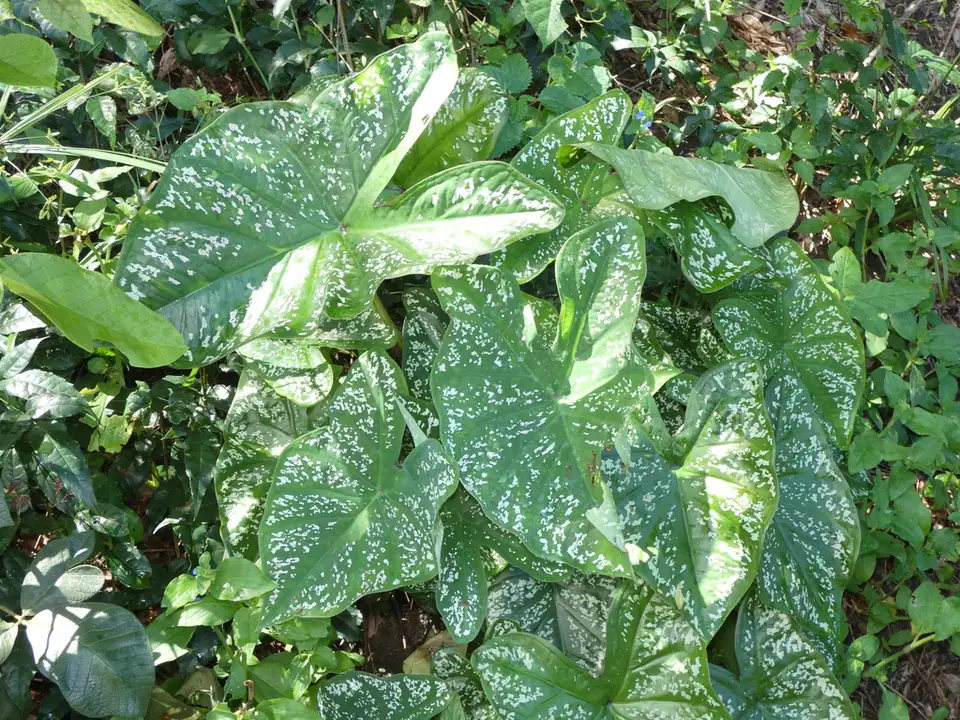
Cómo cultivar y cuidar Caladium
Caladium bicolor
Escrito por Emilio Marruso · última revisión
Tóxica para: Gatos, Perros, Caballos, Ganado, Personas · Por qué
De un vistazo
El caladio es una vivaz delicada que nace de tubérculos y se adapta bien a la maceta e incluso al interior. Planta los tubérculos a 4–5 cm de profundidad, mantén la tierra húmeda todo el verano y abónalo con regularidad mientras crece. En otoño, desentierra los tubérculos, déjalos secar y guárdalos en un lugar cálido, por encima de 10 °C, listos para volver a plantarlos.
- Riego
Mucha agua mientras crece; mantén la tierra húmeda, sobre todo en verano
Qué dicen las fuentes (2)
Riego: Requiere abundante agua durante el crecimiento; mantén el suelo húmedo, especialmente durante todo el verano.
It is a water guzzler and requires abundant amounts of water when growing.
— Caladium bicolor (Angel Wings, Caladium, Candidum, Elephant's Ears, Exposition, Fancy-leaved Caladium, Mother-in-law Plant, Pai, Pink Cloud, Stoplight, Texas Wonder, Via, Via sori) | North Carolina Extension Gardener Plant Toolbox [1] Keep soils moist, especially throughout the summer, and fertilize regularly during the growing season.
— Caladium bicolor (Angel Wings, Caladium, Candidum, Elephant's Ears, Exposition, Fancy-leaved Caladium, Mother-in-law Plant, Pai, Pink Cloud, Stoplight, Texas Wonder, Via, Via sori) | North Carolina Extension Gardener Plant Toolbox [1] - Frío
Aguanta inviernos de hasta −6,7 °C (20 °F)
Rústica en inviernos normales · USDA 9a · RHS H4 · Z9
Qué dicen las fuentes (2)
Rusticidad, zona más fría: 9a [mínima invernal de −6,7 a −3,9 °C (de 20 a 25 °F)]
USDA Plant Hardiness Zone: 9a, 9b, 10a, 10b
— Caladium bicolor (Angel Wings, Caladium, Candidum, Elephant's Ears, Exposition, Fancy-leaved Caladium, Mother-in-law Plant, Pai, Pink Cloud, Stoplight, Texas Wonder, Via, Via sori) | North Carolina Extension Gardener Plant Toolbox [1] Rusticidad, zona más cálida: 10b [mínima invernal de 1,7 a 4,4 °C (de 35 a 40 °F)]
USDA Plant Hardiness Zone: 9a, 9b, 10a, 10b
— Caladium bicolor (Angel Wings, Caladium, Candidum, Elephant's Ears, Exposition, Fancy-leaved Caladium, Mother-in-law Plant, Pai, Pink Cloud, Stoplight, Texas Wonder, Via, Via sori) | North Carolina Extension Gardener Plant Toolbox [1] - Suelo
Suelo ácido, pH hasta 6,0, con mucho compost mezclado antes de plantar
Qué dicen las fuentes (2)
pH del suelo, máximo: 6.0
Soil Texture: High Organic Matter Soil pH: Acid (<6.0) Soil Drainage:
— Caladium bicolor (Angel Wings, Caladium, Candidum, Elephant's Ears, Exposition, Fancy-leaved Caladium, Mother-in-law Plant, Pai, Pink Cloud, Stoplight, Texas Wonder, Via, Via sori) | North Carolina Extension Gardener Plant Toolbox [1] Abonos naturales: Mucho compost u otro material orgánico incorporado a la mayoría de los suelos antes de plantar
Caladiums prefer a moist, fertile, well-drained soil , so it is best to amend most soils with plenty of compost or other organic material.
— Caladiums – Wisconsin Horticulture [2] - Abonado
Abona con regularidad mientras crece, con abono equilibrado o bajo en nitrógeno; que no toque las hojas
Qué dicen las fuentes (11)
Cuándo: Regularmente durante la temporada de crecimiento
Keep soils moist, especially throughout the summer, and fertilize regularly during the growing season.
— Caladium bicolor (Angel Wings, Caladium, Candidum, Elephant's Ears, Exposition, Fancy-leaved Caladium, Mother-in-law Plant, Pai, Pink Cloud, Stoplight, Texas Wonder, Via, Via sori) | North Carolina Extension Gardener Plant Toolbox [1] Caladiums are heavy feeders so need regular fertilization during the growing season , especially container-grown plants.
— Caladiums – Wisconsin Horticulture [2] Abonos minerales: Fertilizante bajo en nitrógeno o equilibrado, no demasiado alto en fósforo
en contenedores: Fertilize caladiums growing in containers every two weeks with a liquid soluble fertilizer to promote strong foliage growth
— Caladium | Home & Garden Information Center [7] en contenedores, opción de liberación lenta: Another fertilizer option is to use a 6-month time-release fertilizer
— Caladium | Home & Garden Information Center [7] en el suelo, sin una prueba de suelo: In the absence of a soil test, use a 12-6-6 fertilizer every six weeks.
— Caladium | Home & Garden Information Center [7] en el suelo, en suelos naturalmente altos en fósforo: The coastal areas of South Carolina tend to have soils naturally high in phosphorus. In that case, use a 15-0-15 fertilizer without phosphorus.
— Caladium | Home & Garden Information Center [7] Use a low-nitrogen or balanced formulation, as too much nitrogen can affect leaf color.
— Caladiums – Wisconsin Horticulture [2] Caution should be taken not to use a fertilizer too high in phosphorous, the middle number of the fertilizer analysis.
— Caladium | Home & Garden Information Center [7] Evitar: Demasiado nitrógeno (afecta el color de las hojas), fertilizante demasiado alto en fósforo, fertilizante dejado sobre las hojas
Use a low-nitrogen or balanced formulation, as too much nitrogen can affect leaf color.
— Caladiums – Wisconsin Horticulture [2] Caution should be taken not to use a fertilizer too high in phosphorous, the middle number of the fertilizer analysis.
— Caladium | Home & Garden Information Center [7] The burning of the edges of older leaves and scorching of leaves usually result from fertilizer touching the leaves; therefore, always wash off any fertilizer that may be on the leaves.
— Caladium | Home & Garden Information Center [7] - Plagas
Babosas y caracoles; podredumbre del tubérculo y manchas en las hojas
Qué dicen las fuentes (3)
Plagas: babosas, caracoles
No serious insect or disease problems. Slugs and snails may damage foliage.
— Caladium bicolor (Angel Wings, Caladium, Candidum, Elephant's Ears, Exposition, Fancy-leaved Caladium, Mother-in-law Plant, Pai, Pink Cloud, Stoplight, Texas Wonder, Via, Via sori) | North Carolina Extension Gardener Plant Toolbox [1] Enfermedades: pudrición del tubérculo, mancha foliar
Tuber rot is a fungal decay of tubers in storage or during the growing season therefore select; disease-free tubers for planting.
— Caladium | Home & Garden Information Center [7] Leaf spot causes lower leaves to develop light tan to brown spots.
— Caladium | Home & Garden Information Center [7] - Atención
El viento y el granizo pueden dañar sus hojas frágiles
- Tamaño
30–60 cm de alto y 30–76 cm de ancho
Qué dicen las fuentes (2)
Altura adulta: 30.5-61 cm (1 pie - 2 pies)
Dimensions: Height: 1 ft. 0 in. - 2 ft. 0 in. Width: 1 ft. 0 in. - 2 ft. 6 in.
— Caladium bicolor (Angel Wings, Caladium, Candidum, Elephant's Ears, Exposition, Fancy-leaved Caladium, Mother-in-law Plant, Pai, Pink Cloud, Stoplight, Texas Wonder, Via, Via sori) | North Carolina Extension Gardener Plant Toolbox [1] Anchura adulta: 30.5-76.2 cm (1 pie - 2 pies 6 pulgadas)
Dimensions: Height: 1 ft. 0 in. - 2 ft. 0 in. Width: 1 ft. 0 in. - 2 ft. 6 in.
— Caladium bicolor (Angel Wings, Caladium, Candidum, Elephant's Ears, Exposition, Fancy-leaved Caladium, Mother-in-law Plant, Pai, Pink Cloud, Stoplight, Texas Wonder, Via, Via sori) | North Carolina Extension Gardener Plant Toolbox [1] - Multiplicación
Se multiplica por tubérculos plantados a 4–5 cm; en otoño, sácalos y guárdalos secos y al calor
Qué dicen las fuentes (4)
Propagación: Tubérculos
It is propagated by tubers, and the tubers must be dug up and stored over winter.
— Caladium bicolor (Angel Wings, Caladium, Candidum, Elephant's Ears, Exposition, Fancy-leaved Caladium, Mother-in-law Plant, Pai, Pink Cloud, Stoplight, Texas Wonder, Via, Via sori) | North Carolina Extension Gardener Plant Toolbox [1] Profundidad de siembra: 3.8-5.1 cm (1½ a 2 pulgadas), profundidad de siembra del tubérculo
Tubers should be planted 1½ to 2 inches deep and 8 to 14 inches apart with the eyes (buds) pointing up.
— Caladium | Home & Garden Information Center [7] Conservación: Desentierra los tubérculos en otoño, sécalos durante una o dos semanas, empaquétalos en turba seca, perlita o vermiculita sin que se toquen entre sí, y mantenlos secos y cálidos por encima de 10 °C (50 °F)
Save caladium tubers for planting next year by digging the tubers in the fall before the leaves have lost all color. Spread them out and allow them to dry for one to two weeks.
— Caladium | Home & Garden Information Center [7] Cut or pull the dry foliage from the tuber remove all dry soil, and pack in dry peat moss, perlite, or vermiculite for storage. To prevent rot, the tubers should not touch each other. Store them in a dry, warm place where the temperature will not drop below 50 °F.
— Caladium | Home & Garden Information Center [7] - Maceta
Crece bien en maceta y también en interior
Qué dicen las fuentes (3)
En maceta: Sí
A tender perennial summer flowering bulb often grown as an annual bedding, container plant, houseplant, or Acaulescent herb grown for its colorful, arrowhead-shaped leaves
— Caladium bicolor (Angel Wings, Caladium, Candidum, Elephant's Ears, Exposition, Fancy-leaved Caladium, Mother-in-law Plant, Pai, Pink Cloud, Stoplight, Texas Wonder, Via, Via sori) | North Carolina Extension Gardener Plant Toolbox [1] It tolerates deep shade and gives a tropical feel to container gardens and borders.
— Caladium bicolor (Angel Wings, Caladium, Candidum, Elephant's Ears, Exposition, Fancy-leaved Caladium, Mother-in-law Plant, Pai, Pink Cloud, Stoplight, Texas Wonder, Via, Via sori) | North Carolina Extension Gardener Plant Toolbox [1] En interior: Sí
A tender perennial summer flowering bulb often grown as an annual bedding, container plant, houseplant, or Acaulescent herb grown for its colorful, arrowhead-shaped leaves
— Caladium bicolor (Angel Wings, Caladium, Candidum, Elephant's Ears, Exposition, Fancy-leaved Caladium, Mother-in-law Plant, Pai, Pink Cloud, Stoplight, Texas Wonder, Via, Via sori) | North Carolina Extension Gardener Plant Toolbox [1] - Seguridad
Tóxica para personas, gatos, perros y caballos; la savia puede irritar la piel
Resumen
Caladium bicolor es un bulbo perenne tierno que florece en verano, cultivado por sus coloridas hojas en forma de punta de flecha. [1] La ingestión puede causar ardor e hinchazón de labios, boca y lengua, y el contacto con la savia puede causar irritación de la piel. [1]
Citado en inglés, como en la fuente.
Esta ficha está incompleta: las fuentes consultadas aún no cubren todos los campos.
Aún no cubierto por nuestras fuentes: Poda
Cuidados
Las medidas entre corchetes son nuestra conversión al otro sistema de unidades; el texto citado no cambia.
Riego
Requiere abundante agua durante el crecimiento; mantén el suelo húmedo, especialmente durante todo el verano.
Qué dicen las fuentes (2)
It is a water guzzler and requires abundant amounts of water when growing.Keep soils moist, especially throughout the summer, and fertilize regularly during the growing season.Luz
Las fuentes dan valores distintos según la región, la zona o las condiciones de cultivo.
Lo que dice cada fuente
Según NC State Extension: Semisombra a sombra profunda.
áreas más frescas del norte: De semisombra a pleno sol (variedades más nuevas tolerantes al sol)
el Sur: Sombra moteada o moderada con protección del sol caliente de la tarde
Qué dicen las fuentes (4)
Según NC State Extension: Light:
Deep shade (Less than 2 hours to no direct sunlight)
Partial Shade (Direct sunlight only part of the day, 2-6 hours)áreas más frescas del norte: Newer, sun-tolerant varieties can be grown in part to full sun , especially in cooler, northern areas.el Sur: but all prefer dappled or moderate shade with protection from the hot afternoon sun.Light:
Deep shade (Less than 2 hours to no direct sunlight)
Partial Shade (Direct sunlight only part of the day, 2-6 hours)Clima y frío
Rusticidad, zona más fría
9a [mínima invernal de −6,7 a −3,9 °C (de 20 a 25 °F)]
Qué dicen las fuentes (1)
USDA Plant Hardiness Zone:
9a, 9b, 10a, 10bRusticidad, zona más cálida
10b [mínima invernal de 1,7 a 4,4 °C (de 35 a 40 °F)]
Qué dicen las fuentes (1)
USDA Plant Hardiness Zone:
9a, 9b, 10a, 10bSuelo
6.0
Qué dicen las fuentes (1)
Soil Texture:
High Organic Matter
Soil pH:
Acid (<6.0)
Soil Drainage:Dónde cultivarla
En interior
Sí
Qué dicen las fuentes (1)
A tender perennial summer flowering bulb often grown as an annual bedding, container plant, houseplant, or Acaulescent herb grown for its colorful, arrowhead-shaped leavesEn maceta
Sí
Qué dicen las fuentes (2)
A tender perennial summer flowering bulb often grown as an annual bedding, container plant, houseplant, or Acaulescent herb grown for its colorful, arrowhead-shaped leavesIt tolerates deep shade and gives a tropical feel to container gardens and borders.Distancia de plantación
Las fuentes dan valores distintos según la región, la zona o las condiciones de cultivo.
Lo que dice cada fuente
Según NC State Extension: 20.3-30.5 cm (8-12 pulgadas)
Según Clemson Extension: 20.3-35.6 cm (8-14 in)
Qué dicen las fuentes (2)
Según NC State Extension: You should plant them 8 to 12 inches apartSegún Clemson Extension: Tubers should be planted 1½ to 2 inches deep and 8 to 14 inches apart with the eyes (buds) pointing up.Propagación
Tubérculos
Qué dicen las fuentes (1)
It is propagated by tubers, and the tubers must be dug up and stored over winter.Cultivo
La planta
Ciclo de vida
perenne (tierna; a menudo cultivada como anual)
Qué dicen las fuentes (1)
Caladiums are tender, tropical perennials with colorful, heart-shaped leaves native to forests in South and Central AmericaFamilia
Araceae
Qué dicen las fuentes (1)
Caladium bicolor , a Brazilian species, is the most common of several species in this genus in the arum family (Araceae)Altura adulta
30.5-61 cm (1 pie - 2 pies)
Qué dicen las fuentes (1)
Dimensions: Height: 1 ft. 0 in. - 2 ft. 0 in. Width: 1 ft. 0 in. - 2 ft. 6 in.Anchura adulta
30.5-76.2 cm (1 pie - 2 pies 6 pulgadas)
Qué dicen las fuentes (1)
Dimensions: Height: 1 ft. 0 in. - 2 ft. 0 in. Width: 1 ft. 0 in. - 2 ft. 6 in.Siembra y crecimiento
Profundidad de siembra
3.8-5.1 cm (1½ a 2 pulgadas), profundidad de siembra del tubérculo
Qué dicen las fuentes (1)
Tubers should be planted 1½ to 2 inches deep and 8 to 14 inches apart with the eyes (buds) pointing up.Cosecha y conservación
Conservación
Desentierra los tubérculos en otoño, sécalos durante una o dos semanas, empaquétalos en turba seca, perlita o vermiculita sin que se toquen entre sí, y mantenlos secos y cálidos por encima de 10 °C (50 °F)
Qué dicen las fuentes (2)
Save caladium tubers for planting next year by digging the tubers in the fall before the leaves have lost all color. Spread them out and allow them to dry for one to two weeks.Cut or pull the dry foliage from the tuber remove all dry soil, and pack in dry peat moss, perlite, or vermiculite for storage. To prevent rot, the tubers should not touch each other. Store them in a dry, warm place where the temperature will not drop below 50 °F.Plagas y enfermedades
Plagas
babosas, caracoles
Qué dicen las fuentes (1)
No serious insect or disease problems. Slugs and snails may damage foliage.Enfermedades
pudrición del tubérculo, mancha foliar
Qué dicen las fuentes (2)
Tuber rot is a fungal decay of tubers in storage or during the growing season therefore select; disease-free tubers for planting.Leaf spot causes lower leaves to develop light tan to brown spots.Abonado
Cuándo
Regularmente durante la temporada de crecimiento
Qué dicen las fuentes (2)
Keep soils moist, especially throughout the summer, and fertilize regularly during the growing season.Caladiums are heavy feeders so need regular fertilization during the growing season , especially container-grown plants.Frecuencia
Las fuentes dan valores distintos según la región, la zona o las condiciones de cultivo.
Lo que dice cada fuente
en contenedores: Cada dos semanas con un fertilizante soluble líquido
en el suelo, sin una prueba de suelo: Cada seis semanas
Qué dicen las fuentes (2)
en contenedores: Fertilize caladiums growing in containers every two weeks with a liquid soluble fertilizer to promote strong foliage growthen el suelo, sin una prueba de suelo: In the absence of a soil test, use a 12-6-6 fertilizer every six weeks.Abonos naturales
Mucho compost u otro material orgánico incorporado a la mayoría de los suelos antes de plantar
Qué dicen las fuentes (1)
Caladiums prefer a moist, fertile, well-drained soil , so it is best to amend most soils with plenty of compost or other organic material.Abonos minerales
Fertilizante bajo en nitrógeno o equilibrado, no demasiado alto en fósforo
Lo que dice cada fuente
en contenedores: Fertilizante líquido soluble cada dos semanas
en contenedores, opción de liberación lenta: Fertilizante de liberación lenta de 6 meses
en el suelo, sin una prueba de suelo: 12-6-6 cada seis semanas
en el suelo, en suelos naturalmente altos en fósforo: 15-0-15 sin fósforo
Qué dicen las fuentes (6)
en contenedores: Fertilize caladiums growing in containers every two weeks with a liquid soluble fertilizer to promote strong foliage growthen contenedores, opción de liberación lenta: Another fertilizer option is to use a 6-month time-release fertilizeren el suelo, sin una prueba de suelo: In the absence of a soil test, use a 12-6-6 fertilizer every six weeks.en el suelo, en suelos naturalmente altos en fósforo: The coastal areas of South Carolina tend to have soils naturally high in phosphorus. In that case, use a 15-0-15 fertilizer without phosphorus.Use a low-nitrogen or balanced formulation, as too much nitrogen can affect leaf color.Caution should be taken not to use a fertilizer too high in phosphorous, the middle number of the fertilizer analysis.Evitar
Demasiado nitrógeno (afecta el color de las hojas), fertilizante demasiado alto en fósforo, fertilizante dejado sobre las hojas
Qué dicen las fuentes (3)
Use a low-nitrogen or balanced formulation, as too much nitrogen can affect leaf color.Caution should be taken not to use a fertilizer too high in phosphorous, the middle number of the fertilizer analysis.The burning of the edges of older leaves and scorching of leaves usually result from fertilizer touching the leaves; therefore, always wash off any fertilizer that may be on the leaves.Signos de exceso
Color alterado de las hojas por exceso de nitrógeno; bordes quemados de las hojas más viejas y quemaduras en las hojas donde el fertilizante toca las hojas
Qué dicen las fuentes (2)
Use a low-nitrogen or balanced formulation, as too much nitrogen can affect leaf color.The burning of the edges of older leaves and scorching of leaves usually result from fertilizer touching the leavesProblemas
Babosas y caracoles
Síntoma: Puede dañar el follaje.
Qué hacer: No se indica en las fuentes.
Qué dicen las fuentes (1)
No serious insect or disease problems. Slugs and snails may damage foliage.
— Caladium bicolor (Angel Wings, Caladium, Candidum, Elephant's Ears, Exposition, Fancy-leaved Caladium, Mother-in-law Plant, Pai, Pink Cloud, Stoplight, Texas Wonder, Via, Via sori) | North Carolina Extension Gardener Plant Toolbox [1] Daños por viento y granizo
Síntoma: Las hojas frágiles pueden dañarse por el viento o el granizo.
Qué hacer: No se indica en las fuentes.
Qué dicen las fuentes (1)
Slugs and snails may damage foliage. Fragile leaves can be damaged by wind or hail.
— Caladium bicolor (Angel Wings, Caladium, Candidum, Elephant's Ears, Exposition, Fancy-leaved Caladium, Mother-in-law Plant, Pai, Pink Cloud, Stoplight, Texas Wonder, Via, Via sori) | North Carolina Extension Gardener Plant Toolbox [1] Muerte de las hojas en interiores
Síntoma: Difícil de cultivar como plantas de interior, ya que las hojas mueren durante el invierno.
Qué hacer: No se indica en las fuentes.
Qué dicen las fuentes (1)
Difficult to grow as interior landscape plants as leaves die back during winter
— Caladium bicolor (Angel Wings, Caladium, Candidum, Elephant's Ears, Exposition, Fancy-leaved Caladium, Mother-in-law Plant, Pai, Pink Cloud, Stoplight, Texas Wonder, Via, Via sori) | North Carolina Extension Gardener Plant Toolbox [1]
Remedios
Cada remedio indica qué dicen las fuentes oficiales; los remedios tradicionales sin fuente oficial aparecen marcados. Los perjudiciales están para que sepas evitarlos.
Primeros auxilios
Primeros auxilios: no sustituyen al médico
ingestión
Limpia la boca y dale leche. Fuente oficial, sin prueba independiente
give the person milk to drink. Call poison control for more treatment information.
— medlineplus.gov [9] Cómo: Si la planta fue ingerida, limpia la boca con un paño frío y húmedo, y da a la persona leche para beber.
If the plant was eaten, wipe out the mouth with a cold, wet cloth, and give the person milk to drink.
— medlineplus.gov [9]
contacto con los ojos o la piel
Enjuaga con agua. Fuente oficial, sin prueba independiente
Cómo: Si los ojos o la piel tocaron la planta, enjuágalos bien con agua.
If the eyes or skin touched the plant, rinse them well with water.
— medlineplus.gov [9]
Cuidar la planta
pulgones
chorro de manguera Funciona
Cómo: Lávalas con la manguera.
Aphids can be bothersome, although they generally do not pose real threats to the plants. Wash them off with the hose or, if necessary, use horticultural soap or neem oil to control them.
— gardeningknowhow.com [10] Qué dicen las pruebas During warm weather, take infested plants outside and hose them off with a stream of water.
— extension.missouri.edu [11] jabón hortícola Funciona
Cómo: Si es necesario, usa jabón hortícola para controlarlas.
Aphids can be bothersome, although they generally do not pose real threats to the plants. Wash them off with the hose or, if necessary, use horticultural soap or neem oil to control them.
— gardeningknowhow.com [10] Qué dicen las pruebas Apply an insecticidal soap. - Use the botanical insecticides pyrethrins or neem.
— extension.missouri.edu [11] aceite de neem Funciona
Cómo: Si es necesario, usa aceite de neem para controlarlas.
Aphids can be bothersome, although they generally do not pose real threats to the plants. Wash them off with the hose or, if necessary, use horticultural soap or neem oil to control them.
— gardeningknowhow.com [10] Qué dicen las pruebas Apply an insecticidal soap. - Use the botanical insecticides pyrethrins or neem.
— extension.missouri.edu [11]
orugas
recogida manual No verificado
Remedio tradicional, no verificado por una fuente oficial.
Cómo: Si ves bordes irregulares en el follaje, busca las criaturas y retíralas a mano de las plantas.
hongos de pudrición de tubérculos
remojo de tubérculos en agua caliente No verificado
Remedio tradicional, no verificado por una fuente oficial.
Cómo: Sumerge los tubérculos en agua calentada a 122 grados Fahrenheit (50 C.) antes de plantarlos o almacenarlos, durante 30 minutos; asegúrate de que los tubérculos estén completamente secos.
babosas y caracoles
barrera de cáscaras de huevo trituradas No verificado
Remedio tradicional, no verificado por una fuente oficial.
Cómo: Lava y seca bien las cáscaras, tritúralas en trozos pequeños, distribúyelas alrededor de la base de las plantas; renueva después de la lluvia.
Venenosa para los animales
Según la fuente, citada textualmente. No es un consejo médico ni veterinario: si una persona o un animal pudo haber ingerido esta planta, contacta con un centro de toxicología o con un veterinario.
Animales
contact with cell sap can cause skin irritation. Ingestion by livestock or pets may cause death.
[1]- Partes venenosas
Poison Part: Bark Flowers Fruits Leaves Roots Sap/Juice
[1]- Principio tóxico
Poison Toxic Principle: Calcium oxalate crystals and unidentified compounds
[1]- Síntomas
Burning and swelling of lips, mouth, tongue; also nausea, vomiting, and diarrhea may occur
[1]- Gravedad
Poison Severity: Medium
[1]
Problems: Poisonous to Humans Problem for Cats Problem for Children Problem for Dogs Problem for Horses
[1]- Partes venenosas
Poison Part: Bark Flowers Fruits Leaves Roots Sap/Juice
[1]- Principio tóxico
Poison Toxic Principle: Calcium oxalate crystals and unidentified compounds
[1]- Síntomas
Burning and swelling of lips, mouth, tongue; also nausea, vomiting, and diarrhea may occur
[1]- Gravedad
Poison Severity: Medium
[1]
Personas
Burning and swelling of lips, mouth, tongue; also nausea, vomiting, and diarrhea may occur; contact with cell sap can cause skin irritation.
[1]- Partes venenosas
Poison Part: Bark Flowers Fruits Leaves Roots Sap/Juice
[1]- Principio tóxico
Poison Toxic Principle: Calcium oxalate crystals and unidentified compounds
[1]- Síntomas
Burning and swelling of lips, mouth, tongue; also nausea, vomiting, and diarrhea may occur
[1]- Gravedad
Poison Severity: Medium
[1]
Calendario
Plantación
Las fuentes dan valores distintos según la región, la zona o las condiciones de cultivo.
Lo que dice cada fuente
el Medio Oeste: En interior en primavera, de 4 a 6 semanas antes de la última helada promedio
el Medio Oeste: Al aire libre después de la última helada
Según Clemson Extension: Cuando la temperatura del suelo alcanza los 70 °F [21 °C]
Según NC State Extension: En primavera, después de la última posibilidad de heladas, cuando el suelo se ha calentado
Qué dicen las fuentes (4)
el Medio Oeste: In the Midwest, plant caladium corms indoors in spring 4 to 6 weeks before the average last frost or purchase potted plants.el Medio Oeste: Move the growing plants outdoors – either keep in the containers above ground or sunk into the ground, or transplant into the ground so the tuber is 1½ to 2 inches deep – after the last frost.Según Clemson Extension: Do not plant the tubers or plants until the soil temperature reaches 70 °F.Según NC State Extension: replant in the spring after the last chance of frost and the soil has warmed.Poda
No figura en las fuentes consultadas.
Meses tal como los dan las fuentes, en su mayoría de Estados Unidos (hemisferio norte). En el hemisferio sur se desplazan unos seis meses.
Respecto a las heladas
Estimación menos precisa: no hay ninguna estación meteorológica a menos de 300 km.
Busca las fechas de heladas por código postal o ciudad
Siembra en interior: de 4 a 6 semanas antes de la última helada
plant caladium corms indoors in spring 4 to 6 weeks before the average last frost
— Caladiums – Wisconsin Horticulture [2] Trasplante: hacia la última helada
Move the growing plants outdoors – either keep in the containers above ground or sunk into the ground, or transplant into the ground so the tuber is 1½ to 2 inches deep – after the last frost.
— Caladiums – Wisconsin Horticulture [2]
Cuenta desde las fechas medias de las heladas de tu zona.
Valores orientativos
Valores de una fuente secundaria, no comprobados palabra por palabra como el resto de esta página. Úselos como punto de partida.
- Horas de sol
- 4-8 horasValor orientativo, adáptalo a tu clima · Fuente secundaria
- Nivel de cuidado
- MedioValor orientativo, adáptalo a tu clima · Fuente secundaria
- Crecimiento
- BajoValor orientativo, adáptalo a tu clima · Fuente secundaria
- Poda
- Marzo, abril, mayo, junio, julio, agosto, septiembre, marzo, abrilValor orientativo, adáptalo a tu clima · Fuente secundaria
Plantas similares
- Anthurium Anthurium andraeanum
- Arrowhead Plant Syngonium podophyllum
- Yautía Xanthosoma sagittifolium
- Aro Arum maculatum
- Black Calla Arum palaestinum
- Blushing Philodendron Philodendron erubescens
- Cala Zantedeschia aethiopica
- Chinese Evergreen Aglaonema commutatum
Fuentes
Cada valor anterior se cita de estos documentos. Los enlaces llevan al editor original.
- Caladium bicolor (Angel Wings, Caladium, Candidum, Elephant's Ears, Exposition, Fancy-leaved Caladium, Mother-in-law Plant, Pai, Pink Cloud, Stoplight, Texas Wonder, Via, Via sori) | North Carolina Extension Gardener Plant Toolbox · plants.ces.ncsu.edu, consultado
- Caladiums – Wisconsin Horticulture · hort.extension.wisc.edu, consultado
- Exposition - Caladium bicolor | North Carolina Extension Gardener Plant Toolbox · plants.ces.ncsu.edu, consultado
- Fancy-leaved Caladium - Caladium bicolor | North Carolina Extension Gardener Plant Toolbox · plants.ces.ncsu.edu, consultado
- Caladium (Angel Wings, Caladium, Elephant's Ear) | North Carolina Extension Gardener Plant Toolbox · plants.ces.ncsu.edu, consultado
- Pink Cloud - Caladium bicolor | North Carolina Extension Gardener Plant Toolbox · plants.ces.ncsu.edu, consultado
- Caladium | Home & Garden Information Center · hgic.clemson.edu, consultado
- Stoplight - Caladium bicolor | North Carolina Extension Gardener Plant Toolbox · plants.ces.ncsu.edu, consultado
- medlineplus.gov · medlineplus.gov
- gardeningknowhow.com · gardeningknowhow.com
- extension.missouri.edu · extension.missouri.edu
Escrito por Emilio Marruso · última revisión