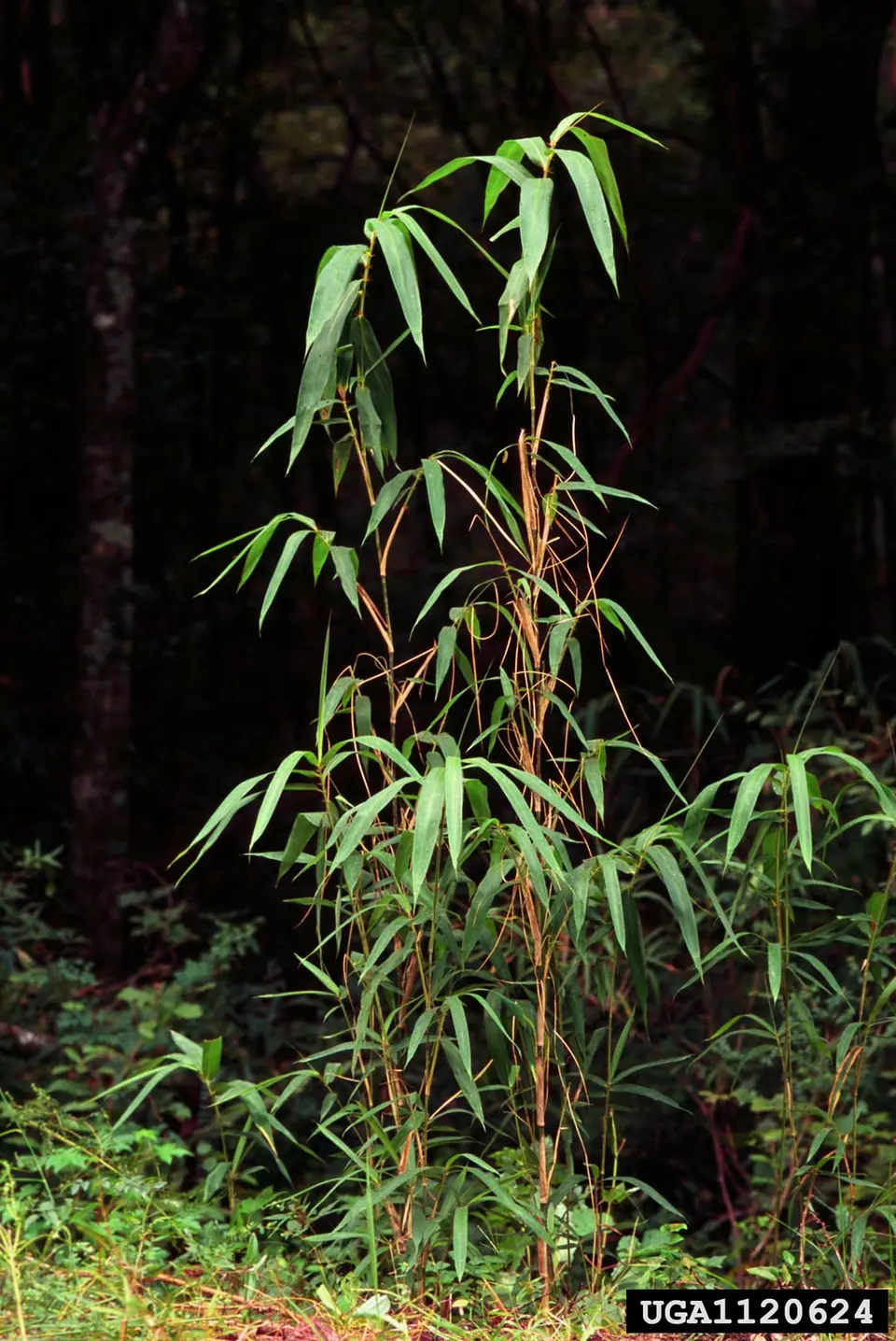


How to Grow and Care for Giant Cane
Arundinaria gigantea
Written by Emilio Marruso · last checked
At a glance
Giant cane is a towering grass that forms dense stands 8–20 feet tall, and it grows anywhere from full sun to deep shade. Its young shoots can be cooked and eaten, its seeds feed songbirds and small mammals, and its thick stands give wildlife cover all year. Apart from the odd touch of rust or leaf spots, it has no serious problems.
- Sun
Full sun to deep shade; does best in part to full sun
What the sources say (1)
Light: Full sun to deep shade; does best in partial to full sun
Plant in full sun to deep shade though it does best in partial to full sun in rich, loamy, well-drained soils.
— Arundinaria gigantea (Canebrake Bamboo, Giant Cane, River Cane, Switchcane) | North Carolina Extension Gardener Plant Toolbox [1] - Cold
Survives winters down to −20 °F (−28.9 °C)
Very hardy · USDA 5a · RHS H7 · Z5
What the sources say (2)
Hardiness, coldest zone: 5a [winter low −28.9 to −26.1 °C (−20 to −15 °F)]
USDA Plant Hardiness Zone: 5a, 5b, 6a, 6b, 7a, 7b, 8a, 8b, 9a, 9b
— Arundinaria gigantea (Canebrake Bamboo, Giant Cane, River Cane, Switchcane) | North Carolina Extension Gardener Plant Toolbox [1] Hardiness, warmest zone: 9b [winter low −3.9 to −1.1 °C (25 to 30 °F)]
USDA Plant Hardiness Zone: 5a, 5b, 6a, 6b, 7a, 7b, 8a, 8b, 9a, 9b
— Arundinaria gigantea (Canebrake Bamboo, Giant Cane, River Cane, Switchcane) | North Carolina Extension Gardener Plant Toolbox [1] - Feeding
Feed once a year from the second to the fifth year; never at planting
What the sources say (6)
When: From the second to the fifth year after planting; not at planting; discontinued after the fifth year
Consider yearly minimum applications of 50 N lb/acre of complete fertilizer selectively for giant cane plants (years 2-5) unless there are known excess nutrients in
— [6] • Do not apply lime or fertilizer at planting.
— [6] Post-Establishment Years (>5 years) • Maintain fences if they were needed to protect planting site. • Discontinue fertilization.
— [6] How often: Once a year, in years 2 to 5
Consider yearly minimum applications of 50 N lb/acre of complete fertilizer selectively for giant cane plants (years 2-5) unless there are known excess nutrients in
— [6] Avoid: Lime or fertilizer at planting; fertilizer immediately before seasonal flooding; fertilizing where ground or surface water already has excess nutrients
• Do not apply lime or fertilizer at planting.
— [6] selectively for giant cane plants (years 2-5) unless there are known excess nutrients in ground or surface water issues at the site. Do not apply fertilizer immediately before seasonal flooding is expected.
— [6] - Harvest
The young shoots can be cooked and eaten
- Pests
Rust and leaf spots may show up; no serious problems otherwise
What the sources say (1)
Diseases: rust, leaf spots
No serious problems though Rust and leafspots may occur.
— Arundinaria gigantea (Canebrake Bamboo, Giant Cane, River Cane, Switchcane) | North Carolina Extension Gardener Plant Toolbox [1] - Size
8–20 ft tall and wide, sometimes up to 25 ft tall
What the sources say (2)
Mature height: 244-610 cm (8-20 ft) usual; up to 762 cm (25 ft)
While it may grow up to 25 feet tall it is usually between 8 and 20 feet.
— Arundinaria gigantea (Canebrake Bamboo, Giant Cane, River Cane, Switchcane) | North Carolina Extension Gardener Plant Toolbox [1] Mature width: 244-610 cm (8-20 ft)
Dimensions: Height: 4 ft. 0 in. - 25 ft. 0 in. Width: 8 ft. 0 in. - 20 ft. 0 in.
— Arundinaria gigantea (Canebrake Bamboo, Giant Cane, River Cane, Switchcane) | North Carolina Extension Gardener Plant Toolbox [1] - Propagation
Start new plants from pieces of its underground stems
What the sources say (1)
Propagation: Rhizome cuttings
positives of rivercane include classic bamboo durability, easy propagation from rhizome cuttings, and ability to thrive.
— Rivercane Restoration - Alabama Cooperative Extension System [5]
Overview
Arundinaria gigantea (giant cane, river cane) is a native North American bamboo of the grass family found on floodplains of rivers and streams. [1] It grows in full sun to deep shade, does best in partial to full sun and well-drained loamy soil, and forms dense clumps by rhizomes. [1] It has a high flammability rating and should not be planted within the defensible space of a home. [1]
This record is incomplete: the sources we read do not cover every field yet.
Not yet covered by our sources: Watering, Pruning
Giant Cane care
How to water Giant Cane
Not stated in the sources we read.
How much light Giant Cane needs
Full sun to deep shade; does best in partial to full sun
What the sources say (1)
Plant in full sun to deep shade though it does best in partial to full sun in rich, loamy, well-drained soils.How much cold Giant Cane can take
Hardiness, coldest zone
5a [winter low −28.9 to −26.1 °C (−20 to −15 °F)]
What the sources say (1)
USDA Plant Hardiness Zone:
5a, 5b, 6a, 6b, 7a, 7b, 8a, 8b, 9a, 9bHardiness, warmest zone
9b [winter low −3.9 to −1.1 °C (25 to 30 °F)]
What the sources say (1)
USDA Plant Hardiness Zone:
5a, 5b, 6a, 6b, 7a, 7b, 8a, 8b, 9a, 9bHow to propagate Giant Cane
Rhizome cuttings
What the sources say (1)
positives of rivercane include classic bamboo durability, easy propagation from rhizome cuttings, and ability to thrive.How to grow Giant Cane
The plant
Life cycle
perennial
What the sources say (1)
Canes are used for basketry, fishing poles, musical instruments, and home construction. Life Cycle: PerennialFamily
Poaceae
What the sources say (1)
Giant cane is a native bamboo in the Poaceae (grass) family found on floodplains of medium to low-energy rivers and streams in the central and southeastern U.S.A.Mature height
244-610 cm (8-20 ft) usual; up to 762 cm (25 ft)
What the sources say (1)
While it may grow up to 25 feet tall it is usually between 8 and 20 feet.Mature width
244-610 cm (8-20 ft)
What the sources say (1)
Dimensions: Height: 4 ft. 0 in. - 25 ft. 0 in. Width: 8 ft. 0 in. - 20 ft. 0 in.Pests and diseases
Diseases
rust, leaf spots
What the sources say (1)
No serious problems though Rust and leafspots may occur.Fertilizing
When
From the second to the fifth year after planting; not at planting; discontinued after the fifth year
What the sources say (3)
Consider yearly minimum applications of 50 N lb/acre of complete fertilizer
selectively for giant cane plants (years 2-5) unless there are known excess nutrients in• Do not apply lime or fertilizer at planting.Post-Establishment Years (>5 years)
• Maintain fences if they were needed to protect planting site.
• Discontinue fertilization.How often
Once a year, in years 2 to 5
What the sources say (1)
Consider yearly minimum applications of 50 N lb/acre of complete fertilizer
selectively for giant cane plants (years 2-5) unless there are known excess nutrients inNatural fertilizers
A mulch of compost (or hardwood chips) right next to the transplant, optional
What each source says
research trial on transplanted giant cane (Dattilo and Rhoades 2004): Hardwood or manure mulch: no effect on first-year survival, larger and more stems by the second year
What the sources say (2)
research trial on transplanted giant cane (Dattilo and Rhoades 2004): Dattilo and Rhoades (2004) reported mulch (hardwood or manure) did not improve giant cane
survival during establishment year but did increase stem (culm) size and number by year 2.Although not required, it is cheap insurance to mulch (Code 484) with hardwood chips,
compost, or other suitable material immediately around the cane transplantMineral fertilizers
Complete fertilizer, at least 56.0 kg [123.5 lb] of N per hectare per year
What the sources say (1)
Consider yearly minimum applications of 50 N lb/acre of complete fertilizer
selectively for giant cane plants (years 2-5) unless there are known excess nutrients inAvoid
Lime or fertilizer at planting; fertilizer immediately before seasonal flooding; fertilizing where ground or surface water already has excess nutrients
What the sources say (2)
• Do not apply lime or fertilizer at planting.selectively for giant cane plants (years 2-5) unless there are known excess nutrients in
ground or surface water issues at the site. Do not apply fertilizer immediately before
seasonal flooding is expected.Giant Cane pests and problems
Rust and leaf spots
Symptom: Rust and leaf spots may occur; no serious problems otherwise
What to do: Not specified in the sources
What the sources say (1)
Insects, Diseases, and Other Plant Problems: No serious problems though Rust and leafspots may occur.
— Arundinaria gigantea (Canebrake Bamboo, Giant Cane, River Cane, Switchcane) | North Carolina Extension Gardener Plant Toolbox [1]
Remedies
Each remedy shows what official sources say about it; traditional remedies without an official source are marked as such. Harmful ones are listed so you know to avoid them.
Treating the plant
spreading rhizomes
soil barrier or sunken pots Official source, not independently tested
How: Contain the spread of the rhizomes.
To keep it contained and prevent uncontrolled spreading, you will need to build a barrier in the soil or else grow the plants in large plastic pots dug into the soil.
— mdc.mo.gov [7]
Calendar
Pruning
Not stated in the sources we read.
Months as given by the sources, which are mostly from the United States (northern hemisphere). In the southern hemisphere they shift by about six months.
Edibility
Reported by the source, quoted verbatim. Do not eat a plant on the basis of this page alone: identification mistakes can be dangerous.
Indicative values
Values from a secondary source, not checked word for word like the rest of this page. Use them as a starting point.
- Watering
- AverageIndicative value, adapt it to your climate · Secondary source
- Soil pH
- 5.5-7Indicative value, adapt it to your climate · Secondary source
- Care level
- HighIndicative value, adapt it to your climate · Secondary source
- Growth rate
- HighIndicative value, adapt it to your climate · Secondary source
- Pruning
- March, April, March, April, May, June, July, August, SeptemberIndicative value, adapt it to your climate · Secondary source
Similar plants
- Small Cane Arundinaria tecta
- African lovegrass Eragrostis curvula
- Aristida purpurea Aristida purpurea
- Autumn Moor Grass Sesleria autumnalis
- Bamboo Phyllostachys aurea
- Beaked Panicgrass Coleataenia anceps
- Bermuda grass Cynodon dactylon
- Big Bluestem Andropogon gerardi
Sources
Every value above is quoted from these documents. Links lead to the original publisher.
- Arundinaria gigantea (Canebrake Bamboo, Giant Cane, River Cane, Switchcane) | North Carolina Extension Gardener Plant Toolbox · plants.ces.ncsu.edu, consulted
- Giant Cane - Arundinaria gigantea | North Carolina Extension Gardener Plant Toolbox · plants.ces.ncsu.edu, consulted
- Identifying Giant Cane, a native bamboo | Grasses at a Glance | Illinois Extension | Illinois · extension.illinois.edu, consulted
- River Cane - Arundinaria gigantea | North Carolina Extension Gardener Plant Toolbox · plants.ces.ncsu.edu, consulted
- Rivercane Restoration - Alabama Cooperative Extension System · aces.edu, consulted
- nrcs.usda.gov · nrcs.usda.gov
- mdc.mo.gov · mdc.mo.gov
Written by Emilio Marruso · last checked