

How to Grow and Care for Small Cane
Arundinaria tecta
Written by Emilio Marruso · last checked
At a glance
Switchcane fits almost any spot in the garden, from full sun to deep shade, as long as the soil stays moist to wet. It grows 2–6 feet tall, up to 12 feet in good conditions, and its young shoots can be cooked and eaten. Skip the lime and fertilizer at planting; a little compost mulch next to it is all it needs.
- Sun
Full sun to deep shade
What the sources say (1)
Light: Full sun to deep shade
Plant in full sun to deep shade in moist, to wet, rich loamy soil.
— Arundinaria tecta (Small Cane, Switchcane) | North Carolina Extension Gardener Plant Toolbox [1] - Water
Keep the soil moist to wet
What the sources say (1)
Watering: Moist to wet soil
Plant in full sun to deep shade in moist, to wet, rich loamy soil.
— Arundinaria tecta (Small Cane, Switchcane) | North Carolina Extension Gardener Plant Toolbox [1] - Cold
Survives winters down to −10 °F (−23.3 °C)
Very hardy · USDA 6a · RHS H7 · Z6
What the sources say (2)
Hardiness, coldest zone: 6a [winter low −23.3 to −20.6 °C (−10 to −5 °F)]
USDA Plant Hardiness Zone: 6a, 6b, 7a, 7b, 8a, 8b, 9a, 9b
— Arundinaria tecta (Small Cane, Switchcane) | North Carolina Extension Gardener Plant Toolbox [1] Hardiness, warmest zone: 9b [winter low −3.9 to −1.1 °C (25 to 30 °F)]
USDA Plant Hardiness Zone: 6a, 6b, 7a, 7b, 8a, 8b, 9a, 9b
— Arundinaria tecta (Small Cane, Switchcane) | North Carolina Extension Gardener Plant Toolbox [1] - Feeding
No lime or fertilizer at planting; a compost mulch next to it is optional
What the sources say (2)
Avoid: Lime or fertilizer at planting
• Do not apply lime or fertilizer at planting.
— [2] Natural fertilizers: A mulch of compost (or hardwood chips) right next to the transplant, optional
Although not required, it is cheap insurance to mulch (Code 484) with hardwood chips, compost, or other suitable material immediately around the cane transplant
— [2] - Harvest
Young shoots can be cooked and eaten; the seeds can replace wheat
- Size
2–6 ft tall, up to 12 ft in good conditions
What the sources say (1)
Mature height: 60.96-182.88 cm (2-6 ft), up to 365.76 (12 ft) in favorable conditions
It typically grows upright 2 to 6 feet in height but can approach 12 feet when conditions are favorable.
— Arundinaria tecta (Small Cane, Switchcane) | North Carolina Extension Gardener Plant Toolbox [1]
Overview
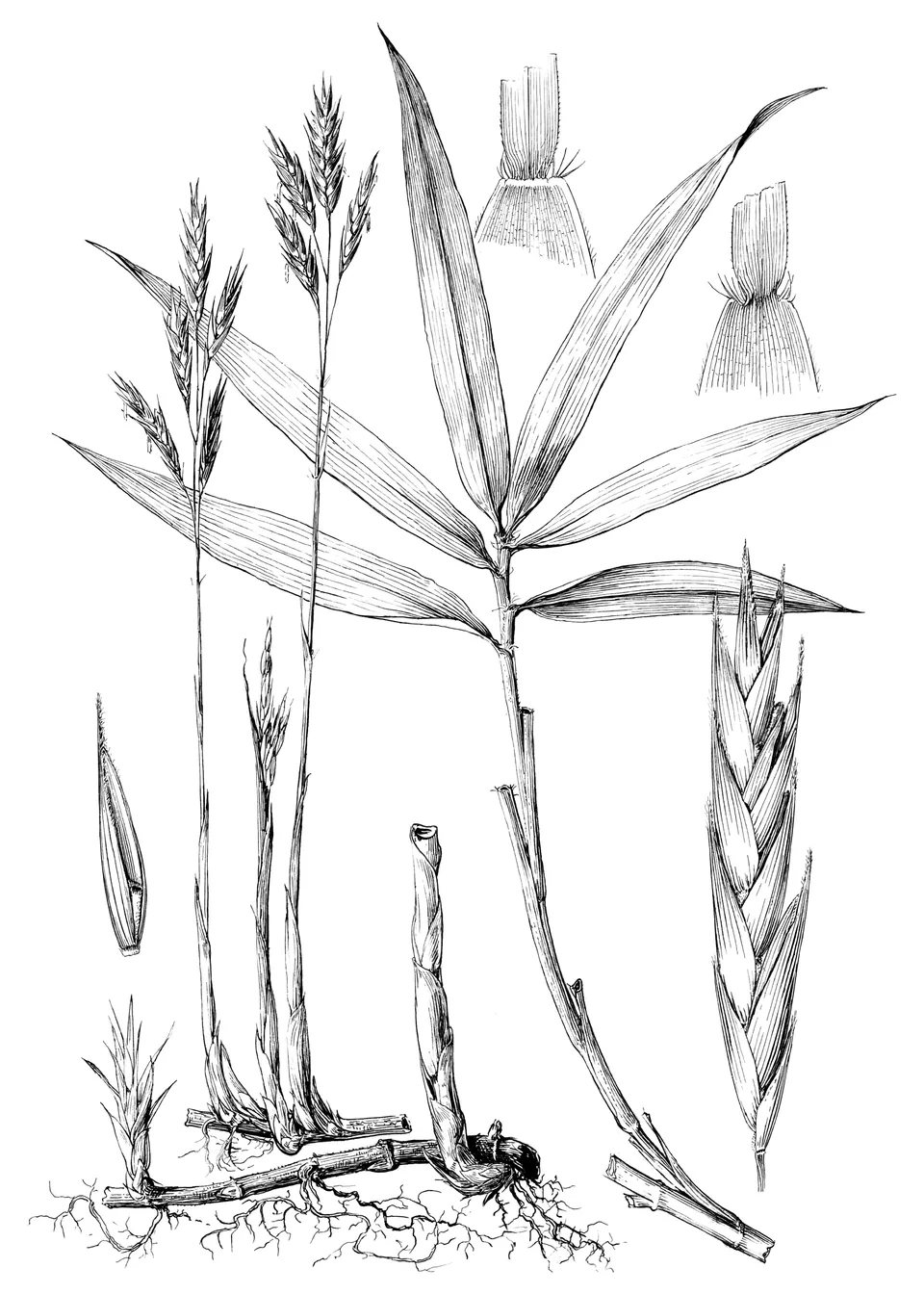
Switch cane is a native bamboo of the eastern US that grows in the understory of moist forests and wetlands. [1] It grows in full sun to deep shade in moist to wet, rich loamy soil. [1] It provides cover and food for wildlife and can be planted along streams, ponds or bogs to stabilize banks [1]
This record is incomplete: the sources we read do not cover every field yet.
Not yet covered by our sources: Pruning, Propagation
Small Cane care
How to water Small Cane
Moist to wet soil
What the sources say (1)
Plant in full sun to deep shade in moist, to wet, rich loamy soil.How much light Small Cane needs
Full sun to deep shade
What the sources say (1)
Plant in full sun to deep shade in moist, to wet, rich loamy soil.How much cold Small Cane can take
Hardiness, coldest zone
6a [winter low −23.3 to −20.6 °C (−10 to −5 °F)]
What the sources say (1)
USDA Plant Hardiness Zone:
6a, 6b, 7a, 7b, 8a, 8b, 9a, 9bHardiness, warmest zone
9b [winter low −3.9 to −1.1 °C (25 to 30 °F)]
What the sources say (1)
USDA Plant Hardiness Zone:
6a, 6b, 7a, 7b, 8a, 8b, 9a, 9bHow to propagate Small Cane
Not stated in the sources we read.
How to grow Small Cane
The plant
Life cycle
perennial
What the sources say (1)
Life Cycle:
Perennial
Country Or Region Of Origin:
Eastern and southeaestern USA
Distribution:
AL, FL, GA, LA, MD, MS, NC, SC, VAFamily
Poaceae
What the sources say (1)
Switch cane is a native bamboo in the Poaceae (grass) family found in the coastal plain and piedmont regions of the eastern US from Virginia to FloridaMature height
60.96-182.88 cm (2-6 ft), up to 365.76 (12 ft) in favorable conditions
What the sources say (1)
It typically grows upright 2 to 6 feet in height but can approach 12 feet when conditions are favorable.Fertilizing
Natural fertilizers
A mulch of compost (or hardwood chips) right next to the transplant, optional
What the sources say (1)
Although not required, it is cheap insurance to mulch (Code 484) with hardwood chips,
compost, or other suitable material immediately around the cane transplantAvoid
Lime or fertilizer at planting
What the sources say (1)
• Do not apply lime or fertilizer at planting.Remedies
The sources we checked give no remedies for this plant.
Calendar
Pruning
Not stated in the sources we read.
Months as given by the sources, which are mostly from the United States (northern hemisphere). In the southern hemisphere they shift by about six months.
Edibility
Reported by the source, quoted verbatim. Do not eat a plant on the basis of this page alone: identification mistakes can be dangerous.
Similar plants
- Giant Cane Arundinaria gigantea
- African lovegrass Eragrostis curvula
- Aristida purpurea Aristida purpurea
- Autumn Moor Grass Sesleria autumnalis
- Bamboo Phyllostachys aurea
- Beaked Panicgrass Coleataenia anceps
- Bermuda grass Cynodon dactylon
- Big Bluestem Andropogon gerardi
Sources
Every value above is quoted from these documents. Links lead to the original publisher.
- Arundinaria tecta (Small Cane, Switchcane) | North Carolina Extension Gardener Plant Toolbox · plants.ces.ncsu.edu, consulted
- nrcs.usda.gov · nrcs.usda.gov
Written by Emilio Marruso · last checked