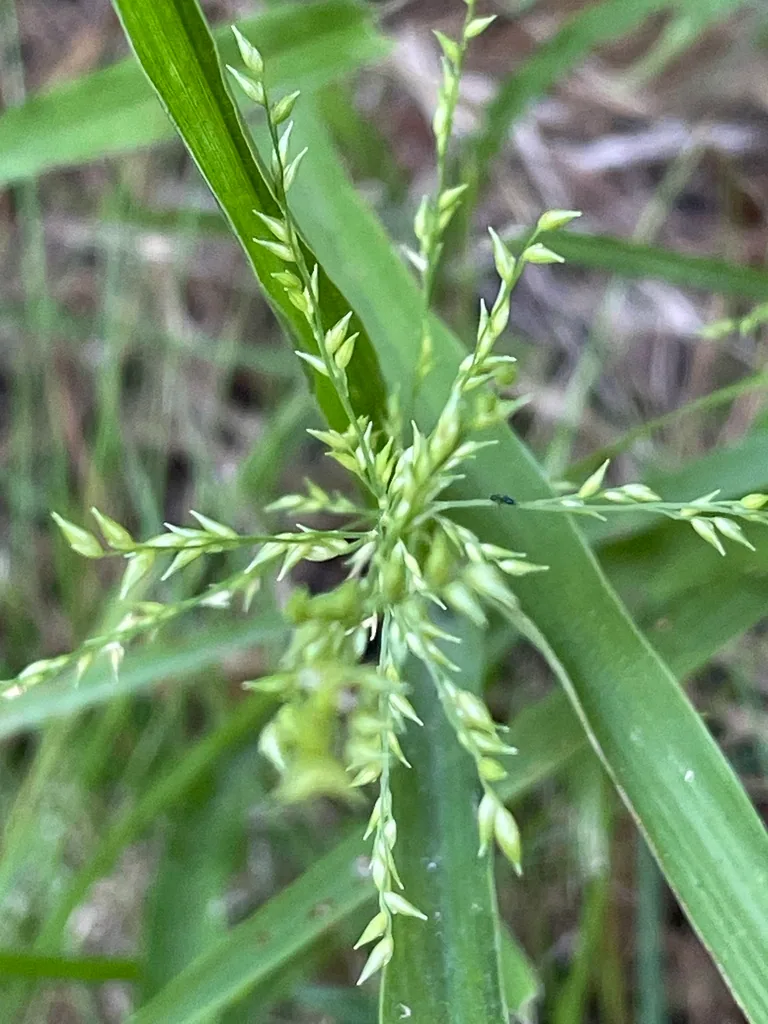
How to Grow and Care for Beaked Panicgrass
Coleataenia anceps
Written by Emilio Marruso · last checked
At a glance
Beaked panicgrass is a perennial grass that brings life to damp corners of the garden, happy in full sun to partial shade and in moist to wet soil. Growing 2–4 ft tall, it feeds birds and some waterfowl with its seeds, while bees nest in its stems. Sow the seed in fall or early winter and collect fresh seed in September.
- Sun
Full sun to partial shade
What the sources say (1)
Light: Full sun to partial shade
Light: Full sun (6 or more hours of direct sunlight a day) Partial Shade (Direct sunlight only part of the day, 2-6 hours) Soil Drainage:
— Coleataenia anceps (Beaked Panicgrass, Beaked Panic Grass, Beaked Panicum) | North Carolina Extension Gardener Plant Toolbox [1] - Water
Likes moist to wet soil: never let it dry out
What the sources say (1)
Watering: Moist to wet soils
Beaked panicgrass prefers moist to wet soils and partial shade.
— Coleataenia anceps (Beaked Panicgrass, Beaked Panic Grass, Beaked Panicum) | North Carolina Extension Gardener Plant Toolbox [1] - Cold
Survives winters down to −20 °F (−28.9 °C)
Very hardy · USDA 5a · RHS H7 · Z5
What the sources say (2)
Hardiness, coldest zone: 5a [winter low −28.9 to −26.1 °C (−20 to −15 °F)]
USDA Plant Hardiness Zone: 5a, 5b, 6a, 6b, 7a, 7b, 8a, 8b, 9a, 9b - Fruit:
— Coleataenia anceps (Beaked Panicgrass, Beaked Panic Grass, Beaked Panicum) | North Carolina Extension Gardener Plant Toolbox [1] Hardiness, warmest zone: 9b [winter low −3.9 to −1.1 °C (25 to 30 °F)]
USDA Plant Hardiness Zone: 5a, 5b, 6a, 6b, 7a, 7b, 8a, 8b, 9a, 9b - Fruit:
— Coleataenia anceps (Beaked Panicgrass, Beaked Panic Grass, Beaked Panicum) | North Carolina Extension Gardener Plant Toolbox [1] - Harvest
Collect the seed in September; birds and some waterfowl eat it too
What the sources say (1)
Harvest: September (seed)
Fruit Description: Seed is ready for harvest in September. Beaked panicgrass is a prolific seed producer.
— Coleataenia anceps (Beaked Panicgrass, Beaked Panic Grass, Beaked Panicum) | North Carolina Extension Gardener Plant Toolbox [1] - Size
2 to 4 ft tall
What the sources say (1)
Mature height: 60.96-121.92 cm (2-4 ft)
The plant can reach a height of 2 to 4 feet with a seedhead 14 inches long.
— Coleataenia anceps (Beaked Panicgrass, Beaked Panic Grass, Beaked Panicum) | North Carolina Extension Gardener Plant Toolbox [1] - Propagation
Grows from seed
What the sources say (1)
Propagation: Seed
Recommended Propagation Strategy: Seed Country Or Region Of Origin: Eastern and Central
— Coleataenia anceps (Beaked Panicgrass, Beaked Panic Grass, Beaked Panicum) | North Carolina Extension Gardener Plant Toolbox [1] - Sowing
Sow in fall or early winter
What the sources say (1)
Sowing: Fall or early winter
Beaked panicgrass prefers moist to wet soils and partial shade. Beaked panicgrass reproduces from seeds and rhizomes. The seeds should be planted in the fall or early winter.
— Coleataenia anceps (Beaked Panicgrass, Beaked Panic Grass, Beaked Panicum) | North Carolina Extension Gardener Plant Toolbox [1]
Overview
Beaked panicgrass is a perennial, rhizomatous grass native to the central and eastern United States. [1] It prefers moist to wet soils and partial shade, and its seeds should be planted in the fall or early winter. [1] It is useful for cattle grazing, and deer graze it while birds and some waterfowl eat the seeds. [1]
This record is incomplete: the sources we read do not cover every field yet.
Not yet covered by our sources: Pruning
Beaked Panicgrass care
How to water Beaked Panicgrass
Moist to wet soils
What the sources say (1)
Beaked panicgrass prefers moist to wet soils and partial shade.How much light Beaked Panicgrass needs
Full sun to partial shade
What the sources say (1)
Light:
Full sun (6 or more hours of direct sunlight a day)
Partial Shade (Direct sunlight only part of the day, 2-6 hours)
Soil Drainage:How much cold Beaked Panicgrass can take
Hardiness, coldest zone
5a [winter low −28.9 to −26.1 °C (−20 to −15 °F)]
What the sources say (1)
USDA Plant Hardiness Zone:
5a, 5b, 6a, 6b, 7a, 7b, 8a, 8b, 9a, 9b
-
Fruit:Hardiness, warmest zone
9b [winter low −3.9 to −1.1 °C (25 to 30 °F)]
What the sources say (1)
USDA Plant Hardiness Zone:
5a, 5b, 6a, 6b, 7a, 7b, 8a, 8b, 9a, 9b
-
Fruit:How to propagate Beaked Panicgrass
Seed
What the sources say (1)
Recommended Propagation Strategy:
Seed
Country Or Region Of Origin:
Eastern and CentralHow to grow Beaked Panicgrass
The plant
Life cycle
perennial
What the sources say (1)
Beaked panicgrass is a perennial, rhizomatous plant in the grass family (Poaceae) native to the central and eastern United States.Family
Poaceae
What the sources say (1)
Beaked panicgrass is a perennial, rhizomatous plant in the grass family (Poaceae) native to the central and eastern United States.Mature height
60.96-121.92 cm (2-4 ft)
What the sources say (1)
The plant can reach a height of 2 to 4 feet with a seedhead 14 inches long.Remedies
The sources we checked give no remedies for this plant.
Calendar
Fall or early winter
What the sources say (1)
Beaked panicgrass prefers moist to wet soils and partial shade.
Beaked panicgrass reproduces from seeds and rhizomes. The seeds should be planted in the fall or early winter.September (seed)
What the sources say (1)
Fruit Description:
Seed is ready for harvest in September. Beaked panicgrass is a prolific seed producer.Not stated in the sources we read.
Months as given by the sources, which are mostly from the United States (northern hemisphere). In the southern hemisphere they shift by about six months.
Edibility
Reported by the source, quoted verbatim. Do not eat a plant on the basis of this page alone: identification mistakes can be dangerous.
While useful for cattle grazing, this plant is rarely abundant and is not usually a primary food source.
[1]Wildlife Value: Bees will nest in the stems. Beaked panicgrass is grazed by cattle and horses.
[1]Deer will graze beaked panicgrass and the seeds are eaten by birds and some waterfowl.
[1]Deer will graze beaked panicgrass and the seeds are eaten by birds and some waterfowl.
[1]
Similar plants
- African lovegrass Eragrostis curvula
- Aristida purpurea Aristida purpurea
- Autumn Moor Grass Sesleria autumnalis
- Bamboo Phyllostachys aurea
- Bermuda grass Cynodon dactylon
- Big Bluestem Andropogon gerardi
- Bigtop Lovegrass Eragrostis hirsuta
- Bitter Panicgrass Panicum amarum
Sources
Every value above is quoted from these documents. Links lead to the original publisher.
- Coleataenia anceps (Beaked Panicgrass, Beaked Panic Grass, Beaked Panicum) | North Carolina Extension Gardener Plant Toolbox · plants.ces.ncsu.edu, consulted
- Beaked Panic Grass | Illinois Grasses | Illinois Extension | Illinois · extension.illinois.edu, consulted
- Identifying beaked panic grass | Grasses at a Glance | Illinois Extension | Illinois · extension.illinois.edu, consulted
- How to Identify Beaked Panic Grass | global | Illinois Extension | Illinois · extension.illinois.edu, consulted
- Field Guide To The Identification of Cogongrass: With Comparisons to Other Look-a-Like Species - Alabama Cooperative Extension System · aces.edu, consulted
Written by Emilio Marruso · last checked