
How to Grow and Care for Aristida purpurea
Aristida purpurea
Written by Emilio Marruso · last checked
Toxic to: Livestock · Why
At a glance
This perennial grass is a gift for sunny, dry spots: it asks for very little water and tolerates drought. Give it full sun and an occasional extra drink, and it will look its very best. You can even grow new plants from seed, an easy way to fill your garden with more of this tough, carefree grass year after year.
- Sun
Full sun
What the sources say (3)
Light: Full sun
According to UA Campus Arboretum: Tolerates full to partial sun and drought, though it looks best when given more water.
— Aristida purpurea - Purple Threeawn | UA Campus Arboretum [2] Sun Exposure: Full sun
— Purple Threeawn (Aristida purpurea) [6] Water Use: Low Light Requirement: Sun Soil Moisture: Dry
— Lady Bird Johnson Wildflower Center - The University of Texas at Austin [8] - Water
Very little water; it tolerates drought but looks best with a bit more
What the sources say (3)
Watering: Very low water
Growth Habits: Perennial bunch grass, 1 to 2.5 feet tall (30-75 cm), 1 to 2 feet wide (30-60 cm) Watering Needs: Very low water
— Purple Threeawn (Aristida purpurea) [6] Water Use: Low Light Requirement: Sun Soil Moisture: Dry
— Lady Bird Johnson Wildflower Center - The University of Texas at Austin [8] Watering notes: Tolerates drought, though it looks best when given more water
Tolerates full to partial sun and drought, though it looks best when given more water.
— Aristida purpurea - Purple Threeawn | UA Campus Arboretum [2] - Cold
Survives winters down to 10 °F (−12.2 °C)
Hardy in cold winters · USDA 8 · RHS H5 · Z8
What the sources say (2)
Hardiness, coldest zone: 8 [winter low −12.2 to −6.7 °C (10 to 20 °F)]
USDA: 8-10 Frost Tolerance: Hardy to 10° F (-12° C)
— Purple Threeawn (Aristida purpurea) [6] Hardiness, warmest zone: 10 [winter low −1.1 to 4.4 °C (30 to 40 °F)]
USDA: 8-10 Frost Tolerance: Hardy to 10° F (-12° C)
— Purple Threeawn (Aristida purpurea) [6] - Propagation
Grow new plants from seed
- Safety
Its long bristles can irritate farm animals and get caught in wool
Overview
Aristida purpurea is a perennial bunchgrass of rocky or sandy plains and slopes. [1] It tolerates full to partial sun and drought but looks best with more water. [2] It is propagated from seed. [6]
This record is incomplete: the sources we read do not cover every field yet.
Not yet covered by our sources: Pruning
Aristida purpurea care
How to water Aristida purpurea
Watering
Very low water
What the sources say (2)
Growth Habits: Perennial bunch grass, 1 to 2.5 feet tall (30-75 cm), 1 to 2 feet wide (30-60 cm)
Watering Needs: Very low waterWater Use: Low
Light Requirement: Sun
Soil Moisture: DryWatering notes
Tolerates drought, though it looks best when given more water
What the sources say (1)
Tolerates full to partial sun and drought, though it looks best when
given more water.How much light Aristida purpurea needs
Full sun
What each source says
According to UA Campus Arboretum: Full to partial sun
What the sources say (3)
According to UA Campus Arboretum: Tolerates full to partial sun and drought, though it looks best when
given more water.Sun Exposure: Full sunWater Use: Low
Light Requirement: Sun
Soil Moisture: DryHow much cold Aristida purpurea can take
Hardiness, coldest zone
8 [winter low −12.2 to −6.7 °C (10 to 20 °F)]
What the sources say (1)
USDA: 8-10
Frost Tolerance: Hardy to 10° F (-12° C)Hardiness, warmest zone
10 [winter low −1.1 to 4.4 °C (30 to 40 °F)]
What the sources say (1)
USDA: 8-10
Frost Tolerance: Hardy to 10° F (-12° C)How to propagate Aristida purpurea
How to grow Aristida purpurea
The plant
Life cycle
perennial
What the sources say (2)
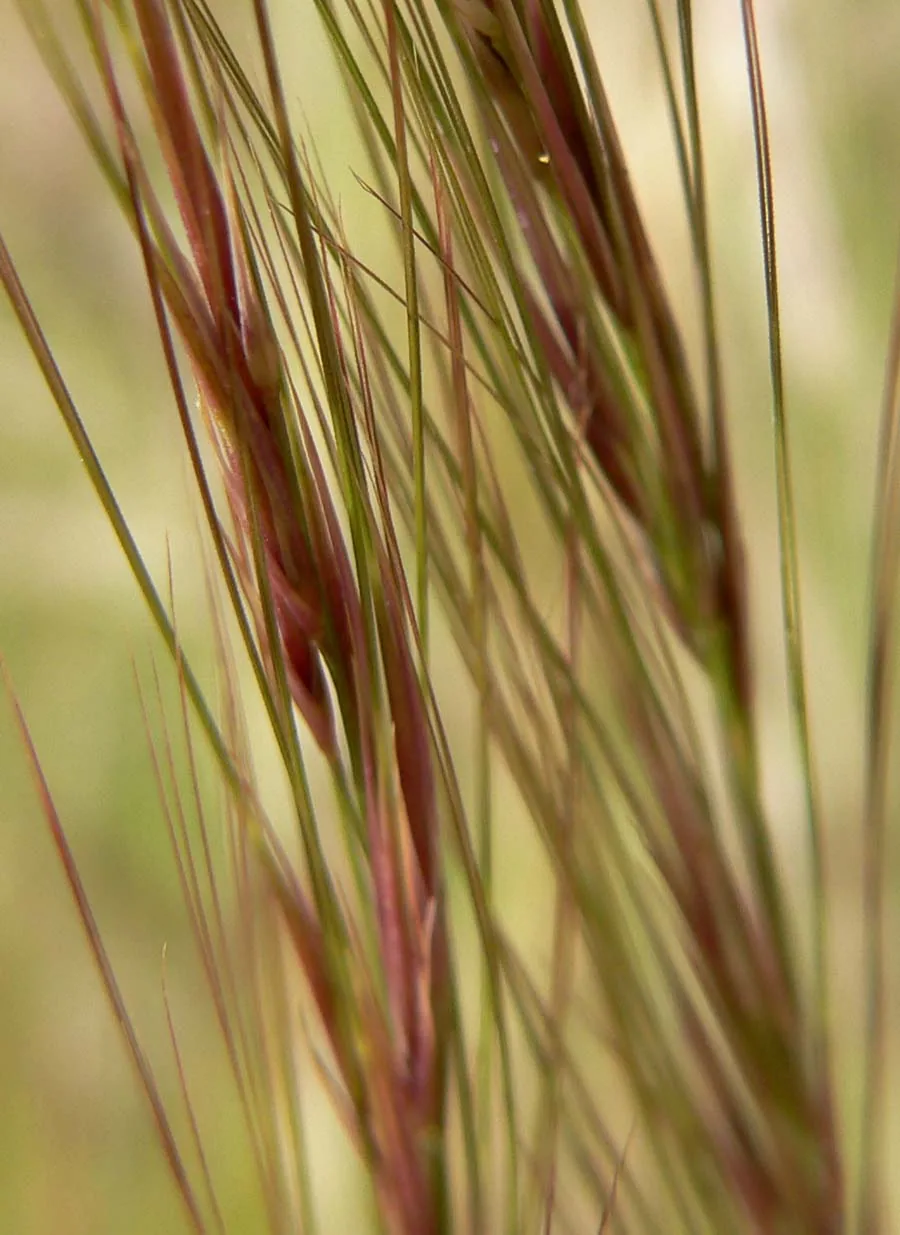
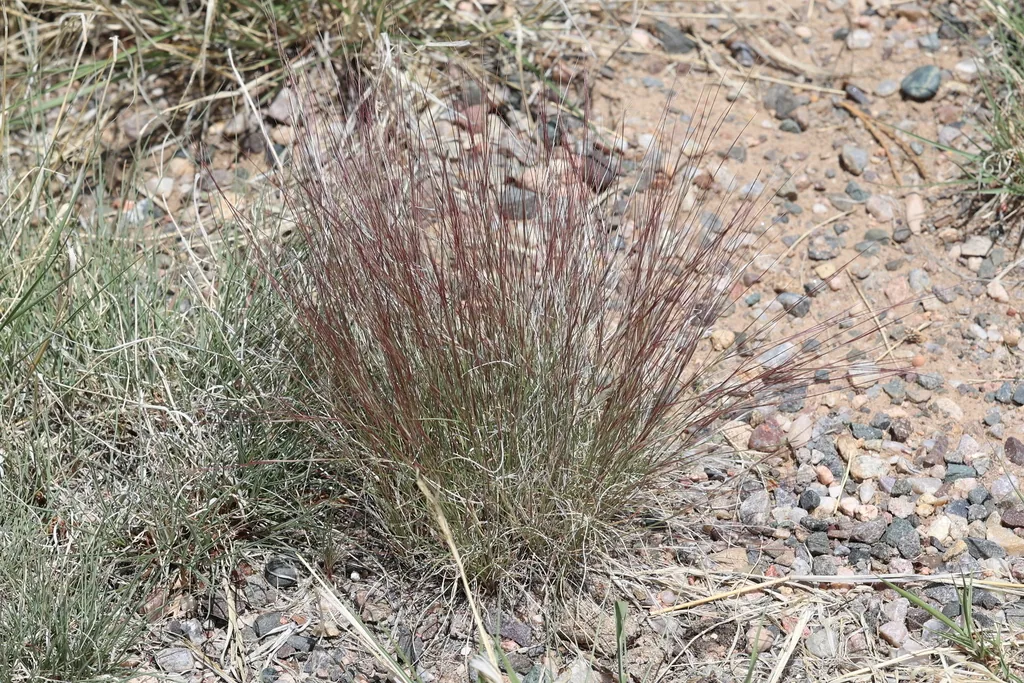
Plant type: Grass Growing Season: Warm Life Cycle: Perennial Cover: HighCharacteristics: A small perennial bunch-forming grass. During the growing season, the plant is a vibrant green, topped with red/purple.Family
Poaceae
What the sources say (1)
Family: Poaceae Compound: Aris pur Synonyms: Aristida aequiramea, Aristida purpurea var. capillarifoliaRemedies
Each remedy shows what official sources say about it; traditional remedies without an official source are marked as such. Harmful ones are listed so you know to avoid them.
Getting rid of it
weed
prescribed summer fire Works
How: On rangeland, prescribed fire in summer (especially after a wet spring) reduced purple threeawn far more than fall fire.
The results showed that while fall fires did reduce purple threeawn production, summer fires were much more effective, particularly after a wet spring.
— ars.usda.gov [9] What the evidence says In comparison to the control plots, the weed's overall biomass was reduced 90 percent by the summer fire and 73 percent by the fall fire after the wet spring
— ars.usda.gov [9]
Is Aristida purpurea toxic to pets?
Reported by the source, quoted verbatim. This is not medical or veterinary advice: if a person or an animal may have eaten this plant, contact a poison control centre or a veterinarian.
Calendar
Pruning
Not stated in the sources we read.
Months as given by the sources, which are mostly from the United States (northern hemisphere). In the southern hemisphere they shift by about six months.
Indicative values
Values from a secondary source, not checked word for word like the rest of this page. Use them as a starting point.
- Hours of sun
- 6-8 hoursIndicative value, adapt it to your climate · Secondary source
- Drought tolerant
- yesIndicative value, adapt it to your climate · Secondary source
- Soil
- Clay, Sand, LoamIndicative value, adapt it to your climate · Secondary source
- Soil pH
- 6-7.5Indicative value, adapt it to your climate · Secondary source
- Growth rate
- LowIndicative value, adapt it to your climate · Secondary source
- Pruning
- March, AprilIndicative value, adapt it to your climate · Secondary source
Similar plants
- Wiregrass Aristida stricta
- African lovegrass Eragrostis curvula
- Autumn Moor Grass Sesleria autumnalis
- Bamboo Phyllostachys aurea
- Beaked Panicgrass Coleataenia anceps
- Bermuda grass Cynodon dactylon
- Big Bluestem Andropogon gerardi
- Bigtop Lovegrass Eragrostis hirsuta
Sources
Every value above is quoted from these documents. Links lead to the original publisher.
- Aristida purpurea - purple threeawn | Yavapai County Native and Naturalized Plants · yavapaiplants.extension.arizona.edu, consulted
- Aristida purpurea - Purple Threeawn | UA Campus Arboretum · arboretum.arizona.edu, consulted
- Plants of Texas Rangelands » Purple Threeawn · rangeplants.tamu.edu, consulted
- danielle_test | USU · extension.usu.edu, consulted
- Aristida purpurea (Purple Three-awn): Minnesota Wildflowers · minnesotawildflowers.info, consulted
- Purple Threeawn (Aristida purpurea) · desert-tropicals.com, consulted
- Aristida purpurea (purple threeawn): Go Botany · gobotany.nativeplanttrust.org, consulted
- Lady Bird Johnson Wildflower Center - The University of Texas at Austin · wildflower.org, consulted
- ars.usda.gov · ars.usda.gov
Written by Emilio Marruso · last checked