
How to Grow and Care for Serbian Spruce
Picea omorika
Written by Emilio Marruso · last checked
At a glance
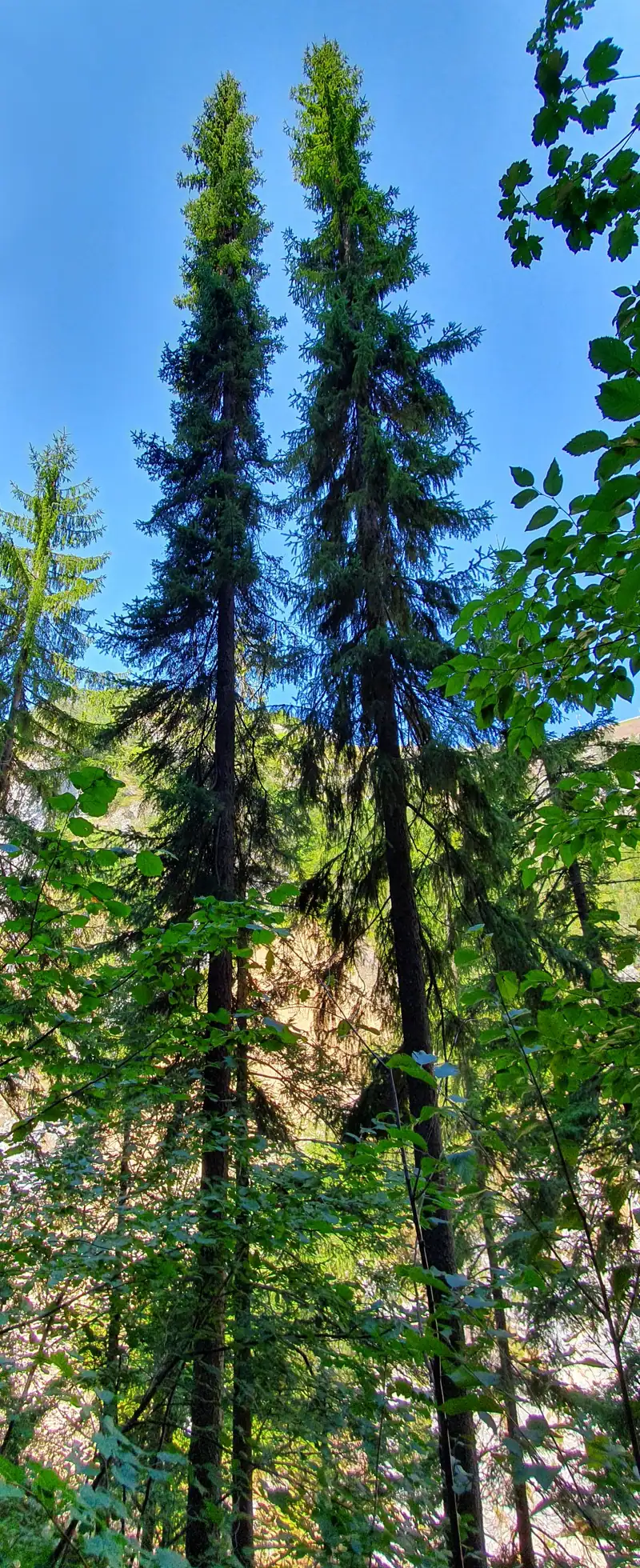
This graceful spruce grows into a tall, slender tree of 40 to 60 feet, yet only 15 to 20 feet wide, so it fits where wider evergreens won't. It's easygoing about light, happy in full sun or partial shade. Give it moist, well-drained soil and a spot sheltered from strong winds, and it will stand proudly in your garden for years.
- Sun
Full sun to partial shade
What the sources say (2)
Light: Full sun to partial shade
The Serbian spruce prefers full sun to partial shade and moist, well-drained soils.
— Picea omorika (Serbian Spruce) | North Carolina Extension Gardener Plant Toolbox [1] Full sun to light shade; moist, well drained soils; tolerates alkaline sites.
— Selecting Trees for Your Home - Serbian Spruce (Picea omorika) [2] - Water
Likes soil that stays moist
What the sources say (2)
Watering: Prefers moist soil
The Serbian spruce prefers full sun to partial shade and moist, well-drained soils.
— Picea omorika (Serbian Spruce) | North Carolina Extension Gardener Plant Toolbox [1] Full sun to light shade; moist, well drained soils; tolerates alkaline sites.
— Selecting Trees for Your Home - Serbian Spruce (Picea omorika) [2] - Soil
Well-drained soil
What the sources say (2)
Watering notes: Well-drained soil
The Serbian spruce prefers full sun to partial shade and moist, well-drained soils.
— Picea omorika (Serbian Spruce) | North Carolina Extension Gardener Plant Toolbox [1] Full sun to light shade; moist, well drained soils; tolerates alkaline sites.
— Selecting Trees for Your Home - Serbian Spruce (Picea omorika) [2] - Pests
Watch for aphids, spider mites, budworms and borers; can get honey fungus
What the sources say (2)
Pests: aphids, spider mites, budworms, borers
Monitor for aphids, spider mites, budworms, and borers. May be susceptible to honey fungus.
— Picea omorika (Serbian Spruce) | North Carolina Extension Gardener Plant Toolbox [1] Diseases: honey fungus
May be susceptible to honey fungus. Otherwise, this species has no other serious insect pests or diseases.
— Picea omorika (Serbian Spruce) | North Carolina Extension Gardener Plant Toolbox [1] - Watch out
Strong winds burn its needles in winter: don't use it as a windbreak
- Size
40–60 ft tall and 15–20 ft wide
What the sources say (2)
Mature height: 1219.2-1828.8 cm (40-60 ft)
It may grow 40-60 feet tall and 15-20 feet wide.
— Picea omorika (Serbian Spruce) | North Carolina Extension Gardener Plant Toolbox [1] Mature width: 457.2-609.6 cm (15-20 ft)
It may grow 40-60 feet tall and 15-20 feet wide.
— Picea omorika (Serbian Spruce) | North Carolina Extension Gardener Plant Toolbox [1]
Overview
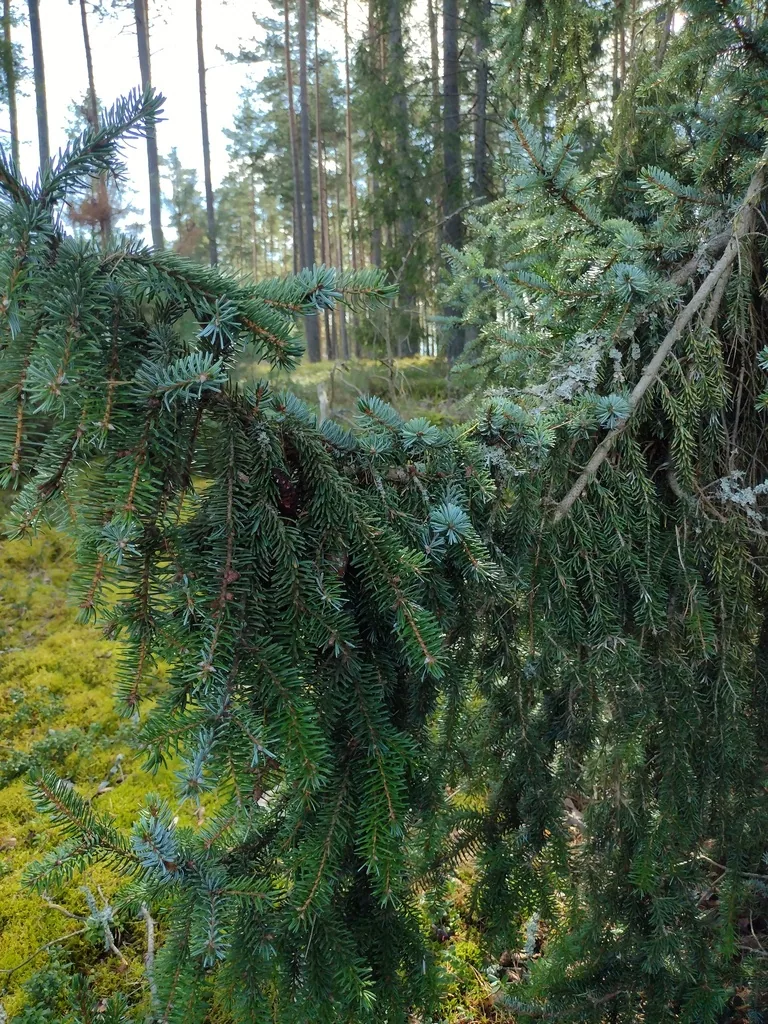
Serbian spruce is a medium-sized needled evergreen conifer with a narrow trunk and conical crown. [1] It prefers full sun to partial shade and moist, well-drained soils. [1][2] It is used as an accent or specimen and in groups as a screen. [1]
This record is incomplete: the sources we read do not cover every field yet.
Not yet covered by our sources: Pruning, Propagation
Serbian Spruce care
How to water Serbian Spruce
Watering
Prefers moist soil
What the sources say (2)
The Serbian spruce prefers full sun to partial shade and moist, well-drained soils.Full sun to light shade; moist, well drained soils; tolerates alkaline sites.Watering notes
Well-drained soil
What the sources say (2)
The Serbian spruce prefers full sun to partial shade and moist, well-drained soils.Full sun to light shade; moist, well drained soils; tolerates alkaline sites.How much light Serbian Spruce needs
Full sun to partial shade
What the sources say (2)
The Serbian spruce prefers full sun to partial shade and moist, well-drained soils.Full sun to light shade; moist, well drained soils; tolerates alkaline sites.How much cold Serbian Spruce can take
Hardiness, coldest zone
The sources give different values depending on region, zone or growing conditions.
What each source says
According to North Carolina Extension Gardener Plant Toolbox: 4 [winter low −34.4 to −28.9 °C (−30 to −20 °F)]
According to University of Illinois Extension: 5 [winter low −28.9 to −23.3 °C (−20 to −10 °F)]
What the sources say (2)
According to North Carolina Extension Gardener Plant Toolbox: It is hardy in zones 4-7, deer-resistant, and tolerates urban conditions.According to University of Illinois Extension: Hardiness Zone:
|
5 - 7
[ Find Your Zone ]Hardiness, warmest zone
7 [winter low −17.8 to −12.2 °C (0 to 10 °F)]
How to propagate Serbian Spruce
Not stated in the sources we read.
How to grow Serbian Spruce
The plant
Family
Pinaceae
What the sources say (1)
This species belongs to the pine family (Pinaceae).Mature height
1219.2-1828.8 cm (40-60 ft)
What the sources say (1)
It may grow 40-60 feet tall and 15-20 feet wide.Mature width
457.2-609.6 cm (15-20 ft)
What the sources say (1)
It may grow 40-60 feet tall and 15-20 feet wide.Pests and diseases
Pests
aphids, spider mites, budworms, borers
What the sources say (1)
Monitor for aphids, spider mites, budworms, and borers. May be susceptible to honey fungus.Diseases
honey fungus
What the sources say (1)
May be susceptible to honey fungus. Otherwise, this species has no other serious insect pests or diseases.Fertilizing
When
The sources give different values depending on region, zone or growing conditions.
What each source says
Picea in general: In fall, at a low nitrogen rate
What the sources say (1)
Picea in general: Otherwise, fertilizing at a low rate of N using a slow release fertilizer in the Fall will be fine.How often
The sources give different values depending on region, zone or growing conditions.
What each source says
Picea in general: Only when a soil test shows the need; test the soil every 5 years
What the sources say (1)
Picea in general: Evergreen trees require even less fertilization than deciduous trees- test your soil every 5 years to determine needMineral fertilizers
The sources give different values depending on region, zone or growing conditions.
What each source says
Picea in general: Slow-release fertilizer, since all fertilizers are salts
Picea in general: Nitrogen at the lowest recommended rate
Micronutrients
The sources give different values depending on region, zone or growing conditions.
What each source says
Picea in general: Iron applied to the soil or sprayed on the foliage for iron chlorosis on high-pH soils, often only a temporary fix
What the sources say (1)
Picea in general: Adding iron to the soil or spraying on the foliage may provide a solution but it may be only temporary.Avoid
The sources give different values depending on region, zone or growing conditions.
What each source says
Picea in general: Fertilizing newly planted trees
Picea in general: Fertilizing stressed trees or trees infested by insects or diseases
Picea in general: Fertilizing after new growth emerges in spring or before the trees harden off in fall
Picea in general: Fertilizer in the backfill, which can burn the needles
What the sources say (4)
Picea in general: Never fertilize newly planted trees, only established treesPicea in general: Never fertilize insect or disease infested or stressed treesPicea in general: Never fertilize after new leaves have emerged in spring or before hardening in fallPicea in general: Use the lowest rate of recommended Nitrogen and never put in the back fill or leaves may burnSigns of deficiency
The sources give different values depending on region, zone or growing conditions.
What each source says
Picea in general: Chlorotic needles from iron deficiency on high-pH soils
What the sources say (1)
Picea in general: Sometimes with a high pH such as yours, iron gets tied up in the soil and cant be taken up by plants. This makes the leaves (needles in this case) chlorotic.Signs of excess
The sources give different values depending on region, zone or growing conditions.
What each source says
Picea in general: Top growth at the expense of root growth
What the sources say (1)
Picea in general: Fertilizing results in top growth at the expense of root growthSerbian Spruce pests and problems
Insect pests and honey fungus
Symptom: Aphids, spider mites, budworms and borers; may be susceptible to honey fungus.
What to do: Monitor for these pests.
What the sources say (1)
Monitor for aphids, spider mites, budworms, and borers. May be susceptible to honey fungus.
— Picea omorika (Serbian Spruce) | North Carolina Extension Gardener Plant Toolbox [1] Winterburn
Symptom: The needles are prone to winterburn in areas with strong winds.
What to do: Do not use it as a windbreak.
What the sources say (1)
This spruce should not be used as a windbreak as the needles are prone to winterburn in areas with strong winds.
— Selecting Trees for Your Home - Serbian Spruce (Picea omorika) [2]
Remedies
Each remedy shows what official sources say about it; traditional remedies without an official source are marked as such. Harmful ones are listed so you know to avoid them.
Treating the plant
spider mites
forceful hosing with water Partly works
How: Use the garden hose to apply a forceful stream of water to dislodge mites from an infested plant. Repeat 3 or 4 times on consecutive days.
it may be possible to reduce light mite populations with periodic “hosings.” Use the garden hose to apply a forceful stream of water to dislodge mites from an infested plant.
— yardandgarden.extension.iastate.edu [4] What the evidence says it may be possible to reduce light mite populations with periodic “hosings.” Use the garden hose to apply a forceful stream of water to dislodge mites from an infested plant.
— yardandgarden.extension.iastate.edu [4] dish soap and water spray Partly works
Some dish detergents may be too harsh for tender foliage. Test the solution on a small area and allow it to set for 24 hours if you are unsure.
— gardenguides.com [5] How: Mix 1 Tbsp. mild dish detergent with 1 quart lukewarm water. Fill a spray bottle with the soap solution and spray large or hard-to-manage plants. Repeat every three to four days.
Fill a spray bottle with the soap solution and spray large or hard-to-manage plants. Cover all areas, including stems.
— gardenguides.com [5] What the evidence says Soap and oil sprays have no residual activity and only control mites and insects that are contacted directly. Thorough spraying is important for control.
— yardandgarden.extension.iastate.edu [4]
Calendar
Pruning
Not stated in the sources we read.
Months as given by the sources, which are mostly from the United States (northern hemisphere). In the southern hemisphere they shift by about six months.
Indicative values
Values from a secondary source, not checked word for word like the rest of this page. Use them as a starting point.
- Life cycle
- PerennialIndicative value, adapt it to your climate · Secondary source
- Hours of sun
- 6-8 hoursIndicative value, adapt it to your climate · Secondary source
- Drought tolerant
- yesIndicative value, adapt it to your climate · Secondary source
- Soil pH
- 5.5-6.5Indicative value, adapt it to your climate · Secondary source
- Growth rate
- LowIndicative value, adapt it to your climate · Secondary source
- Pruning
- March, April, May, AugustIndicative value, adapt it to your climate · Secondary source
- Propagation
- Cutting, Grafting Propagation, Layering Propagation, Air Layering Propagation, Seed PropagationIndicative value, adapt it to your climate · Secondary source
Similar plants
- Black Spruce Picea mariana
- Blue spruce Picea pungens
- Dragon Spruce Picea asperata
- Himalayan Spruce Picea smithiana
- Norway Spruce Picea abies
- Oriental Spruce Picea orientalis
- Sitka Spruce Picea sitchensis
- White Spruce Picea laxa
Sources
Every value above is quoted from these documents. Links lead to the original publisher.
- Picea omorika (Serbian Spruce) | North Carolina Extension Gardener Plant Toolbox · plants.ces.ncsu.edu, consulted
- Selecting Trees for Your Home - Serbian Spruce (Picea omorika) · web.extension.illinois.edu, consulted
- ask.extension.org · ask.extension.org
- yardandgarden.extension.iastate.edu · yardandgarden.extension.iastate.edu
- gardenguides.com · gardenguides.com
Written by Emilio Marruso · last checked