How to Grow and Care for Creeping Charlie
Pilea nummulariifolia
Written by Emilio Marruso · last checked
Not toxic to cats and dogs, according to the sources · Sources
At a glance
This pilea is a charming houseplant that is happy in partial shade and grows well in pots indoors. Water it when the top inch of soil is dry, feed it monthly from spring to fall, and you can even use its leaves in teas. Best of all, it is safe around cats, dogs and horses.
- Sun
Partial shade
What the sources say (1)
Light: Partial shade (semi-shade)
This plant does best in semi-shade and consistently moist fertile well-drained soils in a humid environment.
— Pilea nummulariifolia (Creeping Charlie, Creeping Pilea, Swedish Ivy (Plectranthus)) | North Carolina Extension Gardener Plant Toolbox [1] - Water
Water when the top 1 inch of soil is dry; too much water rots the roots
What the sources say (2)
Watering: Water when the top 1 inch [2.5 cm] is dry (as a houseplant)
As a houseplant, provide water when the top 1 inch is dry
— Pilea nummulariifolia (Creeping Charlie, Creeping Pilea, Swedish Ivy (Plectranthus)) | North Carolina Extension Gardener Plant Toolbox [1] Watering notes: Intolerant of drought but can be overwatered, causing root rot
Intolerant of drought but can also be overwatered causing root rot.
— Pilea nummulariifolia (Creeping Charlie, Creeping Pilea, Swedish Ivy (Plectranthus)) | North Carolina Extension Gardener Plant Toolbox [1] - Cold
Survives winters down to 30 °F (−1.1 °C)
Half hardy: mild winters or an unheated greenhouse · USDA 10a · RHS H3 · Z10
What the sources say (2)
Hardiness, coldest zone: 10a [winter low −1.1 to 1.7 °C (30 to 35 °F)]
USDA Plant Hardiness Zone: 10a, 11a, 11b - Fruit: Fruit Description: Small green achenes
— Pilea nummulariifolia (Creeping Charlie, Creeping Pilea, Swedish Ivy (Plectranthus)) | North Carolina Extension Gardener Plant Toolbox [1] Hardiness, warmest zone: 11b [winter low 7.2 to 10 °C (45 to 50 °F)]
USDA Plant Hardiness Zone: 10a, 11a, 11b - Fruit: Fruit Description: Small green achenes
— Pilea nummulariifolia (Creeping Charlie, Creeping Pilea, Swedish Ivy (Plectranthus)) | North Carolina Extension Gardener Plant Toolbox [1] - Soil
Soil with pH 6.0–8.0
What the sources say (2)
Soil pH, minimum: 6.0
Soil Texture: Loam (Silt) Sand Soil pH: Neutral (6.0-8.0)
— Pilea nummulariifolia (Creeping Charlie, Creeping Pilea, Swedish Ivy (Plectranthus)) | North Carolina Extension Gardener Plant Toolbox [1] Soil pH, maximum: 8.0
Soil Texture: Loam (Silt) Sand Soil pH: Neutral (6.0-8.0)
— Pilea nummulariifolia (Creeping Charlie, Creeping Pilea, Swedish Ivy (Plectranthus)) | North Carolina Extension Gardener Plant Toolbox [1] - Feeding
Feed once a month from spring to fall
What the sources say (2)
When: Spring to fall (as a houseplant)
As a houseplant, provide water when the top 1 inch is dry and fertilize monthly from spring to fall.
— Pilea nummulariifolia (Creeping Charlie, Creeping Pilea, Swedish Ivy (Plectranthus)) | North Carolina Extension Gardener Plant Toolbox [1] How often: Monthly (as a houseplant)
As a houseplant, provide water when the top 1 inch is dry and fertilize monthly from spring to fall.
— Pilea nummulariifolia (Creeping Charlie, Creeping Pilea, Swedish Ivy (Plectranthus)) | North Carolina Extension Gardener Plant Toolbox [1] - Harvest
The leaves are edible and can be used in teas
- Pests
Watch for mealybugs, root rot and bacterial leaf spot
What the sources say (2)
Pests: mealy bugs
Intolerant of drought but can also be overwatered causing root rot. Also susceptible to bacterial leaf spot and mealy bugs
— Pilea nummulariifolia (Creeping Charlie, Creeping Pilea, Swedish Ivy (Plectranthus)) | North Carolina Extension Gardener Plant Toolbox [1] Diseases: root rot, bacterial leaf spot
Intolerant of drought but can also be overwatered causing root rot. Also susceptible to bacterial leaf spot and mealy bugs
— Pilea nummulariifolia (Creeping Charlie, Creeping Pilea, Swedish Ivy (Plectranthus)) | North Carolina Extension Gardener Plant Toolbox [1] - Propagation
Divide the plant or root stem cuttings
What the sources say (1)
Propagation: Division, stem cutting
Recommended Propagation Strategy: Division Stem Cutting Country Or Region
— Pilea nummulariifolia (Creeping Charlie, Creeping Pilea, Swedish Ivy (Plectranthus)) | North Carolina Extension Gardener Plant Toolbox [1] - Containers
Grows well in pots and indoors
What the sources say (2)
In containers: Yes
Consider Creeping Charlie for a hanging basket or as a trailing plant in a mixed container for your home.
— Pilea nummulariifolia (Creeping Charlie, Creeping Pilea, Swedish Ivy (Plectranthus)) | North Carolina Extension Gardener Plant Toolbox [1] Indoors: Yes
It is often grown indoors as a houseplant in a hanging basket or container.
— Pilea nummulariifolia (Creeping Charlie, Creeping Pilea, Swedish Ivy (Plectranthus)) | North Carolina Extension Gardener Plant Toolbox [1] - Safety
Non-toxic to cats, dogs and horses
Overview
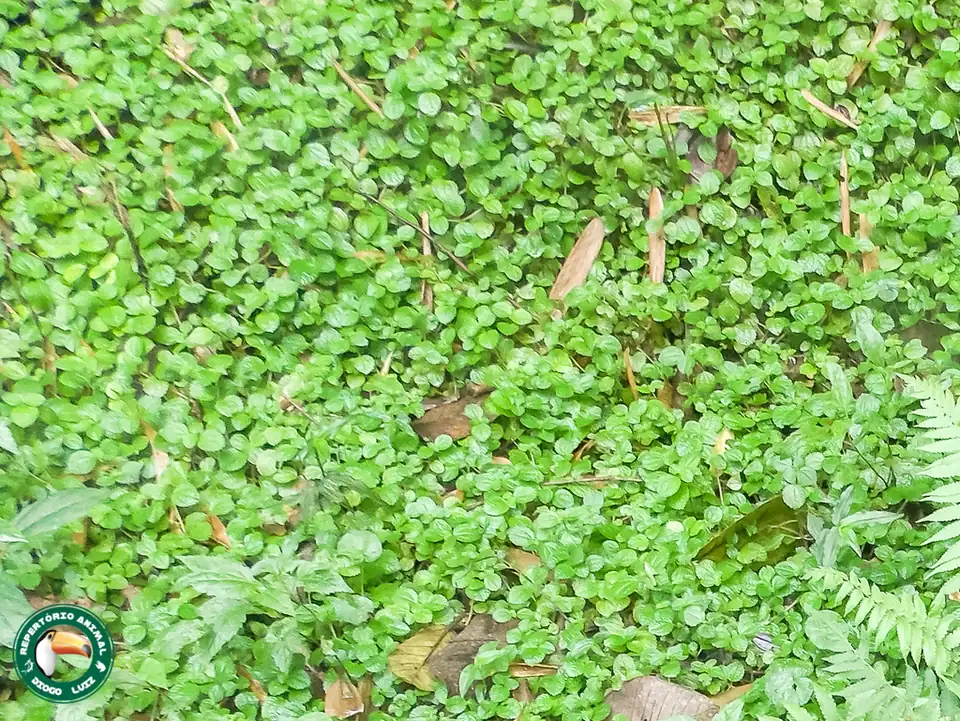
Creeping Charlie is a low-growing, creeping herbaceous perennial in the nettle family, often grown indoors as a houseplant. [1] It does best in semi-shade and consistently moist fertile well-drained soils in a humid environment. [1] It is considered weedy when planted outside. [1]
Creeping Charlie care
Measurements in square brackets are our conversion into the other unit system; the quoted text is unchanged.
How to water Creeping Charlie
Watering
Water when the top 1 inch [2.5 cm] is dry (as a houseplant)
What the sources say (1)
As a houseplant, provide water when the top 1 inch is dryWatering notes
Intolerant of drought but can be overwatered, causing root rot
What the sources say (1)
Intolerant of drought but can also be overwatered causing root rot.How much light Creeping Charlie needs
Partial shade (semi-shade)
What the sources say (1)
This plant does best in semi-shade and consistently moist fertile well-drained soils in a humid environment.How much cold Creeping Charlie can take
Hardiness, coldest zone
10a [winter low −1.1 to 1.7 °C (30 to 35 °F)]
What the sources say (1)
USDA Plant Hardiness Zone:
10a, 11a, 11b
-
Fruit:
Fruit Description:
Small green achenesHardiness, warmest zone
11b [winter low 7.2 to 10 °C (45 to 50 °F)]
What the sources say (1)
USDA Plant Hardiness Zone:
10a, 11a, 11b
-
Fruit:
Fruit Description:
Small green achenesBest soil for Creeping Charlie
Soil pH, minimum
6.0
What the sources say (1)
Soil Texture:
Loam (Silt)
Sand
Soil pH:
Neutral (6.0-8.0)Soil pH, maximum
8.0
What the sources say (1)
Soil Texture:
Loam (Silt)
Sand
Soil pH:
Neutral (6.0-8.0)Where to grow Creeping Charlie
Indoors
Yes
What the sources say (1)
It is often grown indoors as a houseplant in a hanging basket or container.In containers
Yes
What the sources say (1)
Consider Creeping Charlie for a hanging basket or as a trailing plant in a mixed container for your home.How to propagate Creeping Charlie
Division, stem cutting
What the sources say (1)
Recommended Propagation Strategy:
Division
Stem Cutting
Country Or RegionHow to grow Creeping Charlie
The plant
Life cycle
perennial
What the sources say (1)
Creeping Charlie is a herbaceous perennial with a low-growing, creeping, or groundcover habit that is a member of the Urticaceae or nettle family.Family
Urticaceae
What the sources say (1)
Creeping Charlie is a herbaceous perennial with a low-growing, creeping, or groundcover habit that is a member of the Urticaceae or nettle family.Pests and diseases
Pests
mealy bugs
What the sources say (1)
Intolerant of drought but can also be overwatered causing root rot. Also susceptible to bacterial leaf spot and mealy bugsDiseases
root rot, bacterial leaf spot
What the sources say (1)
Intolerant of drought but can also be overwatered causing root rot. Also susceptible to bacterial leaf spot and mealy bugsFertilizing
When
Spring to fall (as a houseplant)
What the sources say (1)
As a houseplant, provide water when the top 1 inch is dry and fertilize monthly from spring to fall.How often
Monthly (as a houseplant)
What the sources say (1)
As a houseplant, provide water when the top 1 inch is dry and fertilize monthly from spring to fall.Creeping Charlie pests and problems
Root rot and leaf spot
Symptom: Overwatering can cause root rot; also susceptible to bacterial leaf spot and mealy bugs.
What to do: Water when the top 1 inch is dry.
What the sources say (2)
Intolerant of drought but can also be overwatered causing root rot. Also susceptible to bacterial leaf spot and mealy bugs
— Pilea nummulariifolia (Creeping Charlie, Creeping Pilea, Swedish Ivy (Plectranthus)) | North Carolina Extension Gardener Plant Toolbox [1] As a houseplant, provide water when the top 1 inch is dry
— Pilea nummulariifolia (Creeping Charlie, Creeping Pilea, Swedish Ivy (Plectranthus)) | North Carolina Extension Gardener Plant Toolbox [1]
Remedies
Each remedy shows what official sources say about it; traditional remedies without an official source are marked as such. Harmful ones are listed so you know to avoid them.
Treating the plant
mealybugs
rubbing alcohol on a cotton swab Works
Make sure to test the soap and alcohol mixtures on a small portion of the plant prior to full application because some plants may be sensitive to soap or alcohol.
— planttalk.colostate.edu [4] How: Dab the insects with a cotton swab dipped in rubbing alcohol; repeat every week until the bugs are gone.
For smaller infestations, dab the insects with a cotton swab dipped in rubbing alcohol. Repeat this procedure every week until the bugs are gone.
— planttalk.colostate.edu [4] What the evidence says For smaller infestations, dab the insects with a cotton swab dipped in rubbing alcohol. Repeat this procedure every week until the bugs are gone.
— planttalk.colostate.edu [4] 10 percent rubbing alcohol spray Works
Make sure to test the soap and alcohol mixtures on a small portion of the plant prior to full application because some plants may be sensitive to soap or alcohol.
— planttalk.colostate.edu [4] How: Spray a mixture of 10 percent rubbing alcohol and 90 percent water directly onto the insects.
For heavy infestations, spray a mixture of 10 percent rubbing alcohol and 90 percent water directly onto the insects.
— planttalk.colostate.edu [4] What the evidence says For heavy infestations, spray a mixture of 10 percent rubbing alcohol and 90 percent water directly onto the insects.
— planttalk.colostate.edu [4] insecticidal soap Works
Make sure to test the soap and alcohol mixtures on a small portion of the plant prior to full application because some plants may be sensitive to soap or alcohol.
— planttalk.colostate.edu [4] How: Spray with insecticidal soap.
These pests may also be controlled with insecticidal soap.
— planttalk.colostate.edu [4] What the evidence says These pests may also be controlled with insecticidal soap.
— planttalk.colostate.edu [4]
spider mites
washing with a water spray Works
If you can delay, apply the insecticidal soap to a small portion of the plant to check for phytotoxicity (some plants are damaged by the soap).
— swyg.nmsu.edu [5] How: Put the houseplant in the bathtub or shower and spray with a strong but fine mist of water, repeating often.
It is easier to just put the houseplant in the bathtub or shower and spray with a strong, but fine mist of water.
— swyg.nmsu.edu [5] What the evidence says Washing the spider mites from the plant frequently will reduce their numbers and their damage.
— swyg.nmsu.edu [5] insecticidal soap in water Partly works
If you can delay, apply the insecticidal soap to a small portion of the plant to check for phytotoxicity (some plants are damaged by the soap).
— swyg.nmsu.edu [5] How: Add insecticidal soap to the water spray; repeat once or twice a week for two to three weeks.
If you wish, you can add insecticidal soap to the water to enhance its effect.
— swyg.nmsu.edu [5] What the evidence says The insecticidal soap will kill some of the mites and assist in washing them from the plant.
— swyg.nmsu.edu [5]
Is Creeping Charlie poisonous?
Reported by the source, quoted verbatim. This is not medical or veterinary advice: if a person or an animal may have eaten this plant, contact a poison control centre or a veterinarian.
#non-toxic for cats #non-toxic for horses #non-toxic for dogs #tropical feel #partial shade tolerant
[1]The source flags the risk for this animal but does not explain why.
Edibility
Reported by the source, quoted verbatim. Do not eat a plant on the basis of this page alone: identification mistakes can be dangerous.
Uses (Ethnobotany): The leaves are edible and can be used in teas.
[1]
Indicative values
Values from a secondary source, not checked word for word like the rest of this page. Use them as a starting point.
- Hours of sun
- 2-3 hoursIndicative value, adapt it to your climate · Secondary source
- Soil
- Well-drainedIndicative value, adapt it to your climate · Secondary source
- Care level
- ModerateIndicative value, adapt it to your climate · Secondary source
- Growth rate
- LowIndicative value, adapt it to your climate · Secondary source
- Pruning
- March, April, May, June, July, March, April, May, June, July, AugustIndicative value, adapt it to your climate · Secondary source
Similar plants
- Aluminum plant Pilea cadierei
- Artillery Plant Pilea microphylla
- Chinese Money Plant Pilea peperomioides
- Friendship Plant Pilea involucrata
- Clearweed Pilea pumila
- Depressed clearweed Pilea depressa
- False Nettle Boehmeria cylindrica
- Heartleaf Nettle Urtica chamaedryoides
Sources
Every value above is quoted from these documents. Links lead to the original publisher.
- Pilea nummulariifolia (Creeping Charlie, Creeping Pilea, Swedish Ivy (Plectranthus)) | North Carolina Extension Gardener Plant Toolbox · plants.ces.ncsu.edu, consulted
- Pilea as a Houseplant · extension.psu.edu, consulted
- Creeping Charlie - Pilea nummulariifolia | North Carolina Extension Gardener Plant Toolbox · plants.ces.ncsu.edu, consulted
- planttalk.colostate.edu · planttalk.colostate.edu
- swyg.nmsu.edu · swyg.nmsu.edu
Written by Emilio Marruso · last checked