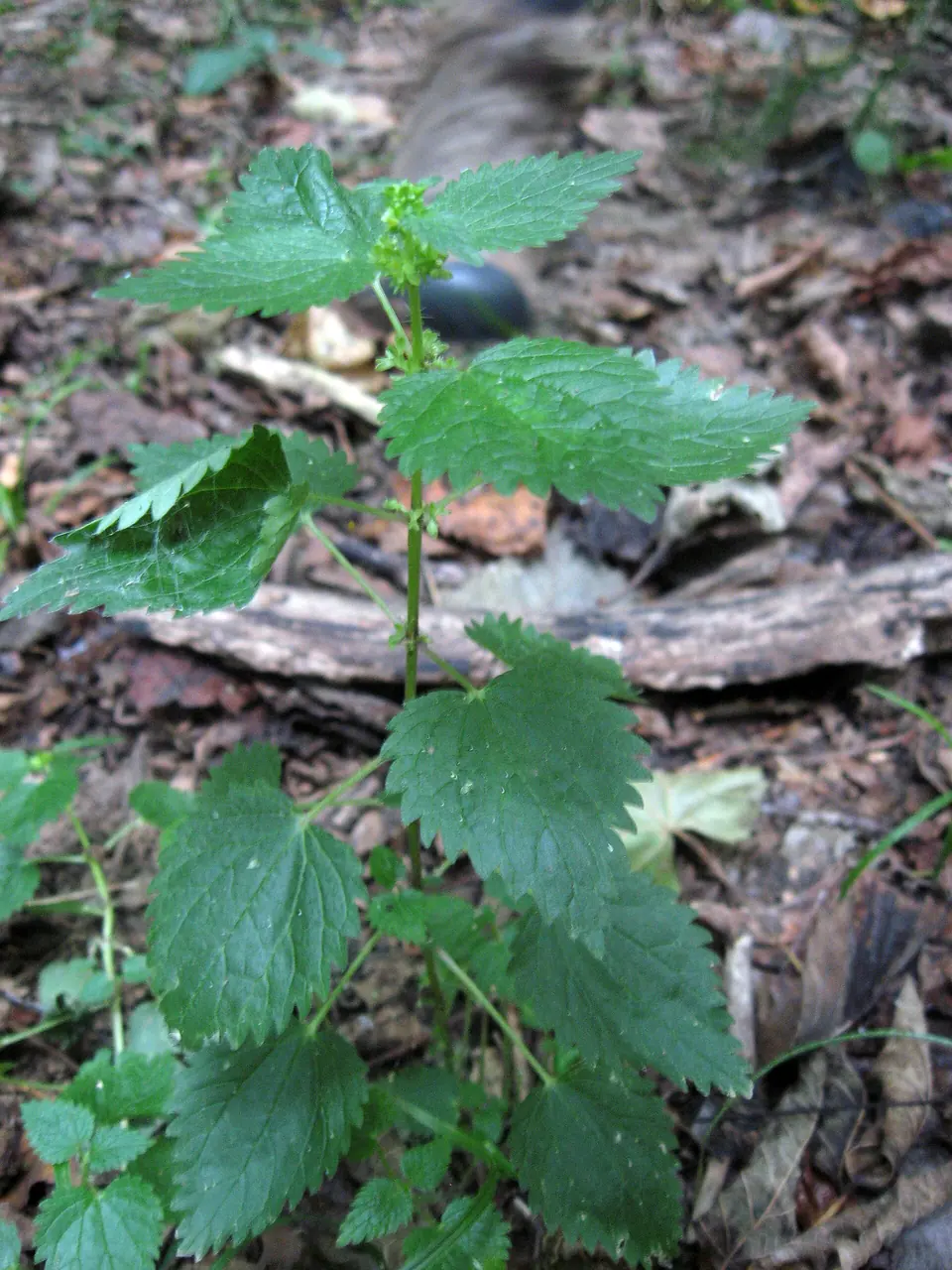


How to Grow and Care for Heartleaf Nettle
Urtica chamaedryoides
Written by Emilio Marruso · last checked
Toxic to: Livestock, Animals, People · Why
At a glance
Heartleaf nettle is a cheerful annual that grows from seed and is happy anywhere from full sun to partial shade. Its leaves and stems are edible once cooked, dried, wilted or refrigerated, which takes the sting out of its many tiny hairs. Just handle the fresh plant with care: its sting can last for 2 days.
- Sun
Full sun to partial shade
What the sources say (1)
Light: Full sun to partial shade
Light: Full sun (6 or more hours of direct sunlight a day) Partial Shade (Direct sunlight only part of the day, 2-6 hours)
— Urtica chamaedryoides (Dwarf Stinging Nettle, Heartleaf Nettle, Heart-leaf Stinging Nettle) | North Carolina Extension Gardener Plant Toolbox [1] - Harvest
Eat leaves and stems only cooked, dried, wilted or refrigerated: that takes away the sting
- Watch out
Its hairs sting and irritate the skin; the sting can last 2 days
- Propagation
An annual that grows from seed
What the sources say (2)
Propagation: Seed
Life Cycle: Annual Recommended Propagation Strategy: Seed Country Or Region Of Origin: Central and Southeastern U.S.A. to Guatemala
— Urtica chamaedryoides (Dwarf Stinging Nettle, Heartleaf Nettle, Heart-leaf Stinging Nettle) | North Carolina Extension Gardener Plant Toolbox [1] Life cycle: annual
Heart-leaf Stinging Nettle is an edible annual with very many stinging trichomes or "hairs" along its leaves and stems that can lead to contact dermatitis and sting for 2 days.
— Urtica chamaedryoides (Dwarf Stinging Nettle, Heartleaf Nettle, Heart-leaf Stinging Nettle) | North Carolina Extension Gardener Plant Toolbox [1] - Safety
Harmful to people, pets and livestock; its stinging hairs can cause breathing problems
Overview
Heartleaf nettle is an annual with very many stinging hairs that can cause contact dermatitis. [1] It is described as a native Florida landscape weed that has only recently become problematic there. [2] Leaves and stems are edible once cooked, dried, wilted, or refrigerated. [1]
This record is incomplete: the sources we read do not cover every field yet.
Not yet covered by our sources: Hardiness, coldest zone, Hardiness, warmest zone
Heartleaf Nettle care
How much light Heartleaf Nettle needs
Full sun to partial shade
What the sources say (1)
Light:
Full sun (6 or more hours of direct sunlight a day)
Partial Shade (Direct sunlight only part of the day, 2-6 hours)How much cold Heartleaf Nettle can take
Hardiness, coldest zone
Not stated in the sources we read.
Hardiness, warmest zone
Not stated in the sources we read.
How to propagate Heartleaf Nettle
Seed
What the sources say (1)
Life Cycle:
Annual
Recommended Propagation Strategy:
Seed
Country Or Region Of Origin:
Central and Southeastern U.S.A. to GuatemalaHow to grow Heartleaf Nettle
The plant
Life cycle
annual
What the sources say (1)
Heart-leaf Stinging Nettle is an edible annual with very many stinging trichomes or "hairs" along its leaves and stems that can lead to contact dermatitis and sting for 2 days.Family
Urticaceae
What the sources say (1)
Genus: Urtica Species: chamaedryoides Family: Urticaceae Uses (Ethnobotany): The fiber from the stems has been used to make clothing.Heartleaf Nettle pests and problems
Stinging hairs
Symptom: Contact dermatitis; the sting can last for 2 days
What the sources say (1)
Heart-leaf Stinging Nettle is an edible annual with very many stinging trichomes or "hairs" along its leaves and stems that can lead to contact dermatitis and sting for 2 days.
— Urtica chamaedryoides (Dwarf Stinging Nettle, Heartleaf Nettle, Heart-leaf Stinging Nettle) | North Carolina Extension Gardener Plant Toolbox [1]
Remedies
Each remedy shows what official sources say about it; traditional remedies without an official source are marked as such. Harmful ones are listed so you know to avoid them.
First aid
First aid: not a substitute for a doctor
nettle sting
wash with soap and water Official source, not independently tested
See a doctor if the pain from a stinging nettle sting doesn't improve after 2 hours.
— healthdirect.gov.au [3] How: Wash the affected area with soap and water. This helps to treat the pain and remove the nettle hairs. Don't scratch or rub the area, even if it's itchy.
Wash the affected area with soap and water. This helps to treat the pain and remove the nettle hairs. Don't scratch or rub the area, even if it's itchy.
— healthdirect.gov.au [3] damp cloth or ice pack Official source, not independently tested
See a doctor if the pain from a stinging nettle sting doesn't improve after 2 hours.
— healthdirect.gov.au [3] How: Put a damp cloth or ice pack on the area.
Put a damp cloth or ice pack on the area.
— healthdirect.gov.au [3]
Getting rid of it
unwanted nettle
removing plants by hand Works
However, it is important to wear gloves to protect skin from the stinging hairs.
— ipm.ucanr.edu [4] How: Burning and stinging nettles can be controlled by removing plants by hand, wearing gloves to protect skin from the stinging hairs.
Burning and stinging nettles can be controlled by removing plants by hand. However, it is important to wear gloves to protect skin from the stinging hairs.
— ipm.ucanr.edu [4] What the evidence says Burning and stinging nettles can be controlled by removing plants by hand. However, it is important to wear gloves to protect skin from the stinging hairs.
— ipm.ucanr.edu [4]
Is Heartleaf Nettle toxic to pets?
Reported by the source, quoted verbatim. This is not medical or veterinary advice: if a person or an animal may have eaten this plant, contact a poison control centre or a veterinarian.
Edibility
Reported by the source, quoted verbatim. Do not eat a plant on the basis of this page alone: identification mistakes can be dangerous.
Leaves and stems are edible once cooked, dried, wilted, or refrigerated as that seems to take out the "sting" from the prolific hairs.
[1]
Similar plants
- Roman nettle Urtica pilulifera
- Stinging Nettle Urtica dioica
- Urtica membranacea Urtica membranacea
- Dwarf nettle Urtica urens
- Creeping Charlie Pilea nummulariifolia
- False Nettle Boehmeria cylindrica
- Mind-Your-Own-Business Soleirolia soleirolii
- Wood Nettle Laportea canadensis
Sources
Every value above is quoted from these documents. Links lead to the original publisher.
- Urtica chamaedryoides (Dwarf Stinging Nettle, Heartleaf Nettle, Heart-leaf Stinging Nettle) | North Carolina Extension Gardener Plant Toolbox · plants.ces.ncsu.edu, consulted
- Urtica chamaedryoides - MREC - UF/IFAS - University of Florida, Institute of Food and Agricultural Sciences - UF/IFAS · mrec.ifas.ufl.edu, consulted
- healthdirect.gov.au · healthdirect.gov.au
- ipm.ucanr.edu · ipm.ucanr.edu
Written by Emilio Marruso · last checked