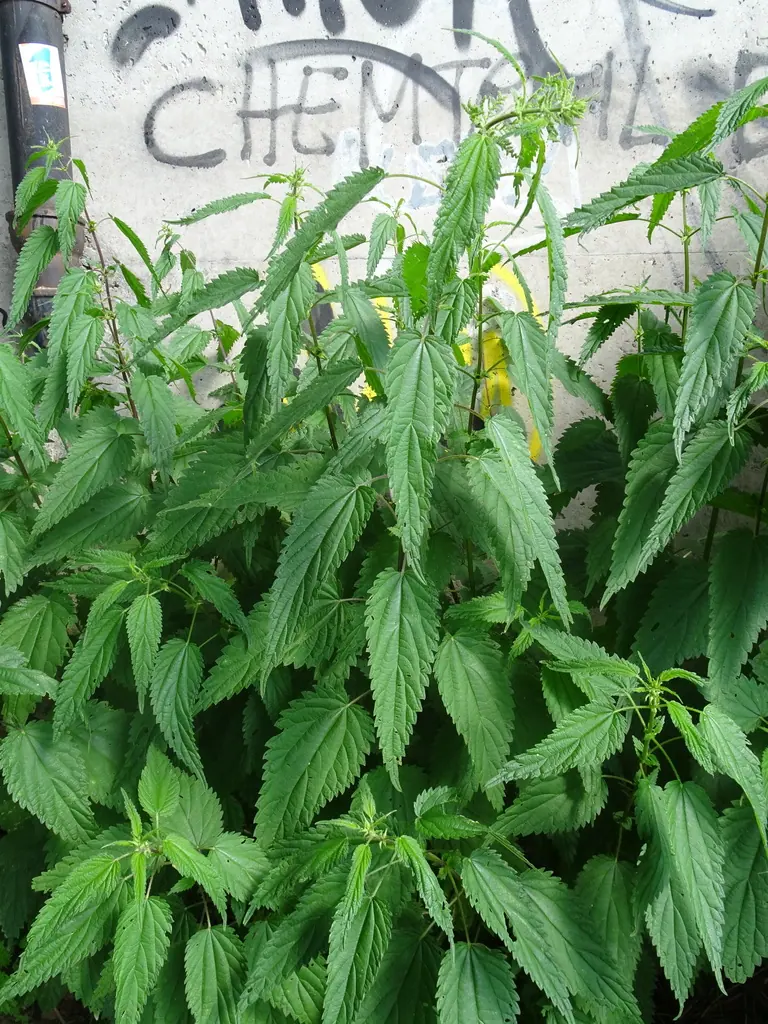
How to Grow and Care for Stinging Nettle
Urtica dioica
Written by Emilio Marruso · last checked
Toxic to: People · Why
At a glance
Stinging nettle is a perennial that grows happily in full sun, partial shade or dappled light, as long as the soil stays moist. Its young shoots make a real vegetable: boil them for five minutes and the sting disappears, ready to serve or add to soups. Just wear gloves when you handle it, and keep it in check, because it spreads underground.
- Sun
Full sun, partial shade or dappled light
What the sources say (3)
Light: Full sun, partial shade or dappled sunlight
Full sun (6 or more hours of direct sunlight a day)
— Urtica dioica (Common Nettle, Stinging Nettle) | North Carolina Extension Gardener Plant Toolbox [1] Partial Shade (Direct sunlight only part of the day, 2-6 hours)
— Urtica dioica (Common Nettle, Stinging Nettle) | North Carolina Extension Gardener Plant Toolbox [1] Dappled Sunlight (Shade through upper canopy all day)
— Urtica dioica (Common Nettle, Stinging Nettle) | North Carolina Extension Gardener Plant Toolbox [1] - Water
Likes moist soil; does poorly in dry spots
What the sources say (1)
Watering: Prefers moist soil; does not do well in areas of drought
Stinging nettle generally grows on deep, rich, moist soil and doesn't do well in areas of drought.
— Urtica dioica (Common Nettle, Stinging Nettle) | North Carolina Extension Gardener Plant Toolbox [1] - Cold
Survives winters down to −30 °F (−34.4 °C)
Very hardy · USDA 4a · RHS H7 · Z4
What the sources say (2)
Hardiness, coldest zone: 4a [winter low −34.4 to −31.7 °C (−30 to −25 °F)]
4a, 4b, 5a, 6a, 6b, 7a, 7b, 8a, 8b, 9a, 9b, 10a, 10b
— Urtica dioica (Common Nettle, Stinging Nettle) | North Carolina Extension Gardener Plant Toolbox [1] Hardiness, warmest zone: 10b [winter low 1.7 to 4.4 °C (35 to 40 °F)]
4a, 4b, 5a, 6a, 6b, 7a, 7b, 8a, 8b, 9a, 9b, 10a, 10b
— Urtica dioica (Common Nettle, Stinging Nettle) | North Carolina Extension Gardener Plant Toolbox [1] - Harvest
Boil young shoots for 5 minutes: the sting goes away; eat as a vegetable or in soups
- Watch out
Spreads by underground stems; pull them out too, or it grows back
- Size
3 to 9 ft tall and 1 to 3 ft wide
What the sources say (2)
Mature height: 91-274 cm (3-9 ft)
Height: 3 ft. 0 in. - 9 ft. 0 in.
— Urtica dioica (Common Nettle, Stinging Nettle) | North Carolina Extension Gardener Plant Toolbox [1] Mature width: 30-91 cm (1-3 ft)
Width: 1 ft. 0 in. - 3 ft. 0 in.
— Urtica dioica (Common Nettle, Stinging Nettle) | North Carolina Extension Gardener Plant Toolbox [1] - Propagation
Divide the plant or grow it from seed
What the sources say (1)
Propagation: Division, seed
Stinging Nettle reproduces by rhizomes and seeds and can form dense colonies covering and an acre or more.
— Urtica dioica (Common Nettle, Stinging Nettle) | North Carolina Extension Gardener Plant Toolbox [1] - Safety
Hairs on leaves and stems sting and burn the skin; always wear gloves
Overview
Stinging nettle is a perennial herb that grows on deep, rich, moist soil and spreads by rhizomes and seeds. [1] Hairs on the leaves and stems cause irritant skin reactions in everyone who touches them. [3] Young shoots are boiled and served as a vegetable, and cooking removes the sting. [1]
Stinging Nettle care
How to water Stinging Nettle
Prefers moist soil; does not do well in areas of drought
What the sources say (1)
Stinging nettle generally grows on deep, rich, moist soil and doesn't do well in areas of drought.How much light Stinging Nettle needs
Full sun, partial shade or dappled sunlight
What the sources say (3)
Full sun (6 or more hours of direct sunlight a day)Partial Shade (Direct sunlight only part of the day, 2-6 hours)Dappled Sunlight (Shade through upper canopy all day)How much cold Stinging Nettle can take
Hardiness, coldest zone
4a [winter low −34.4 to −31.7 °C (−30 to −25 °F)]
What the sources say (1)
4a, 4b, 5a, 6a, 6b, 7a, 7b, 8a, 8b, 9a, 9b, 10a, 10bHardiness, warmest zone
10b [winter low 1.7 to 4.4 °C (35 to 40 °F)]
What the sources say (1)
4a, 4b, 5a, 6a, 6b, 7a, 7b, 8a, 8b, 9a, 9b, 10a, 10bHow to propagate Stinging Nettle
Division, seed
What the sources say (1)
Stinging Nettle reproduces by rhizomes and seeds and can form dense colonies covering and an acre or more.How to grow Stinging Nettle
The plant
Life cycle
perennial
Family
Urticaceae
What the sources say (2)
Burning nettle ( Urtica urens ) and stinging nettle ( Urtica dioica ) belong to the family Urticaceae.Stinging nettle - Urtica dioica (Muhl . ) Wedd.
Family: Urticaceae (Nettle family)Mature height
91-274 cm (3-9 ft)
What the sources say (1)
Height: 3 ft. 0 in. - 9 ft. 0 in.Mature width
30-91 cm (1-3 ft)
What the sources say (1)
Width: 1 ft. 0 in. - 3 ft. 0 in.Stinging Nettle pests and problems
Skin irritation from stinging hairs
Symptom: Reddish patches with itching and burning after contact with leaves or stems; tingling can persist more than 12 hours.
What to do: Wear gloves when handling the plant.
What the sources say (2)
sensation may persist on the affected skin for more than 12 hours, even after visible symptoms have faded.
— Burning and Stinging Nettles / Home and Landscape / UC Statewide IPM Program (UC IPM) [3] Burning and stinging nettles can be controlled by removing plants by hand. However, it is important to wear gloves
— Burning and Stinging Nettles / Home and Landscape / UC Statewide IPM Program (UC IPM) [3] Spread by rhizomes
Symptom: Dense colonies form and the plant is considered a noxious weed in some areas.
What to do: Hand-remove plants including the rhizomes, otherwise they regrow; cultivating the soil may spread rhizomes.
What the sources say (2)
For stinging nettle, ensure that the underground portion called rhizomes
— Burning and Stinging Nettles / Home and Landscape / UC Statewide IPM Program (UC IPM) [3] It is considered a noxious weed in some areas.
— Urtica dioica (Common Nettle, Stinging Nettle) | North Carolina Extension Gardener Plant Toolbox [1]
Remedies
Each remedy shows what official sources say about it; traditional remedies without an official source are marked as such. Harmful ones are listed so you know to avoid them.
First aid
First aid: not a substitute for a doctor
contact with stinging nettle
wash hands and mouth after plant exposure Official source, not independently tested
If someone is experiencing side effects from exposure to Stinging Nettle, call the Poison Hotline right away to help guide you to proper medical care.
— calpoison.org [4] Call the Poison Hotline at 1-800-222-1222 —even if you are not sure, it will not be a waste of time
— calpoison.org [4] How: Remove any plant parts from the mouth or hands. Wash around the mouth and hands and give a few sips of water.
Wash around the mouth and hands and give a few sips of water
— calpoison.org [4]
Getting rid of it
unwanted stinging nettle
removing plants by hand Works
For stinging nettle, ensure that the underground portion called rhizomes are removed or the plants will regrow.
— Burning and Stinging Nettles / Home and Landscape / UC Statewide IPM Program (UC IPM) [3] How: Wear gloves to protect skin from the stinging hairs. Make sure the underground rhizomes are removed or the plants will regrow.
Burning and stinging nettles can be controlled by removing plants by hand. However, it is important to wear gloves to protect skin from the stinging hairs.
— Burning and Stinging Nettles / Home and Landscape / UC Statewide IPM Program (UC IPM) [3] What the evidence says Burning and stinging nettles can be controlled by removing plants by hand. However, it is important to wear gloves to protect skin from the stinging hairs.
— Burning and Stinging Nettles / Home and Landscape / UC Statewide IPM Program (UC IPM) [3] close mowing Partly works
How: Close mowing prevents the development of fruit.
Close mowing can prevent the development of fruit.
— Burning and Stinging Nettles / Home and Landscape / UC Statewide IPM Program (UC IPM) [3] What the evidence says Close mowing can prevent the development of fruit.
— Burning and Stinging Nettles / Home and Landscape / UC Statewide IPM Program (UC IPM) [3] repeated cultivation Works
Be aware that cultivating the soil may spread the rhizomes of stinging nettle, thus increasing the size of the population.
— Burning and Stinging Nettles / Home and Landscape / UC Statewide IPM Program (UC IPM) [3] How: Repeatedly cultivating the soil controls the weed; a single cultivation may spread the rhizomes.
Repeated cultivation works best as a control for this weed.
— Burning and Stinging Nettles / Home and Landscape / UC Statewide IPM Program (UC IPM) [3] What the evidence says Repeated cultivation works best as a control for this weed.
— Burning and Stinging Nettles / Home and Landscape / UC Statewide IPM Program (UC IPM) [3]
Is Stinging Nettle poisonous?
Reported by the source, quoted verbatim. This is not medical or veterinary advice: if a person or an animal may have eaten this plant, contact a poison control centre or a veterinarian.
Intense burning and itching sensation lasting a few minutes from hairs on leaves and stems.
[1]The stinging hairs are hollow and contain a toxin that is injected into the skin when brushed against.
[2]- Poisonous parts
Stems are four-angled and covered with hairs, some of which contain a toxin that causes skin irritation.
[2]- Toxic principle
The contents of the structures are not fully known, but have been found to contain active concentrations of the neurotransmitter chemicals acetylcholine and histamine.
[3]- Symptoms
When human skin comes into contact with a leaf or stem, it often rapidly develops reddish patches accompanied by itching and burning.
[3]
Edibility
Reported by the source, quoted verbatim. Do not eat a plant on the basis of this page alone: identification mistakes can be dangerous.
Similar plants
- Heartleaf Nettle Urtica chamaedryoides
- Roman nettle Urtica pilulifera
- Urtica membranacea Urtica membranacea
- Dwarf nettle Urtica urens
- Creeping Charlie Pilea nummulariifolia
- False Nettle Boehmeria cylindrica
- Mind-Your-Own-Business Soleirolia soleirolii
- Wood Nettle Laportea canadensis
Sources
Every value above is quoted from these documents. Links lead to the original publisher.
- Urtica dioica (Common Nettle, Stinging Nettle) | North Carolina Extension Gardener Plant Toolbox · plants.ces.ncsu.edu, consulted
- Stinging nettle | Integrated Crop Management · crops.extension.iastate.edu, consulted
- Burning and Stinging Nettles / Home and Landscape / UC Statewide IPM Program (UC IPM) · ipm.ucanr.edu, consulted
- calpoison.org · calpoison.org
Written by Emilio Marruso · last checked