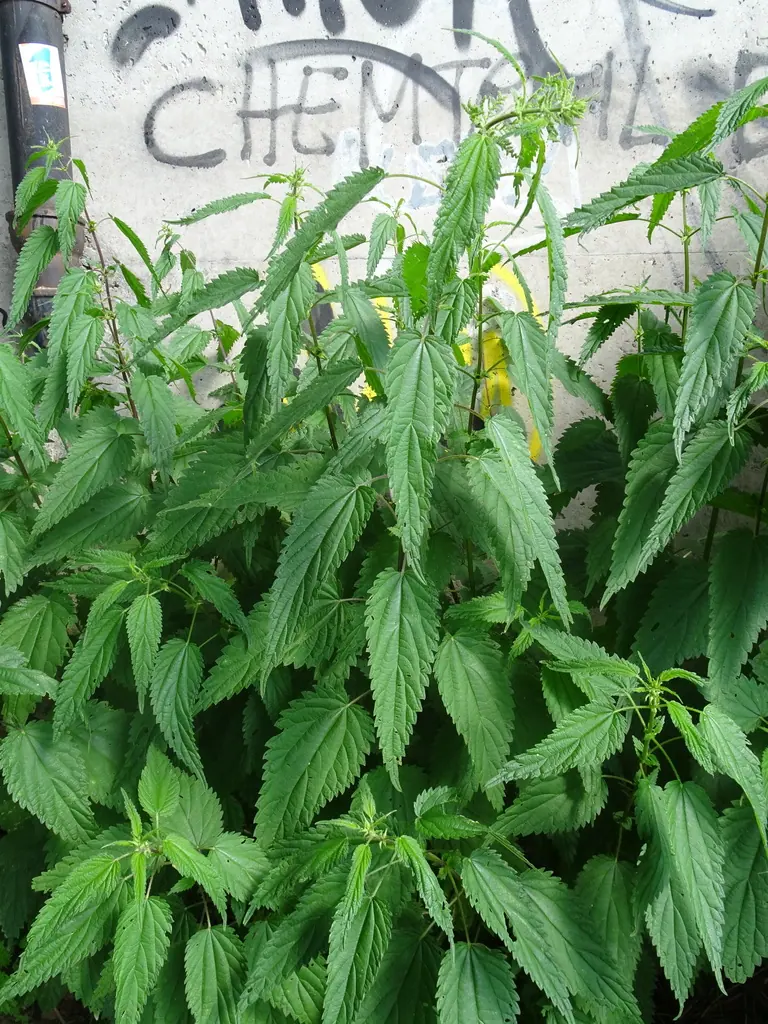
Cómo cultivar y cuidar Ortiga mayor
Urtica dioica
Escrito por Emilio Marruso · última revisión
Tóxica para: Personas · Por qué
De un vistazo
La ortiga es una perenne que crece a gusto a pleno sol, en semisombra o con luz filtrada, siempre que la tierra esté húmeda. Sus brotes tiernos son una verdura de verdad: hiérvelos cinco minutos y el escozor desaparece, listos para servir o añadir a sopas. Eso sí, ponte guantes para tocarla y mantenla a raya, porque se extiende bajo tierra.
- Sol
Pleno sol, semisombra o luz filtrada
Qué dicen las fuentes (3)
Luz: Pleno sol, semisombra o luz solar filtrada
Full sun (6 or more hours of direct sunlight a day)
— Urtica dioica (Common Nettle, Stinging Nettle) | North Carolina Extension Gardener Plant Toolbox [1] Partial Shade (Direct sunlight only part of the day, 2-6 hours)
— Urtica dioica (Common Nettle, Stinging Nettle) | North Carolina Extension Gardener Plant Toolbox [1] Dappled Sunlight (Shade through upper canopy all day)
— Urtica dioica (Common Nettle, Stinging Nettle) | North Carolina Extension Gardener Plant Toolbox [1] - Riego
Le gusta la tierra húmeda; no va bien en zonas secas
Qué dicen las fuentes (1)
Riego: Prefiere suelo húmedo; no le va bien en zonas de sequía
Stinging nettle generally grows on deep, rich, moist soil and doesn't do well in areas of drought.
— Urtica dioica (Common Nettle, Stinging Nettle) | North Carolina Extension Gardener Plant Toolbox [1] - Frío
Aguanta inviernos de hasta −34,4 °C (−30 °F)
Muy rústica · USDA 4a · RHS H7 · Z4
Qué dicen las fuentes (2)
Rusticidad, zona más fría: 4a [mínima invernal de −34,4 a −31,7 °C (de −30 a −25 °F)]
4a, 4b, 5a, 6a, 6b, 7a, 7b, 8a, 8b, 9a, 9b, 10a, 10b
— Urtica dioica (Common Nettle, Stinging Nettle) | North Carolina Extension Gardener Plant Toolbox [1] Rusticidad, zona más cálida: 10b [mínima invernal de 1,7 a 4,4 °C (de 35 a 40 °F)]
4a, 4b, 5a, 6a, 6b, 7a, 7b, 8a, 8b, 9a, 9b, 10a, 10b
— Urtica dioica (Common Nettle, Stinging Nettle) | North Carolina Extension Gardener Plant Toolbox [1] - Cosecha
Hierve los brotes tiernos 5 minutos: dejan de picar; cómelos como verdura o en sopas
- Atención
Se extiende por tallos subterráneos; arráncalos también o vuelve a brotar
- Tamaño
De 0,9 a 2,7 m de alto y de 30 a 90 cm de ancho
Qué dicen las fuentes (2)
Altura adulta: 91-274 cm (3-9 pies)
Height: 3 ft. 0 in. - 9 ft. 0 in.
— Urtica dioica (Common Nettle, Stinging Nettle) | North Carolina Extension Gardener Plant Toolbox [1] Anchura adulta: 30-91 cm (1-3 pies)
Width: 1 ft. 0 in. - 3 ft. 0 in.
— Urtica dioica (Common Nettle, Stinging Nettle) | North Carolina Extension Gardener Plant Toolbox [1] - Multiplicación
Divide la mata o siémbrala
Qué dicen las fuentes (1)
Propagación: División, semilla
Stinging Nettle reproduces by rhizomes and seeds and can form dense colonies covering and an acre or more.
— Urtica dioica (Common Nettle, Stinging Nettle) | North Carolina Extension Gardener Plant Toolbox [1] - Seguridad
Los pelos de hojas y tallos pican y queman la piel; usa siempre guantes
Resumen
La ortiga es una hierba perenne que crece en suelo profundo, rico y húmedo y se propaga por rizomas y semillas. [1] Los pelos en las hojas y los tallos causan reacciones irritantes en la piel de todas las personas que los tocan. [3] Los brotes jóvenes se hierven y se sirven como verdura, y la cocción elimina el escozor. [1]
Citado en inglés, como en la fuente.
Cuidados
Riego
Prefiere suelo húmedo; no le va bien en zonas de sequía
Qué dicen las fuentes (1)
Stinging nettle generally grows on deep, rich, moist soil and doesn't do well in areas of drought.Luz
Pleno sol, semisombra o luz solar filtrada
Qué dicen las fuentes (3)
Full sun (6 or more hours of direct sunlight a day)Partial Shade (Direct sunlight only part of the day, 2-6 hours)Dappled Sunlight (Shade through upper canopy all day)Clima y frío
Rusticidad, zona más fría
4a [mínima invernal de −34,4 a −31,7 °C (de −30 a −25 °F)]
Qué dicen las fuentes (1)
4a, 4b, 5a, 6a, 6b, 7a, 7b, 8a, 8b, 9a, 9b, 10a, 10bRusticidad, zona más cálida
10b [mínima invernal de 1,7 a 4,4 °C (de 35 a 40 °F)]
Qué dicen las fuentes (1)
4a, 4b, 5a, 6a, 6b, 7a, 7b, 8a, 8b, 9a, 9b, 10a, 10bPropagación
División, semilla
Qué dicen las fuentes (1)
Stinging Nettle reproduces by rhizomes and seeds and can form dense colonies covering and an acre or more.Cultivo
La planta
Ciclo de vida
perenne
Familia
Urticaceae
Qué dicen las fuentes (2)
Burning nettle ( Urtica urens ) and stinging nettle ( Urtica dioica ) belong to the family Urticaceae.Stinging nettle - Urtica dioica (Muhl . ) Wedd.
Family: Urticaceae (Nettle family)Altura adulta
91-274 cm (3-9 pies)
Qué dicen las fuentes (1)
Height: 3 ft. 0 in. - 9 ft. 0 in.Anchura adulta
30-91 cm (1-3 pies)
Qué dicen las fuentes (1)
Width: 1 ft. 0 in. - 3 ft. 0 in.Problemas
Irritación de la piel por pelos urticantes
Síntoma: Manchas rojizas con picazón y ardor después del contacto con hojas o tallos; el hormigueo puede durar más de 12 horas.
Qué hacer: Usa guantes al manipular la planta.
Qué dicen las fuentes (2)
sensation may persist on the affected skin for more than 12 hours, even after visible symptoms have faded.
— Burning and Stinging Nettles / Home and Landscape / UC Statewide IPM Program (UC IPM) [3] Burning and stinging nettles can be controlled by removing plants by hand. However, it is important to wear gloves
— Burning and Stinging Nettles / Home and Landscape / UC Statewide IPM Program (UC IPM) [3] Se propaga por rizomas
Síntoma: Se forman colonias densas y la planta se considera maleza nociva en algunas áreas.
Qué hacer: Retira las plantas a mano, incluyendo los rizomas; de lo contrario, vuelven a crecer; al cultivar el suelo, puedes propagar los rizomas.
Qué dicen las fuentes (2)
For stinging nettle, ensure that the underground portion called rhizomes
— Burning and Stinging Nettles / Home and Landscape / UC Statewide IPM Program (UC IPM) [3] It is considered a noxious weed in some areas.
— Urtica dioica (Common Nettle, Stinging Nettle) | North Carolina Extension Gardener Plant Toolbox [1]
Remedios
Cada remedio indica qué dicen las fuentes oficiales; los remedios tradicionales sin fuente oficial aparecen marcados. Los perjudiciales están para que sepas evitarlos.
Primeros auxilios
Primeros auxilios: no sustituyen al médico
contacto con ortiga
lávate las manos y la boca después de la exposición a la planta Fuente oficial, sin prueba independiente
If someone is experiencing side effects from exposure to Stinging Nettle, call the Poison Hotline right away to help guide you to proper medical care.
— calpoison.org [4] Call the Poison Hotline at 1-800-222-1222 —even if you are not sure, it will not be a waste of time
— calpoison.org [4] Cómo: Retira cualquier parte de la planta de la boca o las manos. Lava alrededor de la boca y las manos y da unos sorbos de agua.
Wash around the mouth and hands and give a few sips of water
— calpoison.org [4]
Cómo eliminarla
ortiga no deseada
quitando las plantas a mano Funciona
For stinging nettle, ensure that the underground portion called rhizomes are removed or the plants will regrow.
— Burning and Stinging Nettles / Home and Landscape / UC Statewide IPM Program (UC IPM) [3] Cómo: Usa guantes para proteger la piel de los pelos urticantes. Asegúrate de que se eliminen los rizomas subterráneos o las plantas volverán a crecer.
Burning and stinging nettles can be controlled by removing plants by hand. However, it is important to wear gloves to protect skin from the stinging hairs.
— Burning and Stinging Nettles / Home and Landscape / UC Statewide IPM Program (UC IPM) [3] Qué dicen las pruebas Burning and stinging nettles can be controlled by removing plants by hand. However, it is important to wear gloves to protect skin from the stinging hairs.
— Burning and Stinging Nettles / Home and Landscape / UC Statewide IPM Program (UC IPM) [3] siega al ras Funciona en parte
Cómo: La siega al ras evita el desarrollo del fruto.
Close mowing can prevent the development of fruit.
— Burning and Stinging Nettles / Home and Landscape / UC Statewide IPM Program (UC IPM) [3] Qué dicen las pruebas Close mowing can prevent the development of fruit.
— Burning and Stinging Nettles / Home and Landscape / UC Statewide IPM Program (UC IPM) [3] cultivo repetido Funciona
Be aware that cultivating the soil may spread the rhizomes of stinging nettle, thus increasing the size of the population.
— Burning and Stinging Nettles / Home and Landscape / UC Statewide IPM Program (UC IPM) [3] Cómo: El cultivo repetido del suelo controla la maleza; un solo cultivo puede propagar los rizomas.
Repeated cultivation works best as a control for this weed.
— Burning and Stinging Nettles / Home and Landscape / UC Statewide IPM Program (UC IPM) [3] Qué dicen las pruebas Repeated cultivation works best as a control for this weed.
— Burning and Stinging Nettles / Home and Landscape / UC Statewide IPM Program (UC IPM) [3]
Toxicidad
Según la fuente, citada textualmente. No es un consejo médico ni veterinario: si una persona o un animal pudo haber ingerido esta planta, contacta con un centro de toxicología o con un veterinario.
Intense burning and itching sensation lasting a few minutes from hairs on leaves and stems.
[1]The stinging hairs are hollow and contain a toxin that is injected into the skin when brushed against.
[2]- Partes venenosas
Stems are four-angled and covered with hairs, some of which contain a toxin that causes skin irritation.
[2]- Principio tóxico
The contents of the structures are not fully known, but have been found to contain active concentrations of the neurotransmitter chemicals acetylcholine and histamine.
[3]- Síntomas
When human skin comes into contact with a leaf or stem, it often rapidly develops reddish patches accompanied by itching and burning.
[3]
Comestibilidad
Según la fuente, citada textualmente. No comas una planta basándote solo en esta página: los errores de identificación pueden ser peligrosos.
Plantas similares
- Chichicastle Urtica chamaedryoides
- Ortiga romana Urtica pilulifera
- Ortiga membranosa Urtica membranacea
- Ortiga Urtica urens
- Creeping Charlie Pilea nummulariifolia
- False Nettle Boehmeria cylindrica
- Mind-Your-Own-Business Soleirolia soleirolii
- Wood Nettle Laportea canadensis
Fuentes
Cada valor anterior se cita de estos documentos. Los enlaces llevan al editor original.
- Urtica dioica (Common Nettle, Stinging Nettle) | North Carolina Extension Gardener Plant Toolbox · plants.ces.ncsu.edu, consultado
- Stinging nettle | Integrated Crop Management · crops.extension.iastate.edu, consultado
- Burning and Stinging Nettles / Home and Landscape / UC Statewide IPM Program (UC IPM) · ipm.ucanr.edu, consultado
- calpoison.org · calpoison.org
Escrito por Emilio Marruso · última revisión