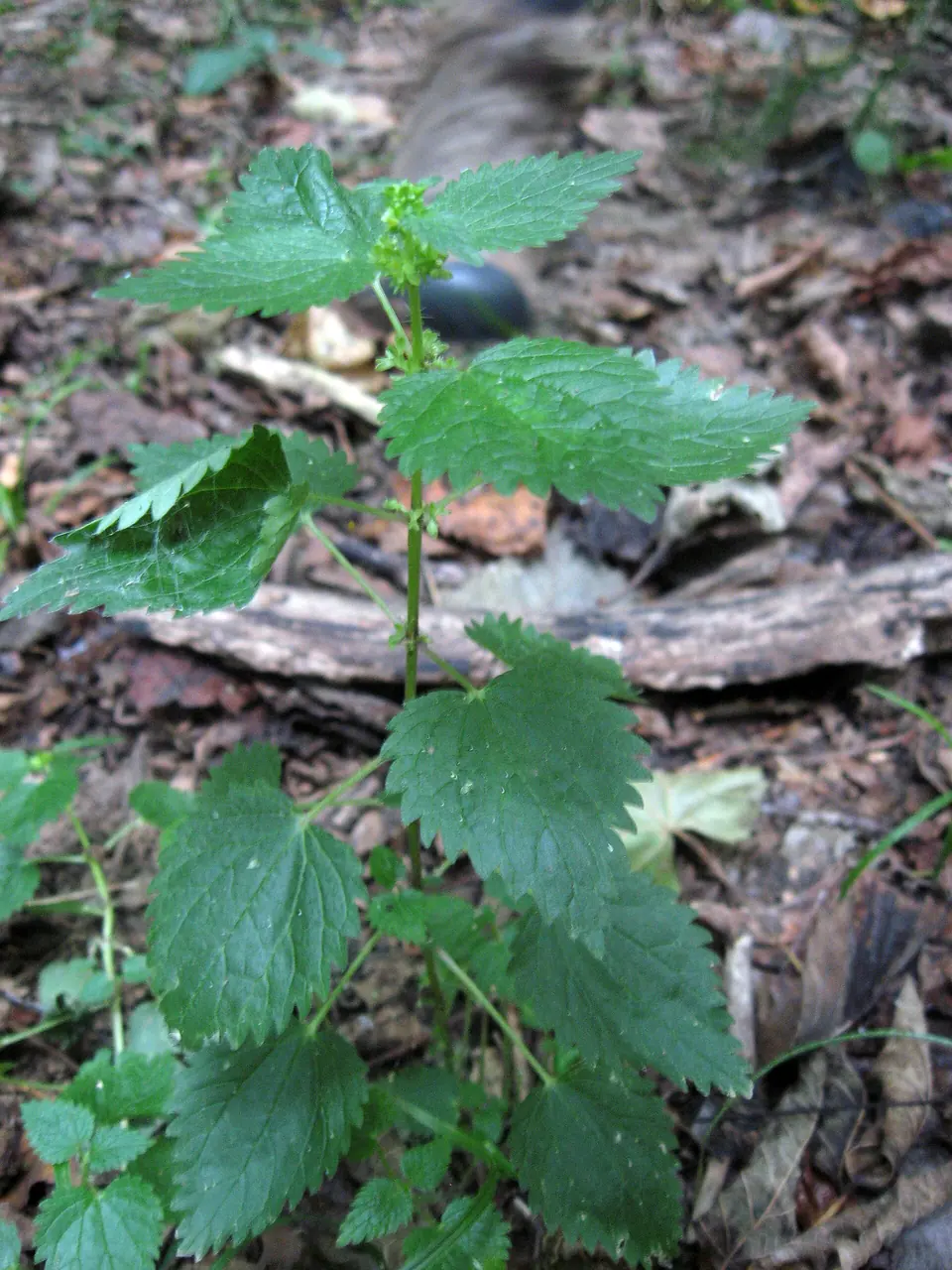


Cómo cultivar y cuidar Chichicastle
Urtica chamaedryoides
Escrito por Emilio Marruso · última revisión
Tóxica para: Ganado, Animales, Personas · Por qué
De un vistazo
Esta ortiga es una alegre planta anual que crece a partir de semilla y se adapta desde el sol pleno hasta la semisombra. Sus hojas y tallos son comestibles una vez cocinados, secos, marchitos o refrigerados, porque así pierden el picor de sus abundantes pelillos. Eso sí, manipula la planta fresca con cuidado: su picadura puede durar 2 días.
- Sol
Del sol pleno a la semisombra
Qué dicen las fuentes (1)
Luz: Pleno sol a semisombra
Light: Full sun (6 or more hours of direct sunlight a day) Partial Shade (Direct sunlight only part of the day, 2-6 hours)
— Urtica chamaedryoides (Dwarf Stinging Nettle, Heartleaf Nettle, Heart-leaf Stinging Nettle) | North Carolina Extension Gardener Plant Toolbox [1] - Cosecha
Come hojas y tallos solo cocinados, secos, marchitos o refrigerados: así pierden el picor
- Atención
Sus pelillos pican e irritan la piel; la picadura puede durar 2 días
- Multiplicación
Planta anual que se multiplica por semilla
Qué dicen las fuentes (2)
Propagación: Semilla
Life Cycle: Annual Recommended Propagation Strategy: Seed Country Or Region Of Origin: Central and Southeastern U.S.A. to Guatemala
— Urtica chamaedryoides (Dwarf Stinging Nettle, Heartleaf Nettle, Heart-leaf Stinging Nettle) | North Carolina Extension Gardener Plant Toolbox [1] Ciclo de vida: anual
Heart-leaf Stinging Nettle is an edible annual with very many stinging trichomes or "hairs" along its leaves and stems that can lead to contact dermatitis and sting for 2 days.
— Urtica chamaedryoides (Dwarf Stinging Nettle, Heartleaf Nettle, Heart-leaf Stinging Nettle) | North Carolina Extension Gardener Plant Toolbox [1] - Seguridad
Peligrosa para personas, mascotas y ganado; sus pelillos urticantes pueden causar problemas respiratorios
Resumen
La ortiga de hoja de corazón es una anual con muchos pelos urticantes que pueden causar dermatitis por contacto. [1] Se describe como una maleza nativa del paisaje de Florida que solo recientemente se ha vuelto problemática allí. [2] Las hojas y los tallos son comestibles una vez cocidos, secos, marchitos o refrigerados. [1]
Citado en inglés, como en la fuente.
Esta ficha está incompleta: las fuentes consultadas aún no cubren todos los campos.
Aún no cubierto por nuestras fuentes: Rusticidad, zona más fría, Rusticidad, zona más cálida
Cuidados
Luz
Pleno sol a semisombra
Qué dicen las fuentes (1)
Light:
Full sun (6 or more hours of direct sunlight a day)
Partial Shade (Direct sunlight only part of the day, 2-6 hours)Clima y frío
Rusticidad, zona más fría
No figura en las fuentes consultadas.
Rusticidad, zona más cálida
No figura en las fuentes consultadas.
Propagación
Semilla
Qué dicen las fuentes (1)
Life Cycle:
Annual
Recommended Propagation Strategy:
Seed
Country Or Region Of Origin:
Central and Southeastern U.S.A. to GuatemalaCultivo
La planta
Ciclo de vida
anual
Qué dicen las fuentes (1)
Heart-leaf Stinging Nettle is an edible annual with very many stinging trichomes or "hairs" along its leaves and stems that can lead to contact dermatitis and sting for 2 days.Familia
Urticaceae
Qué dicen las fuentes (1)
Genus: Urtica Species: chamaedryoides Family: Urticaceae Uses (Ethnobotany): The fiber from the stems has been used to make clothing.Problemas
Pelos urticantes
Síntoma: Dermatitis por contacto; la picadura puede durar 2 días
Qué dicen las fuentes (1)
Heart-leaf Stinging Nettle is an edible annual with very many stinging trichomes or "hairs" along its leaves and stems that can lead to contact dermatitis and sting for 2 days.
— Urtica chamaedryoides (Dwarf Stinging Nettle, Heartleaf Nettle, Heart-leaf Stinging Nettle) | North Carolina Extension Gardener Plant Toolbox [1]
Remedios
Cada remedio indica qué dicen las fuentes oficiales; los remedios tradicionales sin fuente oficial aparecen marcados. Los perjudiciales están para que sepas evitarlos.
Primeros auxilios
Primeros auxilios: no sustituyen al médico
picadura de ortiga
Lava con agua y jabón Fuente oficial, sin prueba independiente
See a doctor if the pain from a stinging nettle sting doesn't improve after 2 hours.
— healthdirect.gov.au [3] Cómo: Lava la zona afectada con agua y jabón. Esto ayuda a tratar el dolor y eliminar los pelos de la ortiga. No te rasques ni te frotes la zona, aunque te pique.
Wash the affected area with soap and water. This helps to treat the pain and remove the nettle hairs. Don't scratch or rub the area, even if it's itchy.
— healthdirect.gov.au [3] paño húmedo o bolsa de hielo Fuente oficial, sin prueba independiente
See a doctor if the pain from a stinging nettle sting doesn't improve after 2 hours.
— healthdirect.gov.au [3] Cómo: Coloca un paño húmedo o una bolsa de hielo sobre la zona.
Put a damp cloth or ice pack on the area.
— healthdirect.gov.au [3]
Cómo eliminarla
ortiga no deseada
quitando las plantas a mano Funciona
However, it is important to wear gloves to protect skin from the stinging hairs.
— ipm.ucanr.edu [4] Cómo: Las ortigas quemantes y urticantes se pueden controlar quitando las plantas a mano, usando guantes para proteger la piel de los pelos urticantes.
Burning and stinging nettles can be controlled by removing plants by hand. However, it is important to wear gloves to protect skin from the stinging hairs.
— ipm.ucanr.edu [4] Qué dicen las pruebas Burning and stinging nettles can be controlled by removing plants by hand. However, it is important to wear gloves to protect skin from the stinging hairs.
— ipm.ucanr.edu [4]
Venenosa para los animales
Según la fuente, citada textualmente. No es un consejo médico ni veterinario: si una persona o un animal pudo haber ingerido esta planta, contacta con un centro de toxicología o con un veterinario.
Comestibilidad
Según la fuente, citada textualmente. No comas una planta basándote solo en esta página: los errores de identificación pueden ser peligrosos.
Leaves and stems are edible once cooked, dried, wilted, or refrigerated as that seems to take out the "sting" from the prolific hairs.
[1]
Plantas similares
- Ortiga romana Urtica pilulifera
- Ortiga mayor Urtica dioica
- Ortiga membranosa Urtica membranacea
- Ortiga Urtica urens
- Creeping Charlie Pilea nummulariifolia
- False Nettle Boehmeria cylindrica
- Mind-Your-Own-Business Soleirolia soleirolii
- Wood Nettle Laportea canadensis
Fuentes
Cada valor anterior se cita de estos documentos. Los enlaces llevan al editor original.
- Urtica chamaedryoides (Dwarf Stinging Nettle, Heartleaf Nettle, Heart-leaf Stinging Nettle) | North Carolina Extension Gardener Plant Toolbox · plants.ces.ncsu.edu, consultado
- Urtica chamaedryoides - MREC - UF/IFAS - University of Florida, Institute of Food and Agricultural Sciences - UF/IFAS · mrec.ifas.ufl.edu, consultado
- healthdirect.gov.au · healthdirect.gov.au
- ipm.ucanr.edu · ipm.ucanr.edu
Escrito por Emilio Marruso · última revisión