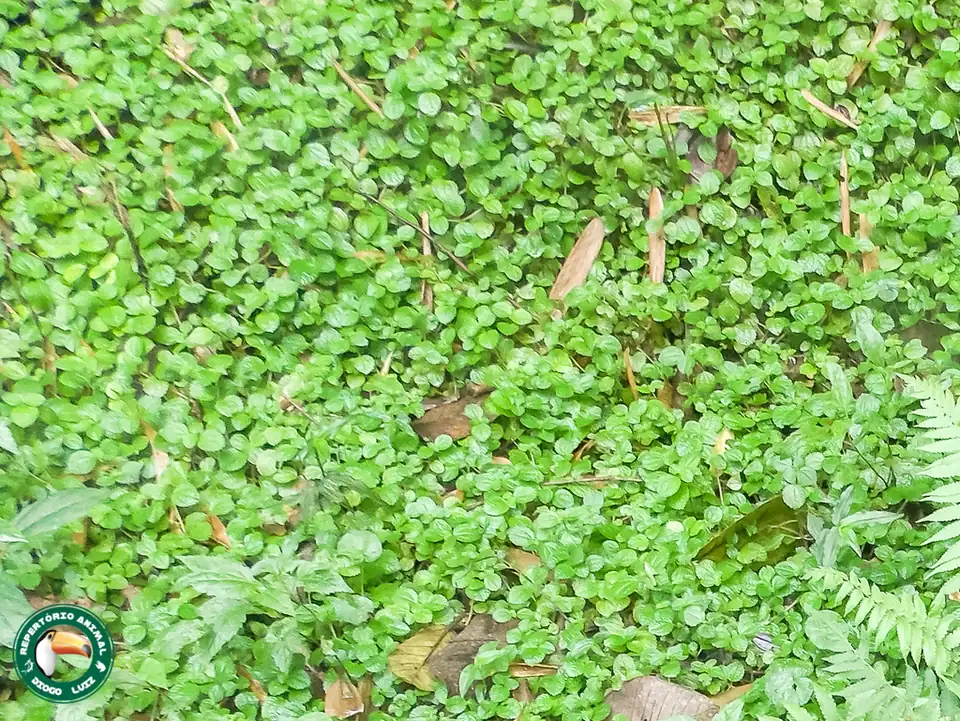
Cómo cultivar y cuidar Creeping Charlie
Pilea nummulariifolia
Escrito por Emilio Marruso · última revisión
No tóxica para gatos y perros, según las fuentes · Fuentes
De un vistazo
Esta pilea es una planta de interior encantadora que vive feliz en semisombra y crece bien en maceta. Riégala cuando los primeros 2,5 cm de tierra estén secos, abónala cada mes de primavera a otoño y hasta puedes usar sus hojas en infusiones. Y lo mejor: no es tóxica para gatos, perros ni caballos.
- Sol
Semisombra
Qué dicen las fuentes (1)
Luz: Semisombra (sombra parcial)
This plant does best in semi-shade and consistently moist fertile well-drained soils in a humid environment.
— Pilea nummulariifolia (Creeping Charlie, Creeping Pilea, Swedish Ivy (Plectranthus)) | North Carolina Extension Gardener Plant Toolbox [1] - Riego
Riega cuando los primeros 2,5 cm de tierra estén secos; el exceso de agua pudre las raíces
Qué dicen las fuentes (2)
Riego: Riega cuando la pulgada superior (1 pulgada [2,5 cm]) esté seca (como planta de interior).
As a houseplant, provide water when the top 1 inch is dry
— Pilea nummulariifolia (Creeping Charlie, Creeping Pilea, Swedish Ivy (Plectranthus)) | North Carolina Extension Gardener Plant Toolbox [1] Notas sobre el riego: No tolera la sequía, pero puede sufrir por exceso de riego, lo que causa pudrición de raíces
Intolerant of drought but can also be overwatered causing root rot.
— Pilea nummulariifolia (Creeping Charlie, Creeping Pilea, Swedish Ivy (Plectranthus)) | North Carolina Extension Gardener Plant Toolbox [1] - Frío
Aguanta inviernos de hasta −1,1 °C (30 °F)
Semirrústica: inviernos suaves o invernadero sin calefacción · USDA 10a · RHS H3 · Z10
Qué dicen las fuentes (2)
Rusticidad, zona más fría: 10a [mínima invernal de −1,1 a 1,7 °C (de 30 a 35 °F)]
USDA Plant Hardiness Zone: 10a, 11a, 11b - Fruit: Fruit Description: Small green achenes
— Pilea nummulariifolia (Creeping Charlie, Creeping Pilea, Swedish Ivy (Plectranthus)) | North Carolina Extension Gardener Plant Toolbox [1] Rusticidad, zona más cálida: 11b [mínima invernal de 7,2 a 10 °C (de 45 a 50 °F)]
USDA Plant Hardiness Zone: 10a, 11a, 11b - Fruit: Fruit Description: Small green achenes
— Pilea nummulariifolia (Creeping Charlie, Creeping Pilea, Swedish Ivy (Plectranthus)) | North Carolina Extension Gardener Plant Toolbox [1] - Suelo
Suelo con pH 6,0–8,0
Qué dicen las fuentes (2)
pH del suelo, mínimo: 6.0
Soil Texture: Loam (Silt) Sand Soil pH: Neutral (6.0-8.0)
— Pilea nummulariifolia (Creeping Charlie, Creeping Pilea, Swedish Ivy (Plectranthus)) | North Carolina Extension Gardener Plant Toolbox [1] pH del suelo, máximo: 8.0
Soil Texture: Loam (Silt) Sand Soil pH: Neutral (6.0-8.0)
— Pilea nummulariifolia (Creeping Charlie, Creeping Pilea, Swedish Ivy (Plectranthus)) | North Carolina Extension Gardener Plant Toolbox [1] - Abonado
Abona una vez al mes de primavera a otoño
Qué dicen las fuentes (2)
Cuándo: De primavera a otoño (como planta de interior)
As a houseplant, provide water when the top 1 inch is dry and fertilize monthly from spring to fall.
— Pilea nummulariifolia (Creeping Charlie, Creeping Pilea, Swedish Ivy (Plectranthus)) | North Carolina Extension Gardener Plant Toolbox [1] Frecuencia: Mensual (como planta de interior)
As a houseplant, provide water when the top 1 inch is dry and fertilize monthly from spring to fall.
— Pilea nummulariifolia (Creeping Charlie, Creeping Pilea, Swedish Ivy (Plectranthus)) | North Carolina Extension Gardener Plant Toolbox [1] - Cosecha
Las hojas son comestibles y sirven para infusiones
- Plagas
Vigila la cochinilla algodonosa, la podredumbre de raíz y la mancha bacteriana de la hoja
Qué dicen las fuentes (2)
Plagas: cochinillas harinosas
Intolerant of drought but can also be overwatered causing root rot. Also susceptible to bacterial leaf spot and mealy bugs
— Pilea nummulariifolia (Creeping Charlie, Creeping Pilea, Swedish Ivy (Plectranthus)) | North Carolina Extension Gardener Plant Toolbox [1] Enfermedades: pudrición de raíz, mancha bacteriana en las hojas
Intolerant of drought but can also be overwatered causing root rot. Also susceptible to bacterial leaf spot and mealy bugs
— Pilea nummulariifolia (Creeping Charlie, Creeping Pilea, Swedish Ivy (Plectranthus)) | North Carolina Extension Gardener Plant Toolbox [1] - Multiplicación
Se multiplica por división o por esquejes de tallo
Qué dicen las fuentes (1)
Propagación: División, esqueje de tallo
Recommended Propagation Strategy: Division Stem Cutting Country Or Region
— Pilea nummulariifolia (Creeping Charlie, Creeping Pilea, Swedish Ivy (Plectranthus)) | North Carolina Extension Gardener Plant Toolbox [1] - Maceta
Crece bien en maceta y en interior
Qué dicen las fuentes (2)
En maceta: Sí
Consider Creeping Charlie for a hanging basket or as a trailing plant in a mixed container for your home.
— Pilea nummulariifolia (Creeping Charlie, Creeping Pilea, Swedish Ivy (Plectranthus)) | North Carolina Extension Gardener Plant Toolbox [1] En interior: Sí
It is often grown indoors as a houseplant in a hanging basket or container.
— Pilea nummulariifolia (Creeping Charlie, Creeping Pilea, Swedish Ivy (Plectranthus)) | North Carolina Extension Gardener Plant Toolbox [1] - Seguridad
No es tóxica para gatos, perros ni caballos
Resumen
La hiedra de Charlie es una herbácea perenne de bajo crecimiento y rastrera de la familia de las ortigas, a menudo cultivada en interiores como planta de casa. [1] Le va mejor en semisombra y en suelos fértiles, bien drenados y constantemente húmedos en un ambiente húmedo. [1] Se considera maleza cuando se planta al aire libre. [1]
Citado en inglés, como en la fuente.
Cuidados
Las medidas entre corchetes son nuestra conversión al otro sistema de unidades; el texto citado no cambia.
Riego
Riego
Riega cuando la pulgada superior (1 pulgada [2,5 cm]) esté seca (como planta de interior).
Qué dicen las fuentes (1)
As a houseplant, provide water when the top 1 inch is dryNotas sobre el riego
No tolera la sequía, pero puede sufrir por exceso de riego, lo que causa pudrición de raíces
Qué dicen las fuentes (1)
Intolerant of drought but can also be overwatered causing root rot.Luz
Semisombra (sombra parcial)
Qué dicen las fuentes (1)
This plant does best in semi-shade and consistently moist fertile well-drained soils in a humid environment.Clima y frío
Rusticidad, zona más fría
10a [mínima invernal de −1,1 a 1,7 °C (de 30 a 35 °F)]
Qué dicen las fuentes (1)
USDA Plant Hardiness Zone:
10a, 11a, 11b
-
Fruit:
Fruit Description:
Small green achenesRusticidad, zona más cálida
11b [mínima invernal de 7,2 a 10 °C (de 45 a 50 °F)]
Qué dicen las fuentes (1)
USDA Plant Hardiness Zone:
10a, 11a, 11b
-
Fruit:
Fruit Description:
Small green achenesSuelo
pH del suelo, mínimo
6.0
Qué dicen las fuentes (1)
Soil Texture:
Loam (Silt)
Sand
Soil pH:
Neutral (6.0-8.0)pH del suelo, máximo
8.0
Qué dicen las fuentes (1)
Soil Texture:
Loam (Silt)
Sand
Soil pH:
Neutral (6.0-8.0)Dónde cultivarla
En interior
Sí
Qué dicen las fuentes (1)
It is often grown indoors as a houseplant in a hanging basket or container.En maceta
Sí
Qué dicen las fuentes (1)
Consider Creeping Charlie for a hanging basket or as a trailing plant in a mixed container for your home.Propagación
División, esqueje de tallo
Qué dicen las fuentes (1)
Recommended Propagation Strategy:
Division
Stem Cutting
Country Or RegionCultivo
La planta
Ciclo de vida
perenne
Qué dicen las fuentes (1)
Creeping Charlie is a herbaceous perennial with a low-growing, creeping, or groundcover habit that is a member of the Urticaceae or nettle family.Familia
Urticaceae
Qué dicen las fuentes (1)
Creeping Charlie is a herbaceous perennial with a low-growing, creeping, or groundcover habit that is a member of the Urticaceae or nettle family.Plagas y enfermedades
Plagas
cochinillas harinosas
Qué dicen las fuentes (1)
Intolerant of drought but can also be overwatered causing root rot. Also susceptible to bacterial leaf spot and mealy bugsEnfermedades
pudrición de raíz, mancha bacteriana en las hojas
Qué dicen las fuentes (1)
Intolerant of drought but can also be overwatered causing root rot. Also susceptible to bacterial leaf spot and mealy bugsAbonado
Cuándo
De primavera a otoño (como planta de interior)
Qué dicen las fuentes (1)
As a houseplant, provide water when the top 1 inch is dry and fertilize monthly from spring to fall.Frecuencia
Mensual (como planta de interior)
Qué dicen las fuentes (1)
As a houseplant, provide water when the top 1 inch is dry and fertilize monthly from spring to fall.Problemas
Pudrición de raíces y manchas en las hojas
Síntoma: El exceso de riego puede causar pudrición de raíces; también es susceptible a la mancha bacteriana de las hojas y a las cochinillas harinosas.
Qué hacer: Riega cuando la parte superior de 1 pulgada esté seca.
Qué dicen las fuentes (2)
Intolerant of drought but can also be overwatered causing root rot. Also susceptible to bacterial leaf spot and mealy bugs
— Pilea nummulariifolia (Creeping Charlie, Creeping Pilea, Swedish Ivy (Plectranthus)) | North Carolina Extension Gardener Plant Toolbox [1] As a houseplant, provide water when the top 1 inch is dry
— Pilea nummulariifolia (Creeping Charlie, Creeping Pilea, Swedish Ivy (Plectranthus)) | North Carolina Extension Gardener Plant Toolbox [1]
Remedios
Cada remedio indica qué dicen las fuentes oficiales; los remedios tradicionales sin fuente oficial aparecen marcados. Los perjudiciales están para que sepas evitarlos.
Cuidar la planta
cochinillas harinosas
alcohol isopropílico en un hisopo de algodón Funciona
Make sure to test the soap and alcohol mixtures on a small portion of the plant prior to full application because some plants may be sensitive to soap or alcohol.
— planttalk.colostate.edu [4] Cómo: Toca los insectos con un hisopo de algodón empapado en alcohol isopropílico; repite cada semana hasta que los bichos desaparezcan.
For smaller infestations, dab the insects with a cotton swab dipped in rubbing alcohol. Repeat this procedure every week until the bugs are gone.
— planttalk.colostate.edu [4] Qué dicen las pruebas For smaller infestations, dab the insects with a cotton swab dipped in rubbing alcohol. Repeat this procedure every week until the bugs are gone.
— planttalk.colostate.edu [4] rocío de alcohol isopropílico al 10 por ciento Funciona
Make sure to test the soap and alcohol mixtures on a small portion of the plant prior to full application because some plants may be sensitive to soap or alcohol.
— planttalk.colostate.edu [4] Cómo: Rocía una mezcla de 10 por ciento de alcohol isopropílico y 90 por ciento de agua directamente sobre los insectos.
For heavy infestations, spray a mixture of 10 percent rubbing alcohol and 90 percent water directly onto the insects.
— planttalk.colostate.edu [4] Qué dicen las pruebas For heavy infestations, spray a mixture of 10 percent rubbing alcohol and 90 percent water directly onto the insects.
— planttalk.colostate.edu [4] jabón insecticida Funciona
Make sure to test the soap and alcohol mixtures on a small portion of the plant prior to full application because some plants may be sensitive to soap or alcohol.
— planttalk.colostate.edu [4] Cómo: Rocía con jabón insecticida.
These pests may also be controlled with insecticidal soap.
— planttalk.colostate.edu [4] Qué dicen las pruebas These pests may also be controlled with insecticidal soap.
— planttalk.colostate.edu [4]
ácaros araña
Lava con un rocío de agua Funciona
If you can delay, apply the insecticidal soap to a small portion of the plant to check for phytotoxicity (some plants are damaged by the soap).
— swyg.nmsu.edu [5] Cómo: Coloca la planta de interior en la bañera o ducha y rocía con una niebla fuerte pero fina de agua, repitiendo con frecuencia.
It is easier to just put the houseplant in the bathtub or shower and spray with a strong, but fine mist of water.
— swyg.nmsu.edu [5] Qué dicen las pruebas Washing the spider mites from the plant frequently will reduce their numbers and their damage.
— swyg.nmsu.edu [5] Usa jabón insecticida en agua Funciona en parte
If you can delay, apply the insecticidal soap to a small portion of the plant to check for phytotoxicity (some plants are damaged by the soap).
— swyg.nmsu.edu [5] Cómo: Añade jabón insecticida al rocío de agua; repite una o dos veces por semana durante dos o tres semanas.
If you wish, you can add insecticidal soap to the water to enhance its effect.
— swyg.nmsu.edu [5] Qué dicen las pruebas The insecticidal soap will kill some of the mites and assist in washing them from the plant.
— swyg.nmsu.edu [5]
Toxicidad
Según la fuente, citada textualmente. No es un consejo médico ni veterinario: si una persona o un animal pudo haber ingerido esta planta, contacta con un centro de toxicología o con un veterinario.
#non-toxic for cats #non-toxic for horses #non-toxic for dogs #tropical feel #partial shade tolerant
[1]La fuente señala el riesgo para este animal pero no explica por qué.
Comestibilidad
Según la fuente, citada textualmente. No comas una planta basándote solo en esta página: los errores de identificación pueden ser peligrosos.
Uses (Ethnobotany): The leaves are edible and can be used in teas.
[1]
Valores orientativos
Valores de una fuente secundaria, no comprobados palabra por palabra como el resto de esta página. Úselos como punto de partida.
- Horas de sol
- 2-3 horasValor orientativo, adáptalo a tu clima · Fuente secundaria
- Suelo
- Bien drenadoValor orientativo, adáptalo a tu clima · Fuente secundaria
- Nivel de cuidado
- ModeradoValor orientativo, adáptalo a tu clima · Fuente secundaria
- Crecimiento
- BajoValor orientativo, adáptalo a tu clima · Fuente secundaria
- Poda
- marzo, abril, mayo, junio, julio, marzo, abril, mayo, junio, julio, agostoValor orientativo, adáptalo a tu clima · Fuente secundaria
Plantas similares
- Planta de aluminio Pilea cadierei
- Artillery Plant Pilea microphylla
- Planta china del dinero Pilea peperomioides
- Planta de la amistad Pilea involucrata
- Clearweed Pilea pumila
- Depressed clearweed Pilea depressa
- False Nettle Boehmeria cylindrica
- Chichicastle Urtica chamaedryoides
Fuentes
Cada valor anterior se cita de estos documentos. Los enlaces llevan al editor original.
- Pilea nummulariifolia (Creeping Charlie, Creeping Pilea, Swedish Ivy (Plectranthus)) | North Carolina Extension Gardener Plant Toolbox · plants.ces.ncsu.edu, consultado
- Pilea as a Houseplant · extension.psu.edu, consultado
- Creeping Charlie - Pilea nummulariifolia | North Carolina Extension Gardener Plant Toolbox · plants.ces.ncsu.edu, consultado
- planttalk.colostate.edu · planttalk.colostate.edu
- swyg.nmsu.edu · swyg.nmsu.edu
Escrito por Emilio Marruso · última revisión