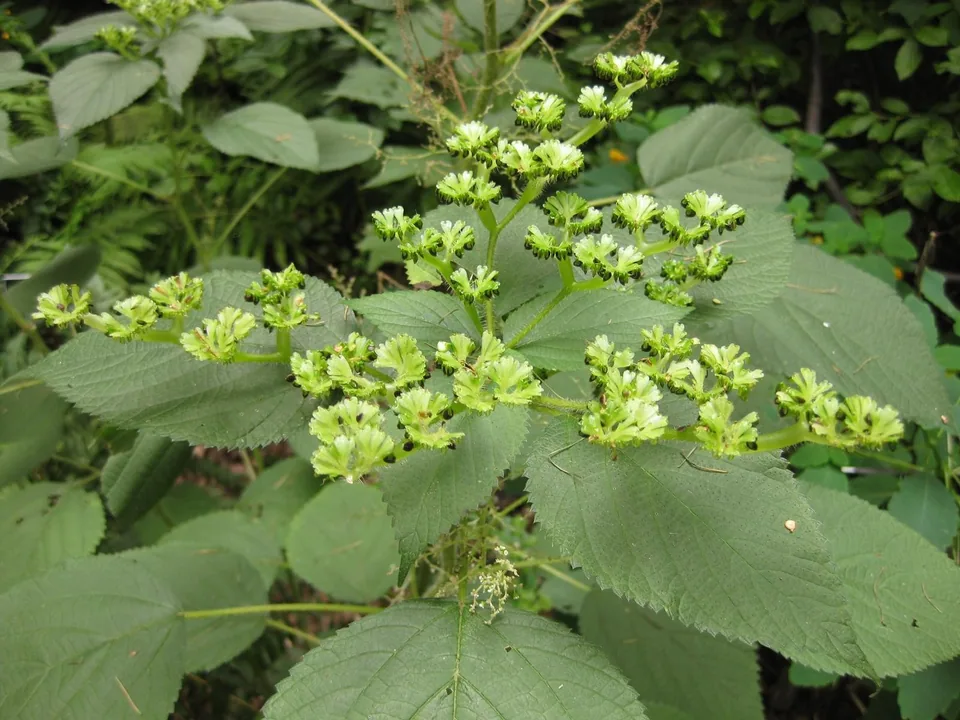


How to Grow and Care for Wood Nettle
Laportea canadensis
Written by Emilio Marruso · last checked
Toxic to: People · Why
At a glance
This woodland nettle is happy where many plants struggle: in dappled light or even deep shade, in rich, moist soil. In spring it gives you tender young shoots that lose their sting once blanched, steamed or sautéed, ready for soups or to serve as a green vegetable. Just wear gloves when you pick them, because the hairs sting.
- Sun
Dappled light, part shade or even deep shade
What the sources say (1)
Light: Dappled sunlight, partial shade to deep shade
Light: Dappled Sunlight (Shade through upper canopy all day) Deep shade (Less than 2 hours to no direct sunlight) Partial Shade (Direct sunlight only part of the day, 2-6 hours)
— Laportea canadensis (Canada Nettle, Canadian Woodnettle, Wood Nettle) | North Carolina Extension Gardener Plant Toolbox [1] - Water
Keep the soil moist
What the sources say (1)
Watering: Thrives in rich, moist soils
It thrives in rich, moist soils with partial to deep shade. The plant grows in dense large sweeping areas to a height of 2 to 4 feet.
— Laportea canadensis (Canada Nettle, Canadian Woodnettle, Wood Nettle) | North Carolina Extension Gardener Plant Toolbox [1] - Soil
Rich, moist soil
What the sources say (1)
Watering: Thrives in rich, moist soils
It thrives in rich, moist soils with partial to deep shade. The plant grows in dense large sweeping areas to a height of 2 to 4 feet.
— Laportea canadensis (Canada Nettle, Canadian Woodnettle, Wood Nettle) | North Carolina Extension Gardener Plant Toolbox [1] - Harvest
Pick young shoots in spring with gloves; cook them to remove the sting, then use in soups
What the sources say (2)
Harvest: Young shoots in spring
Only collect young shoots in the spring. Wear gloves and soak young shoots and leaves in clean water to remove dirt.
— Laportea canadensis (Canada Nettle, Canadian Woodnettle, Wood Nettle) | North Carolina Extension Gardener Plant Toolbox [1] How to harvest: Collect only young shoots in spring; wear gloves and soak shoots and leaves in clean water
Only collect young shoots in the spring. Wear gloves and soak young shoots and leaves in clean water to remove dirt.
— Laportea canadensis (Canada Nettle, Canadian Woodnettle, Wood Nettle) | North Carolina Extension Gardener Plant Toolbox [1] - Pests
Galls may appear on leaves or flowers; they look alarming but are harmless
- Watch out
Its hairs sting and burn the skin: always wear gloves when handling it
- Size
2 to 4 ft tall and 1 to 3 ft wide
What the sources say (2)
Mature height: 61-122 cm (2-4 ft)
Dimensions: Height: 2 ft. 0 in. - 4 ft. 0 in. Width: 1 ft. 0 in. - 3 ft. 0 in.
— Laportea canadensis (Canada Nettle, Canadian Woodnettle, Wood Nettle) | North Carolina Extension Gardener Plant Toolbox [1] Mature width: 30-91 cm (1-3 ft)
Dimensions: Height: 2 ft. 0 in. - 4 ft. 0 in. Width: 1 ft. 0 in. - 3 ft. 0 in.
— Laportea canadensis (Canada Nettle, Canadian Woodnettle, Wood Nettle) | North Carolina Extension Gardener Plant Toolbox [1] - Propagation
From seed, or divide the spreading roots in spring
What the sources say (1)
Propagation: Seed; division of spreading rhizomes in spring
Propagate it by seed or by dividing its spreading rhizomes in the spring.
— Laportea canadensis (Canada Nettle, Canadian Woodnettle, Wood Nettle) | North Carolina Extension Gardener Plant Toolbox [1] - Safety
Moderately poisonous to people
Overview
Wood nettle is a native erect perennial herb found in rich woods and moist bottomlands of rivers and streams. [1] It thrives in rich, moist soils with partial to deep shade. [1] Its stinging hairs are well known to cause painful contact dermatitis. [1]
This record is incomplete: the sources we read do not cover every field yet.
Not yet covered by our sources: Hardiness, coldest zone, Hardiness, warmest zone, Pruning
Wood Nettle care
How to water Wood Nettle
Thrives in rich, moist soils
What the sources say (1)
It thrives in rich, moist soils with partial to deep shade. The plant grows in dense large sweeping areas to a height of 2 to 4 feet.How much light Wood Nettle needs
Dappled sunlight, partial shade to deep shade
What the sources say (1)
Light:
Dappled Sunlight (Shade through upper canopy all day)
Deep shade (Less than 2 hours to no direct sunlight)
Partial Shade (Direct sunlight only part of the day, 2-6 hours)How much cold Wood Nettle can take
Hardiness, coldest zone
Not stated in the sources we read.
Hardiness, warmest zone
Not stated in the sources we read.
How to propagate Wood Nettle
Seed; division of spreading rhizomes in spring
What the sources say (1)
Propagate it by seed or by dividing its spreading rhizomes in the spring.How to grow Wood Nettle
The plant
Life cycle
perennial
What the sources say (1)
Wood nettle is a native erect perennial herb in the Urticaceae family found naturally in forests or natural areas in rich woods, moist bottomlands of rivers and streams.Family
Urticaceae
What the sources say (1)
Wood nettle is a native erect perennial herb in the Urticaceae family found naturally in forests or natural areas in rich woods, moist bottomlands of rivers and streams.Mature height
61-122 cm (2-4 ft)
What the sources say (1)
Dimensions:
Height: 2 ft. 0 in. - 4 ft. 0 in.
Width: 1 ft. 0 in. - 3 ft. 0 in.Mature width
30-91 cm (1-3 ft)
What the sources say (1)
Dimensions:
Height: 2 ft. 0 in. - 4 ft. 0 in.
Width: 1 ft. 0 in. - 3 ft. 0 in.Harvest and storage
How to harvest
Collect only young shoots in spring; wear gloves and soak shoots and leaves in clean water
What the sources say (1)
Only collect young shoots in the spring. Wear gloves and soak young shoots and leaves in clean water to remove dirt.Wood Nettle pests and problems
Galls
Symptom: Galls on the leaves or flowers
What to do: Described as harmless though they may look alarming
What the sources say (1)
This plant is used by many beneficial insects and so may get some galls on the leaves or flowers though they may look alarming, are harmless.
— Laportea canadensis (Canada Nettle, Canadian Woodnettle, Wood Nettle) | North Carolina Extension Gardener Plant Toolbox [1] Contact dermatitis from stinging hairs
Symptom: Painful contact dermatitis, with stinging and burning usually subsiding in about an hour
What to do: Wear gloves when handling this plant
What the sources say (1)
it is well known to cause painful contact dermatitis. Wear gloves when handling this plant, though the stinging and burning usually subsites in about an hour.
— Laportea canadensis (Canada Nettle, Canadian Woodnettle, Wood Nettle) | North Carolina Extension Gardener Plant Toolbox [1]
Remedies
Each remedy shows what official sources say about it; traditional remedies without an official source are marked as such. Harmful ones are listed so you know to avoid them.
First aid
First aid: not a substitute for a doctor
wood nettle sting
topical or oral corticosteroids Official source, not independently tested
Wear gloves when handling this plant, though the stinging and burning usually subsites in about an hour.
— Laportea canadensis (Canada Nettle, Canadian Woodnettle, Wood Nettle) | North Carolina Extension Gardener Plant Toolbox [1] How: Topical or oral corticosteroids for the acute inflammatory phase
Topical or oral corticosteroids for the acute inflammatory phase
— dermnetnz.org [3] cool compress Official source, not independently tested
How: Cool compress
Avoid aggravating the problem with potentially irritating or allergenic topical applications - Cool compress
— dermnetnz.org [3]
Is Wood Nettle poisonous?
Reported by the source, quoted verbatim. This is not medical or veterinary advice: if a person or an animal may have eaten this plant, contact a poison control centre or a veterinarian.
This plant has medium severity poison characteristics. See below
[1]- Poisonous parts
Poison Toxic Principle: Mixture of chemicals, not well understood Causes Contact Dermatitis: Yes Poison Part: Bark Flowers Fruits Leaves Roots Stems
[1]- Toxic principle
Poison Symptoms: SKIN IRRITATION MINOR, OR LASTING ONLY FOR A FEW MINUTES. Contact with the stinging hairs causes intense burning, itching, or stinging lasting usually less than an hour. Poison Toxic Principle: Mixture of chemicals, not well understood
[1]- Symptoms
Poison Symptoms: SKIN IRRITATION MINOR, OR LASTING ONLY FOR A FEW MINUTES. Contact with the stinging hairs causes intense burning, itching, or stinging lasting usually less than an hour.
[1]- Severity
Poison Severity: Medium Poison Symptoms: SKIN IRRITATION MINOR
[1]
Calendar
Harvest
Young shoots in spring
What the sources say (1)
Only collect young shoots in the spring. Wear gloves and soak young shoots and leaves in clean water to remove dirt.Pruning
Not stated in the sources we read.
Months as given by the sources, which are mostly from the United States (northern hemisphere). In the southern hemisphere they shift by about six months.
Edibility
Reported by the source, quoted verbatim. Do not eat a plant on the basis of this page alone: identification mistakes can be dangerous.
To remove the stinging hairs blanch, steam, boil in salted water, or chop up and saute. Serve in soups or as a green vegetable.
[1]
Similar plants
- Clearweed Pilea pumila
- False Nettle Boehmeria cylindrica
- Heartleaf Nettle Urtica chamaedryoides
- Mind-Your-Own-Business Soleirolia soleirolii
- Stinging Nettle Urtica dioica
- Chinese Money Plant Pilea peperomioides
- Creeping Charlie Pilea nummulariifolia
- Aluminum plant Pilea cadierei
Sources
Every value above is quoted from these documents. Links lead to the original publisher.
- Laportea canadensis (Canada Nettle, Canadian Woodnettle, Wood Nettle) | North Carolina Extension Gardener Plant Toolbox · plants.ces.ncsu.edu, consulted
- Wood Nettle - Laportea canadensis | North Carolina Extension Gardener Plant Toolbox · plants.ces.ncsu.edu, consulted
- dermnetnz.org · dermnetnz.org
Written by Emilio Marruso · last checked