
How to Grow and Care for Friendship Plant
Pilea involucrata
Written by Emilio Marruso · last checked
Not toxic to cats and dogs, according to the sources · Sources
At a glance
This small perennial stays compact, just 3 inches to 1 foot tall and wide, and grows happily indoors or in a pot. Give it bright indirect light and moderate watering in the growing season, and new plants are easy to start from stem cuttings. It is also safe around cats, dogs and horses, so it can share your home without worry.
- Sun
Bright light, but not direct sun
What the sources say (1)
Light: Bright indirect light
Grow indoors in a warm, humid environment in bright indirect light.
— Pilea involucrata (Friendship Plant, Panamiga) | North Carolina Extension Gardener Plant Toolbox [1] - Water
Water moderately while it grows; water less from fall to late winter
What the sources say (1)
Watering: Water moderately in the growing season, less in fall to late winter
Water moderately in the growing season, less in fall to late winter.
— Pilea involucrata (Friendship Plant, Panamiga) | North Carolina Extension Gardener Plant Toolbox [1] - Cold
Survives winters down to 40 °F (4.4 °C)
Tender: needs a frost-free greenhouse · USDA 11a · RHS H2 · Z11
What the sources say (2)
Hardiness, coldest zone: 11a [winter low 4.4 to 7.2 °C (40 to 45 °F)]
USDA Plant Hardiness Zone: 11a, 11b, 12a, 12b
— Pilea involucrata (Friendship Plant, Panamiga) | North Carolina Extension Gardener Plant Toolbox [1] Hardiness, warmest zone: 12b [winter low 12.8 to 15.6 °C (55 to 60 °F)]
USDA Plant Hardiness Zone: 11a, 11b, 12a, 12b
— Pilea involucrata (Friendship Plant, Panamiga) | North Carolina Extension Gardener Plant Toolbox [1] - Pests
Watch for mealybugs, spider mites and aphids; also leaf spot and stem rot
What the sources say (2)
Pests: mealybugs, spider mites, aphids
This plant has no serious pest problems. Some pests could include mealybugs, spider mites, and aphids and mealybugs.
— Pilea involucrata (Friendship Plant, Panamiga) | North Carolina Extension Gardener Plant Toolbox [1] Diseases: leaf spot, stem rot
This plant has no serious pest problems. Some pests could include mealybugs, spider mites, and aphids and mealybugs. Leaf spot and stem rot could occur.
— Pilea involucrata (Friendship Plant, Panamiga) | North Carolina Extension Gardener Plant Toolbox [1] - Size
3 in to 1 ft tall and wide
What the sources say (2)
Mature height: 8-30 cm (3 in-1 ft)
Height: 0 ft. 3 in. - 1 ft. 0 in. Width: 0 ft. 3 in. - 1 ft. 0 in.
— Pilea involucrata (Friendship Plant, Panamiga) | North Carolina Extension Gardener Plant Toolbox [1] Mature width: 8-30 cm (3 in-1 ft)
Height: 0 ft. 3 in. - 1 ft. 0 in. Width: 0 ft. 3 in. - 1 ft. 0 in.
— Pilea involucrata (Friendship Plant, Panamiga) | North Carolina Extension Gardener Plant Toolbox [1] - Propagation
Easy to grow new plants from stem cuttings
What the sources say (1)
Propagation: Stem cuttings
It is easily propagated from stem cuttings, making sharing with friends a breeze
— Pilea involucrata (Friendship Plant, Panamiga) | North Carolina Extension Gardener Plant Toolbox [1] - Containers
Grows well indoors, in pots and even in terrariums
What the sources say (2)
Indoors: Yes
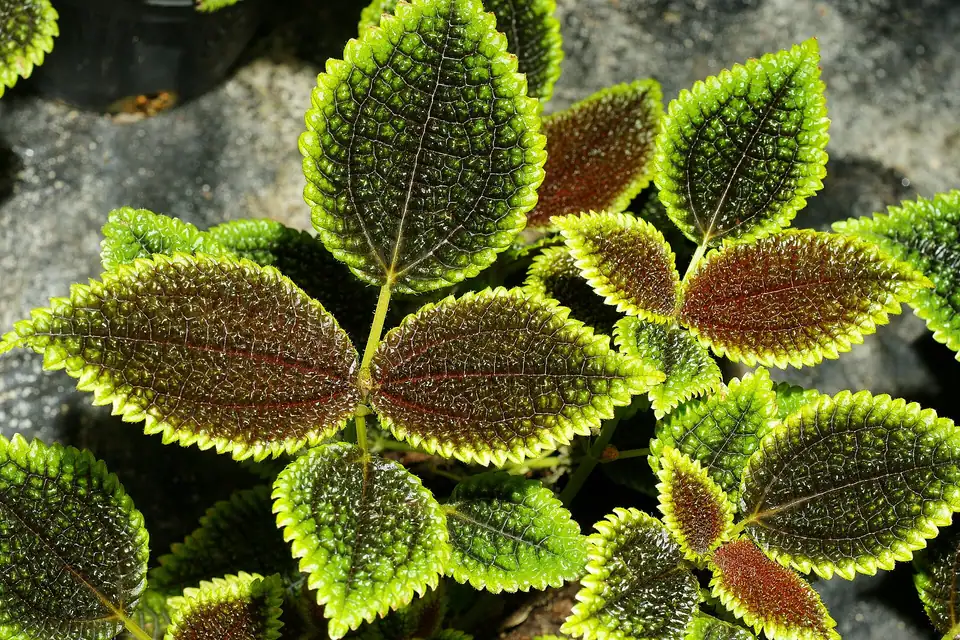
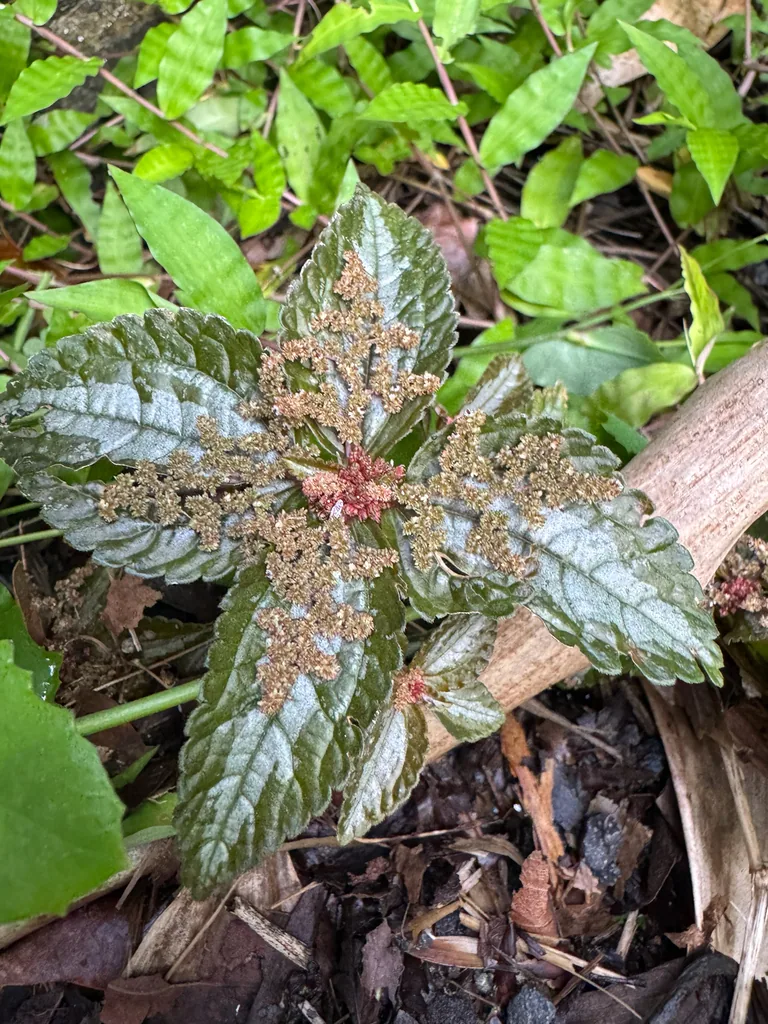
The Friendship Plant is a trailing evergreen perennial that is easy to grow as a houseplant and has uniquely textured ornamental foliage.
— Pilea involucrata (Friendship Plant, Panamiga) | North Carolina Extension Gardener Plant Toolbox [1] In containers: Yes
#easy to propagate #interesting leaves #easy to grow #container plant
— Pilea involucrata (Friendship Plant, Panamiga) | North Carolina Extension Gardener Plant Toolbox [1] - Safety
Not toxic to cats, dogs or horses
Overview
Friendship plant is a trailing evergreen perennial that is easy to grow as a houseplant. [1] It is grown indoors in a warm, humid environment in bright indirect light. [1] It is easily propagated from stem cuttings. [1]
Friendship Plant care
How to water Friendship Plant
Water moderately in the growing season, less in fall to late winter
What the sources say (1)
Water moderately in the growing season, less in fall to late winter.How much light Friendship Plant needs
Bright indirect light
What the sources say (1)
Grow indoors in a warm, humid environment in bright indirect light.How much cold Friendship Plant can take
Hardiness, coldest zone
11a [winter low 4.4 to 7.2 °C (40 to 45 °F)]
What the sources say (1)
USDA Plant Hardiness Zone:
11a, 11b, 12a, 12bHardiness, warmest zone
12b [winter low 12.8 to 15.6 °C (55 to 60 °F)]
What the sources say (1)
USDA Plant Hardiness Zone:
11a, 11b, 12a, 12bWhere to grow Friendship Plant
Indoors
Yes
What the sources say (1)
The Friendship Plant is a trailing evergreen perennial that is easy to grow as a houseplant and has uniquely textured ornamental foliage.In containers
Yes
What the sources say (1)
#easy to propagate #interesting leaves #easy to grow #container plantHow to propagate Friendship Plant
Stem cuttings
What the sources say (1)
It is easily propagated from stem cuttings, making sharing with friends a breezeHow to grow Friendship Plant
The plant
Life cycle
perennial
What the sources say (1)
The Friendship Plant is a trailing evergreen perennial that is easy to grow as a houseplant and has uniquely textured ornamental foliage.Family
Urticaceae
What the sources say (1)
It is native to Central and South America and is a member of the Urticaceae or nettle family.Mature height
8-30 cm (3 in-1 ft)
What the sources say (1)
Height: 0 ft. 3 in. - 1 ft. 0 in.
Width: 0 ft. 3 in. - 1 ft. 0 in.Mature width
8-30 cm (3 in-1 ft)
What the sources say (1)
Height: 0 ft. 3 in. - 1 ft. 0 in.
Width: 0 ft. 3 in. - 1 ft. 0 in.Pests and diseases
Pests
mealybugs, spider mites, aphids
What the sources say (1)
This plant has no serious pest problems. Some pests could include mealybugs, spider mites, and aphids and mealybugs.Diseases
leaf spot, stem rot
What the sources say (1)
This plant has no serious pest problems. Some pests could include mealybugs, spider mites, and aphids and mealybugs. Leaf spot and stem rot could occur.Remedies
Each remedy shows what official sources say about it; traditional remedies without an official source are marked as such. Harmful ones are listed so you know to avoid them.
Treating the plant
mealybugs
rubbing alcohol on cotton swab Not verified
Traditional remedy, not verified by an official source.
Keep in mind that some types of soaps and sprays, even organic ones, can damage sensitive plants. So always test the solution on a few leaves before spraying the entire thing.
— getbusygardening.com [4] How: Touch the mealybugs with a cotton swab soaked in 70% isopropyl alcohol; it must come in direct contact with them. Works for small outbreaks.
mild liquid soap spray Works
Keep in mind that some types of soaps and sprays, even organic ones, can damage sensitive plants. So always test the solution on a few leaves before spraying the entire thing.
— getbusygardening.com [4] How: Homemade spray: 1 tsp of mild liquid soap per 1 liter of water; wash the leaves and rinse. Insecticidal soaps have no residual effect, so keep spraying regularly.
My recipe for homemade mealybug spray is 1 tsp of mild liquid soap per 1 liter of water.
— getbusygardening.com [4] What the evidence says insecticidal soap is a safe, effective organic insecticide with minimal environmental impact
— extension.psu.edu [5] neem oil spray Partly works
Keep in mind that some types of soaps and sprays, even organic ones, can damage sensitive plants. So always test the solution on a few leaves before spraying the entire thing.
— getbusygardening.com [4] How: Spray the entire plant with neem oil once the leaves are dry; repeat if mealybugs are still found.
Neem oil is a natural product that is very effective for getting rid of mealybugs on houseplants, and it has a residual effect to keep them away too.
— getbusygardening.com [4] What the evidence says However, neem oil is not effective against every insect and disease, and often must be frequently reapplied to reach the desired outcome.
— extension.unh.edu [6] picking off by hand Not verified
Traditional remedy, not verified by an official source.
How: Small infestations can be picked off by hand.
spider mites
strong water spray Not verified
Traditional remedy, not verified by an official source.
How: Strong sprays of water to dislodge the mites.
Is Friendship Plant poisonous?
Reported by the source, quoted verbatim. This is not medical or veterinary advice: if a person or an animal may have eaten this plant, contact a poison control centre or a veterinarian.
#terrarium #non-toxic for cats #non-toxic for horses #non-toxic for dogs #easy to propagate
[1]The source flags the risk for this animal but does not explain why.
Indicative values
Values from a secondary source, not checked word for word like the rest of this page. Use them as a starting point.
- Hours of sun
- 4-6 hoursIndicative value, adapt it to your climate · Secondary source
- Soil pH
- 5.5-6.5Indicative value, adapt it to your climate · Secondary source
- Care level
- MediumIndicative value, adapt it to your climate · Secondary source
- Growth rate
- LowIndicative value, adapt it to your climate · Secondary source
- Pruning
- December, January, February, March, April, May, May, MayIndicative value, adapt it to your climate · Secondary source
Similar plants
- Aluminum plant Pilea cadierei
- Artillery Plant Pilea microphylla
- Chinese Money Plant Pilea peperomioides
- Creeping Charlie Pilea nummulariifolia
- Clearweed Pilea pumila
- Depressed clearweed Pilea depressa
- Mind-Your-Own-Business Soleirolia soleirolii
- Trailing Procris repens
Sources
Every value above is quoted from these documents. Links lead to the original publisher.
- Pilea involucrata (Friendship Plant, Panamiga) | North Carolina Extension Gardener Plant Toolbox · plants.ces.ncsu.edu, consulted
- Pilea as a Houseplant · extension.psu.edu, consulted
- Friendship Plant - Pilea involucrata | North Carolina Extension Gardener Plant Toolbox · plants.ces.ncsu.edu, consulted
- getbusygardening.com · getbusygardening.com
- extension.psu.edu · extension.psu.edu
- extension.unh.edu · extension.unh.edu
Written by Emilio Marruso · last checked