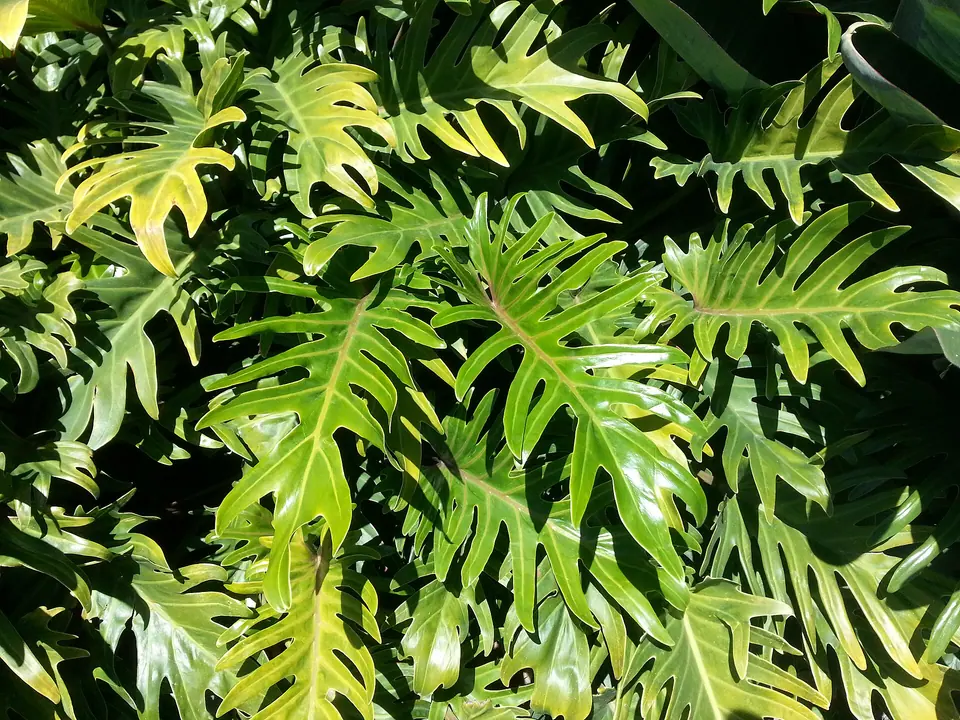


How to Grow and Care for Xanadu Philodendron
Philodendron xanadu
Written by Emilio Marruso · last checked
Toxic to: Cats, Dogs, People · Why
At a glance
Xanadu philodendron is a leafy perennial that grows 3 to 5 feet tall and just as wide, and it is happy indoors or out. Give it bright, indirect light inside, or full sun to partial shade outdoors, and it settles nicely into a container. Just go easy on the water: too much turns its leaves yellow.
- Sun
Indoors: bright, indirect light. Outdoors: full sun to partial shade
What the sources say (4)
Light: Outdoors: full sun to partial shade. Indoors: bright but indirect light
Outdoors: if planted outdoors, prefers full sun to partial shade and moist, rich, well-drained soils.
— Philodendron xanadu (Winterbourn Philodendron, Xanadu Philodendron) | North Carolina Extension Gardener Plant Toolbox [1] Indoors: Indoors, it prefers bright but indirect light, some humidity, and temperature ranges of 65 to 75 degrees Fahrenheit.
— Philodendron xanadu (Winterbourn Philodendron, Xanadu Philodendron) | North Carolina Extension Gardener Plant Toolbox [1] if planted outdoors, prefers full sun to partial shade and moist, rich, well-drained soils.
— Philodendron xanadu (Winterbourn Philodendron, Xanadu Philodendron) | North Carolina Extension Gardener Plant Toolbox [1] Indoors, it prefers bright but indirect light, some humidity, and temperature ranges of 65 to 75 degrees Fahrenheit.
— Philodendron xanadu (Winterbourn Philodendron, Xanadu Philodendron) | North Carolina Extension Gardener Plant Toolbox [1] - Water
Don't overwater: too much water turns the leaves yellow
What the sources say (2)
Watering notes: Overwatering causes yellowing of the leaves and should be avoided
Yellowing of the leaves will occur if overwatered. Container plants may need to be repotted every 1 to 2 years.
— Philodendron xanadu (Winterbourn Philodendron, Xanadu Philodendron) | North Carolina Extension Gardener Plant Toolbox [1] This plant is vulnerable to leaf spots from fungi, and overwatering should be avoided.
— Philodendron xanadu (Winterbourn Philodendron, Xanadu Philodendron) | North Carolina Extension Gardener Plant Toolbox [1] - Cold
Survives winters down to 25 °F (−3.9 °C)
Half hardy: mild winters or an unheated greenhouse · USDA 9b · RHS H3 · Z9
What the sources say (2)
Hardiness, coldest zone: 9b [winter low −3.9 to −1.1 °C (25 to 30 °F)]
USDA Plant Hardiness Zone: 9b, 10a, 10b, 11a, 11b
— Philodendron xanadu (Winterbourn Philodendron, Xanadu Philodendron) | North Carolina Extension Gardener Plant Toolbox [1] Hardiness, warmest zone: 11b [winter low 7.2 to 10 °C (45 to 50 °F)]
USDA Plant Hardiness Zone: 9b, 10a, 10b, 11a, 11b
— Philodendron xanadu (Winterbourn Philodendron, Xanadu Philodendron) | North Carolina Extension Gardener Plant Toolbox [1] - Feeding
Don't feed it for the first four weeks after moving it indoors
What the sources say (3)
Avoid: Fertilizing when soluble salts in the potting mix are 2.0 dS/m or more
after moving plants indoors: Once plants are placed indoors, it is advisable not to re-pot or fertilize for about four weeks because plants do not need additional stresses.
— [3] Philodendron in commercial production: Pesticide phytotoxicity or burn from drying liquid fertilizer in the leaf roll. Apply liquid fertilizer at rates of 2 lb 20-20-20/100 gallons of water or less.
— [3] Plants should not be fertilized if soluble salts are 2.0 dS/m or more.
— [3] - Pests
Aphids, mealybugs, scale, thrips and spider mites; fungal leaf spots
What the sources say (2)
Pests: aphids, mealy bugs, scale, thrips, spider mites
Xanadu philodendron may be susceptible to aphids, mealy bugs, scale, thrips, and spider mites. This plant is vulnerable to leaf spots from fungi, and overwatering should be avoided.
— Philodendron xanadu (Winterbourn Philodendron, Xanadu Philodendron) | North Carolina Extension Gardener Plant Toolbox [1] Diseases: leaf spots from fungi
Xanadu philodendron may be susceptible to aphids, mealy bugs, scale, thrips, and spider mites. This plant is vulnerable to leaf spots from fungi, and overwatering should be avoided.
— Philodendron xanadu (Winterbourn Philodendron, Xanadu Philodendron) | North Carolina Extension Gardener Plant Toolbox [1] - Size
3 to 5 ft tall and just as wide
What the sources say (2)
Mature height: 91-152 cm (3-5 ft)
It has a dense, mounding, spreading habit, and measures 3 to 5 feet tall and 3 to 5 feet wide.
— Philodendron xanadu (Winterbourn Philodendron, Xanadu Philodendron) | North Carolina Extension Gardener Plant Toolbox [1] Mature width: 91-152 cm (3-5 ft)
It has a dense, mounding, spreading habit, and measures 3 to 5 feet tall and 3 to 5 feet wide.
— Philodendron xanadu (Winterbourn Philodendron, Xanadu Philodendron) | North Carolina Extension Gardener Plant Toolbox [1] - Containers
Grows well in containers and as a houseplant
What the sources say (2)
In containers: Yes
Yellowing of the leaves will occur if overwatered. Container plants may need to be repotted every 1 to 2 years.
— Philodendron xanadu (Winterbourn Philodendron, Xanadu Philodendron) | North Carolina Extension Gardener Plant Toolbox [1] Indoors: Yes
Xanadu philodendron thrives as a houseplant or in a warm-weather landscape.
— Philodendron xanadu (Winterbourn Philodendron, Xanadu Philodendron) | North Carolina Extension Gardener Plant Toolbox [1] - Safety
Harmful to cats, dogs and children if chewed: it swells the mouth; the sap irritates skin
Overview
Xanadu philodendron grows as a houseplant or in a warm-weather landscape. [1] Outdoors it prefers full sun to partial shade and moist, rich, well-drained soils; indoors it prefers bright but indirect light. [1] Eating or chewing the leaves or stems can cause swelling of the lips, tongue and mouth. [1]
This record is incomplete: the sources we read do not cover every field yet.
Not yet covered by our sources: Watering, Propagation
Xanadu Philodendron care
How to water Xanadu Philodendron
Watering
Not stated in the sources we read.
Watering notes
Overwatering causes yellowing of the leaves and should be avoided
What the sources say (2)
Yellowing of the leaves will occur if overwatered. Container plants may need to be repotted every 1 to 2 years.This plant is vulnerable to leaf spots from fungi, and overwatering should be avoided.How much light Xanadu Philodendron needs
Outdoors: full sun to partial shade. Indoors: bright but indirect light
What each source says
Outdoors: Full sun to partial shade
Indoors: Bright but indirect light
What the sources say (4)
Outdoors: if planted outdoors, prefers full sun to partial shade and moist, rich, well-drained soils.Indoors: Indoors, it prefers bright but indirect light, some humidity, and temperature ranges of 65 to 75 degrees Fahrenheit.if planted outdoors, prefers full sun to partial shade and moist, rich, well-drained soils.Indoors, it prefers bright but indirect light, some humidity, and temperature ranges of 65 to 75 degrees Fahrenheit.How much cold Xanadu Philodendron can take
Hardiness, coldest zone
9b [winter low −3.9 to −1.1 °C (25 to 30 °F)]
What the sources say (1)
USDA Plant Hardiness Zone:
9b, 10a, 10b, 11a, 11bHardiness, warmest zone
11b [winter low 7.2 to 10 °C (45 to 50 °F)]
What the sources say (1)
USDA Plant Hardiness Zone:
9b, 10a, 10b, 11a, 11bWhere to grow Xanadu Philodendron
Indoors
Yes
What the sources say (1)
Xanadu philodendron thrives as a houseplant or in a warm-weather landscape.In containers
Yes
What the sources say (1)
Yellowing of the leaves will occur if overwatered. Container plants may need to be repotted every 1 to 2 years.How to propagate Xanadu Philodendron
Not stated in the sources we read.
How to grow Xanadu Philodendron
The plant
Life cycle
perennial
What the sources say (1)
Family:
Araceae
Life Cycle:
Perennial
Country Or Region Of Origin:Family
Araceae
What the sources say (1)
Genus:
Philodendron
Species:
xanadu
Family:
Araceae
Life Cycle:Mature height
91-152 cm (3-5 ft)
What the sources say (1)
It has a dense, mounding, spreading habit, and measures 3 to 5 feet tall and 3 to 5 feet wide.Mature width
91-152 cm (3-5 ft)
What the sources say (1)
It has a dense, mounding, spreading habit, and measures 3 to 5 feet tall and 3 to 5 feet wide.Pests and diseases
Pests
aphids, mealy bugs, scale, thrips, spider mites
What the sources say (1)
Xanadu philodendron may be susceptible to aphids, mealy bugs, scale, thrips, and spider mites. This plant is vulnerable to leaf spots from fungi, and overwatering should be avoided.Diseases
leaf spots from fungi
What the sources say (1)
Xanadu philodendron may be susceptible to aphids, mealy bugs, scale, thrips, and spider mites. This plant is vulnerable to leaf spots from fungi, and overwatering should be avoided.Fertilizing
How often
The sources give different values depending on region, zone or growing conditions.
What each source says
Philodendron in commercial production: Monthly
What the sources say (1)
Philodendron in commercial production: Use a fertilizer with an N:P:K ratio of 3:1:2 or 3:1:3. The suggested application rate is 3 lb N per 1,000 sq. ft per month.Mineral fertilizers
The sources give different values depending on region, zone or growing conditions.
What each source says
Philodendron in commercial production: Controlled-release or water-soluble fertilizer with an N:P:K ratio of 3:1:2 or 3:1:3, at 14.6 g of nitrogen per m² per month
What the sources say (1)
Philodendron in commercial production: Use a fertilizer with an N:P:K ratio of 3:1:2 or 3:1:3. The suggested application rate is 3 lb N per 1,000 sq. ft per month.Micronutrients
The sources give different values depending on region, zone or growing conditions.
What each source says
Philodendron in commercial production: Magnesium sulfate for magnesium deficiency, 3.6-6 g per liter of water
What the sources say (1)
Philodendron in commercial production: Magnesium deficiency. Apply magnesium sulfate (MgSO4) at a rate of 3–5 lbs/100 gallons water.Avoid
Fertilizing when soluble salts in the potting mix are 2.0 dS/m or more
What each source says
after moving plants indoors: No fertilizing or repotting for the first four weeks indoors
Philodendron in commercial production: Liquid fertilizer stronger than 20-20-20 at 2.4 g per liter, which burns the leaf roll as it dries
What the sources say (3)
after moving plants indoors: Once plants are placed indoors, it is advisable not to re-pot or fertilize for about four weeks because plants do not need additional stresses.Philodendron in commercial production: Pesticide phytotoxicity or burn from drying liquid fertilizer in the leaf roll. Apply liquid fertilizer at rates of 2 lb 20-20-20/100 gallons of water or less.Plants should not be fertilized if soluble salts are 2.0 dS/m or more.Signs of deficiency
Nitrogen: chlorosis and smaller leaves; magnesium: V-shaped chlorosis on older leaves spreading from the petiole to the margins, midrib stays green; potassium: margins of older leaves turn brown, spreading toward the midrib
What the sources say (3)
Chlorosis and reduced leaf size. Nitrogen deficiency. Apply granular, high-nitrogen fertilizer.Older leaves have V-shaped chlorosis which spreads from the petiole attachment to the leaf margins. Midrib remains green. Magnesium deficiency.Margins of older leaves turn brownish, and discoloration spreads toward the midrib. Potassium deficiency.Xanadu Philodendron pests and problems
Insect pests
Symptom: Susceptibility to aphids, mealy bugs, scale, thrips, and spider mites
What to do: Not stated in the source
What the sources say (1)
Xanadu philodendron may be susceptible to aphids, mealy bugs, scale, thrips, and spider mites.
— Philodendron xanadu (Winterbourn Philodendron, Xanadu Philodendron) | North Carolina Extension Gardener Plant Toolbox [1] Overwatering
Symptom: Yellowing of the leaves and leaf spots from fungi
What to do: Avoid overwatering
What the sources say (2)
Yellowing of the leaves will occur if overwatered. Container plants may need to be repotted every 1 to 2 years.
— Philodendron xanadu (Winterbourn Philodendron, Xanadu Philodendron) | North Carolina Extension Gardener Plant Toolbox [1] This plant is vulnerable to leaf spots from fungi, and overwatering should be avoided.
— Philodendron xanadu (Winterbourn Philodendron, Xanadu Philodendron) | North Carolina Extension Gardener Plant Toolbox [1]
Remedies
Each remedy shows what official sources say about it; traditional remedies without an official source are marked as such. Harmful ones are listed so you know to avoid them.
First aid
First aid: not a substitute for a doctor
plant sap on skin or eyes
washing off the sap Official source, not independently tested
Seek immediate medical help. DO NOT make a person throw up unless told to do so by poison control or a health care provider.
— medlineplus.gov [4] How: Wash off any plant sap from the skin and eyes.
Wipe out the mouth with a cold, wet cloth. Wash off any plant sap from the skin and eyes.
— medlineplus.gov [4]
swallowed plant
water or milk Official source, not independently tested
DO NOT give water or milk if the person is having symptoms (such as vomiting, convulsions , or a decreased level of alertness) that make it hard to swallow.
— medlineplus.gov [4] How: If the plant was swallowed, immediately give water or milk unless instructed otherwise by poison control or a provider.
If the chemical was swallowed, immediately give the person water or milk, unless instructed otherwise by poison control or a provider.
— medlineplus.gov [4]
Treating the plant
mealybugs
rubbing alcohol on a cotton swab Works
How: Kill mealybugs by hand with a cotton swab dipped in alcohol; check weekly and repeat.
Mealybugs can be managed by noticing them quickly and killing them by hand with a cotton swab dipped in alcohol
— yardandgarden.extension.iastate.edu [5] What the evidence says Mealybugs can be managed by noticing them quickly and killing them by hand with a cotton swab dipped in alcohol
— yardandgarden.extension.iastate.edu [5] neem oil spray Partly works
How: Neem is one of the relatively safe products for indoor use; apply frequently, as it works best on immature mealybugs.
Insecticidal soap, neem, and pyrethrin are all relatively safe insecticides that can be used indoors to treat this pest.
— yardandgarden.extension.iastate.edu [6] What the evidence says Insecticidal soap, neem, and pyrethrin are all relatively safe insecticides that can be used indoors to treat this pest.
— yardandgarden.extension.iastate.edu [6]
scale
rubbing alcohol on a cotton swab Official source, not independently tested
How: Spot treat a few scale insects with rubbing alcohol on a swab.
If only a few are found, spot treat with a spray of rubbing alcohol or a cotton swab dipped in rubbing alcohol.
— yardandgarden.extension.iastate.edu [6]
fungus gnats
letting the soil dry between waterings Works
How: Allow the top of the soil to dry out between waterings.
Allow the soil, especially the soil surface, to dry out between waterings.
— yardandgarden.extension.iastate.edu [6] What the evidence says Insecticides are not needed when soils are allowed to dry out.
— yardandgarden.extension.iastate.edu [6] yellow sticky traps Partly works
How: Yellow sticky card traps catch the flying adults.
Yellow sticky card traps can catch flying adults but do not prevent new insects from hatching.
— yardandgarden.extension.iastate.edu [6] What the evidence says Yellow sticky card traps can catch flying adults but do not prevent new insects from hatching.
— yardandgarden.extension.iastate.edu [6]
Is Xanadu Philodendron toxic to pets?
Reported by the source, quoted verbatim. This is not medical or veterinary advice: if a person or an animal may have eaten this plant, contact a poison control centre or a veterinarian.
Animals
#dense growth #problem for dogs #foundation planting #border planting
[1]The source flags the risk for this animal but does not explain why.
#poisonous leaves #problem for cats #contact dermatitis #poisonous if ingested #problem for children
[1]The source flags the risk for this animal but does not explain why.
People
If the leaves or stems are eaten or chewed, swelling of the lips, tongue, and mouth can occur. It may also cause mouth pain and drooling. The sap can cause skin irritation.
[1]
Similar plants
- Blushing Philodendron Philodendron erubescens
- Silver Sword Philodendron Philodendron hastatum
- Tree Philodendron Philodendron bipinnatifidum
- Philodendron Philodendron hederaceum
- Anthurium Anthurium andraeanum
- Arrowhead Plant Syngonium podophyllum
- Arum Arum maculatum
- Black Calla Arum palaestinum
Sources
Every value above is quoted from these documents. Links lead to the original publisher.
- Philodendron xanadu (Winterbourn Philodendron, Xanadu Philodendron) | North Carolina Extension Gardener Plant Toolbox · plants.ces.ncsu.edu, consulted
- Philodendron | North Carolina Extension Gardener Plant Toolbox · plants.ces.ncsu.edu, consulted
- edis.ifas.ufl.edu · edis.ifas.ufl.edu
- medlineplus.gov · medlineplus.gov
- yardandgarden.extension.iastate.edu · yardandgarden.extension.iastate.edu
- yardandgarden.extension.iastate.edu · yardandgarden.extension.iastate.edu
Written by Emilio Marruso · last checked