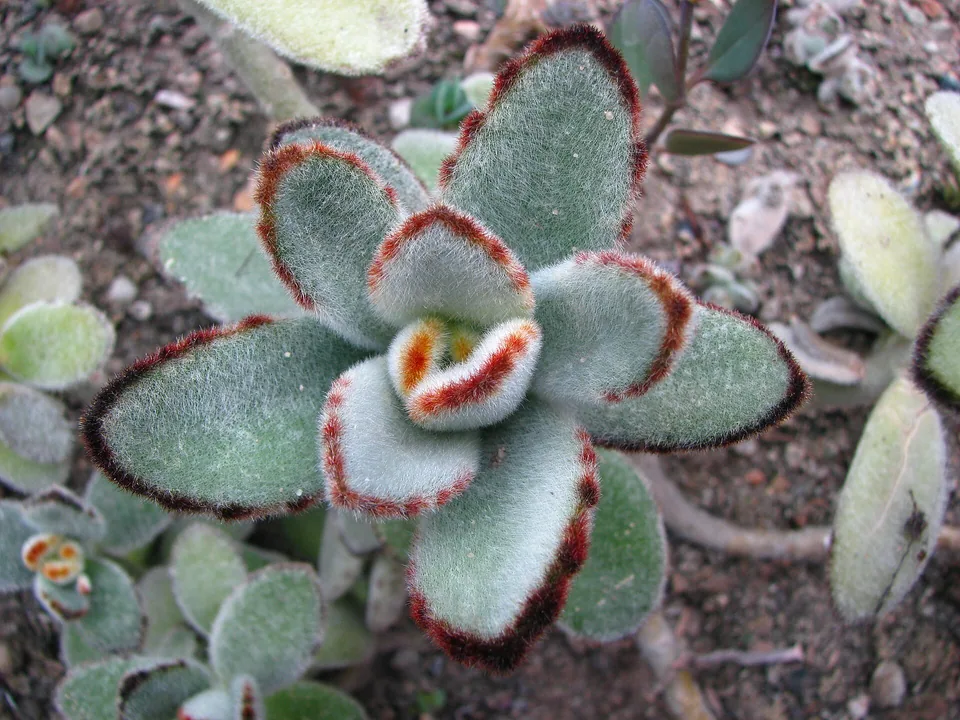


How to Grow and Care for Panda Plant
Kalanchoe tomentosa
Written by Emilio Marruso · last checked
Toxic to: Cats, Dogs, People · Why
At a glance
The panda plant is an easygoing perennial that grows happily indoors or in a pot, reaching 1 to 3 feet tall. Let the soil dry out between waterings and it will thrive. You can even start new plants from a single leaf, an offshoot or a stem cutting. Just keep it out of reach of small children and pets.
- Sun
Needs good light: too little makes it leggy, but hot full sun burns the leaves
- Water
Let the soil dry between waterings; too much rots the roots, wrinkled leaves mean it's thirsty
What the sources say (2)
Watering: Allow the soil to dry out between waterings
The soil should be allowed to dry out between waterings.
— Kalanchoe tomentosa (Cocoon Plant, Panda Bear Plant, Panda Plant, Plush Plant, Pussy Ears, Teddy Bear Cactus, Velvet Leaf Kalanchoe) | North Carolina Extension Gardener Plant Toolbox [1] Watering notes: Overwatering can cause root rot; shriveled or wrinkled leaves may result from underwatering
Overwatering can cause root rot. Shriveled or wrinkled leaves may be the result of underwatering.
— Kalanchoe tomentosa (Cocoon Plant, Panda Bear Plant, Panda Plant, Plush Plant, Pussy Ears, Teddy Bear Cactus, Velvet Leaf Kalanchoe) | North Carolina Extension Gardener Plant Toolbox [1] - Cold
Survives winters down to 20 °F (−6.7 °C)
Hardy in average winters · USDA 9a · RHS H4 · Z9
What the sources say (2)
Hardiness, coldest zone: 9a [winter low −6.7 to −3.9 °C (20 to 25 °F)]
USDA Plant Hardiness Zone: 9a, 9b, 10a, 10b, 11a, 11b
— Kalanchoe tomentosa (Cocoon Plant, Panda Bear Plant, Panda Plant, Plush Plant, Pussy Ears, Teddy Bear Cactus, Velvet Leaf Kalanchoe) | North Carolina Extension Gardener Plant Toolbox [1] Hardiness, warmest zone: 11b [winter low 7.2 to 10 °C (45 to 50 °F)]
USDA Plant Hardiness Zone: 9a, 9b, 10a, 10b, 11a, 11b
— Kalanchoe tomentosa (Cocoon Plant, Panda Bear Plant, Panda Plant, Plush Plant, Pussy Ears, Teddy Bear Cactus, Velvet Leaf Kalanchoe) | North Carolina Extension Gardener Plant Toolbox [1] - Pests
Watch for mealybugs and spider mites; overwatering causes root rot
What the sources say (2)
Pests: mealybugs, spider mites
Monitor for mealybugs and spider mites. Overwatering can cause root rot.
— Kalanchoe tomentosa (Cocoon Plant, Panda Bear Plant, Panda Plant, Plush Plant, Pussy Ears, Teddy Bear Cactus, Velvet Leaf Kalanchoe) | North Carolina Extension Gardener Plant Toolbox [1] Diseases: root rot
Monitor for mealybugs and spider mites. Overwatering can cause root rot.
— Kalanchoe tomentosa (Cocoon Plant, Panda Bear Plant, Panda Plant, Plush Plant, Pussy Ears, Teddy Bear Cactus, Velvet Leaf Kalanchoe) | North Carolina Extension Gardener Plant Toolbox [1] - Size
1 to 3 ft tall and 2 to 3 ft wide
What the sources say (2)
Mature height: 30-91 cm (1-3 ft)
The panda plant is erect, slow-growing, and can reach up to 1 to 3 feet tall and 2 to 3 feet wide.
— Kalanchoe tomentosa (Cocoon Plant, Panda Bear Plant, Panda Plant, Plush Plant, Pussy Ears, Teddy Bear Cactus, Velvet Leaf Kalanchoe) | North Carolina Extension Gardener Plant Toolbox [1] Mature width: 61-91 cm (2-3 ft)
The panda plant is erect, slow-growing, and can reach up to 1 to 3 feet tall and 2 to 3 feet wide.
— Kalanchoe tomentosa (Cocoon Plant, Panda Bear Plant, Panda Plant, Plush Plant, Pussy Ears, Teddy Bear Cactus, Velvet Leaf Kalanchoe) | North Carolina Extension Gardener Plant Toolbox [1] - Propagation
Start new plants from leaf cuttings, offshoots or stem cuttings
What the sources say (2)
Propagation: Leaf cuttings, offshoots, stem cuttings
It is best to try leaf cuttings or offshoots for propagation.
— Kalanchoe tomentosa (Cocoon Plant, Panda Bear Plant, Panda Plant, Plush Plant, Pussy Ears, Teddy Bear Cactus, Velvet Leaf Kalanchoe) | North Carolina Extension Gardener Plant Toolbox [1] Recommended Propagation Strategy: Leaf Cutting Stem Cutting Country Or Region Of Origin:
— Kalanchoe tomentosa (Cocoon Plant, Panda Bear Plant, Panda Plant, Plush Plant, Pussy Ears, Teddy Bear Cactus, Velvet Leaf Kalanchoe) | North Carolina Extension Gardener Plant Toolbox [1] - Containers
Grows well in pots and indoors
What the sources say (2)
In containers: Yes
Landscape Location: Container Houseplants Patio Landscape Theme:
— Kalanchoe tomentosa (Cocoon Plant, Panda Bear Plant, Panda Plant, Plush Plant, Pussy Ears, Teddy Bear Cactus, Velvet Leaf Kalanchoe) | North Carolina Extension Gardener Plant Toolbox [1] Indoors: Yes
The panda plant is a semi-woody perennial succulent and a popular houseplant native of east central Madagascar
— Kalanchoe tomentosa (Cocoon Plant, Panda Bear Plant, Panda Plant, Plush Plant, Pussy Ears, Teddy Bear Cactus, Velvet Leaf Kalanchoe) | North Carolina Extension Gardener Plant Toolbox [1] - Safety
Poisonous if eaten: keep it away from small children, cats and dogs
Overview
Kalanchoe tomentosa is a slow-growing succulent houseplant native to Madagascar. [1] The plant is poisonous if ingested. [1]
This record is incomplete: the sources we read do not cover every field yet.
Not yet covered by our sources: Light
Panda Plant care
How to water Panda Plant
Watering
Allow the soil to dry out between waterings
What the sources say (1)
The soil should be allowed to dry out between waterings.Watering notes
Overwatering can cause root rot; shriveled or wrinkled leaves may result from underwatering
What the sources say (1)
Overwatering can cause root rot. Shriveled or wrinkled leaves may be the result of underwatering.How much light Panda Plant needs
Not stated in the sources we read.
How much cold Panda Plant can take
Hardiness, coldest zone
9a [winter low −6.7 to −3.9 °C (20 to 25 °F)]
What the sources say (1)
USDA Plant Hardiness Zone:
9a, 9b, 10a, 10b, 11a, 11bHardiness, warmest zone
11b [winter low 7.2 to 10 °C (45 to 50 °F)]
What the sources say (1)
USDA Plant Hardiness Zone:
9a, 9b, 10a, 10b, 11a, 11bWhere to grow Panda Plant
Indoors
Yes
What the sources say (1)
The panda plant is a semi-woody perennial succulent and a popular houseplant native of east central MadagascarIn containers
Yes
What the sources say (1)
Landscape Location:
Container
Houseplants
Patio
Landscape Theme:How to propagate Panda Plant
Leaf cuttings, offshoots, stem cuttings
What the sources say (2)
It is best to try leaf cuttings or offshoots for propagation.Recommended Propagation Strategy:
Leaf Cutting
Stem Cutting
Country Or Region Of Origin:How to grow Panda Plant
The plant
Life cycle
perennial
What the sources say (1)
Life Cycle:
Perennial
Recommended Propagation Strategy:
Leaf Cutting
Stem CuttingFamily
Crassulaceae
What the sources say (1)
The panda plant is a semi-woody perennial succulent and a popular houseplant native of east central Madagascar and is a member of the stonecrop family (Crassulaceae).Mature height
30-91 cm (1-3 ft)
What the sources say (1)
The panda plant is erect, slow-growing, and can reach up to 1 to 3 feet tall and 2 to 3 feet wide.Mature width
61-91 cm (2-3 ft)
What the sources say (1)
The panda plant is erect, slow-growing, and can reach up to 1 to 3 feet tall and 2 to 3 feet wide.Pests and diseases
Pests
mealybugs, spider mites
What the sources say (1)
Monitor for mealybugs and spider mites. Overwatering can cause root rot.Diseases
root rot
What the sources say (1)
Monitor for mealybugs and spider mites. Overwatering can cause root rot.Fertilizing
How often
The sources give different values depending on region, zone or growing conditions.
What each source says
Kalanchoe in general: Every few months
What the sources say (1)
Kalanchoe in general: Fertilize kalanchoes every few months with a half-strength solution of an all-purpose, water-soluble fertilizer.Mineral fertilizers
The sources give different values depending on region, zone or growing conditions.
What each source says
Kalanchoe in general: All-purpose water-soluble fertilizer at half strength
What the sources say (1)
Kalanchoe in general: Fertilize kalanchoes every few months with a half-strength solution of an all-purpose, water-soluble fertilizer.Panda Plant pests and problems
Mealybugs and spider mites
Symptom: Pests to monitor for
What to do: Monitor the plant
What the sources say (1)
Monitor for mealybugs and spider mites. Overwatering can cause root rot.
— Kalanchoe tomentosa (Cocoon Plant, Panda Bear Plant, Panda Plant, Plush Plant, Pussy Ears, Teddy Bear Cactus, Velvet Leaf Kalanchoe) | North Carolina Extension Gardener Plant Toolbox [1] Overwatering
Symptom: Root rot; yellow or mushy leaves or stems
What to do: Allow the soil to dry between waterings
What the sources say (1)
Yellow or mushy leaves or stems can be caused by overwatering.
— Kalanchoe tomentosa (Cocoon Plant, Panda Bear Plant, Panda Plant, Plush Plant, Pussy Ears, Teddy Bear Cactus, Velvet Leaf Kalanchoe) | North Carolina Extension Gardener Plant Toolbox [1] Inadequate sunlight
Symptom: Leggy growth; leaf burn in full hot sun
What the sources say (1)
Leggy growth is usually caused by inadequate sunlight, and it may develop leaf burn if placed in full hot sun.
— Kalanchoe tomentosa (Cocoon Plant, Panda Bear Plant, Panda Plant, Plush Plant, Pussy Ears, Teddy Bear Cactus, Velvet Leaf Kalanchoe) | North Carolina Extension Gardener Plant Toolbox [1]
Remedies
Each remedy shows what official sources say about it; traditional remedies without an official source are marked as such. Harmful ones are listed so you know to avoid them.
Treating the plant
mealybugs
rubbing alcohol on a cotton swab Works
Always test a small area first and check results after two days.
— thisoldhouse.com [5] Be careful not to get the alcohol on the leaves of the plants as they may be damaged.
— extension.umd.edu [6] How: Wipe away visible mealy bugs using 70% isopropyl alcohol on a cotton pad or swab; for sensitive plants dilute the alcohol 1:1 with water.
Wipe away visible mealy bugs using 70% isopropyl alcohol on a cotton pad or swab.
— thisoldhouse.com [5] What the evidence says Dipping a cotton swab in household alcohol and dabbing it on the individual mealybugs can control light infestations.
— extension.umd.edu [6] neem oil Not verified
Traditional remedy, not verified by an official source.
How: Apply thoroughly to the affected areas.
spider mites
castile soap spray Harmful
How: Mix 1 tablespoon of castile soap with 1 quart of warm water, spray the entire plant including the undersides of the leaves, repeat weekly for about a month.
Mix 1 tablespoon of castile soap with 1 quart of warm water. Spray the entire plant, including the undersides of leaves.
— thisoldhouse.com [5] What the evidence says Insecticidal soaps are made from potassium salts of fatty acids (don’t make a homemade soap solution as this can burn and damage plants).
— extension.umn.edu [7] neem oil Works
How: Neem oil smothers spider mites and helps prevent future outbreaks.
Neem oil smothers spider mites and helps prevent future outbreaks.
— thisoldhouse.com [5] What the evidence says Horticultural oils are made from either petroleum oils, vegetable oils (like cottonseed oil), or neem seed oil. Soaps and horticultural oils are reasonably effective against mites and have little impact on people, animals and nontarget insects.
— extension.umn.edu [7]
root rot
trim mushy roots and air the plant Not verified
Traditional remedy, not verified by an official source.
How: Remove the plant from the wet substrate, rinse the roots, trim away mushy brown roots and let the plant air in a protected place; leave it bare-rooted for a day or two, then repot in a terra cotta pot with cactus or succulent substrate.
hydrogen peroxide and water root spray Not verified
Traditional remedy, not verified by an official source.
How: Spray the roots with a 50-50 mix of hydrogen peroxide and water before leaving the plant to dry.
Is Panda Plant toxic to pets?
Reported by the source, quoted verbatim. This is not medical or veterinary advice: if a person or an animal may have eaten this plant, contact a poison control centre or a veterinarian.
Animals
Problems: Poisonous to Humans Problem for Cats Problem for Children Problem for Dogs
[1]- Severity
This plant has medium severity poison characteristics. See below
[1]
People
This plant is poisonous if ingested. Keep the panda plant out of the reach of small children and pets.
[1]- Poisonous parts
Poison Part: Flowers Fruits Leaves Roots Sap/Juice Seeds Stems
[1]- Toxic principle
Poison Toxic Principle: bufadienolides Causes Contact Dermatitis: No Poison Part:
[1]- Symptoms
Poison Symptoms: If ingested, nausea, vomiting, diarrhea, arrhythmias, and lethargy.
[1]- Severity
This plant has medium severity poison characteristics. See below
[1]
Similar plants
- Chandelier Plant Kalanchoe delagoensis
- Kalanchoe Kalanchoe beharensis
- Kalanchoe Kalanchoe blossfeldiana
- Mother of Thousands Kalanchoe daigremontiana
- Silver Teaspoons Kalanchoe bracteata
- Blue Echeveria Echeveria secunda
- Copper Rose Echeveria multicaulis
- Ghost Plant Graptopetalum paraguayense
Sources
Every value above is quoted from these documents. Links lead to the original publisher.
- Kalanchoe tomentosa (Cocoon Plant, Panda Bear Plant, Panda Plant, Plush Plant, Pussy Ears, Teddy Bear Cactus, Velvet Leaf Kalanchoe) | North Carolina Extension Gardener Plant Toolbox · plants.ces.ncsu.edu, consulted
- Kalanchoe - Kalanchoe | North Carolina Extension Gardener Plant Toolbox · plants.ces.ncsu.edu, consulted
- Kalanchoe (Chandelier Plant, Devils Backbone, Kalanchoe, Mother-In-Law-Plant, Mother of Millions, Mother of Thousands) | North Carolina Extension Gardener Plant Toolbox · plants.ces.ncsu.edu, consulted
- planttalk.colostate.edu · planttalk.colostate.edu
- thisoldhouse.com · thisoldhouse.com
- extension.umd.edu · extension.umd.edu
- extension.umn.edu · extension.umn.edu
Written by Emilio Marruso · last checked