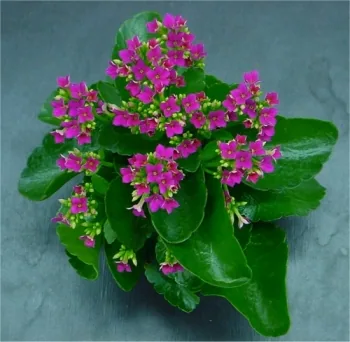
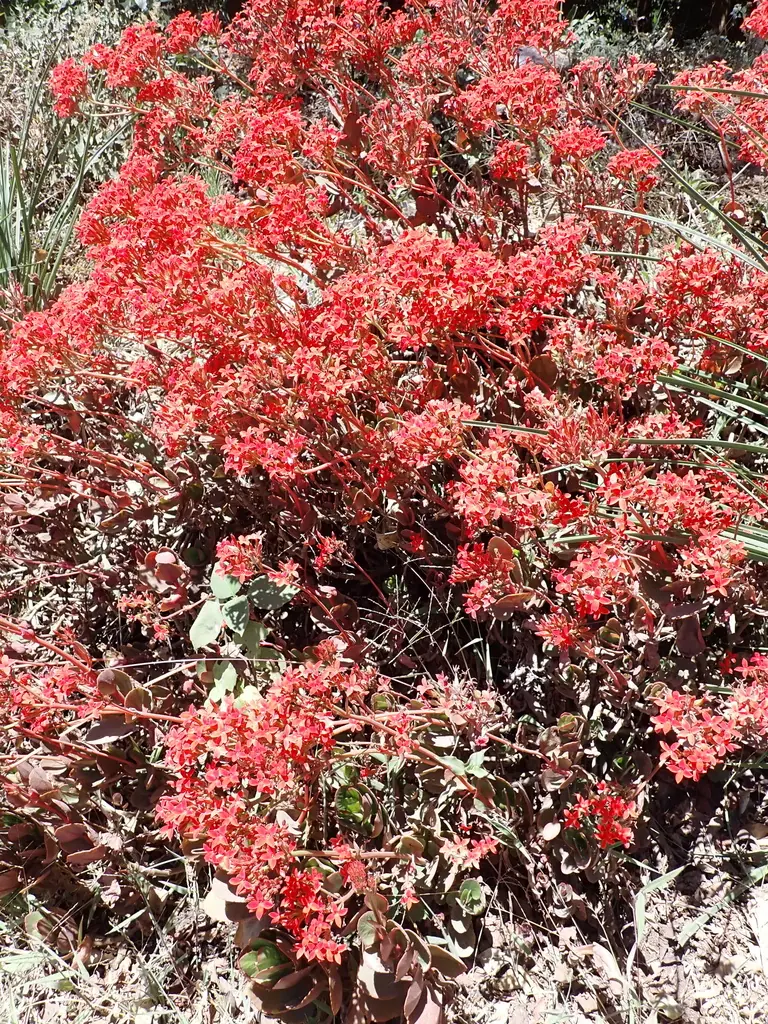
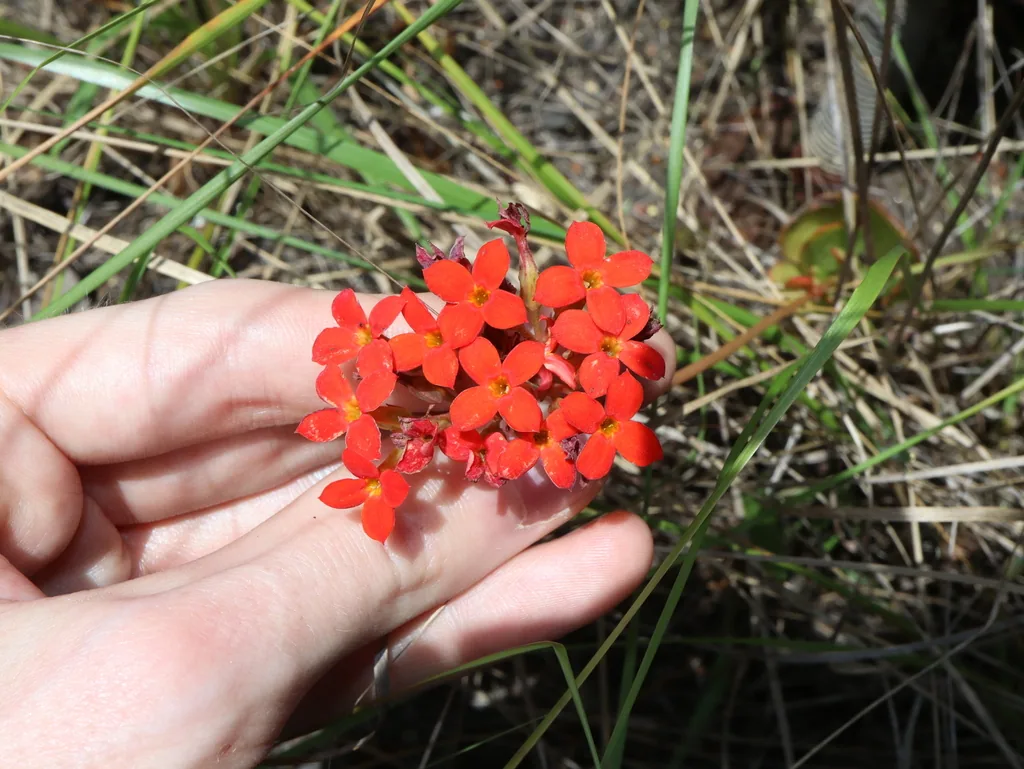

How to Grow and Care for Kalanchoe
Kalanchoe blossfeldiana
Written by Emilio Marruso · last checked
Toxic to: Cats, Dogs, People · Why
At a glance
Kalanchoe is a perennial that grows indoors or in pots, and it can spend the summer outdoors in a bright, lightly shaded spot. It asks for little: let the soil dry between waterings, feed it once a month while it grows, and trim old flower stems after blooming. To bring back the flowers, give it 14 hours of total darkness a day for 6 weeks in fall and winter.
- Sun
Outdoors in summer: a bright spot with light shade
What the sources say (5)
Planting: Outdoors once the weather has settled, sometime in March (Florida); in Illinois transplanted or moved outdoors during the summer months
Florida: Once the weather has settled sometime in March, your kalanchoe can be planted outside in a full sun to part shade location.
— A kalanchoe by any other name - UF/IFAS Extension Charlotte County [2] Illinois: Plants can be transplanted or moved outdoors during Illinois’ summer months
— A nontraditional holiday plant: Kalanchoe | Good Growing | Illinois Extension | Illinois [3] According to Clemson HGIC: After danger of frost, move outdoors to a bright, lightly shaded spot for the summer.
— Kalanchoe | Home & Garden Information Center [5] Once the weather has settled sometime in March, your kalanchoe can be planted outside in a full sun to part shade location.
— A kalanchoe by any other name - UF/IFAS Extension Charlotte County [2] Plants can be transplanted or moved outdoors during Illinois’ summer months—plant in full sun to part shade in light, sandy soils.
— A nontraditional holiday plant: Kalanchoe | Good Growing | Illinois Extension | Illinois [3] - Water
Let the soil dry between waterings; never leave it sitting in a saucer of water
What the sources say (3)
Watering notes: Overwatering can cause root rot or stem rot; do not let plants sit in a saucer of water and ensure proper drainage; outdoors little water is needed through the growing season
Overwatering can cause root rot or stem rot.
— Kalanchoe blossfeldiana (Christmas Kalanchoe, Florist Kalanchoe, Madagascar Widow's Thrill) | North Carolina Extension Gardener Plant Toolbox [1] Allow the soil to dry between waterings and make sure they have proper drainage – do not allow them to sit in a saucer of water.
— A kalanchoe by any other name - UF/IFAS Extension Charlotte County [2] Little water and light fertilizer are needed throughout the growing season.
— A nontraditional holiday plant: Kalanchoe | Good Growing | Illinois Extension | Illinois [3] - Cold
Move it outdoors only after the danger of frost has passed
What the sources say (5)
Planting: Outdoors once the weather has settled, sometime in March (Florida); in Illinois transplanted or moved outdoors during the summer months
Florida: Once the weather has settled sometime in March, your kalanchoe can be planted outside in a full sun to part shade location.
— A kalanchoe by any other name - UF/IFAS Extension Charlotte County [2] Illinois: Plants can be transplanted or moved outdoors during Illinois’ summer months
— A nontraditional holiday plant: Kalanchoe | Good Growing | Illinois Extension | Illinois [3] According to Clemson HGIC: After danger of frost, move outdoors to a bright, lightly shaded spot for the summer.
— Kalanchoe | Home & Garden Information Center [5] Once the weather has settled sometime in March, your kalanchoe can be planted outside in a full sun to part shade location.
— A kalanchoe by any other name - UF/IFAS Extension Charlotte County [2] Plants can be transplanted or moved outdoors during Illinois’ summer months—plant in full sun to part shade in light, sandy soils.
— A nontraditional holiday plant: Kalanchoe | Good Growing | Illinois Extension | Illinois [3] - Feeding
Once a month while it grows, with a balanced houseplant fertilizer
What the sources say (4)
How often: Once a month during active growth
outdoors in summer: Little water and light fertilizer are needed throughout the growing season.
— A nontraditional holiday plant: Kalanchoe | Good Growing | Illinois Extension | Illinois [3] Fertilize actively growing plants with any houseplant fertilizer once a month.
— Kalanchoe | Home & Garden Information Center [5] Mineral fertilizers: A balanced houseplant fertilizer, or a bloom-promoting one higher in phosphorus
Actively growing plants should be provided with a well-balanced fertilizer or a bloom-enhancing fertilizer that has higher levels of phosphorus.
— A nontraditional holiday plant: Kalanchoe | Good Growing | Illinois Extension | Illinois [3] Fertilize actively growing plants with any houseplant fertilizer once a month.
— Kalanchoe | Home & Garden Information Center [5] - Pruning
After flowering, cut back tall growth and old flower stems
What the sources say (1)
Pruning: After flowering, cut back tall growth and old flower stems
After flowering, shift the plant to a slightly larger pot. Kalanchoes are succulents that grow best in a well-drained and well- aerated potting soil, such 60% peat moss and 40% perlite. Cut back tall growth and old flower stems.
— Kalanchoe | Home & Garden Information Center [5] - Pests
Aphids, mealybugs, spider mites and scale; too much water rots roots and stems
What the sources say (4)
Pests: aphids, mealybugs, spider mites, brown scale
The most common insect pests include aphids, mealybugs, and spider mites.
— Kalanchoe blossfeldiana (Christmas Kalanchoe, Florist Kalanchoe, Madagascar Widow's Thrill) | North Carolina Extension Gardener Plant Toolbox [1] Mealybugs, aphids and brown scale are the most common insect pests of kalanchoe.
— Kalanchoe | Home & Garden Information Center [5] Diseases: root rot, stem rot, powdery mildew
Overwatering can cause root rot or stem rot. To prevent powdery mildew, provide good air circulation around the plant.
— Kalanchoe blossfeldiana (Christmas Kalanchoe, Florist Kalanchoe, Madagascar Widow's Thrill) | North Carolina Extension Gardener Plant Toolbox [1] Powdery mildew is another possible disease problem for kalanchoe.
— Kalanchoe | Home & Garden Information Center [5] - Watch out
No flowers? Give it 14 hours of total darkness a day for 6 weeks in fall and winter
- Propagation
From stem cuttings or leaf cuttings
What the sources say (2)
Propagation: Stem cuttings and leaf cuttings
This plant can be propagated by their stem or leaf cuttings.
— Kalanchoe blossfeldiana (Christmas Kalanchoe, Florist Kalanchoe, Madagascar Widow's Thrill) | North Carolina Extension Gardener Plant Toolbox [1] Kalenchoe blossfeldiana can be propagated from leaf or stem cuttings.
— A nontraditional holiday plant: Kalanchoe | Good Growing | Illinois Extension | Illinois [3] - Containers
Grows well in pots and indoors; make sure the pot drains well
What the sources say (2)
In containers: Yes
The florist kalanchoe is an excellent container plant and will brighten any area of your home.
— Kalanchoe blossfeldiana (Christmas Kalanchoe, Florist Kalanchoe, Madagascar Widow's Thrill) | North Carolina Extension Gardener Plant Toolbox [1] Indoors: Yes
Kalanchoe ( Kalanchoe blossfeldiana ) is a popular houseplant typically available for sale during late winter and spring months.
— Kalanchoe | Home & Garden Information Center [5] - Safety
Toxic if eaten by people, dogs and cats; it can be fatal to pets. Keep it out of reach
Overview
Florist kalanchoe is a flowering succulent grown as a houseplant or container plant, hardy outdoors in USDA zones 10 to 12. [1] It is drought tolerant, should dry out between waterings, and is propagated by stem or leaf cuttings. [1] All parts are toxic if ingested by people, dogs and cats. [1][3]
Kalanchoe care
How to water Kalanchoe
Watering
The sources give different values depending on region, zone or growing conditions.
What each source says
According to NC State Extension (species): Drought tolerant; allow the soil to dry out between waterings, then water deeply
According to University of Arkansas Extension: Water on a weekly basis
According to Clemson HGIC: Allow the soil to dry slightly between waterings
What the sources say (4)
According to NC State Extension (species): These plants are drought tolerant, and it is best to allow the soil to dry out between waterings and then water them deeply.According to University of Arkansas Extension: Give them good light and water on a weekly basisAccording to Clemson HGIC: Allow the soil to dry slightly between waterings.These plants are drought tolerant, and it is best to allow the soil to dry out between waterings and then water them deeply.Watering notes
Overwatering can cause root rot or stem rot; do not let plants sit in a saucer of water and ensure proper drainage; outdoors little water is needed through the growing season
What the sources say (3)
Overwatering can cause root rot or stem rot.Allow the soil to dry between waterings and make sure they have proper drainage – do not allow them to sit in a saucer of water.Little water and light fertilizer are needed throughout the growing season.How much light Kalanchoe needs
The sources give different values depending on region, zone or growing conditions.
What each source says
According to NC State Extension (species): Bright indirect sunlight or partial shade; afternoon shade recommended
According to Clemson HGIC: Full sun
outdoors, Florida: Full sun to part shade
outdoors, Illinois: Full sun to part shade
What the sources say (6)
According to NC State Extension (species): The florist kalanchoe prefers bright indirect sunlight or partial shade. Prolonged direct sun can scorch the leaves so afternoon shade is recommended.According to Clemson HGIC: Kalanchoe grows best in full sun and aoutdoors, Florida: your kalanchoe can be planted outside in a full sun to part shade location.outdoors, Illinois: plant in full sun to part shade in light, sandy soils.The florist kalanchoe prefers bright indirect sunlight or partial shade. Prolonged direct sun can scorch the leaves so afternoon shade is recommended.Once the weather has settled sometime in March, your kalanchoe can be planted outside in a full sun to part shade location.How much cold Kalanchoe can take
Hardiness, coldest zone
The sources give different values depending on region, zone or growing conditions.
What each source says
According to NC State Extension (species): 10a [winter low −1.1 to 1.7 °C (30 to 35 °F)]
According to NC State Extension (genus Kalanchoe): 9a [winter low −6.7 to −3.9 °C (20 to 25 °F)]
What the sources say (3)
According to NC State Extension (species): USDA Plant Hardiness Zone:
10a, 10b, 11a, 11b, 12a, 12bAccording to NC State Extension (genus Kalanchoe): USDA Plant Hardiness Zone:
9a, 9b, 10a, 10b, 11a, 11b, 12a, 12bUSDA Plant Hardiness Zone:
10a, 10b, 11a, 11b, 12a, 12bHardiness, warmest zone
12b [winter low 12.8 to 15.6 °C (55 to 60 °F)]
What the sources say (1)
USDA Plant Hardiness Zone:
10a, 10b, 11a, 11b, 12a, 12bWhere to grow Kalanchoe
Indoors
Yes
What the sources say (1)
Kalanchoe ( Kalanchoe blossfeldiana ) is a popular houseplant typically available for sale during late winter and spring months.In containers
Yes
What the sources say (1)
The florist kalanchoe is an excellent container plant and will brighten any area of your home.How to propagate Kalanchoe
Stem cuttings and leaf cuttings
What the sources say (2)
This plant can be propagated by their stem or leaf cuttings.Kalenchoe blossfeldiana can be propagated from leaf or stem cuttings.How to grow Kalanchoe
The plant
Life cycle
perennial
What the sources say (1)
Life Cycle:
PerennialFamily
Crassulaceae
What the sources say (1)
It is native to Northeast Madagascar and is a member of the stonecrop family (Crassulaceae).Mature height
Pests and diseases
Pests
aphids, mealybugs, spider mites, brown scale
What the sources say (2)
The most common insect pests include aphids, mealybugs, and spider mites.Mealybugs, aphids and brown scale are the most common insect pests of kalanchoe.Diseases
root rot, stem rot, powdery mildew
What the sources say (2)
Overwatering can cause root rot or stem rot. To prevent powdery mildew, provide good air circulation around the plant.Powdery mildew is another possible disease problem for kalanchoe.Fertilizing
When
While the plant is actively growing
What the sources say (2)
Actively growing plants should be provided with a well-balanced fertilizer or a bloom-enhancing fertilizer that has higher levels of phosphorus.Fertilize actively growing plants with any houseplant fertilizer once a month.How often
Once a month during active growth
What each source says
outdoors in summer: Light fertilizer through the growing season
What the sources say (2)
outdoors in summer: Little water and light fertilizer are needed throughout the growing season.Fertilize actively growing plants with any houseplant fertilizer once a month.Mineral fertilizers
A balanced houseplant fertilizer, or a bloom-promoting one higher in phosphorus
What the sources say (2)
Actively growing plants should be provided with a well-balanced fertilizer or a bloom-enhancing fertilizer that has higher levels of phosphorus.Fertilize actively growing plants with any houseplant fertilizer once a month.Kalanchoe pests and problems
Overwatering rot
Symptom: Root rot or stem rot from overwatering.
What to do: Allow the soil to dry between waterings, ensure proper drainage and do not let the plant sit in water.
What the sources say (2)
Overwatering can cause root rot or stem rot.
— Kalanchoe blossfeldiana (Christmas Kalanchoe, Florist Kalanchoe, Madagascar Widow's Thrill) | North Carolina Extension Gardener Plant Toolbox [1] Root rot usually results from a soil mix that does not drain quickly or from overly frequent watering. Do not let plants sit in water.
— Kalanchoe | Home & Garden Information Center [5] Insect pests
Symptom: Aphids, mealybugs and spider mites.
What to do: Isolate infested plants; wipe mealybugs off with alcohol on a cotton swab; scrape off brown scale; remove aphids by hand.
What the sources say (2)
The most common insect pests include aphids, mealybugs, and spider mites.
— Kalanchoe blossfeldiana (Christmas Kalanchoe, Florist Kalanchoe, Madagascar Widow's Thrill) | North Carolina Extension Gardener Plant Toolbox [1] Isolate plants that are infested. Control mealybugs by wiping them off with alcohol using a cotton swab.
— Kalanchoe | Home & Garden Information Center [5] Powdery mildew
Symptom: Mottled leaves with yellow spotting, dead flecks or ring spot patterns; stunted plants that may not flower.
What to do: Provide good air circulation around the plant.
What the sources say (2)
To prevent powdery mildew, provide good air circulation around the plant.
— Kalanchoe blossfeldiana (Christmas Kalanchoe, Florist Kalanchoe, Madagascar Widow's Thrill) | North Carolina Extension Gardener Plant Toolbox [1] Leaves may be mottled and have yellow spotting, dead flecks, line or ring spot patterns.
— Kalanchoe | Home & Garden Information Center [5] Failure to bloom
Symptom: The plant does not bloom.
What to do: Provide the period of darkness required to reset the bloom cycle: total darkness 14 hours a day for at least 6 weeks in fall and winter.
What the sources say (2)
If the plant fails to bloom, it may be the result of the plant not receiving the period of darkness required to reset the bloom cycle.
— Kalanchoe blossfeldiana (Christmas Kalanchoe, Florist Kalanchoe, Madagascar Widow's Thrill) | North Carolina Extension Gardener Plant Toolbox [1] In the fall and winter, total darkness is required for 14 hours a day for at least 6 weeks.
— Kalanchoe blossfeldiana (Christmas Kalanchoe, Florist Kalanchoe, Madagascar Widow's Thrill) | North Carolina Extension Gardener Plant Toolbox [1]
Remedies
Each remedy shows what official sources say about it; traditional remedies without an official source are marked as such. Harmful ones are listed so you know to avoid them.
Treating the plant
mealybugs
wiping with alcohol Works
How: Isolate infested plants. Control mealybugs by wiping them off with alcohol using a cotton swab.
Isolate plants that are infested. Control mealybugs by wiping them off with alcohol using a cotton swab.
— Kalanchoe | Home & Garden Information Center [5] What the evidence says Isolate plants that are infested. Control mealybugs by wiping them off with alcohol using a cotton swab.
— Kalanchoe | Home & Garden Information Center [5]
aphids
removing by hand Works
How: Aphids can be removed by hand.
Aphids can be removed by hand.
— Kalanchoe | Home & Garden Information Center [5] What the evidence says Aphids can be removed by hand.
— Kalanchoe | Home & Garden Information Center [5] soap solution Not verified
Traditional remedy, not verified by an official source.
For example, spraying home remedies that contain dish detergent on plants on a sunny day can injure the plant, essentially burning it.
— extension.psu.edu [8] Most dish soaps are not naturally occurring substances nor are they biodegradable.
— ucanr.edu [9] How: Diluted in water (20 grams of soap for 1 liter); wash the plant with the solution, wrapping the ground with polyethylene before.
brown scale
powdery mildew
air flow Works
How: To prevent powdery mildew allow for plenty of air flow around plant material.
To prevent powdery mildew allow for plenty of air flow around plant material.
— Kalanchoe | Home & Garden Information Center [5] What the evidence says To prevent powdery mildew allow for plenty of air flow around plant material.
— Kalanchoe | Home & Garden Information Center [5]
scale insects
garlic extract spray Not verified
Traditional remedy, not verified by an official source.
You can find lots of homemade recipes online, but be very cautious using these substances because their efficacy, toxicity, and environmental effects have not been university tested.
— extension.unh.edu [10] How: 5-6 cloves of garlic are crumbled in the mortar and then pour with a glass of water. The mixture is extracted in the dark place for several hours, then filtered and sprayed on the plant.
Is Kalanchoe toxic to pets?
Reported by the source, quoted verbatim. This is not medical or veterinary advice: if a person or an animal may have eaten this plant, contact a poison control centre or a veterinarian.
Animals
Keep this plant out of the reach of children, dogs, and cats due to its toxicity if ingested.
[1]- Poisonous parts
Poison Part: Flowers Leaves Stems Download Print-Friendly QR
[1]- Toxic principle
Poison Toxic Principle: bufadienolides Causes Contact Dermatitis: No
[1]- Symptoms
Poison Symptoms: If ingested by humans or pets, it can cause nausea, vomiting, diarrhea, lethargy, and abnormal heart rhythms or arrhythmias.
[1]- Severity
Poison Severity: Medium Poison Symptoms: If ingested by
[1]
Ingestion of this plant by pets can be fatal and causing abnormal heart rate, seizures, and death.
[1]- Poisonous parts
Poison Part: Flowers Leaves Stems Download Print-Friendly QR
[1]- Toxic principle
Poison Toxic Principle: bufadienolides Causes Contact Dermatitis: No
[1]- Symptoms
Poison Symptoms: If ingested by humans or pets, it can cause nausea, vomiting, diarrhea, lethargy, and abnormal heart rhythms or arrhythmias.
[1]- Severity
Poison Severity: Medium Poison Symptoms: If ingested by
[1]
The ASPCA lists Kalanchoe as toxic to dogs and cats. The group of compounds responsible for pet harm is cardiotoxic steroids known as bufadienolides. These compounds are found in all plant parts, with higher concentrations in the blooms.
[3]- Poisonous parts
These compounds are found in all plant parts, with higher concentrations in the blooms.
[3]- Toxic principle
The group of compounds responsible for pet harm is cardiotoxic steroids known as bufadienolides.
[3]- Symptoms
Signs of toxicosis in pets include excessive salivation, depression, and gastrointestinal distress beginning a few hours after consumption.
[3]
People
If ingested by humans or pets, it can cause nausea, vomiting, diarrhea, lethargy, and abnormal heart rhythms or arrhythmias.
[1]- Poisonous parts
Poison Part: Flowers Leaves Stems Download Print-Friendly QR
[1]- Toxic principle
Poison Toxic Principle: bufadienolides Causes Contact Dermatitis: No
[1]- Symptoms
Poison Symptoms: If ingested by humans or pets, it can cause nausea, vomiting, diarrhea, lethargy, and abnormal heart rhythms or arrhythmias.
[1]- Severity
Poison Severity: Medium Poison Symptoms: If ingested by
[1]
Calendar
Planting
Outdoors once the weather has settled, sometime in March (Florida); in Illinois transplanted or moved outdoors during the summer months
What each source says
Florida: Outdoors once the weather has settled, sometime in March
Illinois: Transplanted or moved outdoors during the summer months
According to Clemson HGIC: Move outdoors after danger of frost, to a bright, lightly shaded spot for the summer
What the sources say (5)
Florida: Once the weather has settled sometime in March, your kalanchoe can be planted outside in a full sun to part shade location.Illinois: Plants can be transplanted or moved outdoors during Illinois’ summer monthsAccording to Clemson HGIC: After danger of frost, move outdoors to a bright, lightly shaded spot for the summer.Once the weather has settled sometime in March, your kalanchoe can be planted outside in a full sun to part shade location.Plants can be transplanted or moved outdoors during Illinois’ summer months—plant in full sun to part shade in light, sandy soils.Pruning
After flowering, cut back tall growth and old flower stems
What the sources say (1)
After flowering, shift the plant to a slightly larger pot. Kalanchoes are succulents that grow best in a well-drained and well- aerated potting soil, such 60% peat moss and 40% perlite. Cut back tall growth and old flower stems.Months as given by the sources, which are mostly from the United States (northern hemisphere). In the southern hemisphere they shift by about six months.
Relative to frost
Less precise estimate: there is no weather station within 300 km.
Find frost dates by ZIP code or city
Transplant: around the last frost
After danger of frost, move outdoors to a bright, lightly shaded spot for the summer.
— Kalanchoe | Home & Garden Information Center [5]
Count from the average frost dates where you live.
Indicative values
Values from a secondary source, not checked word for word like the rest of this page. Use them as a starting point.
- Hours of sun
- 6-10 hoursIndicative value, adapt it to your climate · Secondary source
- Drought tolerant
- yesIndicative value, adapt it to your climate · Secondary source
- Soil
- Well-drainedIndicative value, adapt it to your climate · Secondary source
- Soil pH
- 5.8-6.3Indicative value, adapt it to your climate · Secondary source
- Care level
- ModerateIndicative value, adapt it to your climate · Secondary source
- Growth rate
- LowIndicative value, adapt it to your climate · Secondary source
Similar plants
- Chandelier Plant Kalanchoe delagoensis
- Kalanchoe Kalanchoe beharensis
- Mother of Thousands Kalanchoe daigremontiana
- Panda Plant Kalanchoe tomentosa
- Silver Teaspoons Kalanchoe bracteata
- Allegheny Stonecrop Hylotelephium telephioides
- Blue Echeveria Echeveria secunda
- Carpet Sedum Sedum lineare
Sources
Every value above is quoted from these documents. Links lead to the original publisher.
- Kalanchoe blossfeldiana (Christmas Kalanchoe, Florist Kalanchoe, Madagascar Widow's Thrill) | North Carolina Extension Gardener Plant Toolbox · plants.ces.ncsu.edu, consulted
- A kalanchoe by any other name - UF/IFAS Extension Charlotte County · blogs.ifas.ufl.edu, consulted
- A nontraditional holiday plant: Kalanchoe | Good Growing | Illinois Extension | Illinois · extension.illinois.edu, consulted
- Kalanchoe (Chandelier Plant, Devils Backbone, Kalanchoe, Mother-In-Law-Plant, Mother of Millions, Mother of Thousands) | North Carolina Extension Gardener Plant Toolbox · plants.ces.ncsu.edu, consulted
- Kalanchoe | Home & Garden Information Center · hgic.clemson.edu, consulted
- Kalanchoe · uaex.uada.edu, consulted
- Kalanchoe - Kalanchoe | North Carolina Extension Gardener Plant Toolbox · plants.ces.ncsu.edu, consulted
- extension.psu.edu · extension.psu.edu
- ucanr.edu · ucanr.edu
- extension.unh.edu · extension.unh.edu
Written by Emilio Marruso · last checked