
How to Grow and Care for Kalanchoe
Kalanchoe beharensis
Written by Emilio Marruso · last checked
At a glance
This kalanchoe is an easygoing perennial that grows 3–5 ft tall and thrives anywhere from full sun to partial shade. It is happy in a pot, even indoors, and you can start new plants from offsets, leaf cuttings, stem cuttings or seeds. The one golden rule: let the soil dry between waterings, because too much water is the most common reason it fails.
- Sun
Full sun to partial shade
What the sources say (3)
Light: Full sun to partial shade
Mature plants do best in full sun to partial shade.
— Kalanchoe beharensis [4] Light Preference | Full Sun, Semi-Shade
— NParks | Kalanchoe beharensis [2] These easy-to-grow plants need full sun or semi-shade exposure
— Kalanchoe beharensis or Felt bush | Care and Growing [5] - Water
Let the soil dry between waterings; too much water is the most common cause of failure
What the sources say (2)
- Spacing
2 ft between plants
What the sources say (1)
Spacing: 60 cm (0.6 m)
Planting Distance | 0.6 m
— NParks | Kalanchoe beharensis [2] - Pests
Mealybugs, aphids and brown scale, controlled with neem oil; watch for root rot and powdery mildew
What the sources say (2)
Pests: mealybugs, aphids, brown scale
Insects, Diseases, and Other Plant Problems: Monitor for mealybugs, aphids and brown scale.
— Kalanchoe (Chandelier Plant, Devils Backbone, Kalanchoe, Mother-In-Law-Plant, Mother of Millions, Mother of Thousands) | North Carolina Extension Gardener Plant Toolbox [1] Diseases: root rot, powdery mildew
Root rot can result from overwatering. Powdery mildew can also occur.
— Kalanchoe (Chandelier Plant, Devils Backbone, Kalanchoe, Mother-In-Law-Plant, Mother of Millions, Mother of Thousands) | North Carolina Extension Gardener Plant Toolbox [1] - Size
3 to 5 ft tall
What the sources say (1)
Mature height: 91.44-152.4 cm (3-5 ft)
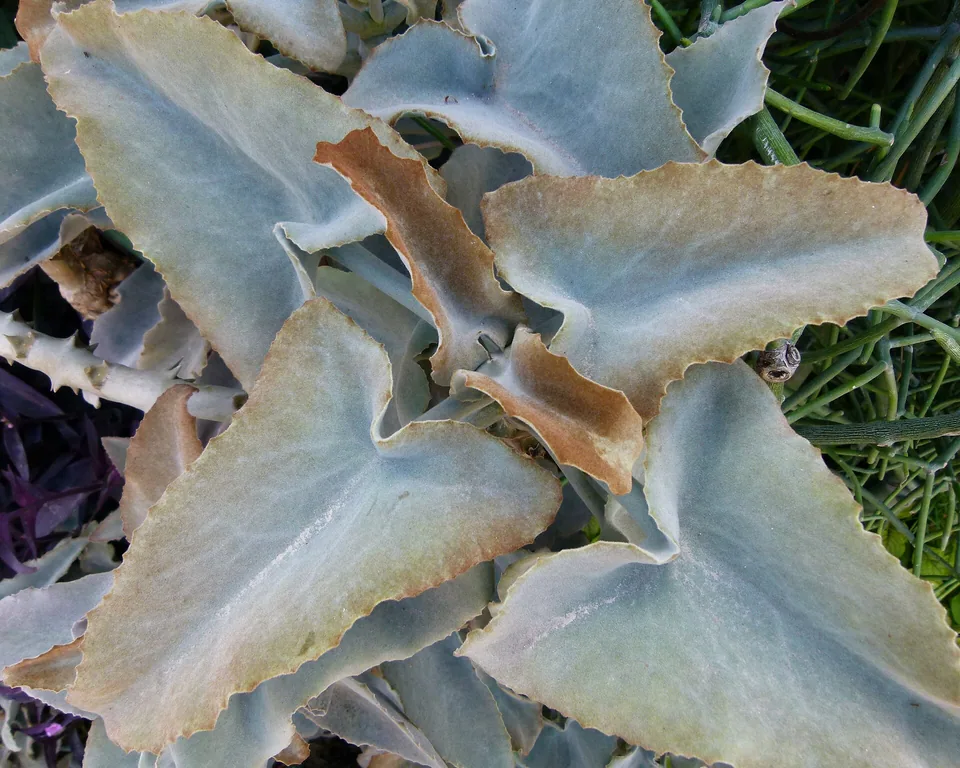
Kalanchoe beharensis (Velvet Leaf Kalanchoe) 3 to 5 ft. tall, tree-like shrub, arrowhead-shaped, rusty brown colored leaves with felt-like hairs, greenish-yellow blooms
— Kalanchoe (Chandelier Plant, Devils Backbone, Kalanchoe, Mother-In-Law-Plant, Mother of Millions, Mother of Thousands) | North Carolina Extension Gardener Plant Toolbox [1] - Propagation
From offsets, leaf cuttings, stem cuttings or seeds
What the sources say (3)
Propagation: Offsets, leaf cuttings, stem cuttings and seeds
It is propagated by removal of small offsets at the base of the main plant or by leaf and stem cuttings.
— Kalanchoe beharensis [4] Felt bush propagates by seeds or by cuttings.
— Kalanchoe beharensis or Felt bush | Care and Growing [5] Propagation Method | Stem Cutting (Herbaceous, Tip)
— NParks | Kalanchoe beharensis [2] - Containers
Grows well in pots, indoors too
Overview
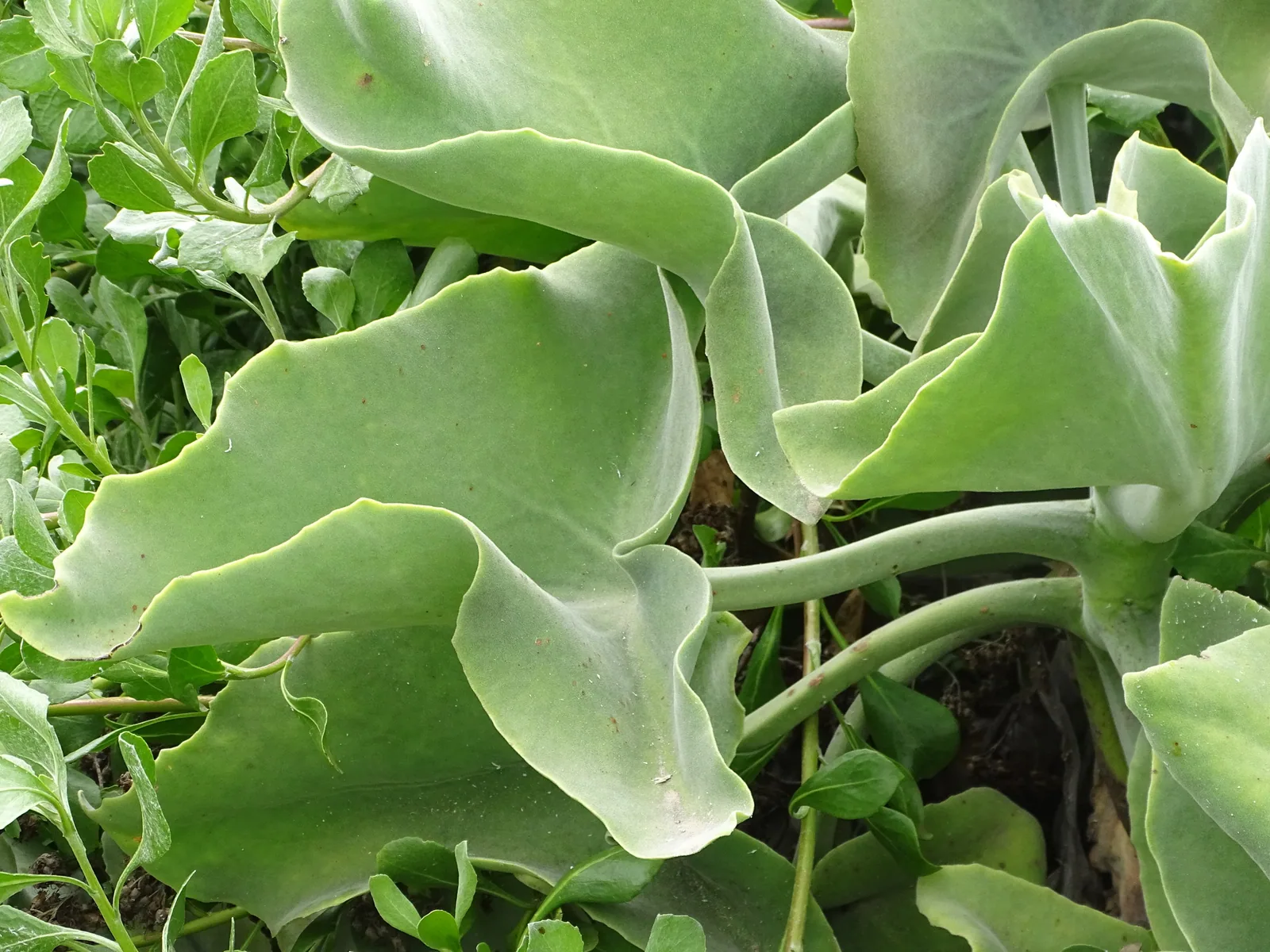
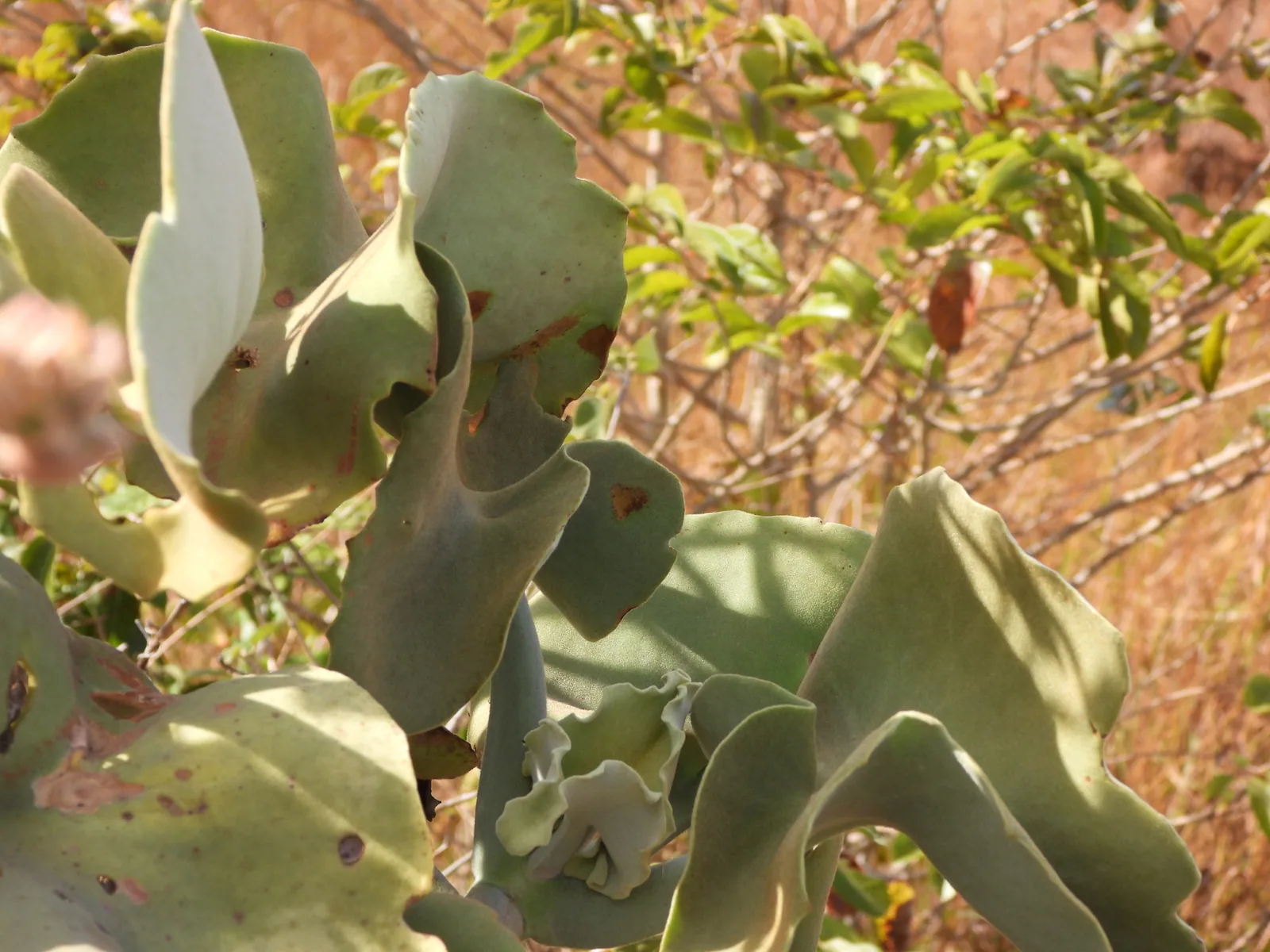
Kalanchoe beharensis is a large succulent shrub from Madagascar with velvety, felt-like leaves. [3][4] It does best in full sun to partial shade in well-drained soil and is easy to grow indoors or in containers. [4][2] Over-watering is the most common cause of plant failure. [4]
This record is incomplete: the sources we read do not cover every field yet.
Not yet covered by our sources: Hardiness, coldest zone, Hardiness, warmest zone, Pruning
Kalanchoe care
How to water Kalanchoe
Watering
The sources give different values depending on region, zone or growing conditions.
What each source says
According to NParks: Avoid overwatering; allow the soil to dry between waterings
According to LLIFLE: Moderate watering in autumn and spring; in summer water thoroughly and let dry before watering again; in winter only occasional watering
According to Consulta Plantas: Water frequently from spring to fall; reduce watering in winter
What the sources say (3)
According to NParks: Be careful to avoid overwatering and allow the soil to dry between watering.According to LLIFLE: It needs moderate watering in autumn and spring while in summer it should be watered thoroughly and allowed to dry before watering again. In winter give only occasional watering (only when the plant starts shrivelling)According to Consulta Plantas: Water frequently from spring to fall; reduce watering in winter (keep the substrate slightly moist).How much light Kalanchoe needs
Full sun to partial shade
How much cold Kalanchoe can take
Hardiness, coldest zone
Not stated in the sources we read.
Hardiness, warmest zone
Not stated in the sources we read.
Where to grow Kalanchoe
Indoors
Yes
In containers
Yes
What the sources say (1)
Landscape Uses
| Container Planting, Indoor PlantSpacing
60 cm (0.6 m)
What the sources say (1)
Planting Distance
| 0.6 mHow to propagate Kalanchoe
Offsets, leaf cuttings, stem cuttings and seeds
What the sources say (3)
It is propagated by removal of small offsets at the base of the main plant or by leaf and stem cuttings.Felt bush propagates by seeds or by cuttings.Propagation Method
| Stem Cutting (Herbaceous, Tip)How to grow Kalanchoe
The plant
Life cycle
perennial
What the sources say (1)
Kalanchoe is a genus of tropical, perennial succulents native to Africa and Asia.Family
Crassulaceae
What the sources say (1)
It is a member of the stonecrop family (Crassulaceae) and has 174 accepted species.Mature height
91.44-152.4 cm (3-5 ft)
What the sources say (1)
Kalanchoe beharensis (Velvet Leaf Kalanchoe) 3 to 5 ft. tall, tree-like shrub, arrowhead-shaped, rusty brown colored leaves with felt-like hairs, greenish-yellow bloomsPests and diseases
Pests
mealybugs, aphids, brown scale
What the sources say (1)
Insects, Diseases, and Other Plant Problems: Monitor for mealybugs, aphids and brown scale.Diseases
root rot, powdery mildew
What the sources say (1)
Root rot can result from overwatering. Powdery mildew can also occur.Fertilizing
How often
The sources give different values depending on region, zone or growing conditions.
What each source says
Kalanchoe in general: Every few months
What the sources say (1)
Kalanchoe in general: Fertilize kalanchoes every few months with a half-strength solution of an all-purpose, water-soluble fertilizer.Mineral fertilizers
The sources give different values depending on region, zone or growing conditions.
What each source says
Kalanchoe in general: All-purpose water-soluble fertilizer at half strength
What the sources say (1)
Kalanchoe in general: Fertilize kalanchoes every few months with a half-strength solution of an all-purpose, water-soluble fertilizer.Kalanchoe pests and problems
Overwatering
Symptom: Over-watering is the most common cause of plant failure
What to do: Avoid overwatering and allow the soil to dry between watering
Aphids and mealybugs
Symptom: This plant is prone to attack by aphids and mealybugs
What to do: Can be controlled with neem oil
What the sources say (1)
This plant is prone to attack by aphids and mealybugs which can be controlled with neem oil.
— NParks | Kalanchoe beharensis [2]
Remedies
Each remedy shows what official sources say about it; traditional remedies without an official source are marked as such. Harmful ones are listed so you know to avoid them.
Treating the plant
aphids and mealybugs
neem oil Official source, not independently tested
How: Aphids and mealybugs can be controlled with neem oil.
This plant is prone to attack by aphids and mealybugs which can be controlled with neem oil.
— NParks | Kalanchoe beharensis [2]
Calendar
Pruning
Not stated in the sources we read.
Months as given by the sources, which are mostly from the United States (northern hemisphere). In the southern hemisphere they shift by about six months.
Indicative values
Values from a secondary source, not checked word for word like the rest of this page. Use them as a starting point.
- Drought tolerant
- yesIndicative value, adapt it to your climate · Secondary source
- Soil pH
- 6-6.5Indicative value, adapt it to your climate · Secondary source
- USDA hardiness zones
- 11-12 [winter low 4.4 to 15.6 °C (40 to 60 °F)]Indicative value, adapt it to your climate · Secondary source
- Care level
- MediumIndicative value, adapt it to your climate · Secondary source
- Growth rate
- LowIndicative value, adapt it to your climate · Secondary source
- Pruning
- March, April, May, June, JulyIndicative value, adapt it to your climate · Secondary source
Similar plants
- Chandelier Plant Kalanchoe delagoensis
- Mother of Thousands Kalanchoe daigremontiana
- Kalanchoe Kalanchoe blossfeldiana
- Panda Plant Kalanchoe tomentosa
- Silver Teaspoons Kalanchoe bracteata
- Allegheny Stonecrop Hylotelephium telephioides
- Blue Echeveria Echeveria secunda
- Carpet Sedum Sedum lineare
Sources
Every value above is quoted from these documents. Links lead to the original publisher.
- Kalanchoe (Chandelier Plant, Devils Backbone, Kalanchoe, Mother-In-Law-Plant, Mother of Millions, Mother of Thousands) | North Carolina Extension Gardener Plant Toolbox · plants.ces.ncsu.edu, consulted
- NParks | Kalanchoe beharensis · nparks.gov.sg, consulted
- Kalanchoe beharensis - Botany Brisbane · botanybrisbane.com, consulted
- Kalanchoe beharensis · llifle.eu, consulted
- Kalanchoe beharensis or Felt bush | Care and Growing · consultaplantas.com, consulted
- planttalk.colostate.edu · planttalk.colostate.edu
Written by Emilio Marruso · last checked