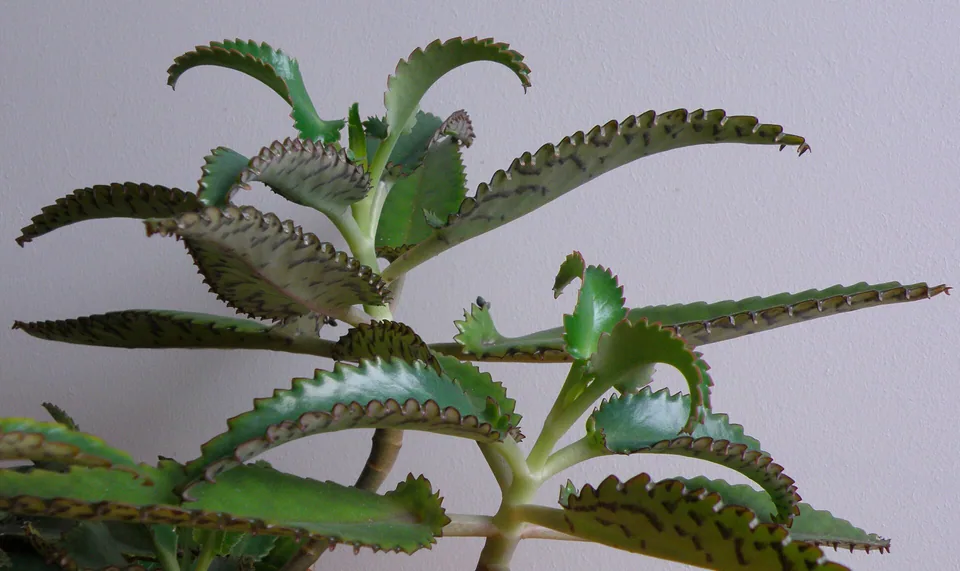


How to Grow and Care for Mother of Thousands
Kalanchoe daigremontiana
Written by Emilio Marruso · last checked
Toxic to: Cats, Dogs, People · Why
At a glance
This kalanchoe has a charming trick: tiny plantlets grow along the edges of its leaves, and each one can become a new plant in well-drained soil in spring. It happily lives indoors or in a pot, in bright indirect light. Water sparingly, let the soil dry out between waterings, and watch it grow to 1–3 feet tall.
- Sun
Bright indirect light or partial shade; avoid hot midday sun, which scorches the leaves
What the sources say (1)
Light: Bright indirect sunlight or partial shade; can tolerate some direct sunlight but avoid hot midday sun
This plant prefers bright indirect sunlight or partial shade. It can tolerate some direct sunlight, but it is best to avoid the hot midday sun.
— Kalanchoe daigremontiana (Alligator Plant, Devil's Backbone, Maternity Plant, Mexican Hat Plant, Mother of Thousands) | North Carolina Extension Gardener Plant Toolbox [1] - Water
Water sparingly and let the soil dry between waterings; too much water rots the roots
What the sources say (2)
Watering notes: Reduce watering during the dormant stage; overwatering can cause root rot
Water this plant sparingly. Allow the soil to dry out between waterings and reduce watering during the plant's dormant stage.
— Kalanchoe daigremontiana (Alligator Plant, Devil's Backbone, Maternity Plant, Mexican Hat Plant, Mother of Thousands) | North Carolina Extension Gardener Plant Toolbox [1] Monitor for mealybugs, aphids, and spider mites. Overwatering can cause root rot.
— Kalanchoe daigremontiana (Alligator Plant, Devil's Backbone, Maternity Plant, Mexican Hat Plant, Mother of Thousands) | North Carolina Extension Gardener Plant Toolbox [1] - Cold
Survives winters down to 20 °F (−6.7 °C)
Hardy in average winters · USDA 9 · RHS H4 · Z9
What the sources say (2)
Hardiness, coldest zone: 9 [winter low −6.7 to −1.1 °C (20 to 30 °F)]
Mother of thousands is winter hardy in zones 9 to 11.
— Kalanchoe daigremontiana (Alligator Plant, Devil's Backbone, Maternity Plant, Mexican Hat Plant, Mother of Thousands) | North Carolina Extension Gardener Plant Toolbox [1] Hardiness, warmest zone: 11 [winter low 4.4 to 10 °C (40 to 50 °F)]
Mother of thousands is winter hardy in zones 9 to 11.
— Kalanchoe daigremontiana (Alligator Plant, Devil's Backbone, Maternity Plant, Mexican Hat Plant, Mother of Thousands) | North Carolina Extension Gardener Plant Toolbox [1] - Pests
Mealybugs, aphids and spider mites; also powdery mildew and rust
What the sources say (2)
Pests: mealybugs, aphids, spider mites
Insects, Diseases, and Other Plant Problems: Monitor for mealybugs, aphids, and spider mites. Overwatering can cause root rot.
— Kalanchoe daigremontiana (Alligator Plant, Devil's Backbone, Maternity Plant, Mexican Hat Plant, Mother of Thousands) | North Carolina Extension Gardener Plant Toolbox [1] Diseases: root rot (from overwatering), powdery mildew, rust
Overwatering can cause root rot. Powdery mildew and rust can occur.
— Kalanchoe daigremontiana (Alligator Plant, Devil's Backbone, Maternity Plant, Mexican Hat Plant, Mother of Thousands) | North Carolina Extension Gardener Plant Toolbox [1] - Watch out
The plant dies after it flowers: keep some of its plantlets to replace it
What the sources say (4)
Life cycle: perennial (monocarpic: the plant dies after flowering)
Mother of thousands Is a succulent, herbaceous perennial subshrub found in the desert or dry shrublands of its native Madagascar.
— Kalanchoe daigremontiana (Alligator Plant, Devil's Backbone, Maternity Plant, Mexican Hat Plant, Mother of Thousands) | North Carolina Extension Gardener Plant Toolbox [1] The plant is monocarpic, meaning that after flowering the plant will die.
— Kalanchoe daigremontiana (Alligator Plant, Devil's Backbone, Maternity Plant, Mexican Hat Plant, Mother of Thousands) | North Carolina Extension Gardener Plant Toolbox [1] Propagation: Plantlets from the leaf margins, planted in well-drained soil; best done in spring
It is easy to propagate by harvesting the tiny plantlets from the leaf margins and planting them in well-drained soil. Propagation is best done in the spring.
— Kalanchoe daigremontiana (Alligator Plant, Devil's Backbone, Maternity Plant, Mexican Hat Plant, Mother of Thousands) | North Carolina Extension Gardener Plant Toolbox [1] Good Growing Fact of the Week: The species Kalanchoe daigremontiana has earned the common name of Mother-of-Millions due to its ability to produce plantlets on the edge of the leaves.
— A nontraditional holiday plant: Kalanchoe | Good Growing | Illinois Extension | Illinois [5] - Size
1–3 ft tall and 1–2 ft wide
What the sources say (2)
Mature height: 30-91 cm (1-3 ft)
Height: 1 ft. 0 in. - 3 ft. 0 in. Width: 1 ft. 0 in. - 2 ft. 0 in.
— Kalanchoe daigremontiana (Alligator Plant, Devil's Backbone, Maternity Plant, Mexican Hat Plant, Mother of Thousands) | North Carolina Extension Gardener Plant Toolbox [1] Mature width: 30-61 cm (1-2 ft)
Height: 1 ft. 0 in. - 3 ft. 0 in. Width: 1 ft. 0 in. - 2 ft. 0 in.
— Kalanchoe daigremontiana (Alligator Plant, Devil's Backbone, Maternity Plant, Mexican Hat Plant, Mother of Thousands) | North Carolina Extension Gardener Plant Toolbox [1] - Propagation
In spring, plant the little plantlets from the leaf edges in well-drained soil
What the sources say (2)
Propagation: Plantlets from the leaf margins, planted in well-drained soil; best done in spring
It is easy to propagate by harvesting the tiny plantlets from the leaf margins and planting them in well-drained soil. Propagation is best done in the spring.
— Kalanchoe daigremontiana (Alligator Plant, Devil's Backbone, Maternity Plant, Mexican Hat Plant, Mother of Thousands) | North Carolina Extension Gardener Plant Toolbox [1] Good Growing Fact of the Week: The species Kalanchoe daigremontiana has earned the common name of Mother-of-Millions due to its ability to produce plantlets on the edge of the leaves.
— A nontraditional holiday plant: Kalanchoe | Good Growing | Illinois Extension | Illinois [5] - Containers
Grows well in pots and indoors
What the sources say (2)
In containers: Yes
In warmer climates consider using this plant in a rock garden or as a container plant on your patio.
— Kalanchoe daigremontiana (Alligator Plant, Devil's Backbone, Maternity Plant, Mexican Hat Plant, Mother of Thousands) | North Carolina Extension Gardener Plant Toolbox [1] Indoors: Yes
This plant is often used as a houseplant or in succulent gardens.
— Kalanchoe daigremontiana (Alligator Plant, Devil's Backbone, Maternity Plant, Mexican Hat Plant, Mother of Thousands) | North Carolina Extension Gardener Plant Toolbox [1] - Safety
Poisonous if eaten, even deadly for dogs and cats; wear gloves when handling it
Overview
Mother of thousands is a succulent perennial from Madagascar that produces small plantlets along its leaf edges. [1] It is often grown as a houseplant and needs sparing water and well-drained soil. [1] All parts are toxic if ingested, and the sap can cause contact dermatitis. [1]
Mother of Thousands care
How to water Mother of Thousands
Watering
The sources give different values depending on region, zone or growing conditions.
What each source says
According to NC State Extension (Kalanchoe daigremontiana): Water sparingly; allow the soil to dry out between waterings
According to NC State Extension (genus Kalanchoe): Water well and then allow the soil to dry out between waterings
What the sources say (3)
According to NC State Extension (Kalanchoe daigremontiana): Water this plant sparingly. Allow the soil to dry out between waterings and reduce watering during the plant's dormant stage.According to NC State Extension (genus Kalanchoe): Water these plants well and then allow the soil to dry out between waterings.Water this plant sparingly. Allow the soil to dry out between waterings and reduce watering during the plant's dormant stage.Watering notes
Reduce watering during the dormant stage; overwatering can cause root rot
What the sources say (2)
Water this plant sparingly. Allow the soil to dry out between waterings and reduce watering during the plant's dormant stage.Monitor for mealybugs, aphids, and spider mites. Overwatering can cause root rot.How much light Mother of Thousands needs
Bright indirect sunlight or partial shade; can tolerate some direct sunlight but avoid hot midday sun
What the sources say (1)
This plant prefers bright indirect sunlight or partial shade. It can tolerate some direct sunlight, but it is best to avoid the hot midday sun.How much cold Mother of Thousands can take
Hardiness, coldest zone
9 [winter low −6.7 to −1.1 °C (20 to 30 °F)]
What the sources say (1)
Mother of thousands is winter hardy in zones 9 to 11.Hardiness, warmest zone
11 [winter low 4.4 to 10 °C (40 to 50 °F)]
What the sources say (1)
Mother of thousands is winter hardy in zones 9 to 11.Where to grow Mother of Thousands
Indoors
Yes
What the sources say (1)
This plant is often used as a houseplant or in succulent gardens.In containers
Yes
What the sources say (1)
In warmer climates consider using this plant in a rock garden or as a container plant on your patio.How to propagate Mother of Thousands
Plantlets from the leaf margins, planted in well-drained soil; best done in spring
What the sources say (2)
It is easy to propagate by harvesting the tiny plantlets from the leaf margins and planting them in well-drained soil. Propagation is best done in the spring.Good Growing Fact of the Week: The species Kalanchoe daigremontiana has earned the common name of Mother-of-Millions due to its ability to produce plantlets on the edge of the leaves.How to grow Mother of Thousands
The plant
Life cycle
perennial (monocarpic: the plant dies after flowering)
What the sources say (2)
Mother of thousands Is a succulent, herbaceous perennial subshrub found in the desert or dry shrublands of its native Madagascar.The plant is monocarpic, meaning that after flowering the plant will die.Family
Crassulaceae
What the sources say (1)
It is a member of the stonecrop family (Crassulaceae).Mature height
30-91 cm (1-3 ft)
What the sources say (1)
Height: 1 ft. 0 in. - 3 ft. 0 in. Width: 1 ft. 0 in. - 2 ft. 0 in.Mature width
30-61 cm (1-2 ft)
What the sources say (1)
Height: 1 ft. 0 in. - 3 ft. 0 in. Width: 1 ft. 0 in. - 2 ft. 0 in.Pests and diseases
Pests
mealybugs, aphids, spider mites
What the sources say (1)
Insects, Diseases, and Other Plant Problems: Monitor for mealybugs, aphids, and spider mites. Overwatering can cause root rot.Diseases
root rot (from overwatering), powdery mildew, rust
What the sources say (1)
Overwatering can cause root rot. Powdery mildew and rust can occur.Mother of Thousands pests and problems
Pests
What to do: Monitor the plant for them.
What the sources say (1)
Monitor for mealybugs, aphids, and spider mites. Overwatering can cause root rot.
— Kalanchoe daigremontiana (Alligator Plant, Devil's Backbone, Maternity Plant, Mexican Hat Plant, Mother of Thousands) | North Carolina Extension Gardener Plant Toolbox [1] Root rot from overwatering
What to do: Water sparingly and let the soil dry out between waterings.
What the sources say (1)
Monitor for mealybugs, aphids, and spider mites. Overwatering can cause root rot.
— Kalanchoe daigremontiana (Alligator Plant, Devil's Backbone, Maternity Plant, Mexican Hat Plant, Mother of Thousands) | North Carolina Extension Gardener Plant Toolbox [1] Leaf scorch
What to do: Avoid hot midday sun.
What the sources say (1)
Leaf scorch can result if the plant receives prolonged direct sunlight or intense afternoon sun.
— Kalanchoe daigremontiana (Alligator Plant, Devil's Backbone, Maternity Plant, Mexican Hat Plant, Mother of Thousands) | North Carolina Extension Gardener Plant Toolbox [1] Powdery mildew and rust
What to do: Not given.
What the sources say (1)
Overwatering can cause root rot. Powdery mildew and rust can occur.
— Kalanchoe daigremontiana (Alligator Plant, Devil's Backbone, Maternity Plant, Mexican Hat Plant, Mother of Thousands) | North Carolina Extension Gardener Plant Toolbox [1]
Remedies
Each remedy shows what official sources say about it; traditional remedies without an official source are marked as such. Harmful ones are listed so you know to avoid them.
First aid
First aid: not a substitute for a doctor
pet poisoning
contact a veterinarian Official source, not independently tested
If it is suspected that a pet has ingested any plant part, contact a veterinarian professional immediately for further guidance.
— A nontraditional holiday plant: Kalanchoe | Good Growing | Illinois Extension | Illinois [5] If pets ingest this plant, it can be a life threatening emergency and possibly fatal.
— Kalanchoe daigremontiana (Alligator Plant, Devil's Backbone, Maternity Plant, Mexican Hat Plant, Mother of Thousands) | North Carolina Extension Gardener Plant Toolbox [1] How: If it is suspected that a pet has ingested any plant part, contact a veterinarian professional immediately for further guidance.
If it is suspected that a pet has ingested any plant part, contact a veterinarian professional immediately for further guidance.
— A nontraditional holiday plant: Kalanchoe | Good Growing | Illinois Extension | Illinois [5]
Treating the plant
aphids
dish soap solution Harmful
Most dish soaps are not naturally occurring substances nor are they biodegradable.
— ucanr.edu [8] The dish detergent label does not provide any directions on how to use it on plants to control insects.
— extension.psu.edu [7] How: Treat them with insecticidal soap or soapy water, avoiding harsh products.
Aphids: Small, colorful insects that feed on sap. Treat them with insecticidal soap or soapy water, avoiding harsh products.
— en.jardineriaon.com [6] What the evidence says For example, spraying home remedies that contain dish detergent on plants on a sunny day can injure the plant, essentially burning it.
— extension.psu.edu [7]
Getting rid of it
invasive spread
hand pulling Partly works
Protective gloves should be worn when handling this plant due to the risk of contact dermatitis.
— Kalanchoe daigremontiana (Alligator Plant, Devil's Backbone, Maternity Plant, Mexican Hat Plant, Mother of Thousands) | North Carolina Extension Gardener Plant Toolbox [1] Do not dump landscape plant material in natural or disturbed areas.
— | Center for Aquatic and Invasive Plants | University of Florida, IFAS [4] How: Hand pull, dispose of plant material securely to prevent further spread.
Cultural/Physical Hand pull, dispose of plant material securely to prevent further spread.
— | Center for Aquatic and Invasive Plants | University of Florida, IFAS [4] What the evidence says Follow-up hand removal of leaves is necessary to prevent leaves from producing new plants.
— | Center for Aquatic and Invasive Plants | University of Florida, IFAS [4]
Is Mother of Thousands toxic to pets?
Reported by the source, quoted verbatim. This is not medical or veterinary advice: if a person or an animal may have eaten this plant, contact a poison control centre or a veterinarian.
Animals
If pets ingest this plant, it can be a life threatening emergency and possibly fatal.
[1]- Poisonous parts
These compounds are found in all plant parts, with higher concentrations in the blooms.
[5]- Toxic principle
The group of compounds responsible for pet harm is cardiotoxic steroids known as bufadienolides.
[5]- Symptoms
Signs of toxicosis in pets include excessive salivation, depression, and gastrointestinal distress beginning a few hours after consumption.
[5]- Severity
If pets ingest this plant, it can be a life threatening emergency and possibly fatal.
[1]
People
If ingested, symptoms include drooling, loss of appetite, nausea, vomiting, diarrhea, cardiac arrhythmias, and seizures.
[1]- Poisonous parts
Causes Contact Dermatitis: Yes Poison Part: Flowers Fruits Leaves Roots Sap/Juice Stems
[1]- Toxic principle
Poison Toxic Principle: bufadienolides Causes Contact Dermatitis: Yes
[1]- Symptoms
If ingested, symptoms include drooling, loss of appetite, nausea, vomiting, diarrhea, cardiac arrhythmias, and seizures.
[1]- Severity
Poison Severity: Medium Poison Symptoms: If ingested, symptoms include drooling
[1]
Protective gloves should be worn when handling this plant due to the risk of contact dermatitis.
[1]
Similar plants
- Chandelier Plant Kalanchoe delagoensis
- Kalanchoe Kalanchoe beharensis
- Kalanchoe Kalanchoe blossfeldiana
- Panda Plant Kalanchoe tomentosa
- Silver Teaspoons Kalanchoe bracteata
- Blue Echeveria Echeveria secunda
- Copper Rose Echeveria multicaulis
- Ghost Plant Graptopetalum paraguayense
Sources
Every value above is quoted from these documents. Links lead to the original publisher.
- Kalanchoe daigremontiana (Alligator Plant, Devil's Backbone, Maternity Plant, Mexican Hat Plant, Mother of Thousands) | North Carolina Extension Gardener Plant Toolbox · plants.ces.ncsu.edu, consulted
- Kalanchoe - Kalanchoe | North Carolina Extension Gardener Plant Toolbox · plants.ces.ncsu.edu, consulted
- Kalanchoe (Chandelier Plant, Devils Backbone, Kalanchoe, Mother-In-Law-Plant, Mother of Millions, Mother of Thousands) | North Carolina Extension Gardener Plant Toolbox · plants.ces.ncsu.edu, consulted
- | Center for Aquatic and Invasive Plants | University of Florida, IFAS · plant-directory.ifas.ufl.edu, consulted
- A nontraditional holiday plant: Kalanchoe | Good Growing | Illinois Extension | Illinois · extension.illinois.edu, consulted
- en.jardineriaon.com · en.jardineriaon.com
- extension.psu.edu · extension.psu.edu
- ucanr.edu · ucanr.edu
Written by Emilio Marruso · last checked