

Cómo cultivar y cuidar Aranto
Kalanchoe daigremontiana
Escrito por Emilio Marruso · última revisión
Tóxica para: Gatos, Perros, Personas · Por qué
De un vistazo
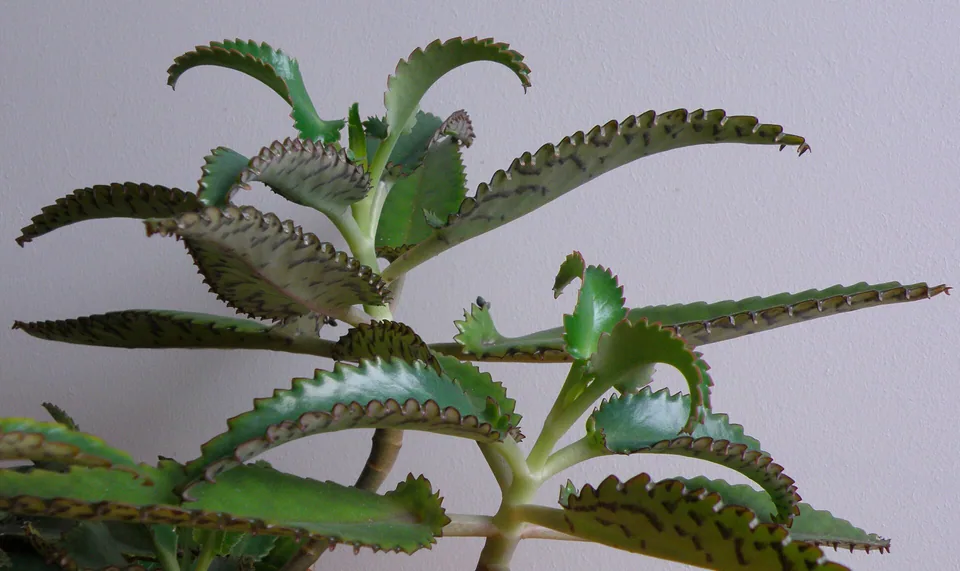
Este kalanchoe tiene un truco encantador: en el borde de sus hojas crecen plantitas diminutas, y cada una puede convertirse en una planta nueva en tierra bien drenada en primavera. Vive feliz en interior o en maceta, con luz brillante indirecta. Riega con moderación, deja secar la tierra entre riegos y verás cómo crece hasta 30–90 cm de alto.
- Sol
Luz brillante indirecta o semisombra; evita el sol fuerte del mediodía, que quema las hojas
Qué dicen las fuentes (1)
Luz: Luz indirecta brillante o semisombra; puede tolerar algo de luz solar directa pero evita el sol intenso del mediodía
This plant prefers bright indirect sunlight or partial shade. It can tolerate some direct sunlight, but it is best to avoid the hot midday sun.
— Kalanchoe daigremontiana (Alligator Plant, Devil's Backbone, Maternity Plant, Mexican Hat Plant, Mother of Thousands) | North Carolina Extension Gardener Plant Toolbox [1] - Riego
Riega poco y deja secar la tierra entre riegos; el exceso de agua pudre las raíces
Qué dicen las fuentes (2)
Notas sobre el riego: Reduce el riego durante la etapa de latencia; el exceso de riego puede causar pudrición de las raíces
Water this plant sparingly. Allow the soil to dry out between waterings and reduce watering during the plant's dormant stage.
— Kalanchoe daigremontiana (Alligator Plant, Devil's Backbone, Maternity Plant, Mexican Hat Plant, Mother of Thousands) | North Carolina Extension Gardener Plant Toolbox [1] Monitor for mealybugs, aphids, and spider mites. Overwatering can cause root rot.
— Kalanchoe daigremontiana (Alligator Plant, Devil's Backbone, Maternity Plant, Mexican Hat Plant, Mother of Thousands) | North Carolina Extension Gardener Plant Toolbox [1] - Frío
Aguanta inviernos de hasta −6,7 °C (20 °F)
Rústica en inviernos normales · USDA 9 · RHS H4 · Z9
Qué dicen las fuentes (2)
Rusticidad, zona más fría: 9 [mínima invernal de −6,7 a −1,1 °C (de 20 a 30 °F)]
Mother of thousands is winter hardy in zones 9 to 11.
— Kalanchoe daigremontiana (Alligator Plant, Devil's Backbone, Maternity Plant, Mexican Hat Plant, Mother of Thousands) | North Carolina Extension Gardener Plant Toolbox [1] Rusticidad, zona más cálida: 11 [mínima invernal de 4,4 a 10 °C (de 40 a 50 °F)]
Mother of thousands is winter hardy in zones 9 to 11.
— Kalanchoe daigremontiana (Alligator Plant, Devil's Backbone, Maternity Plant, Mexican Hat Plant, Mother of Thousands) | North Carolina Extension Gardener Plant Toolbox [1] - Plagas
Cochinillas algodonosas, pulgones y araña roja; también oídio y roya
Qué dicen las fuentes (2)
Plagas: cochinillas harinosas, pulgones, arañitas rojas
Insects, Diseases, and Other Plant Problems: Monitor for mealybugs, aphids, and spider mites. Overwatering can cause root rot.
— Kalanchoe daigremontiana (Alligator Plant, Devil's Backbone, Maternity Plant, Mexican Hat Plant, Mother of Thousands) | North Carolina Extension Gardener Plant Toolbox [1] Enfermedades: pudrición de raíces (por exceso de riego), mildiu polvoriento, roya
Overwatering can cause root rot. Powdery mildew and rust can occur.
— Kalanchoe daigremontiana (Alligator Plant, Devil's Backbone, Maternity Plant, Mexican Hat Plant, Mother of Thousands) | North Carolina Extension Gardener Plant Toolbox [1] - Atención
La planta muere después de florecer: guarda algunas de sus plantitas para sustituirla
Qué dicen las fuentes (4)
Ciclo de vida: perenne (monocárpica: la planta muere después de florecer)
Mother of thousands Is a succulent, herbaceous perennial subshrub found in the desert or dry shrublands of its native Madagascar.
— Kalanchoe daigremontiana (Alligator Plant, Devil's Backbone, Maternity Plant, Mexican Hat Plant, Mother of Thousands) | North Carolina Extension Gardener Plant Toolbox [1] The plant is monocarpic, meaning that after flowering the plant will die.
— Kalanchoe daigremontiana (Alligator Plant, Devil's Backbone, Maternity Plant, Mexican Hat Plant, Mother of Thousands) | North Carolina Extension Gardener Plant Toolbox [1] Propagación: Plántulas de los bordes de las hojas, plantadas en suelo bien drenado; mejor hacerlo en primavera
It is easy to propagate by harvesting the tiny plantlets from the leaf margins and planting them in well-drained soil. Propagation is best done in the spring.
— Kalanchoe daigremontiana (Alligator Plant, Devil's Backbone, Maternity Plant, Mexican Hat Plant, Mother of Thousands) | North Carolina Extension Gardener Plant Toolbox [1] Good Growing Fact of the Week: The species Kalanchoe daigremontiana has earned the common name of Mother-of-Millions due to its ability to produce plantlets on the edge of the leaves.
— A nontraditional holiday plant: Kalanchoe | Good Growing | Illinois Extension | Illinois [5] - Tamaño
30–90 cm de alto y 30–60 cm de ancho
Qué dicen las fuentes (2)
Altura adulta: 30-91 cm (1-3 pies)
Height: 1 ft. 0 in. - 3 ft. 0 in. Width: 1 ft. 0 in. - 2 ft. 0 in.
— Kalanchoe daigremontiana (Alligator Plant, Devil's Backbone, Maternity Plant, Mexican Hat Plant, Mother of Thousands) | North Carolina Extension Gardener Plant Toolbox [1] Anchura adulta: 30-61 cm (1-2 pies)
Height: 1 ft. 0 in. - 3 ft. 0 in. Width: 1 ft. 0 in. - 2 ft. 0 in.
— Kalanchoe daigremontiana (Alligator Plant, Devil's Backbone, Maternity Plant, Mexican Hat Plant, Mother of Thousands) | North Carolina Extension Gardener Plant Toolbox [1] - Multiplicación
En primavera, planta las plantitas del borde de las hojas en tierra bien drenada
Qué dicen las fuentes (2)
Propagación: Plántulas de los bordes de las hojas, plantadas en suelo bien drenado; mejor hacerlo en primavera
It is easy to propagate by harvesting the tiny plantlets from the leaf margins and planting them in well-drained soil. Propagation is best done in the spring.
— Kalanchoe daigremontiana (Alligator Plant, Devil's Backbone, Maternity Plant, Mexican Hat Plant, Mother of Thousands) | North Carolina Extension Gardener Plant Toolbox [1] Good Growing Fact of the Week: The species Kalanchoe daigremontiana has earned the common name of Mother-of-Millions due to its ability to produce plantlets on the edge of the leaves.
— A nontraditional holiday plant: Kalanchoe | Good Growing | Illinois Extension | Illinois [5] - Maceta
Crece bien en maceta y en interior
Qué dicen las fuentes (2)
En maceta: Sí
In warmer climates consider using this plant in a rock garden or as a container plant on your patio.
— Kalanchoe daigremontiana (Alligator Plant, Devil's Backbone, Maternity Plant, Mexican Hat Plant, Mother of Thousands) | North Carolina Extension Gardener Plant Toolbox [1] En interior: Sí
This plant is often used as a houseplant or in succulent gardens.
— Kalanchoe daigremontiana (Alligator Plant, Devil's Backbone, Maternity Plant, Mexican Hat Plant, Mother of Thousands) | North Carolina Extension Gardener Plant Toolbox [1] - Seguridad
Es venenosa si se ingiere, incluso mortal para perros y gatos; usa guantes al manipularla
Resumen
La madre de miles es una suculenta perenne de Madagascar que produce pequeñas plántulas a lo largo de los bordes de sus hojas. [1] A menudo se cultiva como planta de interior y necesita riego escaso y suelo bien drenado. [1] Todas las partes son tóxicas si se ingieren, y la savia puede causar dermatitis por contacto. [1]
Citado en inglés, como en la fuente.
Cuidados
Riego
Riego
Las fuentes dan valores distintos según la región, la zona o las condiciones de cultivo.
Lo que dice cada fuente
Según NC State Extension (Kalanchoe daigremontiana): Riega con moderación; deja que el suelo se seque entre riegos
Según NC State Extension (genus Kalanchoe): Riega bien y luego deja que el suelo se seque entre riegos
Qué dicen las fuentes (3)
Según NC State Extension (Kalanchoe daigremontiana): Water this plant sparingly. Allow the soil to dry out between waterings and reduce watering during the plant's dormant stage.Según NC State Extension (genus Kalanchoe): Water these plants well and then allow the soil to dry out between waterings.Water this plant sparingly. Allow the soil to dry out between waterings and reduce watering during the plant's dormant stage.Notas sobre el riego
Reduce el riego durante la etapa de latencia; el exceso de riego puede causar pudrición de las raíces
Qué dicen las fuentes (2)
Water this plant sparingly. Allow the soil to dry out between waterings and reduce watering during the plant's dormant stage.Monitor for mealybugs, aphids, and spider mites. Overwatering can cause root rot.Luz
Luz indirecta brillante o semisombra; puede tolerar algo de luz solar directa pero evita el sol intenso del mediodía
Qué dicen las fuentes (1)
This plant prefers bright indirect sunlight or partial shade. It can tolerate some direct sunlight, but it is best to avoid the hot midday sun.Clima y frío
Rusticidad, zona más fría
9 [mínima invernal de −6,7 a −1,1 °C (de 20 a 30 °F)]
Qué dicen las fuentes (1)
Mother of thousands is winter hardy in zones 9 to 11.Rusticidad, zona más cálida
11 [mínima invernal de 4,4 a 10 °C (de 40 a 50 °F)]
Qué dicen las fuentes (1)
Mother of thousands is winter hardy in zones 9 to 11.Dónde cultivarla
En interior
Sí
Qué dicen las fuentes (1)
This plant is often used as a houseplant or in succulent gardens.En maceta
Sí
Qué dicen las fuentes (1)
In warmer climates consider using this plant in a rock garden or as a container plant on your patio.Propagación
Plántulas de los bordes de las hojas, plantadas en suelo bien drenado; mejor hacerlo en primavera
Qué dicen las fuentes (2)
It is easy to propagate by harvesting the tiny plantlets from the leaf margins and planting them in well-drained soil. Propagation is best done in the spring.Good Growing Fact of the Week: The species Kalanchoe daigremontiana has earned the common name of Mother-of-Millions due to its ability to produce plantlets on the edge of the leaves.Cultivo
La planta
Ciclo de vida
perenne (monocárpica: la planta muere después de florecer)
Qué dicen las fuentes (2)
Mother of thousands Is a succulent, herbaceous perennial subshrub found in the desert or dry shrublands of its native Madagascar.The plant is monocarpic, meaning that after flowering the plant will die.Familia
Crassulaceae
Qué dicen las fuentes (1)
It is a member of the stonecrop family (Crassulaceae).Altura adulta
30-91 cm (1-3 pies)
Qué dicen las fuentes (1)
Height: 1 ft. 0 in. - 3 ft. 0 in. Width: 1 ft. 0 in. - 2 ft. 0 in.Anchura adulta
30-61 cm (1-2 pies)
Qué dicen las fuentes (1)
Height: 1 ft. 0 in. - 3 ft. 0 in. Width: 1 ft. 0 in. - 2 ft. 0 in.Plagas y enfermedades
Plagas
cochinillas harinosas, pulgones, arañitas rojas
Qué dicen las fuentes (1)
Insects, Diseases, and Other Plant Problems: Monitor for mealybugs, aphids, and spider mites. Overwatering can cause root rot.Enfermedades
pudrición de raíces (por exceso de riego), mildiu polvoriento, roya
Qué dicen las fuentes (1)
Overwatering can cause root rot. Powdery mildew and rust can occur.Problemas
Plagas
Qué hacer: Vigila la planta para detectarlas.
Qué dicen las fuentes (1)
Monitor for mealybugs, aphids, and spider mites. Overwatering can cause root rot.
— Kalanchoe daigremontiana (Alligator Plant, Devil's Backbone, Maternity Plant, Mexican Hat Plant, Mother of Thousands) | North Carolina Extension Gardener Plant Toolbox [1] Pudrición de raíces por exceso de riego
Qué hacer: Riega con moderación y deja que el suelo se seque entre riegos.
Qué dicen las fuentes (1)
Monitor for mealybugs, aphids, and spider mites. Overwatering can cause root rot.
— Kalanchoe daigremontiana (Alligator Plant, Devil's Backbone, Maternity Plant, Mexican Hat Plant, Mother of Thousands) | North Carolina Extension Gardener Plant Toolbox [1] Quemadura de hojas
Qué hacer: Evita el sol intenso del mediodía.
Qué dicen las fuentes (1)
Leaf scorch can result if the plant receives prolonged direct sunlight or intense afternoon sun.
— Kalanchoe daigremontiana (Alligator Plant, Devil's Backbone, Maternity Plant, Mexican Hat Plant, Mother of Thousands) | North Carolina Extension Gardener Plant Toolbox [1] Mildiu polvoriento y roya
Qué hacer: No se indica.
Qué dicen las fuentes (1)
Overwatering can cause root rot. Powdery mildew and rust can occur.
— Kalanchoe daigremontiana (Alligator Plant, Devil's Backbone, Maternity Plant, Mexican Hat Plant, Mother of Thousands) | North Carolina Extension Gardener Plant Toolbox [1]
Remedios
Cada remedio indica qué dicen las fuentes oficiales; los remedios tradicionales sin fuente oficial aparecen marcados. Los perjudiciales están para que sepas evitarlos.
Primeros auxilios
Primeros auxilios: no sustituyen al médico
intoxicación de mascotas
contacta con un veterinario Fuente oficial, sin prueba independiente
If it is suspected that a pet has ingested any plant part, contact a veterinarian professional immediately for further guidance.
— A nontraditional holiday plant: Kalanchoe | Good Growing | Illinois Extension | Illinois [5] If pets ingest this plant, it can be a life threatening emergency and possibly fatal.
— Kalanchoe daigremontiana (Alligator Plant, Devil's Backbone, Maternity Plant, Mexican Hat Plant, Mother of Thousands) | North Carolina Extension Gardener Plant Toolbox [1] Cómo: Si sospechas que una mascota ha ingerido alguna parte de la planta, contacta a un veterinario profesional de inmediato para obtener más orientación.
If it is suspected that a pet has ingested any plant part, contact a veterinarian professional immediately for further guidance.
— A nontraditional holiday plant: Kalanchoe | Good Growing | Illinois Extension | Illinois [5]
Cuidar la planta
pulgones
solución de jabón para platos Perjudicial
Most dish soaps are not naturally occurring substances nor are they biodegradable.
— ucanr.edu [8] The dish detergent label does not provide any directions on how to use it on plants to control insects.
— extension.psu.edu [7] Cómo: Trátalas con jabón insecticida o agua jabonosa, evitando productos agresivos.
Aphids: Small, colorful insects that feed on sap. Treat them with insecticidal soap or soapy water, avoiding harsh products.
— en.jardineriaon.com [6] Qué dicen las pruebas For example, spraying home remedies that contain dish detergent on plants on a sunny day can injure the plant, essentially burning it.
— extension.psu.edu [7]
Cómo eliminarla
propagación invasiva
arrancado a mano Funciona en parte
Protective gloves should be worn when handling this plant due to the risk of contact dermatitis.
— Kalanchoe daigremontiana (Alligator Plant, Devil's Backbone, Maternity Plant, Mexican Hat Plant, Mother of Thousands) | North Carolina Extension Gardener Plant Toolbox [1] Do not dump landscape plant material in natural or disturbed areas.
— | Center for Aquatic and Invasive Plants | University of Florida, IFAS [4] Cómo: Arranca a mano y desecha el material vegetal de forma segura para evitar que se propague.
Cultural/Physical Hand pull, dispose of plant material securely to prevent further spread.
— | Center for Aquatic and Invasive Plants | University of Florida, IFAS [4] Qué dicen las pruebas Follow-up hand removal of leaves is necessary to prevent leaves from producing new plants.
— | Center for Aquatic and Invasive Plants | University of Florida, IFAS [4]
Venenosa para los animales
Según la fuente, citada textualmente. No es un consejo médico ni veterinario: si una persona o un animal pudo haber ingerido esta planta, contacta con un centro de toxicología o con un veterinario.
Animales
If pets ingest this plant, it can be a life threatening emergency and possibly fatal.
[1]- Partes venenosas
These compounds are found in all plant parts, with higher concentrations in the blooms.
[5]- Principio tóxico
The group of compounds responsible for pet harm is cardiotoxic steroids known as bufadienolides.
[5]- Síntomas
Signs of toxicosis in pets include excessive salivation, depression, and gastrointestinal distress beginning a few hours after consumption.
[5]- Gravedad
If pets ingest this plant, it can be a life threatening emergency and possibly fatal.
[1]
Personas
If ingested, symptoms include drooling, loss of appetite, nausea, vomiting, diarrhea, cardiac arrhythmias, and seizures.
[1]- Partes venenosas
Causes Contact Dermatitis: Yes Poison Part: Flowers Fruits Leaves Roots Sap/Juice Stems
[1]- Principio tóxico
Poison Toxic Principle: bufadienolides Causes Contact Dermatitis: Yes
[1]- Síntomas
If ingested, symptoms include drooling, loss of appetite, nausea, vomiting, diarrhea, cardiac arrhythmias, and seizures.
[1]- Gravedad
Poison Severity: Medium Poison Symptoms: If ingested, symptoms include drooling
[1]
Protective gloves should be worn when handling this plant due to the risk of contact dermatitis.
[1]
Plantas similares
- Chandelier Plant Kalanchoe delagoensis
- Kalanchoe Kalanchoe beharensis
- Kalanchoe Kalanchoe blossfeldiana
- Planta panda Kalanchoe tomentosa
- Silver Teaspoons Kalanchoe bracteata
- Conchita Echeveria secunda
- Copper Rose Echeveria multicaulis
- Graptopétalo Graptopetalum paraguayense
Fuentes
Cada valor anterior se cita de estos documentos. Los enlaces llevan al editor original.
- Kalanchoe daigremontiana (Alligator Plant, Devil's Backbone, Maternity Plant, Mexican Hat Plant, Mother of Thousands) | North Carolina Extension Gardener Plant Toolbox · plants.ces.ncsu.edu, consultado
- Kalanchoe - Kalanchoe | North Carolina Extension Gardener Plant Toolbox · plants.ces.ncsu.edu, consultado
- Kalanchoe (Chandelier Plant, Devils Backbone, Kalanchoe, Mother-In-Law-Plant, Mother of Millions, Mother of Thousands) | North Carolina Extension Gardener Plant Toolbox · plants.ces.ncsu.edu, consultado
- | Center for Aquatic and Invasive Plants | University of Florida, IFAS · plant-directory.ifas.ufl.edu, consultado
- A nontraditional holiday plant: Kalanchoe | Good Growing | Illinois Extension | Illinois · extension.illinois.edu, consultado
- en.jardineriaon.com · en.jardineriaon.com
- extension.psu.edu · extension.psu.edu
- ucanr.edu · ucanr.edu
Escrito por Emilio Marruso · última revisión