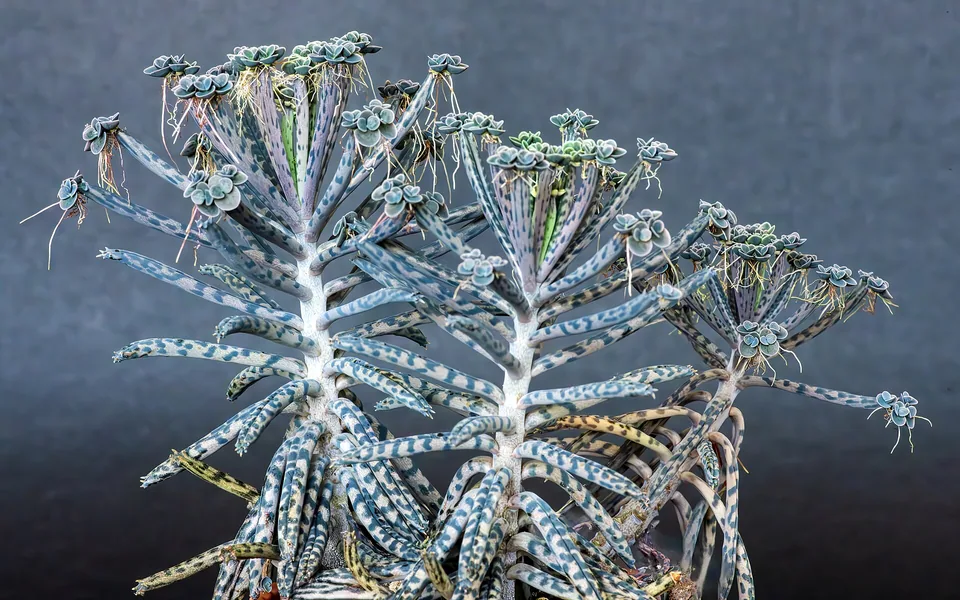


Cómo cultivar y cuidar Chandelier Plant
Kalanchoe delagoensis
Escrito por Emilio Marruso · última revisión
Tóxica para: Gatos, Perros, Caballos, Personas · Por qué
De un vistazo
Esta kalanchoe es una planta perenne que crece a gusto en interior o en maceta y alcanza de 30 cm a 1,2 m de alto. Dale sol pleno o parcial, protegida del sol fuerte de la tarde, y deja secar la tierra entre riegos. Lo mejor: forma sus propias plantitas, así que puedes sacar plantas nuevas de ellas, de hojas o de esquejes de tallo.
- Sol
Sol pleno o parcial, protegida del sol fuerte de la tarde
Qué dicen las fuentes (1)
Luz: Pleno sol a semisombra, con protección del sol caliente de la tarde
This plant grows best in hot, arid climates and prefers full to partial sun, but it needs protection from the hot afternoon sun.
— Kalanchoe delagoensis (Chandelier Plant, Devil's Backbone, Lizard Plant, Mother-In-Law-Plant, Mother of Millons) | North Carolina Extension Gardener Plant Toolbox [1] - Riego
Deja secar la tierra entre riegos; en verano, cada 2 semanas. El exceso de agua pudre las raíces
Qué dicen las fuentes (2)
Riego: Deja que el suelo se seque entre riegos; durante el período de reposo en verano, reduce el riego a cada 2 semanas
Allow the soil to dry out between waterings. During its dormant period in summer, reduce watering to every 2 weeks.
— Kalanchoe delagoensis (Chandelier Plant, Devil's Backbone, Lizard Plant, Mother-In-Law-Plant, Mother of Millons) | North Carolina Extension Gardener Plant Toolbox [1] Notas sobre el riego: El riego excesivo puede provocar pudrición de raíces; la caída de hojas puede deberse a riego excesivo y a hojas secas, marrones y rizadas por falta de agua
Overwatering can result in root rot. Other possible diseases or problems include powdery mildew from poor air circulation and high humidity, leaf drop from excessive watering or too little light
— Kalanchoe delagoensis (Chandelier Plant, Devil's Backbone, Lizard Plant, Mother-In-Law-Plant, Mother of Millons) | North Carolina Extension Gardener Plant Toolbox [1] - Frío
Aguanta inviernos de hasta −1,1 °C (30 °F)
Semirrústica: inviernos suaves o invernadero sin calefacción · USDA 10a · RHS H3 · Z10
Qué dicen las fuentes (2)
Rusticidad, zona más fría: 10a [mínima invernal de −1,1 a 1,7 °C (de 30 a 35 °F)]
USDA Plant Hardiness Zone: 10a, 10b, 11a, 11b
— Kalanchoe delagoensis (Chandelier Plant, Devil's Backbone, Lizard Plant, Mother-In-Law-Plant, Mother of Millons) | North Carolina Extension Gardener Plant Toolbox [1] Rusticidad, zona más cálida: 11b [mínima invernal de 7,2 a 10 °C (de 45 a 50 °F)]
USDA Plant Hardiness Zone: 10a, 10b, 11a, 11b
— Kalanchoe delagoensis (Chandelier Plant, Devil's Backbone, Lizard Plant, Mother-In-Law-Plant, Mother of Millons) | North Carolina Extension Gardener Plant Toolbox [1] - Plagas
Cochinilla algodonosa y pulgón; podredumbre de raíz y oídio
Qué dicen las fuentes (2)
Plagas: cochinillas, pulgones
Insects, Diseases, and Other Plant Problems: Watch for mealybugs and aphids.
— Kalanchoe delagoensis (Chandelier Plant, Devil's Backbone, Lizard Plant, Mother-In-Law-Plant, Mother of Millons) | North Carolina Extension Gardener Plant Toolbox [1] Enfermedades: podredumbre de raíz, mildiu polvoriento
Overwatering can result in root rot. Other possible diseases or problems include powdery mildew from poor air circulation and high humidity
— Kalanchoe delagoensis (Chandelier Plant, Devil's Backbone, Lizard Plant, Mother-In-Law-Plant, Mother of Millons) | North Carolina Extension Gardener Plant Toolbox [1] - Tamaño
De 30 cm a 1,2 m de alto y de 30 a 60 cm de ancho
Qué dicen las fuentes (2)
Altura adulta: 30.5-121.9 cm (1-4 pies)
Dimensions: Height: 1 ft. 0 in. - 4 ft. 0 in.
— Kalanchoe delagoensis (Chandelier Plant, Devil's Backbone, Lizard Plant, Mother-In-Law-Plant, Mother of Millons) | North Carolina Extension Gardener Plant Toolbox [1] Anchura adulta: 30.5-61 cm (1-2 pies)
Width: 1 ft. 0 in. - 2 ft. 0 in.
— Kalanchoe delagoensis (Chandelier Plant, Devil's Backbone, Lizard Plant, Mother-In-Law-Plant, Mother of Millons) | North Carolina Extension Gardener Plant Toolbox [1] - Multiplicación
Con sus plantitas, esquejes de hoja o esquejes de tallo
Qué dicen las fuentes (2)
Propagación: Plántulas, esquejes de hoja y esquejes de tallo
This plant can be propagated by plantlets and cuttings.
— Kalanchoe delagoensis (Chandelier Plant, Devil's Backbone, Lizard Plant, Mother-In-Law-Plant, Mother of Millons) | North Carolina Extension Gardener Plant Toolbox [1] Recommended Propagation Strategy: Leaf Cutting Stem Cutting Country Or Region Of Origin:
— Kalanchoe delagoensis (Chandelier Plant, Devil's Backbone, Lizard Plant, Mother-In-Law-Plant, Mother of Millons) | North Carolina Extension Gardener Plant Toolbox [1] - Maceta
Crece también en maceta y en interior
Qué dicen las fuentes (2)
En maceta: Sí
Suggested planting locations are a patio, container planting, or use as a houseplant.
— Kalanchoe delagoensis (Chandelier Plant, Devil's Backbone, Lizard Plant, Mother-In-Law-Plant, Mother of Millons) | North Carolina Extension Gardener Plant Toolbox [1] En interior: Sí
It is easily grown indoors in a cactus and succulent potting mix.
— Kalanchoe delagoensis (Chandelier Plant, Devil's Backbone, Lizard Plant, Mother-In-Law-Plant, Mother of Millons) | North Carolina Extension Gardener Plant Toolbox [1] - Seguridad
Tóxica si se ingiere, para personas, gatos, perros y caballos; usa guantes, irrita la piel
Resumen
Kalanchoe delagoensis es una suculenta perenne originaria de Madagascar, que a menudo se cultiva como planta de interior. [1] Prefiere pleno sol a semisombra, necesita que el suelo se seque entre riegos y se reproduce mediante plantitas en los bordes de las hojas. [1] Se ha vuelto invasiva en algunas partes del mundo y es tóxica para humanos y mascotas si se ingiere. [1]
Citado en inglés, como en la fuente.
Cuidados
Riego
Riego
Deja que el suelo se seque entre riegos; durante el período de reposo en verano, reduce el riego a cada 2 semanas
Qué dicen las fuentes (1)
Allow the soil to dry out between waterings. During its dormant period in summer, reduce watering to every 2 weeks.Notas sobre el riego
El riego excesivo puede provocar pudrición de raíces; la caída de hojas puede deberse a riego excesivo y a hojas secas, marrones y rizadas por falta de agua
Qué dicen las fuentes (1)
Overwatering can result in root rot. Other possible diseases or problems include powdery mildew from poor air circulation and high humidity, leaf drop from excessive watering or too little lightLuz
Pleno sol a semisombra, con protección del sol caliente de la tarde
Qué dicen las fuentes (1)
This plant grows best in hot, arid climates and prefers full to partial sun, but it needs protection from the hot afternoon sun.Clima y frío
Rusticidad, zona más fría
10a [mínima invernal de −1,1 a 1,7 °C (de 30 a 35 °F)]
Qué dicen las fuentes (1)
USDA Plant Hardiness Zone:
10a, 10b, 11a, 11bRusticidad, zona más cálida
11b [mínima invernal de 7,2 a 10 °C (de 45 a 50 °F)]
Qué dicen las fuentes (1)
USDA Plant Hardiness Zone:
10a, 10b, 11a, 11bDónde cultivarla
En interior
Sí
Qué dicen las fuentes (1)
It is easily grown indoors in a cactus and succulent potting mix.En maceta
Sí
Qué dicen las fuentes (1)
Suggested planting locations are a patio, container planting, or use as a houseplant.Propagación
Plántulas, esquejes de hoja y esquejes de tallo
Qué dicen las fuentes (2)
This plant can be propagated by plantlets and cuttings.Recommended Propagation Strategy:
Leaf Cutting
Stem Cutting
Country Or Region Of Origin:Cultivo
La planta
Ciclo de vida
perenne
Qué dicen las fuentes (1)
Genus:
Kalanchoe
Species:
delagoensis
Family:
Crassulaceae
Life Cycle:
PerennialFamilia
Crassulaceae
Qué dicen las fuentes (1)
Mother of millions is a member of the stonecrop or orpine family (Crassulaceae).Altura adulta
30.5-121.9 cm (1-4 pies)
Qué dicen las fuentes (1)
Dimensions:
Height: 1 ft. 0 in. - 4 ft. 0 in.Anchura adulta
30.5-61 cm (1-2 pies)
Qué dicen las fuentes (1)
Width: 1 ft. 0 in. - 2 ft. 0 in.Plagas y enfermedades
Plagas
cochinillas, pulgones
Qué dicen las fuentes (1)
Insects, Diseases, and Other Plant Problems: Watch for mealybugs and aphids.Enfermedades
podredumbre de raíz, mildiu polvoriento
Qué dicen las fuentes (1)
Overwatering can result in root rot. Other possible diseases or problems include powdery mildew from poor air circulation and high humidityProblemas
Cochinillas harinosas y pulgones
Síntoma: Plagas de insectos a tener en cuenta
Qué hacer: Vigílalos
Qué dicen las fuentes (1)
Insects, Diseases, and Other Plant Problems: Watch for mealybugs and aphids. Overwatering can result in root rot.
— Kalanchoe delagoensis (Chandelier Plant, Devil's Backbone, Lizard Plant, Mother-In-Law-Plant, Mother of Millons) | North Carolina Extension Gardener Plant Toolbox [1] Podredumbre de la raíz
Síntoma: Podredumbre de la raíz
Qué hacer: Evita el riego excesivo; deja que el suelo se seque entre riegos
Qué dicen las fuentes (2)
Watch for mealybugs and aphids. Overwatering can result in root rot.
— Kalanchoe delagoensis (Chandelier Plant, Devil's Backbone, Lizard Plant, Mother-In-Law-Plant, Mother of Millons) | North Carolina Extension Gardener Plant Toolbox [1] Allow the soil to dry out between waterings. During its dormant period in summer, reduce watering to every 2 weeks.
— Kalanchoe delagoensis (Chandelier Plant, Devil's Backbone, Lizard Plant, Mother-In-Law-Plant, Mother of Millons) | North Carolina Extension Gardener Plant Toolbox [1] Mildiu polvoriento
Síntoma: Mildiu polvoriento
Qué hacer: Evita la mala circulación de aire y la alta humedad
Qué dicen las fuentes (1)
Other possible diseases or problems include powdery mildew from poor air circulation and high humidity, leaf drop from excessive watering or too little light
— Kalanchoe delagoensis (Chandelier Plant, Devil's Backbone, Lizard Plant, Mother-In-Law-Plant, Mother of Millons) | North Carolina Extension Gardener Plant Toolbox [1] Crecimiento larguirucho
Síntoma: Crecimiento larguirucho
Qué hacer: Proporciona suficiente luz solar
Qué dicen las fuentes (1)
and leggy growth due to inadequate sunlight. Too much sun or providing to little water can cause dry, brown, and curling leaves.
— Kalanchoe delagoensis (Chandelier Plant, Devil's Backbone, Lizard Plant, Mother-In-Law-Plant, Mother of Millons) | North Carolina Extension Gardener Plant Toolbox [1]
Remedios
Cada remedio indica qué dicen las fuentes oficiales; los remedios tradicionales sin fuente oficial aparecen marcados. Los perjudiciales están para que sepas evitarlos.
Cuidar la planta
cochinillas harinosas
alcohol isopropílico en un hisopo de algodón Funciona en parte
Cómo: limpia los insectos con un hisopo de algodón mojado en alcohol isopropílico
To speed things up and kill any obvious bugs you see on contact, clean them off using a cotton swab dipped in rubbing alcohol .
— getbusygardening.com [9] Qué dicen las pruebas Mealybugs can be managed by noticing them quickly and killing them by hand with a cotton swab dipped in alcohol or with an insecticide (including soap-based products) labeled for mealybug control on your specific houseplant.
— yardandgarden.extension.iastate.edu [10] rocío con jabón líquido suave Funciona en parte
Cómo: prepara el tuyo mezclando 1 cucharadita de jabón líquido suave con 1 litro de agua
You can even mix your own by combining 1 teaspoon of mild liquid soap with 1 liter of water.
— getbusygardening.com [9] Qué dicen las pruebas Mealybugs can be managed by noticing them quickly and killing them by hand with a cotton swab dipped in alcohol or with an insecticide (including soap-based products) labeled for mealybug control on your specific houseplant.
— yardandgarden.extension.iastate.edu [10]
Cómo eliminarla
propagación invasiva
Arrancando a mano. Fuente oficial, sin prueba independiente
Wear gloves, long sleeves, and pants during plant removal.
— blogs.ifas.ufl.edu [11] Do not place the Kalanchoe into your compost piles or yard waste.
— blogs.ifas.ufl.edu [12] Cómo: arranca las plantas con la mano, quitando la planta completa y cualquier hoja y plántula de la zona, y deséchalas en una bolsa de plástico
Because mother of millions has a weak root system, they are fairly easy to remove mechanically, and the best way to remove them is pulling by hand.
— blogs.ifas.ufl.edu [11]
Venenosa para los animales
Según la fuente, citada textualmente. No es un consejo médico ni veterinario: si una persona o un animal pudo haber ingerido esta planta, contacta con un centro de toxicología o con un veterinario.
Animales
#problem for cats #problem for dogs #problem for horses
[1]La fuente señala el riesgo para este animal pero no explica por qué.
Personas
This plant is toxic to humans and pets, if ingested. Keep it out of the reach of children and pets.
[1]Skin irritation can result from handling this plant. Protective gloves are recommended.
[1]- Síntomas
Causes Contact Dermatitis: Yes
[1]
Poison Symptoms: Vomiting, diarrhea, abnormal heart rhythm (rare).
[1]
Plantas similares
- Kalanchoe Kalanchoe beharensis
- Aranto Kalanchoe daigremontiana
- Kalanchoe Kalanchoe blossfeldiana
- Planta panda Kalanchoe tomentosa
- Silver Teaspoons Kalanchoe bracteata
- Conchita Echeveria secunda
- Copper Rose Echeveria multicaulis
- Graptopétalo Graptopetalum paraguayense
Fuentes
Cada valor anterior se cita de estos documentos. Los enlaces llevan al editor original.
- Kalanchoe delagoensis (Chandelier Plant, Devil's Backbone, Lizard Plant, Mother-In-Law-Plant, Mother of Millons) | North Carolina Extension Gardener Plant Toolbox · plants.ces.ncsu.edu, consultado
- Mother of Millons - Kalanchoe delagoensis | North Carolina Extension Gardener Plant Toolbox · plants.ces.ncsu.edu, consultado
- Kalanchoe - Kalanchoe | North Carolina Extension Gardener Plant Toolbox · plants.ces.ncsu.edu, consultado
- Devil's Backbone - Kalanchoe delagoensis | North Carolina Extension Gardener Plant Toolbox · plants.ces.ncsu.edu, consultado
- Kalanchoe (Chandelier Plant, Devils Backbone, Kalanchoe, Mother-In-Law-Plant, Mother of Millions, Mother of Thousands) | North Carolina Extension Gardener Plant Toolbox · plants.ces.ncsu.edu, consultado
- Mother of Thousands - Kalanchoe | North Carolina Extension Gardener Plant Toolbox · plants.ces.ncsu.edu, consultado
- Mother-In-Law-Plant - Kalanchoe | North Carolina Extension Gardener Plant Toolbox · plants.ces.ncsu.edu, consultado
- | Center for Aquatic and Invasive Plants | University of Florida, IFAS · plant-directory.ifas.ufl.edu, consultado
- getbusygardening.com · getbusygardening.com
- yardandgarden.extension.iastate.edu · yardandgarden.extension.iastate.edu
- blogs.ifas.ufl.edu · blogs.ifas.ufl.edu
- blogs.ifas.ufl.edu · blogs.ifas.ufl.edu
Escrito por Emilio Marruso · última revisión