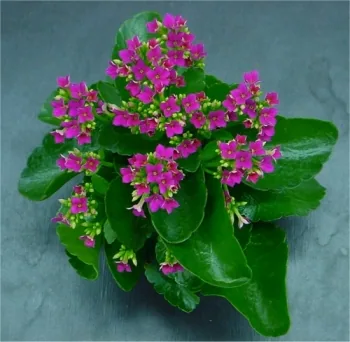
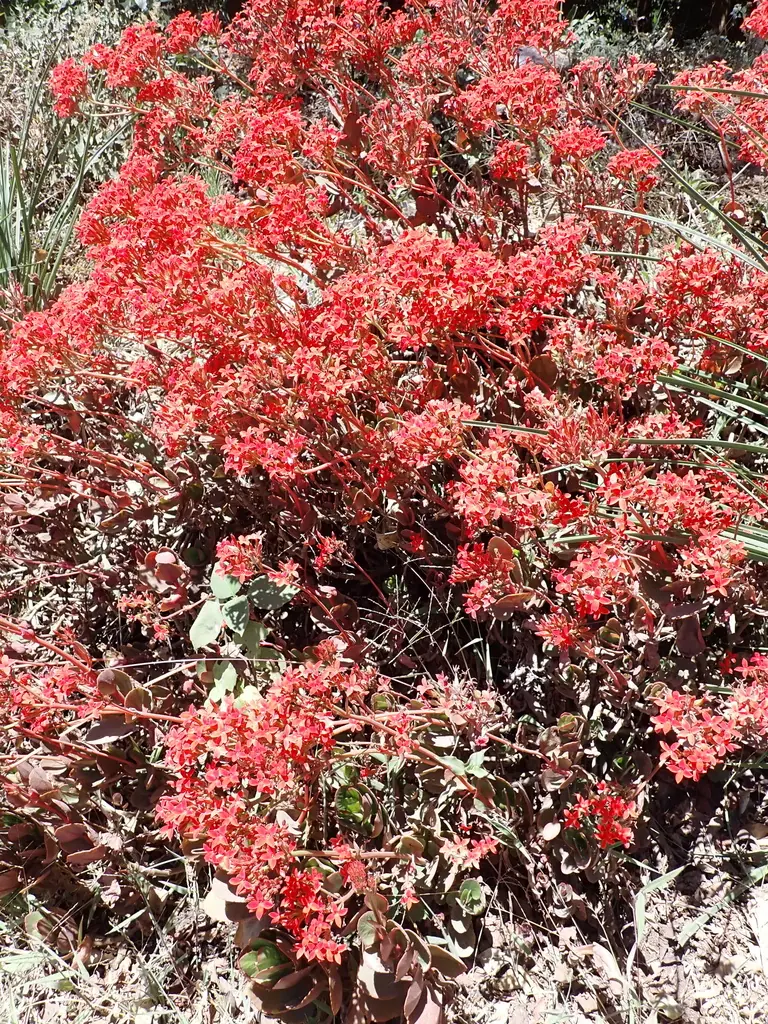
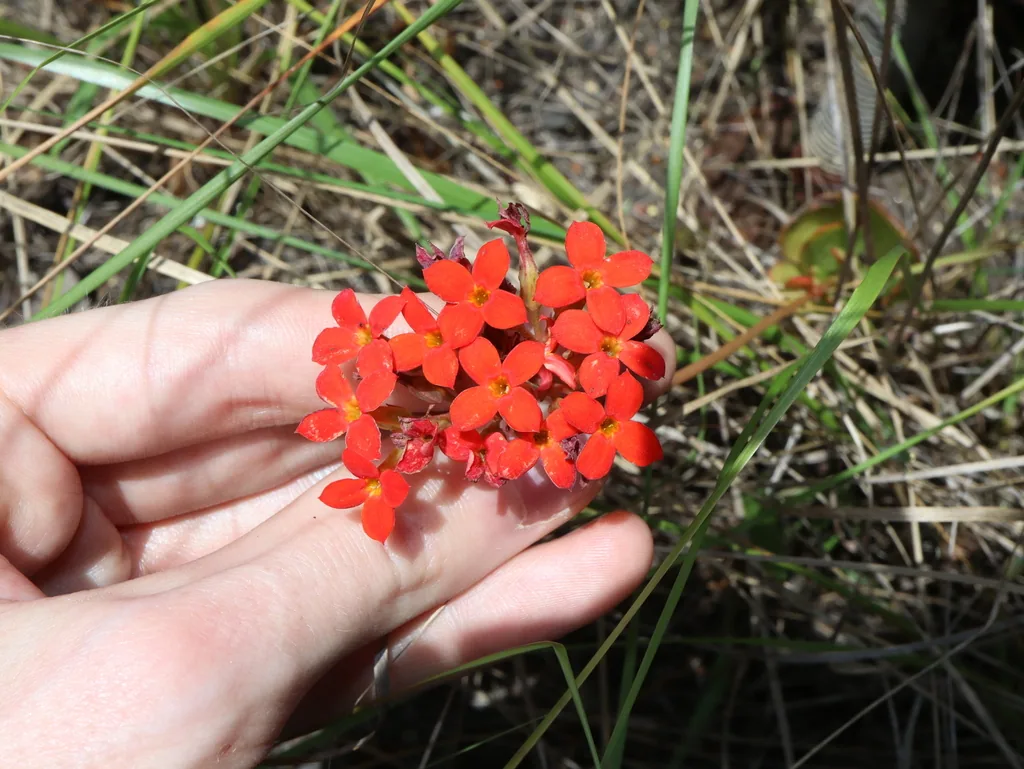

Cómo cultivar y cuidar Kalanchoe
Kalanchoe blossfeldiana
Escrito por Emilio Marruso · última revisión
Tóxica para: Gatos, Perros, Personas · Por qué
De un vistazo
El kalanchoe es una planta perenne que crece en interior o en maceta, y puede pasar el verano fuera, en un lugar luminoso con algo de sombra. Pide poco: deja secar la tierra entre riegos, abónalo una vez al mes mientras crece y corta los tallos florales viejos tras la floración. Para que vuelva a florecer, dale 14 horas de oscuridad total al día durante 6 semanas en otoño e invierno.
- Sol
Fuera en verano: un lugar luminoso con algo de sombra
Qué dicen las fuentes (5)
Plantación: Al aire libre una vez que el clima se haya asentado, alrededor de marzo (Florida); en Illinois se trasplanta o se saca al aire libre durante los meses de verano
Florida: Once the weather has settled sometime in March, your kalanchoe can be planted outside in a full sun to part shade location.
— A kalanchoe by any other name - UF/IFAS Extension Charlotte County [2] Illinois: Plants can be transplanted or moved outdoors during Illinois’ summer months
— A nontraditional holiday plant: Kalanchoe | Good Growing | Illinois Extension | Illinois [3] Según Clemson HGIC: After danger of frost, move outdoors to a bright, lightly shaded spot for the summer.
— Kalanchoe | Home & Garden Information Center [5] Once the weather has settled sometime in March, your kalanchoe can be planted outside in a full sun to part shade location.
— A kalanchoe by any other name - UF/IFAS Extension Charlotte County [2] Plants can be transplanted or moved outdoors during Illinois’ summer months—plant in full sun to part shade in light, sandy soils.
— A nontraditional holiday plant: Kalanchoe | Good Growing | Illinois Extension | Illinois [3] - Riego
Deja secar la tierra entre riegos; nunca lo dejes con agua en el plato
Qué dicen las fuentes (3)
Notas sobre el riego: El riego excesivo puede causar pudrición de raíces o pudrición del tallo; no dejes que las plantas queden en un platillo con agua y asegura un drenaje adecuado; al aire libre se necesita poca agua durante la temporada de crecimiento
Overwatering can cause root rot or stem rot.
— Kalanchoe blossfeldiana (Christmas Kalanchoe, Florist Kalanchoe, Madagascar Widow's Thrill) | North Carolina Extension Gardener Plant Toolbox [1] Allow the soil to dry between waterings and make sure they have proper drainage – do not allow them to sit in a saucer of water.
— A kalanchoe by any other name - UF/IFAS Extension Charlotte County [2] Little water and light fertilizer are needed throughout the growing season.
— A nontraditional holiday plant: Kalanchoe | Good Growing | Illinois Extension | Illinois [3] - Frío
Sácalo fuera solo cuando ya no haya riesgo de heladas
Qué dicen las fuentes (5)
Plantación: Al aire libre una vez que el clima se haya asentado, alrededor de marzo (Florida); en Illinois se trasplanta o se saca al aire libre durante los meses de verano
Florida: Once the weather has settled sometime in March, your kalanchoe can be planted outside in a full sun to part shade location.
— A kalanchoe by any other name - UF/IFAS Extension Charlotte County [2] Illinois: Plants can be transplanted or moved outdoors during Illinois’ summer months
— A nontraditional holiday plant: Kalanchoe | Good Growing | Illinois Extension | Illinois [3] Según Clemson HGIC: After danger of frost, move outdoors to a bright, lightly shaded spot for the summer.
— Kalanchoe | Home & Garden Information Center [5] Once the weather has settled sometime in March, your kalanchoe can be planted outside in a full sun to part shade location.
— A kalanchoe by any other name - UF/IFAS Extension Charlotte County [2] Plants can be transplanted or moved outdoors during Illinois’ summer months—plant in full sun to part shade in light, sandy soils.
— A nontraditional holiday plant: Kalanchoe | Good Growing | Illinois Extension | Illinois [3] - Abonado
Una vez al mes mientras crece, con un abono equilibrado para plantas de interior
Qué dicen las fuentes (4)
Frecuencia: Una vez al mes durante el crecimiento activo
al aire libre en verano: Little water and light fertilizer are needed throughout the growing season.
— A nontraditional holiday plant: Kalanchoe | Good Growing | Illinois Extension | Illinois [3] Fertilize actively growing plants with any houseplant fertilizer once a month.
— Kalanchoe | Home & Garden Information Center [5] Abonos minerales: Un fertilizante equilibrado para plantas de interior, o uno que favorezca la floración con mayor contenido de fósforo
Actively growing plants should be provided with a well-balanced fertilizer or a bloom-enhancing fertilizer that has higher levels of phosphorus.
— A nontraditional holiday plant: Kalanchoe | Good Growing | Illinois Extension | Illinois [3] Fertilize actively growing plants with any houseplant fertilizer once a month.
— Kalanchoe | Home & Garden Information Center [5] - Poda
Tras la floración, recorta los tallos altos y los tallos florales viejos
Qué dicen las fuentes (1)
Poda: Después de la floración, poda el crecimiento alto y los tallos de flores viejas.
After flowering, shift the plant to a slightly larger pot. Kalanchoes are succulents that grow best in a well-drained and well- aerated potting soil, such 60% peat moss and 40% perlite. Cut back tall growth and old flower stems.
— Kalanchoe | Home & Garden Information Center [5] - Plagas
Pulgón, cochinilla algodonosa, araña roja y cochinilla; el exceso de agua pudre raíces y tallos
Qué dicen las fuentes (4)
Plagas: pulgones, cochinillas harinosas, arañitas rojas, cochinilla marrón
The most common insect pests include aphids, mealybugs, and spider mites.
— Kalanchoe blossfeldiana (Christmas Kalanchoe, Florist Kalanchoe, Madagascar Widow's Thrill) | North Carolina Extension Gardener Plant Toolbox [1] Mealybugs, aphids and brown scale are the most common insect pests of kalanchoe.
— Kalanchoe | Home & Garden Information Center [5] Enfermedades: pudrición de raíz, pudrición del tallo, mildiu polvoriento
Overwatering can cause root rot or stem rot. To prevent powdery mildew, provide good air circulation around the plant.
— Kalanchoe blossfeldiana (Christmas Kalanchoe, Florist Kalanchoe, Madagascar Widow's Thrill) | North Carolina Extension Gardener Plant Toolbox [1] Powdery mildew is another possible disease problem for kalanchoe.
— Kalanchoe | Home & Garden Information Center [5] - Atención
¿No florece? Dale 14 horas de oscuridad total al día durante 6 semanas en otoño e invierno
- Multiplicación
Por esquejes de tallo o de hoja
Qué dicen las fuentes (2)
Propagación: Esquejes de tallo y esquejes de hoja
This plant can be propagated by their stem or leaf cuttings.
— Kalanchoe blossfeldiana (Christmas Kalanchoe, Florist Kalanchoe, Madagascar Widow's Thrill) | North Carolina Extension Gardener Plant Toolbox [1] Kalenchoe blossfeldiana can be propagated from leaf or stem cuttings.
— A nontraditional holiday plant: Kalanchoe | Good Growing | Illinois Extension | Illinois [3] - Maceta
Crece bien en maceta y en interior; asegúrate de que la maceta drene bien
Qué dicen las fuentes (2)
En maceta: Sí
The florist kalanchoe is an excellent container plant and will brighten any area of your home.
— Kalanchoe blossfeldiana (Christmas Kalanchoe, Florist Kalanchoe, Madagascar Widow's Thrill) | North Carolina Extension Gardener Plant Toolbox [1] En interior: Sí
Kalanchoe ( Kalanchoe blossfeldiana ) is a popular houseplant typically available for sale during late winter and spring months.
— Kalanchoe | Home & Garden Information Center [5] - Seguridad
Tóxico si lo comen personas, perros o gatos; puede ser mortal para las mascotas. Mantenlo fuera de su alcance
Resumen
El kalanchoe de florista es una suculenta floreciente que se cultiva como planta de interior o de maceta, resistente al aire libre en las zonas USDA 10 a 12. [1] Es tolerante a la sequía, debe secarse entre riegos y se propaga mediante esquejes de tallo o de hoja. [1] Todas las partes son tóxicas si las ingieren personas, perros y gatos. [1][3]
Citado en inglés, como en la fuente.
Cuidados
Riego
Riego
Las fuentes dan valores distintos según la región, la zona o las condiciones de cultivo.
Lo que dice cada fuente
Según NC State Extension (species): Tolerante a la sequía; deja que el suelo se seque entre riegos y luego riega profundamente
Según University of Arkansas Extension: Riega una vez por semana
Según Clemson HGIC: Deja que el suelo se seque un poco entre riegos
Qué dicen las fuentes (4)
Según NC State Extension (species): These plants are drought tolerant, and it is best to allow the soil to dry out between waterings and then water them deeply.Según University of Arkansas Extension: Give them good light and water on a weekly basisSegún Clemson HGIC: Allow the soil to dry slightly between waterings.These plants are drought tolerant, and it is best to allow the soil to dry out between waterings and then water them deeply.Notas sobre el riego
El riego excesivo puede causar pudrición de raíces o pudrición del tallo; no dejes que las plantas queden en un platillo con agua y asegura un drenaje adecuado; al aire libre se necesita poca agua durante la temporada de crecimiento
Qué dicen las fuentes (3)
Overwatering can cause root rot or stem rot.Allow the soil to dry between waterings and make sure they have proper drainage – do not allow them to sit in a saucer of water.Little water and light fertilizer are needed throughout the growing season.Luz
Las fuentes dan valores distintos según la región, la zona o las condiciones de cultivo.
Lo que dice cada fuente
Según NC State Extension (species): Luz indirecta brillante o semisombra; se recomienda sombra por la tarde
Según Clemson HGIC: Pleno sol
Al aire libre, Florida: Pleno sol a semisombra
Al aire libre, Illinois: Pleno sol a semisombra
Qué dicen las fuentes (6)
Según NC State Extension (species): The florist kalanchoe prefers bright indirect sunlight or partial shade. Prolonged direct sun can scorch the leaves so afternoon shade is recommended.Según Clemson HGIC: Kalanchoe grows best in full sun and aAl aire libre, Florida: your kalanchoe can be planted outside in a full sun to part shade location.Al aire libre, Illinois: plant in full sun to part shade in light, sandy soils.The florist kalanchoe prefers bright indirect sunlight or partial shade. Prolonged direct sun can scorch the leaves so afternoon shade is recommended.Once the weather has settled sometime in March, your kalanchoe can be planted outside in a full sun to part shade location.Clima y frío
Rusticidad, zona más fría
Las fuentes dan valores distintos según la región, la zona o las condiciones de cultivo.
Lo que dice cada fuente
Según NC State Extension (species): 10a [mínima invernal de −1,1 a 1,7 °C (de 30 a 35 °F)]
Según NC State Extension (genus Kalanchoe): 9a [mínima invernal de −6,7 a −3,9 °C (de 20 a 25 °F)]
Qué dicen las fuentes (3)
Según NC State Extension (species): USDA Plant Hardiness Zone:
10a, 10b, 11a, 11b, 12a, 12bSegún NC State Extension (genus Kalanchoe): USDA Plant Hardiness Zone:
9a, 9b, 10a, 10b, 11a, 11b, 12a, 12bUSDA Plant Hardiness Zone:
10a, 10b, 11a, 11b, 12a, 12bRusticidad, zona más cálida
12b [mínima invernal de 12,8 a 15,6 °C (de 55 a 60 °F)]
Qué dicen las fuentes (1)
USDA Plant Hardiness Zone:
10a, 10b, 11a, 11b, 12a, 12bDónde cultivarla
En interior
Sí
Qué dicen las fuentes (1)
Kalanchoe ( Kalanchoe blossfeldiana ) is a popular houseplant typically available for sale during late winter and spring months.En maceta
Sí
Qué dicen las fuentes (1)
The florist kalanchoe is an excellent container plant and will brighten any area of your home.Propagación
Esquejes de tallo y esquejes de hoja
Qué dicen las fuentes (2)
This plant can be propagated by their stem or leaf cuttings.Kalenchoe blossfeldiana can be propagated from leaf or stem cuttings.Cultivo
La planta
Ciclo de vida
perenne
Qué dicen las fuentes (1)
Life Cycle:
PerennialFamilia
Crassulaceae
Qué dicen las fuentes (1)
It is native to Northeast Madagascar and is a member of the stonecrop family (Crassulaceae).Altura adulta
Plagas y enfermedades
Plagas
pulgones, cochinillas harinosas, arañitas rojas, cochinilla marrón
Qué dicen las fuentes (2)
The most common insect pests include aphids, mealybugs, and spider mites.Mealybugs, aphids and brown scale are the most common insect pests of kalanchoe.Enfermedades
pudrición de raíz, pudrición del tallo, mildiu polvoriento
Qué dicen las fuentes (2)
Overwatering can cause root rot or stem rot. To prevent powdery mildew, provide good air circulation around the plant.Powdery mildew is another possible disease problem for kalanchoe.Abonado
Cuándo
Mientras la planta está creciendo activamente
Qué dicen las fuentes (2)
Actively growing plants should be provided with a well-balanced fertilizer or a bloom-enhancing fertilizer that has higher levels of phosphorus.Fertilize actively growing plants with any houseplant fertilizer once a month.Frecuencia
Una vez al mes durante el crecimiento activo
Lo que dice cada fuente
al aire libre en verano: Fertilizante ligero durante la temporada de crecimiento
Qué dicen las fuentes (2)
al aire libre en verano: Little water and light fertilizer are needed throughout the growing season.Fertilize actively growing plants with any houseplant fertilizer once a month.Abonos minerales
Un fertilizante equilibrado para plantas de interior, o uno que favorezca la floración con mayor contenido de fósforo
Qué dicen las fuentes (2)
Actively growing plants should be provided with a well-balanced fertilizer or a bloom-enhancing fertilizer that has higher levels of phosphorus.Fertilize actively growing plants with any houseplant fertilizer once a month.Problemas
Pudrición por exceso de riego
Síntoma: Pudrición de raíces o pudrición del tallo por exceso de riego.
Qué hacer: Deja que el suelo se seque entre riegos, asegura un buen drenaje y no dejes que la planta repose en agua.
Qué dicen las fuentes (2)
Overwatering can cause root rot or stem rot.
— Kalanchoe blossfeldiana (Christmas Kalanchoe, Florist Kalanchoe, Madagascar Widow's Thrill) | North Carolina Extension Gardener Plant Toolbox [1] Root rot usually results from a soil mix that does not drain quickly or from overly frequent watering. Do not let plants sit in water.
— Kalanchoe | Home & Garden Information Center [5] Insectos plaga
Síntoma: Pulgones, cochinillas harinosas y arañitas rojas.
Qué hacer: Aísla las plantas infestadas; limpia las cochinillas harinosas con alcohol en un hisopo de algodón; raspa la cochinilla marrón; elimina los pulgones a mano.
Qué dicen las fuentes (2)
The most common insect pests include aphids, mealybugs, and spider mites.
— Kalanchoe blossfeldiana (Christmas Kalanchoe, Florist Kalanchoe, Madagascar Widow's Thrill) | North Carolina Extension Gardener Plant Toolbox [1] Isolate plants that are infested. Control mealybugs by wiping them off with alcohol using a cotton swab.
— Kalanchoe | Home & Garden Information Center [5] Mildiu polvoriento
Síntoma: Hojas moteadas con manchas amarillas, manchas muertas o patrones de anillos; plantas atrofiadas que pueden no florecer.
Qué hacer: Proporciona una buena circulación de aire alrededor de la planta.
Qué dicen las fuentes (2)
To prevent powdery mildew, provide good air circulation around the plant.
— Kalanchoe blossfeldiana (Christmas Kalanchoe, Florist Kalanchoe, Madagascar Widow's Thrill) | North Carolina Extension Gardener Plant Toolbox [1] Leaves may be mottled and have yellow spotting, dead flecks, line or ring spot patterns.
— Kalanchoe | Home & Garden Information Center [5] Falta de floración
Síntoma: La planta no florece.
Qué hacer: Proporciona el período de oscuridad necesario para reiniciar el ciclo de floración: oscuridad total 14 horas al día durante al menos 6 semanas en otoño e invierno.
Qué dicen las fuentes (2)
If the plant fails to bloom, it may be the result of the plant not receiving the period of darkness required to reset the bloom cycle.
— Kalanchoe blossfeldiana (Christmas Kalanchoe, Florist Kalanchoe, Madagascar Widow's Thrill) | North Carolina Extension Gardener Plant Toolbox [1] In the fall and winter, total darkness is required for 14 hours a day for at least 6 weeks.
— Kalanchoe blossfeldiana (Christmas Kalanchoe, Florist Kalanchoe, Madagascar Widow's Thrill) | North Carolina Extension Gardener Plant Toolbox [1]
Remedios
Cada remedio indica qué dicen las fuentes oficiales; los remedios tradicionales sin fuente oficial aparecen marcados. Los perjudiciales están para que sepas evitarlos.
Cuidar la planta
cochinillas harinosas
Limpia con alcohol. Funciona
Cómo: Aísla las plantas infestadas. Controla las cochinillas harinosas limpiándolas con alcohol usando un hisopo de algodón.
Isolate plants that are infested. Control mealybugs by wiping them off with alcohol using a cotton swab.
— Kalanchoe | Home & Garden Information Center [5] Qué dicen las pruebas Isolate plants that are infested. Control mealybugs by wiping them off with alcohol using a cotton swab.
— Kalanchoe | Home & Garden Information Center [5]
pulgones
eliminación manual Funciona
Cómo: Los pulgones se pueden eliminar a mano.
Aphids can be removed by hand.
— Kalanchoe | Home & Garden Information Center [5] Qué dicen las pruebas Aphids can be removed by hand.
— Kalanchoe | Home & Garden Information Center [5] solución de jabón No verificado
Remedio tradicional, no verificado por una fuente oficial.
For example, spraying home remedies that contain dish detergent on plants on a sunny day can injure the plant, essentially burning it.
— extension.psu.edu [8] Most dish soaps are not naturally occurring substances nor are they biodegradable.
— ucanr.edu [9] Cómo: Diluido en agua (20 gramos de jabón por 1 litro); lava la planta con la solución, cubriendo antes el suelo con polietileno.
cochinilla marrón
mildiu polvoriento
flujo de aire Funciona
Cómo: Para prevenir el mildiu polvoriento, permite mucho flujo de aire alrededor del material vegetal.
To prevent powdery mildew allow for plenty of air flow around plant material.
— Kalanchoe | Home & Garden Information Center [5] Qué dicen las pruebas To prevent powdery mildew allow for plenty of air flow around plant material.
— Kalanchoe | Home & Garden Information Center [5]
cochinillas
spray de extracto de ajo No verificado
Remedio tradicional, no verificado por una fuente oficial.
You can find lots of homemade recipes online, but be very cautious using these substances because their efficacy, toxicity, and environmental effects have not been university tested.
— extension.unh.edu [10] Cómo: Se desmenuzan 5-6 dientes de ajo en el mortero y luego se vierten con un vaso de agua. La mezcla se extrae en un lugar oscuro durante varias horas, luego se filtra y se rocía sobre la planta.
Venenosa para los animales
Según la fuente, citada textualmente. No es un consejo médico ni veterinario: si una persona o un animal pudo haber ingerido esta planta, contacta con un centro de toxicología o con un veterinario.
Animales
Keep this plant out of the reach of children, dogs, and cats due to its toxicity if ingested.
[1]- Partes venenosas
Poison Part: Flowers Leaves Stems Download Print-Friendly QR
[1]- Principio tóxico
Poison Toxic Principle: bufadienolides Causes Contact Dermatitis: No
[1]- Síntomas
Poison Symptoms: If ingested by humans or pets, it can cause nausea, vomiting, diarrhea, lethargy, and abnormal heart rhythms or arrhythmias.
[1]- Gravedad
Poison Severity: Medium Poison Symptoms: If ingested by
[1]
Ingestion of this plant by pets can be fatal and causing abnormal heart rate, seizures, and death.
[1]- Partes venenosas
Poison Part: Flowers Leaves Stems Download Print-Friendly QR
[1]- Principio tóxico
Poison Toxic Principle: bufadienolides Causes Contact Dermatitis: No
[1]- Síntomas
Poison Symptoms: If ingested by humans or pets, it can cause nausea, vomiting, diarrhea, lethargy, and abnormal heart rhythms or arrhythmias.
[1]- Gravedad
Poison Severity: Medium Poison Symptoms: If ingested by
[1]
The ASPCA lists Kalanchoe as toxic to dogs and cats. The group of compounds responsible for pet harm is cardiotoxic steroids known as bufadienolides. These compounds are found in all plant parts, with higher concentrations in the blooms.
[3]- Partes venenosas
These compounds are found in all plant parts, with higher concentrations in the blooms.
[3]- Principio tóxico
The group of compounds responsible for pet harm is cardiotoxic steroids known as bufadienolides.
[3]- Síntomas
Signs of toxicosis in pets include excessive salivation, depression, and gastrointestinal distress beginning a few hours after consumption.
[3]
Personas
If ingested by humans or pets, it can cause nausea, vomiting, diarrhea, lethargy, and abnormal heart rhythms or arrhythmias.
[1]- Partes venenosas
Poison Part: Flowers Leaves Stems Download Print-Friendly QR
[1]- Principio tóxico
Poison Toxic Principle: bufadienolides Causes Contact Dermatitis: No
[1]- Síntomas
Poison Symptoms: If ingested by humans or pets, it can cause nausea, vomiting, diarrhea, lethargy, and abnormal heart rhythms or arrhythmias.
[1]- Gravedad
Poison Severity: Medium Poison Symptoms: If ingested by
[1]
Calendario
Plantación
Al aire libre una vez que el clima se haya asentado, alrededor de marzo (Florida); en Illinois se trasplanta o se saca al aire libre durante los meses de verano
Lo que dice cada fuente
Florida: Al aire libre una vez que el clima se haya asentado, alrededor de marzo
Illinois: Trasplantada o movida al exterior durante los meses de verano
Según Clemson HGIC: Mueve al exterior después del peligro de heladas, a un lugar luminoso y ligeramente sombreado durante el verano
Qué dicen las fuentes (5)
Florida: Once the weather has settled sometime in March, your kalanchoe can be planted outside in a full sun to part shade location.Illinois: Plants can be transplanted or moved outdoors during Illinois’ summer monthsSegún Clemson HGIC: After danger of frost, move outdoors to a bright, lightly shaded spot for the summer.Once the weather has settled sometime in March, your kalanchoe can be planted outside in a full sun to part shade location.Plants can be transplanted or moved outdoors during Illinois’ summer months—plant in full sun to part shade in light, sandy soils.Poda
Después de la floración, poda el crecimiento alto y los tallos de flores viejas.
Qué dicen las fuentes (1)
After flowering, shift the plant to a slightly larger pot. Kalanchoes are succulents that grow best in a well-drained and well- aerated potting soil, such 60% peat moss and 40% perlite. Cut back tall growth and old flower stems.Meses tal como los dan las fuentes, en su mayoría de Estados Unidos (hemisferio norte). En el hemisferio sur se desplazan unos seis meses.
Respecto a las heladas
Estimación menos precisa: no hay ninguna estación meteorológica a menos de 300 km.
Busca las fechas de heladas por código postal o ciudad
Trasplante: hacia la última helada
After danger of frost, move outdoors to a bright, lightly shaded spot for the summer.
— Kalanchoe | Home & Garden Information Center [5]
Cuenta desde las fechas medias de las heladas de tu zona.
Valores orientativos
Valores de una fuente secundaria, no comprobados palabra por palabra como el resto de esta página. Úselos como punto de partida.
- Horas de sol
- 6-10 horasValor orientativo, adáptalo a tu clima · Fuente secundaria
- Resiste la sequía
- SíValor orientativo, adáptalo a tu clima · Fuente secundaria
- Suelo
- Bien drenadoValor orientativo, adáptalo a tu clima · Fuente secundaria
- pH del suelo
- 5.8-6.3Valor orientativo, adáptalo a tu clima · Fuente secundaria
- Nivel de cuidado
- ModeradoValor orientativo, adáptalo a tu clima · Fuente secundaria
- Crecimiento
- BajoValor orientativo, adáptalo a tu clima · Fuente secundaria
Plantas similares
- Chandelier Plant Kalanchoe delagoensis
- Kalanchoe Kalanchoe beharensis
- Aranto Kalanchoe daigremontiana
- Planta panda Kalanchoe tomentosa
- Silver Teaspoons Kalanchoe bracteata
- Allegheny Stonecrop Hylotelephium telephioides
- Conchita Echeveria secunda
- Carpet Sedum Sedum lineare
Fuentes
Cada valor anterior se cita de estos documentos. Los enlaces llevan al editor original.
- Kalanchoe blossfeldiana (Christmas Kalanchoe, Florist Kalanchoe, Madagascar Widow's Thrill) | North Carolina Extension Gardener Plant Toolbox · plants.ces.ncsu.edu, consultado
- A kalanchoe by any other name - UF/IFAS Extension Charlotte County · blogs.ifas.ufl.edu, consultado
- A nontraditional holiday plant: Kalanchoe | Good Growing | Illinois Extension | Illinois · extension.illinois.edu, consultado
- Kalanchoe (Chandelier Plant, Devils Backbone, Kalanchoe, Mother-In-Law-Plant, Mother of Millions, Mother of Thousands) | North Carolina Extension Gardener Plant Toolbox · plants.ces.ncsu.edu, consultado
- Kalanchoe | Home & Garden Information Center · hgic.clemson.edu, consultado
- Kalanchoe · uaex.uada.edu, consultado
- Kalanchoe - Kalanchoe | North Carolina Extension Gardener Plant Toolbox · plants.ces.ncsu.edu, consultado
- extension.psu.edu · extension.psu.edu
- ucanr.edu · ucanr.edu
- extension.unh.edu · extension.unh.edu
Escrito por Emilio Marruso · última revisión