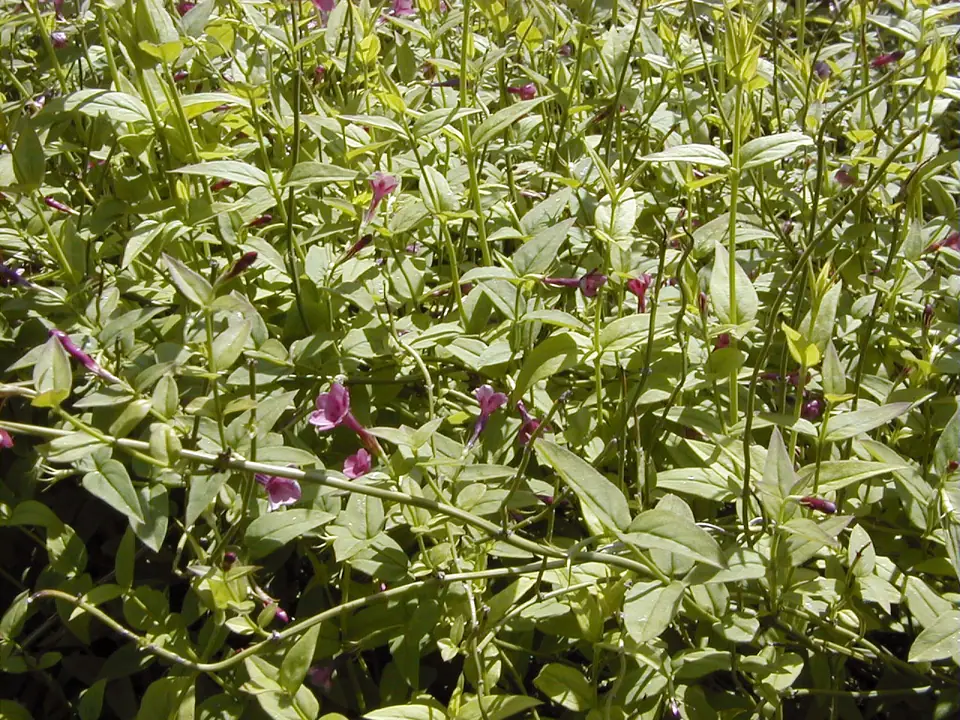


How to Grow and Care for Red Jasmine
Jasminum beesianum
Written by Emilio Marruso · last checked
Not toxic to cats and dogs, according to the sources · Sources
At a glance
This jasmine is an easygoing perennial that can reach 12 feet tall. It's happy in full or partial sun, needs only medium watering in average, well-drained soil, and rarely has pest or disease problems outdoors. Even better, it's safe around cats, dogs and horses, so the whole family can enjoy it.
- Sun
Full sun or partial sun
What the sources say (1)
Light: Full to partial sun
It is best suited for USDA zones 7a to 9b, where it prefers medium watering in average, well-drained soil and full to partial sun.
— Jasminum beesianum (Beesianum Jasmine, Red Jasmine) | North Carolina Extension Gardener Plant Toolbox [1] - Water
Medium watering: not too much, not too little
What the sources say (1)
Watering: Medium watering in average, well-drained soil
It is best suited for USDA zones 7a to 9b, where it prefers medium watering in average, well-drained soil and full to partial sun.
— Jasminum beesianum (Beesianum Jasmine, Red Jasmine) | North Carolina Extension Gardener Plant Toolbox [1] - Cold
Survives winters down to 0 °F (−17.8 °C)
Hardy in very cold winters · USDA 7a · RHS H6 · Z7
What the sources say (3)
Hardiness, coldest zone: 7a [winter low −17.8 to −15 °C (0 to 5 °F)]
It is best suited for USDA zones 7a to 9b, where it prefers medium watering in average, well-drained soil and full to partial sun.
— Jasminum beesianum (Beesianum Jasmine, Red Jasmine) | North Carolina Extension Gardener Plant Toolbox [1] Hardiness, warmest zone: 9b [winter low −3.9 to −1.1 °C (25 to 30 °F)]
It is best suited for USDA zones 7a to 9b, where it prefers medium watering in average, well-drained soil and full to partial sun.
— Jasminum beesianum (Beesianum Jasmine, Red Jasmine) | North Carolina Extension Gardener Plant Toolbox [1] USDA Plant Hardiness Zone: 7a, 7b, 8a, 8b, 9a, 9b
— Jasminum beesianum (Beesianum Jasmine, Red Jasmine) | North Carolina Extension Gardener Plant Toolbox [1] - Soil
Average, well-drained soil that is alkaline, pH 8.0 or higher
What the sources say (2)
Soil pH, minimum: 8.0
Soil pH: Alkaline (>8.0) Soil Drainage: Good Drainage
— Jasminum beesianum (Beesianum Jasmine, Red Jasmine) | North Carolina Extension Gardener Plant Toolbox [1] Watering: Medium watering in average, well-drained soil
It is best suited for USDA zones 7a to 9b, where it prefers medium watering in average, well-drained soil and full to partial sun.
— Jasminum beesianum (Beesianum Jasmine, Red Jasmine) | North Carolina Extension Gardener Plant Toolbox [1] - Pruning
Prune right after it finishes blooming
What the sources say (1)
Pruning: After blooming
It is best to prune after blooming. Glossy black berries last into winter.
— Jasminum beesianum (Beesianum Jasmine, Red Jasmine) | North Carolina Extension Gardener Plant Toolbox [1] - Pests
Rare outdoors; aphids, spider mites, leaf spot or root rot show up mostly on plants kept indoors in winter
What the sources say (2)
Pests: aphids, spider mites
Aphids or spider mites, leaf spot, and root rot can occur; however, insect and disease problems are uncommon for outdoor plants.
— Jasminum beesianum (Beesianum Jasmine, Red Jasmine) | North Carolina Extension Gardener Plant Toolbox [1] Diseases: leaf spot, root rot
Aphids or spider mites, leaf spot, and root rot can occur; however, insect and disease problems are uncommon for outdoor plants.
— Jasminum beesianum (Beesianum Jasmine, Red Jasmine) | North Carolina Extension Gardener Plant Toolbox [1] - Size
Grows up to 12 ft tall
What the sources say (1)
Mature height: 366 cm (12 ft)
Growing up to 12 feet tall, it requires frequent pruning to contain its height, red jasmine produces pink to red sweet-smelling flowers in late spring to mid-summer.
— Jasminum beesianum (Beesianum Jasmine, Red Jasmine) | North Carolina Extension Gardener Plant Toolbox [1] - Safety
Safe for pets: not toxic to cats, dogs or horses
Overview
Red jasmine is a fragrant, semi-evergreen climbing plant in the olive family, native to Tibet and central China. [1] It prefers medium watering in average, well-drained soil and full to partial sun, and is best pruned after blooming. [1] It is listed as non-toxic for cats, horses and dogs. [1]
This record is incomplete: the sources we read do not cover every field yet.
Not yet covered by our sources: Propagation
Red Jasmine care
How to water Red Jasmine
Medium watering in average, well-drained soil
What the sources say (1)
It is best suited for USDA zones 7a to 9b, where it prefers medium watering in average, well-drained soil and full to partial sun.How much light Red Jasmine needs
Full to partial sun
What the sources say (1)
It is best suited for USDA zones 7a to 9b, where it prefers medium watering in average, well-drained soil and full to partial sun.How much cold Red Jasmine can take
Hardiness, coldest zone
7a [winter low −17.8 to −15 °C (0 to 5 °F)]
What the sources say (1)
It is best suited for USDA zones 7a to 9b, where it prefers medium watering in average, well-drained soil and full to partial sun.Hardiness, warmest zone
9b [winter low −3.9 to −1.1 °C (25 to 30 °F)]
What the sources say (2)
It is best suited for USDA zones 7a to 9b, where it prefers medium watering in average, well-drained soil and full to partial sun.USDA Plant Hardiness Zone:
7a, 7b, 8a, 8b, 9a, 9bBest soil for Red Jasmine
8.0
What the sources say (1)
Soil pH:
Alkaline (>8.0)
Soil Drainage:
Good DrainageHow to propagate Red Jasmine
Not stated in the sources we read.
How to grow Red Jasmine
The plant
Life cycle
perennial
What the sources say (1)
#frost tolerant #red flowers #non-toxic for cats #non-toxic for horses #non-toxic for dogs #pet friendly #perennial #climberFamily
Oleaceae
What the sources say (1)
Red jasmine is a fragrant, semi-evergreen, flowering, climbing plant in the olive family (Oleaceae).Mature height
366 cm (12 ft)
What the sources say (1)
Growing up to 12 feet tall, it requires frequent pruning to contain its height, red jasmine produces pink to red sweet-smelling flowers in late spring to mid-summer.Pests and diseases
Pests
aphids, spider mites
What the sources say (1)
Aphids or spider mites, leaf spot, and root rot can occur; however, insect and disease problems are uncommon for outdoor plants.Diseases
leaf spot, root rot
What the sources say (1)
Aphids or spider mites, leaf spot, and root rot can occur; however, insect and disease problems are uncommon for outdoor plants.Fertilizing
When
The sources give different values depending on region, zone or growing conditions.
What each source says
in the ground: Organic mulch in autumn
What the sources say (1)
in the ground: With jasmines growing in the ground, apply a generous mulch of organic matter , such as well-rotted garden compost , over the area the roots are growing in during autumn.How often
The sources give different values depending on region, zone or growing conditions.
What each source says
in the ground: No feeding needed; a yearly mulch is enough
What the sources say (1)
in the ground: Jasmines in the ground shouldn't need feeding. Annual mulching should be sufficient.Natural fertilizers
The sources give different values depending on region, zone or growing conditions.
What each source says
in the ground: A generous mulch of organic matter such as well-rotted garden compost over the root area in autumn
What the sources say (1)
in the ground: With jasmines growing in the ground, apply a generous mulch of organic matter , such as well-rotted garden compost , over the area the roots are growing in during autumn.Mineral fertilizers
The sources give different values depending on region, zone or growing conditions.
What each source says
in containers: High-potassium liquid feed to boost flowering
What the sources say (1)
in containers: To boost flowering, feed plants growing in containers with a high-potassium liquid feed (such as tomato fertiliser), following the manufacturers instructionsRed Jasmine pests and problems
Aphids, spider mites, leaf spot and root rot
Symptom: Aphids or spider mites, leaf spot, and root rot can occur; however, insect and disease problems are uncommon for outdoor plants.
What to do: Problems are more likely to occur for plants brought indoors for the winter.
What the sources say (2)
Aphids or spider mites, leaf spot, and root rot can occur; however, insect and disease problems are uncommon for outdoor plants.
— Jasminum beesianum (Beesianum Jasmine, Red Jasmine) | North Carolina Extension Gardener Plant Toolbox [1] Problems are more likely to occur for plants brought indoors for the winter.
— Jasminum beesianum (Beesianum Jasmine, Red Jasmine) | North Carolina Extension Gardener Plant Toolbox [1]
Remedies
Each remedy shows what official sources say about it; traditional remedies without an official source are marked as such. Harmful ones are listed so you know to avoid them.
Treating the plant
spider mites
cut back to the ground and discard infested material Official source, not independently tested
How: If plants become infested with spider mites, cut them to the ground after blooming and discard the infested plant material. Feed the crowns to stimulate new growth.
If plants become infested with spider mites, cut them to the ground after blooming and discard the infested plant material.
— hgic.clemson.edu [4]
Is Red Jasmine poisonous?
Reported by the source, quoted verbatim. This is not medical or veterinary advice: if a person or an animal may have eaten this plant, contact a poison control centre or a veterinarian.
#non-toxic for cats #non-toxic for horses #non-toxic for dogs #pet friendly
[1]The source flags the risk for this animal but does not explain why.
Calendar
Pruning
After blooming
What the sources say (1)
It is best to prune after blooming. Glossy black berries last into winter.Months as given by the sources, which are mostly from the United States (northern hemisphere). In the southern hemisphere they shift by about six months.
Similar plants
- Common Jasmine Jasminum officinale
- Winter Jasmine Jasminum nudiflorum
- Jasminum sambac Jasminum sambac
- Pink Jasmine Jasminum polyanthum
- Amur privet Ligustrum amurense
- Black ash Fraxinus nigra
- Chinese Fringetree Chionanthus retusus
- Chinese Privet Ligustrum sinense
Sources
Every value above is quoted from these documents. Links lead to the original publisher.
- Jasminum beesianum (Beesianum Jasmine, Red Jasmine) | North Carolina Extension Gardener Plant Toolbox · plants.ces.ncsu.edu, consulted
- Jasminum (Jasmine) | North Carolina Extension Gardener Plant Toolbox · plants.ces.ncsu.edu, consulted
- rhs.org.uk · rhs.org.uk
- hgic.clemson.edu · hgic.clemson.edu
Written by Emilio Marruso · last checked