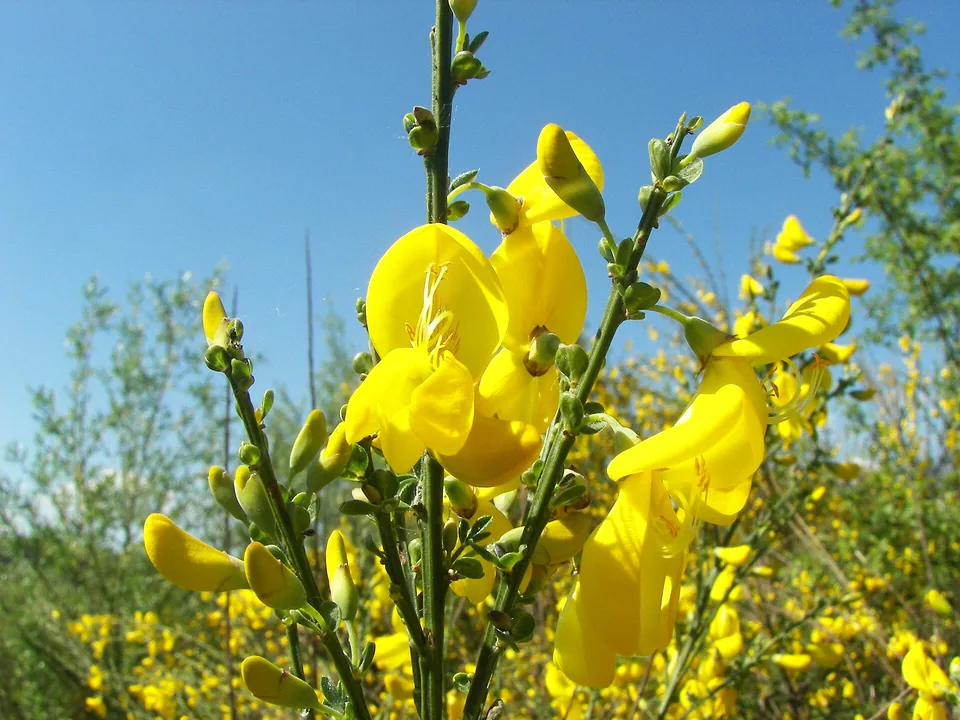
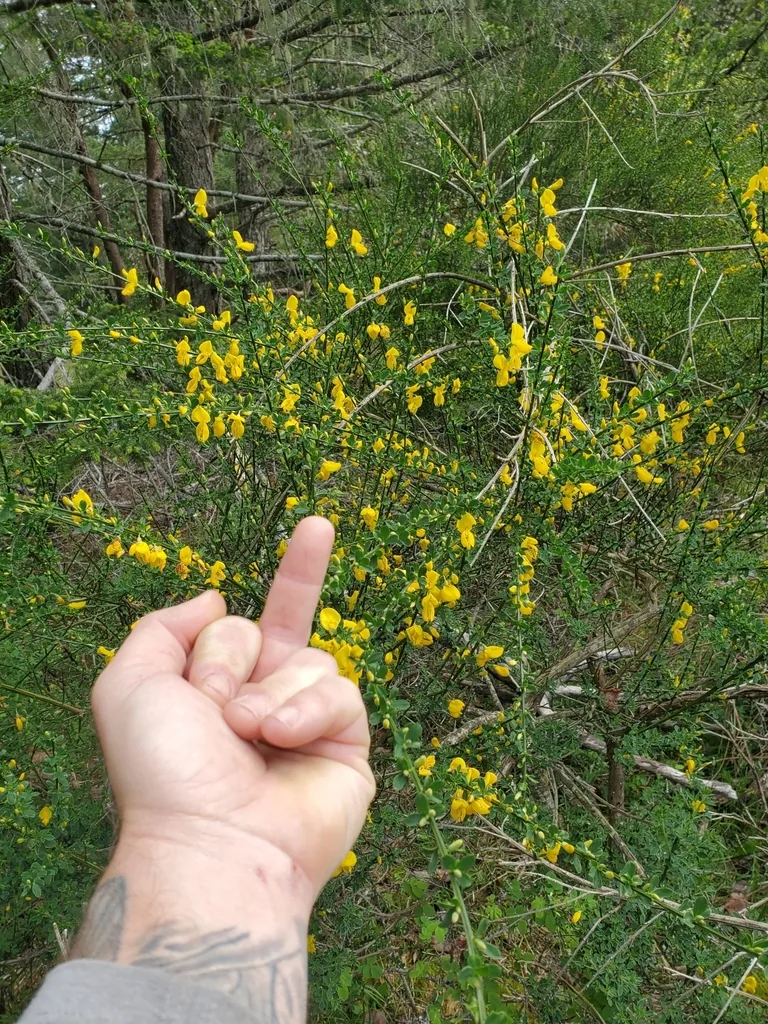

How to Grow and Care for Scotch Broom
Cytisus scoparius
Written by Emilio Marruso · last checked
Toxic to: People · Why
At a glance
Scotch broom is a perennial that loves the sun: give it at least 6 hours of direct light a day and it grows into a full plant 4 to 8 feet tall and just as wide. It accepts soil from slightly acidic to alkaline, and you can grow it from seed. Just keep it away from kids and pets' reach: it is highly toxic if eaten.
- Sun
Full sun: 6 or more hours of direct sunlight a day
What the sources say (1)
Light: Full sun (6 or more hours of direct sunlight a day)
Light: Full sun (6 or more hours of direct sunlight a day)
— Cytisus scoparius (Common Broom, English Broom, Portuguese Broom, Scotch Broom, Scottish Broom, Striated Broom) | North Carolina Extension Gardener Plant Toolbox [1] - Cold
Survives winters down to −20 °F (−28.9 °C)
Very hardy · USDA 5a · RHS H7 · Z5
What the sources say (2)
Hardiness, coldest zone: 5a [winter low −28.9 to −26.1 °C (−20 to −15 °F)]
USDA Plant Hardiness Zone: 5a, 5b, 6a, 6b, 7a, 7b, 8a, 8b
— Cytisus scoparius (Common Broom, English Broom, Portuguese Broom, Scotch Broom, Scottish Broom, Striated Broom) | North Carolina Extension Gardener Plant Toolbox [1] Hardiness, warmest zone: 8b [winter low −9.4 to −6.7 °C (15 to 20 °F)]
USDA Plant Hardiness Zone: 5a, 5b, 6a, 6b, 7a, 7b, 8a, 8b
— Cytisus scoparius (Common Broom, English Broom, Portuguese Broom, Scotch Broom, Scottish Broom, Striated Broom) | North Carolina Extension Gardener Plant Toolbox [1] - Soil
Slightly acidic to alkaline soil, pH 6.0–8.0
What the sources say (2)
Soil pH, minimum: 6.0
Soil pH: Neutral (6.0-8.0) Soil Drainage: Good Drainage Occasionally
— Cytisus scoparius (Common Broom, English Broom, Portuguese Broom, Scotch Broom, Scottish Broom, Striated Broom) | North Carolina Extension Gardener Plant Toolbox [1] Soil pH, maximum: 8.0
Soil pH: Neutral (6.0-8.0) Soil Drainage: Good Drainage Occasionally
— Cytisus scoparius (Common Broom, English Broom, Portuguese Broom, Scotch Broom, Scottish Broom, Striated Broom) | North Carolina Extension Gardener Plant Toolbox [1] - Pests
Can get leaf and stem blight
What the sources say (1)
Diseases: leaf and stem blight
It is susceptible to leaf and stem blight. It can be weedy and rapidly grow to crowd out native plants.
— Cytisus scoparius (Common Broom, English Broom, Portuguese Broom, Scotch Broom, Scottish Broom, Striated Broom) | North Carolina Extension Gardener Plant Toolbox [1] - Size
4–8 ft tall and 4–8 ft wide
What the sources say (2)
Mature height: 122-244 cm (4-8 ft)
Dimensions: Height: 4 ft. 0 in. - 8 ft. 0 in. Width: 4 ft. 0 in. - 8 ft. 0 in.
— Cytisus scoparius (Common Broom, English Broom, Portuguese Broom, Scotch Broom, Scottish Broom, Striated Broom) | North Carolina Extension Gardener Plant Toolbox [1] Mature width: 122-244 cm (4-8 ft)
Dimensions: Height: 4 ft. 0 in. - 8 ft. 0 in. Width: 4 ft. 0 in. - 8 ft. 0 in.
— Cytisus scoparius (Common Broom, English Broom, Portuguese Broom, Scotch Broom, Scottish Broom, Striated Broom) | North Carolina Extension Gardener Plant Toolbox [1] - Propagation
Grows from seed
What the sources say (1)
Propagation: Seed
Recommended Propagation Strategy: Seed Country Or Region Of Origin: Central
— Cytisus scoparius (Common Broom, English Broom, Portuguese Broom, Scotch Broom, Scottish Broom, Striated Broom) | North Carolina Extension Gardener Plant Toolbox [1] - Safety
Highly toxic, may be fatal if eaten: vomiting, muscle weakness, seizures
Overview
Scotch broom is a deciduous, woody shrub in the pea family that grows 4 to 8 feet [1.2–2.4 m] tall and wide. [1] It is listed as highly toxic to humans and is invasive in North Carolina. [1]
This record is incomplete: the sources we read do not cover every field yet.
Not yet covered by our sources: Watering, Pruning
Scotch Broom care
Measurements in square brackets are our conversion into the other unit system; the quoted text is unchanged.
How to water Scotch Broom
Not stated in the sources we read.
How much light Scotch Broom needs
Full sun (6 or more hours of direct sunlight a day)
What the sources say (1)
Light:
Full sun (6 or more hours of direct sunlight a day)How much cold Scotch Broom can take
Hardiness, coldest zone
5a [winter low −28.9 to −26.1 °C (−20 to −15 °F)]
What the sources say (1)
USDA Plant Hardiness Zone:
5a, 5b, 6a, 6b, 7a, 7b, 8a, 8bHardiness, warmest zone
8b [winter low −9.4 to −6.7 °C (15 to 20 °F)]
What the sources say (1)
USDA Plant Hardiness Zone:
5a, 5b, 6a, 6b, 7a, 7b, 8a, 8bBest soil for Scotch Broom
Soil pH, minimum
6.0
What the sources say (1)
Soil pH:
Neutral (6.0-8.0)
Soil Drainage:
Good Drainage
OccasionallySoil pH, maximum
8.0
What the sources say (1)
Soil pH:
Neutral (6.0-8.0)
Soil Drainage:
Good Drainage
OccasionallyHow to propagate Scotch Broom
Seed
What the sources say (1)
Recommended Propagation Strategy:
Seed
Country Or Region Of Origin:
CentralHow to grow Scotch Broom
The plant
Life cycle
perennial
What the sources say (1)
Scotch broom is a perennial, deciduous, woody shrub in the pea family (Fabaceae) and is invasive in North CarolinaFamily
Fabaceae
What the sources say (1)
Scotch broom is a perennial, deciduous, woody shrub in the pea family (Fabaceae) and is invasive in North CarolinaMature height
122-244 cm (4-8 ft)
What the sources say (1)
Dimensions: Height: 4 ft. 0 in. - 8 ft. 0 in. Width: 4 ft. 0 in. - 8 ft. 0 in.Mature width
122-244 cm (4-8 ft)
What the sources say (1)
Dimensions: Height: 4 ft. 0 in. - 8 ft. 0 in. Width: 4 ft. 0 in. - 8 ft. 0 in.Pests and diseases
Diseases
leaf and stem blight
What the sources say (1)
It is susceptible to leaf and stem blight. It can be weedy and rapidly grow to crowd out native plants.Scotch Broom pests and problems
Leaf and stem blight
Symptom: Susceptible to leaf and stem blight.
What to do: Source gives no management.
What the sources say (1)
It is susceptible to leaf and stem blight. It can be weedy and rapidly grow to crowd out native plants.
— Cytisus scoparius (Common Broom, English Broom, Portuguese Broom, Scotch Broom, Scottish Broom, Striated Broom) | North Carolina Extension Gardener Plant Toolbox [1]
Remedies
Each remedy shows what official sources say about it; traditional remedies without an official source are marked as such. Harmful ones are listed so you know to avoid them.
Treating the plant
aphids
strong stream of water Not verified
Traditional remedy, not verified by an official source.
How: Spray the affected plants with a strong stream of water to dislodge the pests.
insecticidal soap Works
For example, spraying home remedies that contain dish detergent on plants on a sunny day can injure the plant, essentially burning it.
— extension.psu.edu [4] How: In severe cases, insecticidal soap can be used as a targeted treatment.
In severe cases, insecticidal soap or neem oil can be used as a targeted treatment.
— livetoplant.com [2] What the evidence says For example, insecticidal soap is a safe, effective organic insecticide with minimal environmental impact.
— extension.psu.edu [3] neem oil Works
Despite these being biological pesticides, it is important to read the directions on the label and wear safety equipment.
— extension.illinois.edu [5] How: In severe cases, neem oil can be used as a targeted treatment.
In severe cases, insecticidal soap or neem oil can be used as a targeted treatment.
— livetoplant.com [2] What the evidence says Neem oil is found in the seeds of the neem tree. The active component found in this biological pesticide reduces insect feeding, interferes with hormones -- making it hard to grow or lay eggs -- and acts as a repellent.
— extension.illinois.edu [5]
caterpillars
handpicking Not verified
Traditional remedy, not verified by an official source.
How: Handpick caterpillars from the plants; effective for small infestations.
spider mites
water spray Not verified
Traditional remedy, not verified by an official source.
How: Regularly spray the plants with water to increase humidity levels.
scale insects
pruning infested branches Not verified
Traditional remedy, not verified by an official source.
How: Prune heavily infested branches.
Getting rid of it
invasive weed
hand-pulling Partly works
Grubbing when the soil is dry and hard usually will break off the stems, leaving rootstalks that may resprout.
— ipm.ucanr.edu [6] How: Small infestations can be removed by hand-pulling or mechanical grubbing, with tools such as shovels or picks. Easiest in early spring or late fall when the soil is moist.
Small infestations can be removed by hand-pulling or mechanical grubbing. A variety of tools can aid in removal, including shovels or picks, chains, or specialized tools such as the Brush Grubber or The Uprooter.
— ipm.ucanr.edu [6] What the evidence says Small infestations can be removed by hand-pulling or mechanical grubbing.
— ipm.ucanr.edu [6] weed wrench pulling Not verified
Traditional remedy, not verified by an official source.
How: Pull with weed wrenches in the winter or spring when the ground is wet; the plants come out way easier.
digging Partly works
How: Careful digging is useful to manage weed populations.
Careful digging is useful to manage weed populations. However, digging can carry undesirable weed seed to the surface and foster further germination.
— hortsense.cahnrs.wsu.edu [7] What the evidence says Careful digging is useful to manage weed populations. However, digging can carry undesirable weed seed to the surface and foster further germination.
— hortsense.cahnrs.wsu.edu [7] cutting Not verified
Traditional remedy, not verified by an official source.
How: Cut in late summer, at or below ground level; repeat follow-up every year until the seed bank is exhausted.
mowing Partly works
How: Mowing gives poor control unless performed repeatedly throughout the growing season.
Mowing broom plants gives poor control unless performed repeatedly throughout the growing season.
— ipm.ucanr.edu [6] What the evidence says Mowing broom plants gives poor control unless performed repeatedly throughout the growing season.
— ipm.ucanr.edu [6] burning Partly works
Don't burn near forests, shrub patches, or structures. Mow and lay a "wet line" down around the edge of the proposed burn area.
— whidbeyenvironment.org [8] How: Cut the aboveground vegetation, let it dry on site, then burn.
Cutting the aboveground vegetation of broom and allowing it to dry on site, followed by burning, can effectively control resprouting.
— ipm.ucanr.edu [6] What the evidence says Burning alone is generally not an effective method for controlling brooms.
— ipm.ucanr.edu [6] grazing with goats and sheep Partly works
In horses, however, ingestion of Scotch broom is reported to cause neurologic effects such as excitement and loss of muscle control and balance, as well as digestive and reproductive effects.
— ipm.ucanr.edu [6] How: Goats and sheep feed on resprouting shrubs, including brooms.
Grazing can provide control in small areas, if the grazing pressure is high enough to continually suppress growth. Goats and sheep have been shown to feed on resprouting shrubs, including brooms.
— ipm.ucanr.edu [6] What the evidence says Grazing can provide control in small areas, if the grazing pressure is high enough to continually suppress growth.
— ipm.ucanr.edu [6]
Is Scotch Broom poisonous?
Reported by the source, quoted verbatim. This is not medical or veterinary advice: if a person or an animal may have eaten this plant, contact a poison control centre or a veterinarian.
HIGHLY TOXIC, MAY BE FATAL IF EATEN! Vomiting, excitement, muscular weakness, convulsions.
[1]- Poisonous parts
Causes Contact Dermatitis: No Poison Part: Leaves Seeds Stems
[1]- Toxic principle
Poison Toxic Principle: Quinolizidine alkaloids Causes Contact Dermatitis: No
[1]- Symptoms
HIGHLY TOXIC, MAY BE FATAL IF EATEN! Vomiting, excitement, muscular weakness, convulsions.
[1]- Severity
Poison Severity: High Poison Symptoms: HIGHLY TOXIC, MAY BE FATAL IF EATEN!
[1]
Calendar
Pruning
Not stated in the sources we read.
Months as given by the sources, which are mostly from the United States (northern hemisphere). In the southern hemisphere they shift by about six months.
Indicative values
Values from a secondary source, not checked word for word like the rest of this page. Use them as a starting point.
- Watering
- MinimumIndicative value, adapt it to your climate · Secondary source
- Soil
- Rocky, gravelly, dry, Well-drainedIndicative value, adapt it to your climate · Secondary source
- Care level
- MediumIndicative value, adapt it to your climate · Secondary source
- Growth rate
- ModerateIndicative value, adapt it to your climate · Secondary source
- Pruning
- March, April, May, February, March, April, May, March, April, May, June, July, August, September, December, January, FebruaryIndicative value, adapt it to your climate · Secondary source
- Pests
- Fungal leaf spot, Pest resistant, Disease resistant, Deer resistant, Rabbit resistant, Drought resistantIndicative value, adapt it to your climate · Secondary source
Similar plants
- American hogpeanut Amphicarpaea bracteata
- Bean Phaseolus vulgaris
- Bicolor Lespedeza Lespedeza bicolor
- Black Locust Robinia pseudoacacia
- Black Medick Medicago lupulina
- Blue False Indigo Baptisia australis
- Bur Medick Medicago polymorpha
- Bush Clover Lespedeza thunbergii
Sources
Every value above is quoted from these documents. Links lead to the original publisher.
- Cytisus scoparius (Common Broom, English Broom, Portuguese Broom, Scotch Broom, Scottish Broom, Striated Broom) | North Carolina Extension Gardener Plant Toolbox · plants.ces.ncsu.edu, consulted
- livetoplant.com · livetoplant.com
- extension.psu.edu · extension.psu.edu
- extension.psu.edu · extension.psu.edu
- extension.illinois.edu · extension.illinois.edu
- ipm.ucanr.edu · ipm.ucanr.edu
- hortsense.cahnrs.wsu.edu · hortsense.cahnrs.wsu.edu
- whidbeyenvironment.org · whidbeyenvironment.org
Written by Emilio Marruso · last checked