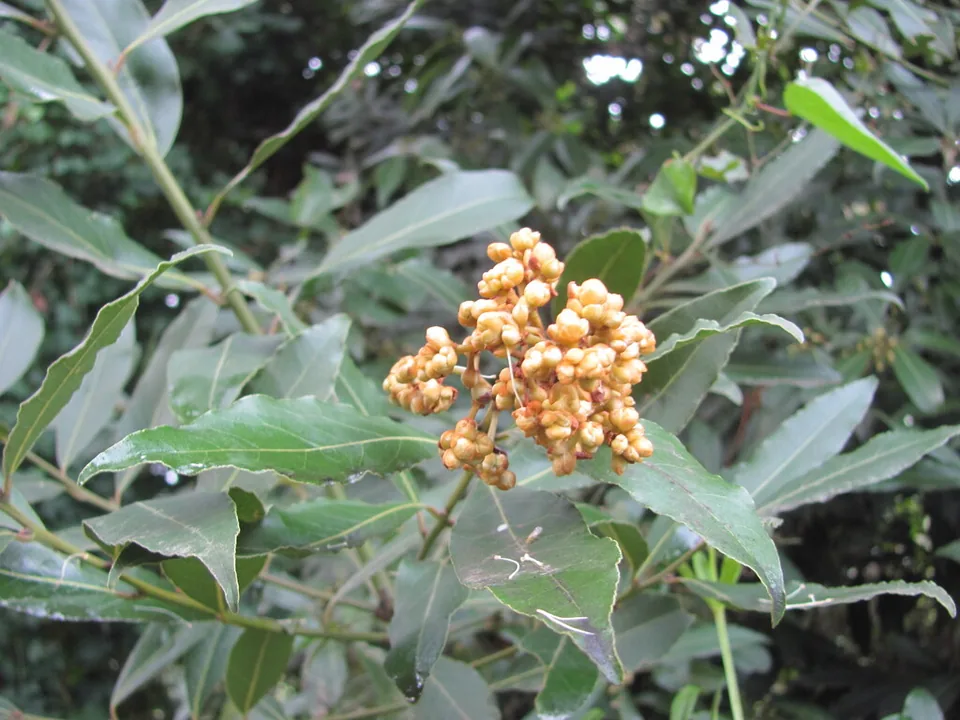
How to Grow and Care for Sweet bay
Laurus nobilis
Written by Emilio Marruso · last checked
Toxic to: Cats, Dogs, Horses, People · Why
At a glance
Bay laurel gives you fragrant leaves for cooking all year round, and the larger, older leaves have the best flavor. It thrives in full sun or partial shade, grows happily in a pot or even indoors, and asks for little: water when the top inch of soil is dry, never too much. Dry the leaves and keep them in sealed containers.
- Sun
Full sun to partial shade
What the sources say (2)
Light: Full sun to partial shade
Sweet bay tolerates a variety of well-drained soil types in full sun to partial shade.
— Laurus nobilis (Bay Laurel, Bay Leaf Tree, Bay Tree, Grecian Laurel, Laurel, Laurel Tree, Sweet Bag, Sweet Bay, Tree Laurel, True Laurel) | North Carolina Extension Gardener Plant Toolbox [1] bay trees can be planted in well-drained full-sun to part-shade locations.
— Hey, hey, its sweet bay! - UF/IFAS Extension Charlotte County [4] - Water
Water when the top inch of soil is dry; never overwater, and water less in winter
What the sources say (5)
Watering: Water when the top inch of potting mix becomes dry; tolerates short periods of drought but grows best with consistent moisture
Water when the top inch of potting mix becomes dry. Bay tolerates short periods of drought but grows best with consistent moisture.
— How do I grow bay laurel? | Yard and Garden [8] place the plant in a full sun location and water when the soil starts to become dry.
— Bay Laurel | Herbs | Illinois Extension | Illinois [6] Watering notes: Do not overwater; soil kept too moist invites root rots; water less frequently in winter, allowing the soil to dry between waterings; low water use with deep watering every 2 to 3 weeks in summer
Do not keep the soil too moist as that invites root rots and Bay prefers to grow in soil kept on the dry side.
— Bay Laurel | Herbs | Illinois Extension | Illinois [6] Water less frequently during winter, allowing the soil to dry between waterings.
— How do I grow bay laurel? | Yard and Garden [8] Water: Low water use; deep watering every 2 to 3 weeks in summer
— Bay Laurel | UC Master Gardeners of Santa Clara County [7] - Planting
Plant from fall through spring
What the sources say (2)
Planting: Fall through spring (transplants)
According to UC Master Gardeners of Santa Clara County: Transplants: Plant in fall through spring
— Bay Laurel | UC Master Gardeners of Santa Clara County [7] Transplants: Plant in fall through spring - Cuttings: Difficult. Rooting can take months.
— Bay Laurel | UC Master Gardeners of Santa Clara County [7] - Feeding
All-purpose fertilizer in spring and through the growing season; very little in winter
What the sources say (6)
When: Spring and throughout the growing season; much reduced in winter, when bay grows little
Fertilize once in the spring with a slow-release fertilizer or every 6 to 8 weeks with an all-purpose fertilizer at half strength.
— How do I grow bay laurel? | Yard and Garden [8] Fertilizing will be much reduced as bay tends not to grow very much during the winter months.
— Bay Laurel | Herbs | Illinois Extension | Illinois [6] When spring arrives, plants can be moved back outdoors and a regular fertilizer schedule can be resumed.
— Bay Laurel | Herbs | Illinois Extension | Illinois [6] Mineral fertilizers: General-purpose (all-purpose) fertilizer, liquid or at half strength, or a slow-release fertilizer once in spring
in containers: Fertilize once in the spring with a slow-release fertilizer or every 6 to 8 weeks with an all-purpose fertilizer at half strength.
— How do I grow bay laurel? | Yard and Garden [8] Fertilize once in the spring with a slow-release fertilizer or every 6 to 8 weeks with an all-purpose fertilizer at half strength.
— How do I grow bay laurel? | Yard and Garden [8] Apply a general purpose liquid fertilizer about every 2 weeks during the growing season.
— Bay Laurel | Herbs | Illinois Extension | Illinois [6] - Pruning
Prune once a year, when the tree is not actively growing
What the sources say (2)
Pruning: When the tree is not actively growing (annually once established)
Pruning is best done when the tree is not actively growing
— Sweet Bay, Laurus nobilis – Wisconsin Horticulture [2] When to prune: When the tree is not actively growing; leaves for cooking are best harvested in midsummer.
Pruning is best done when the tree is not actively growing to maximize growth, but to maximize flavor, harvest leaves in the mid summer.
— Sweet Bay, Laurus nobilis – Wisconsin Horticulture [2] - Harvest
Pick leaves year-round, choosing the larger, older ones; best flavor in midsummer
What the sources say (5)
Harvest: Year-round; mid summer to maximize flavor
Leaves may be harvested year round. Larger, older leaves tend to provide the strongest and best flavor.
— Bay Laurel | UC Master Gardeners of Santa Clara County [7] Leaves can be harvested year-round from established plants.
— How do I grow bay laurel? | Yard and Garden [8] to maximize flavor, harvest leaves in the mid summer.
— Sweet Bay, Laurus nobilis – Wisconsin Horticulture [2] How to harvest: Harvest leaves as needed through the season, year-round from established plants; pick the larger, older leaves, which have the strongest and best flavor
Leaves can be harvested throughout the season as needed. The larger, older leaves tend to have the strongest and best flavor.
— Bay Laurel | Herbs | Illinois Extension | Illinois [6] Leaves can be harvested year-round from established plants. - Fresh leaves have a stronger flavor than dried leaves.
— How do I grow bay laurel? | Yard and Garden [8] - Pollination
Male and female plants are separate; only females bear black fruit, and bees pollinate them
What the sources say (3)
Fruit set: Dioecious: male and female flowers on separate plants
The plants are dioecious, with star-shaped male and female flowers on separate plants.
— Sweet Bay, Laurus nobilis – Wisconsin Horticulture [2] What it needs: Male and female plants are separate; only female plants produce the fruit (black drupes).
It has separate male and female plants (i.e., it is dioecious), with only the female ones producing the fleshy, black drupes.
— Laurus nobilis (Bay Laurel, Bay Leaf Tree, Bay Tree, Grecian Laurel, Laurel, Laurel Tree, Sweet Bag, Sweet Bay, Tree Laurel, True Laurel) | North Carolina Extension Gardener Plant Toolbox [1] Pollinators: bees
Inconspicuous but fragrant, pale yellow-green flowers in spring are followed by small, purplish-black, egg-shaped berries, each with a single seed, on established female trees. Bees pollinate the flowers.
— Sweet Bay, Laurus nobilis – Wisconsin Horticulture [2] - Pests
Scale insects, spider mites and thrips; too much water brings root rot
What the sources say (5)
Pests: scale insects, psyllids, spider mites, thrips
Scales and psyllids are occasional pests. This plant is susceptible to laurel wilt, phytophthora and root rot.
— Laurus nobilis (Bay Laurel, Bay Leaf Tree, Bay Tree, Grecian Laurel, Laurel, Laurel Tree, Sweet Bag, Sweet Bay, Tree Laurel, True Laurel) | North Carolina Extension Gardener Plant Toolbox [1] Scale insects and spider mites are the most common indoor pests. Inspect plants periodically, especially during winter.
— How do I grow bay laurel? | Yard and Garden [8] Common pests & diseases - Sooty Mold - Armored scales - Psyllids - Thrips
— Bay Laurel | UC Master Gardeners of Santa Clara County [7] Diseases: laurel wilt, phytophthora, root rot, sooty mold
Scales and psyllids are occasional pests. This plant is susceptible to laurel wilt, phytophthora and root rot.
— Laurus nobilis (Bay Laurel, Bay Leaf Tree, Bay Tree, Grecian Laurel, Laurel, Laurel Tree, Sweet Bag, Sweet Bay, Tree Laurel, True Laurel) | North Carolina Extension Gardener Plant Toolbox [1] Common pests & diseases - Sooty Mold - Armored scales - Psyllids - Thrips
— Bay Laurel | UC Master Gardeners of Santa Clara County [7] - Watch out
It may drop leaves when moved between indoors and outdoors; it usually recovers
- Size
8 to 30 ft wide
What the sources say (1)
Mature width: 243.8-914.4 cm (8 to 30 feet)
Dimensions: Height: 8 ft. 0 in. - 12 ft. 0 in. Width: 8 ft. 0 in. - 30 ft. 0 in.
— Laurus nobilis (Bay Laurel, Bay Leaf Tree, Bay Tree, Grecian Laurel, Laurel, Laurel Tree, Sweet Bag, Sweet Bay, Tree Laurel, True Laurel) | North Carolina Extension Gardener Plant Toolbox [1] - Propagation
Summer cuttings or air-layering; cuttings root slowly and can take months
What the sources say (5)
Propagation: Fresh seed; half-ripe cuttings taken in summer; air-layering
Bay is difficult to propagate, but it can be grown from fresh seed (germination is rather erratic and the requires warm temperatures), half-ripe cuttings taken in summer (which may take several months), or by air-layering.
— Sweet Bay, Laurus nobilis – Wisconsin Horticulture [2] Cuttings: Semi-ripe (semi-hardwood) cuttings in summer or late summer, or softwood cuttings in early summer; they are difficult to root and can take several months.
Take cuttings – semi-ripe cuttings in late summer or softwood cuttings in early summer.
— [9] half-ripe cuttings taken in summer (which may take several months), or by air-layering.
— Sweet Bay, Laurus nobilis – Wisconsin Horticulture [2] If you attempt propagation, use only fresh seeds and semi-hardwood cutting material.
— Hey, hey, its sweet bay! - UF/IFAS Extension Charlotte County [4] Cuttings can also be taken but they are difficult to root.
— Bay Laurel | Herbs | Illinois Extension | Illinois [6] - Sowing
Sow only fresh seed, in warmth; it sprouts slowly and unevenly
What the sources say (3)
Germination: Use only fresh seed; germination is erratic, poor and slow and needs warm temperatures.
Bay is difficult to propagate, but it can be grown from fresh seed (germination is rather erratic and the requires warm temperatures)
— Sweet Bay, Laurus nobilis – Wisconsin Horticulture [2] Bay can be grown from seed, but it germinates poorly and slowly.
— Bay Laurel | Herbs | Illinois Extension | Illinois [6] If you attempt propagation, use only fresh seeds and semi-hardwood cutting material.
— Hey, hey, its sweet bay! - UF/IFAS Extension Charlotte County [4] - Containers
Grows well in a pot, even indoors
What the sources say (4)
- Safety
Harmful to cats, dogs and horses; in people it can cause vomiting and diarrhea
Overview
Sweet bay is an evergreen tree or shrub in the laurel family native to the Mediterranean Basin. [1] Because it grows slowly, it does well in containers. [2] It is frost-sensitive and needs protection from frost in colder microclimates. [7]
Sweet bay care
How to water Sweet bay
Watering
Water when the top inch of potting mix becomes dry; tolerates short periods of drought but grows best with consistent moisture
What the sources say (2)
Water when the top inch of potting mix becomes dry. Bay tolerates short periods of drought but grows best with consistent moisture.place the plant in a full sun location and water when the soil starts to become dry.Watering notes
Do not overwater; soil kept too moist invites root rots; water less frequently in winter, allowing the soil to dry between waterings; low water use with deep watering every 2 to 3 weeks in summer
What the sources say (3)
Do not keep the soil too moist as that invites root rots and Bay prefers to grow in soil kept on the dry side.Water less frequently during winter, allowing the soil to dry between waterings.Water: Low water use; deep watering every 2 to 3 weeks in summerHow much light Sweet bay needs
Full sun to partial shade
What the sources say (2)
Sweet bay tolerates a variety of well-drained soil types in full sun to partial shade.bay trees can be planted in well-drained full-sun to part-shade locations.How much cold Sweet bay can take
Hardiness, coldest zone
The sources give different values depending on region, zone or growing conditions.
What each source says
According to NC State Extension Plant Toolbox: 8b [winter low −9.4 to −6.7 °C (15 to 20 °F)]
According to University of Wisconsin Extension: 7a [winter low −17.8 to −15 °C (0 to 5 °F)]
According to University of Illinois Extension: 8 [winter low −12.2 to −6.7 °C (10 to 20 °F)]
What the sources say (5)
According to NC State Extension Plant Toolbox: NC Region: Coastal Piedmont USDA Plant Hardiness Zone: 8b, 9a, 9b, 10a, 10bAccording to University of Wisconsin Extension: L. nobilis is widely grown as an ornamental plant in mild climates (zones 7a to 10b)According to University of Illinois Extension: Bay laurel is an evergreen shrub or tree in zones 8 and above.NC Region:
Coastal
Piedmont
USDA Plant Hardiness Zone:
8b, 9a, 9b, 10a, 10bL. nobilis is widely grown as an ornamental plant in mild climates (zones 7a to 10b)Hardiness, warmest zone
10b [winter low 1.7 to 4.4 °C (35 to 40 °F)]
What each source says
According to NC State Extension Plant Toolbox: 10b [winter low 1.7 to 4.4 °C (35 to 40 °F)]
According to University of Wisconsin Extension: 10b [winter low 1.7 to 4.4 °C (35 to 40 °F)]
What the sources say (4)
According to NC State Extension Plant Toolbox: NC Region: Coastal Piedmont USDA Plant Hardiness Zone: 8b, 9a, 9b, 10a, 10bAccording to University of Wisconsin Extension: L. nobilis is widely grown as an ornamental plant in mild climates (zones 7a to 10b)NC Region:
Coastal
Piedmont
USDA Plant Hardiness Zone:
8b, 9a, 9b, 10a, 10bL. nobilis is widely grown as an ornamental plant in mild climates (zones 7a to 10b)Where to grow Sweet bay
Indoors
Yes
In containers
Yes
What the sources say (2)
Bay is best grown in a container. Bay can be grown from seed, but it germinates poorly and slowly.Because it is relatively slow growing, it does well in containers.How to propagate Sweet bay
Fresh seed; half-ripe cuttings taken in summer; air-layering
What the sources say (1)
Bay is difficult to propagate, but it can be grown from fresh seed (germination is rather erratic and the requires warm temperatures), half-ripe cuttings taken in summer (which may take several months), or by air-layering.How to grow Sweet bay
The plant
Life cycle
perennial
What the sources say (1)
Frost-sensitive; protect from frost in colder microclimates
- Type: Perennial, evergreen, woodyFamily
Lauraceae
What the sources say (1)
Laurus nobilis (family Lauraceae) is widely cultivated in many regions of the world, where it is used primarily as a culinary herb.Mature height
Mature width
243.8-914.4 cm (8 to 30 feet)
What the sources say (1)
Dimensions:
Height: 8 ft. 0 in. - 12 ft. 0 in.
Width: 8 ft. 0 in. - 30 ft. 0 in.Harvest and storage
How to harvest
Harvest leaves as needed through the season, year-round from established plants; pick the larger, older leaves, which have the strongest and best flavor
What the sources say (2)
Leaves can be harvested throughout the season as needed. The larger, older leaves tend to have the strongest and best flavor.Leaves can be harvested year-round from established plants.
- Fresh leaves have a stronger flavor than dried leaves.Storage
Dry the leaves, then store them in sealed containers
What the sources say (1)
The larger, older leaves tend to have the strongest and best flavor. Dry leaves before storing in sealed containers.Pests and diseases
Pests
scale insects, psyllids, spider mites, thrips
What the sources say (3)
Scales and psyllids are occasional pests. This plant is susceptible to laurel wilt, phytophthora and root rot.Scale insects and spider mites are the most common indoor pests. Inspect plants periodically, especially during winter.Common pests & diseases
- Sooty Mold
- Armored scales
- Psyllids
- ThripsDiseases
laurel wilt, phytophthora, root rot, sooty mold
What the sources say (2)
Scales and psyllids are occasional pests. This plant is susceptible to laurel wilt, phytophthora and root rot.Common pests & diseases
- Sooty Mold
- Armored scales
- Psyllids
- ThripsFertilizing
When
Spring and throughout the growing season; much reduced in winter, when bay grows little
What the sources say (3)
Fertilize once in the spring with a slow-release fertilizer or every 6 to 8 weeks with an all-purpose fertilizer at half strength.Fertilizing will be much reduced as bay tends not to grow very much during the winter months.When spring arrives, plants can be moved back outdoors and a regular fertilizer schedule can be resumed.How often
The sources disagree:
What each source says
with a liquid fertilizer: Every 2 weeks during the growing season
What the sources say (1)
with a liquid fertilizer: Apply a general purpose liquid fertilizer about every 2 weeks during the growing season.Mineral fertilizers
General-purpose (all-purpose) fertilizer, liquid or at half strength, or a slow-release fertilizer once in spring
What each source says
in containers: Slow-release fertilizer once in spring, or all-purpose fertilizer at half strength every 6 to 8 weeks
What the sources say (3)
in containers: Fertilize once in the spring with a slow-release fertilizer or every 6 to 8 weeks with an all-purpose fertilizer at half strength.Fertilize once in the spring with a slow-release fertilizer or every 6 to 8 weeks with an all-purpose fertilizer at half strength.Apply a general purpose liquid fertilizer about every 2 weeks during the growing season.Roots
Suckers
The sources give different values depending on region, zone or growing conditions.
What each source says
standard (lollipop-shaped) trees: Suckers may sprout from the roots
What the sources say (1)
standard (lollipop-shaped) trees: With standard (lollipop-shaped) bay trees, suckers may sprout from the roots.Propagation
Germination
Use only fresh seed; germination is erratic, poor and slow and needs warm temperatures.
What the sources say (3)
Bay is difficult to propagate, but it can be grown from fresh seed (germination is rather erratic and the requires warm temperatures)Bay can be grown from seed, but it germinates poorly and slowly.If you attempt propagation, use only fresh seeds and semi-hardwood cutting material.Cuttings
Semi-ripe (semi-hardwood) cuttings in summer or late summer, or softwood cuttings in early summer; they are difficult to root and can take several months.
What the sources say (4)
Take cuttings – semi-ripe cuttings in late summer or softwood cuttings in early summer.half-ripe cuttings taken in summer (which may take several months), or by air-layering.If you attempt propagation, use only fresh seeds and semi-hardwood cutting material.Cuttings can also be taken but they are difficult to root.After harvest
Storage
Leaves: dry them (flat between the pages of an old book under a weight) or freeze them to keep the flavour for longer.
Heat and drought
Drought
Tolerates short periods of drought but grows best with consistent moisture; once established in the ground it should not need watering, while newly planted bay needs water in dry spells during the first year. Container plants need regular watering.
What the sources say (4)
Bay tolerates short periods of drought but grows best with consistent moisture.Once established in the ground, bay shouldn’t need watering.Water newly planted bay in dry spells during the first year.Bay is often grown in containers, in which case it needs regular watering and feeding too.Pollination
Fruit set
Dioecious: male and female flowers on separate plants
What the sources say (1)
The plants are dioecious, with star-shaped male and female flowers on separate plants.What it needs
Male and female plants are separate; only female plants produce the fruit (black drupes).
What the sources say (1)
It has separate male and female plants (i.e., it is dioecious), with only the female ones producing the fleshy, black drupes.Carried by
Insects
What the sources say (1)
Inconspicuous but fragrant, pale yellow-green flowers in spring are followed by small, purplish-black, egg-shaped berries, each with a single seed, on established female trees. Bees pollinate the flowers.Pollinators
bees
What the sources say (1)
Inconspicuous but fragrant, pale yellow-green flowers in spring are followed by small, purplish-black, egg-shaped berries, each with a single seed, on established female trees. Bees pollinate the flowers.Pruning
When to prune
When the tree is not actively growing; leaves for cooking are best harvested in midsummer.
What the sources say (1)
Pruning is best done when the tree is not actively growing to maximize growth, but to maximize flavor, harvest leaves in the mid summer.Sweet bay pests and problems
Scale
Symptom: Bump-like insects on leaves and woody parts, particularly indoors
What to do: Monitor; inspect plants periodically
What the sources say (1)
This plant has few pests but scale can be a problem, particularly indoors.
— Sweet Bay, Laurus nobilis – Wisconsin Horticulture [2] Laurel wilt, phytophthora and root rot
Symptom: Plant susceptible to these diseases
What to do: Avoid overwatering and poor drainage
What the sources say (1)
This plant is susceptible to laurel wilt, phytophthora and root rot.
— Laurus nobilis (Bay Laurel, Bay Leaf Tree, Bay Tree, Grecian Laurel, Laurel, Laurel Tree, Sweet Bag, Sweet Bay, Tree Laurel, True Laurel) | North Carolina Extension Gardener Plant Toolbox [1] Yellowing leaves
Symptom: Yellow leaves often caused by overwatering or poor drainage
What to do: Correct watering and drainage
What the sources say (1)
Yellowing leaves are often caused by overwatering or poor drainage.
— How do I grow bay laurel? | Yard and Garden [8] Scale insects and spider mites
Symptom: Most common indoor pests
What to do: Inspect plants periodically, especially during winter
What the sources say (1)
Scale insects and spider mites are the most common indoor pests.
— How do I grow bay laurel? | Yard and Garden [8] Leaf drop after moving
Symptom: Leaf drop when moved between indoor and outdoor environments
What to do: Plants typically recover as they adjust
What the sources say (1)
Leaf drop may occur when plants are moved between indoor and outdoor environments
— How do I grow bay laurel? | Yard and Garden [8]
Remedies
Each remedy shows what official sources say about it; traditional remedies without an official source are marked as such. Harmful ones are listed so you know to avoid them.
Treating the plant
mealybugs
potassium soap spray Works
How: Spray diluted as recommended; effective against mealybugs, aphids and honeydew residue.
Potassium soap : Effective against mealybugs, aphids, and honeydew residue. Spray diluted as recommended.
— en.jardineriaon.com [10] What the evidence says For example, insecticidal soap is a safe, effective organic insecticide with minimal environmental impact.
— extension.psu.edu [11]
aphids
neem oil Works
Despite these being biological pesticides, it is important to read the directions on the label and wear safety equipment.
— extension.illinois.edu [12] How: Natural insecticide and fungicide, described as safe even for laurels used for culinary purposes.
Neem oil : natural insecticide and fungicide, safe even for laurels used for culinary purposes.
— en.jardineriaon.com [10] What the evidence says Neem oil is found in the seeds of the neem tree. The active component found in this biological pesticide reduces insect feeding, interferes with hormones -- making it hard to grow or lay eggs -- and acts as a repellent.
— extension.illinois.edu [12]
insect pests
garlic, onion and thyme infusion Not verified
Traditional remedy, not verified by an official source.
Penn State Extension does not recommend using home remedies for many reasons. They do not come with precise instructions on how to use; they may not be effective; they have the potential to harm humans, pets, and plants;
— extension.psu.edu [13] How: Infusion used as a natural repellent for minor pests or in organic gardening.
powdery mildew
baking soda spray Not verified
Traditional remedy, not verified by an official source.
How: Bicarbonate of soda mixed with water.
fungal diseases
diluted milk spray Not verified
Traditional remedy, not verified by an official source.
How: Diluted milk sprayed on the leaves for mild fungi.
diluted vinegar and essential oils Not verified
Traditional remedy, not verified by an official source.
Diluted vinegar and essential oils: can be used with caution for fungal prevention.
— en.jardineriaon.com [10] How: To be used with caution for fungal prevention.
leaf miners
picking off infested leaves Works
How: If larvae are still present inside the leaves, pick off those leaves and throw them away.
If there is, pick off those leaves and throw them away.
— web.extension.illinois.edu [14] What the evidence says If there is, pick off those leaves and throw them away.
— web.extension.illinois.edu [14]
Is Sweet bay toxic to pets?
Reported by the source, quoted verbatim. This is not medical or veterinary advice: if a person or an animal may have eaten this plant, contact a poison control centre or a veterinarian.
Animals
#problem for cats #problem for dogs #problem for horses
[1]The source flags the risk for this animal but does not explain why.
People
Poison Symptoms: Vomiting and diarrhea; Large ingestion of whole leaves can cause obstruction
[1]
Calendar
Planting
Fall through spring (transplants)
What each source says
According to UC Master Gardeners of Santa Clara County: Fall through spring (transplants)
What the sources say (2)
According to UC Master Gardeners of Santa Clara County: Transplants: Plant in fall through springTransplants: Plant in fall through spring
- Cuttings: Difficult. Rooting can take months.Harvest
Year-round; mid summer to maximize flavor
What the sources say (3)
Leaves may be harvested year round. Larger, older leaves tend to provide the strongest and best flavor.Leaves can be harvested year-round from established plants.to maximize flavor, harvest leaves in the mid summer.Pruning
When the tree is not actively growing (annually once established)
What the sources say (1)
Pruning is best done when the tree is not actively growingMonths as given by the sources, which are mostly from the United States (northern hemisphere). In the southern hemisphere they shift by about six months.
Relative to frost
Less precise estimate: there is no weather station within 300 km.
Find frost dates by ZIP code or city
Transplant: around the last frost
Move plants outdoors after the danger of frost has passed in spring (typically mid-May).
— How do I grow bay laurel? | Yard and Garden [8]
Count from the average frost dates where you live.
Edibility
Reported by the source, quoted verbatim. Do not eat a plant on the basis of this page alone: identification mistakes can be dangerous.
Leaves are used to flavor foods while cooking, but the leaves should not be eaten for a variety of reasons including but not limited to choking and creating cuts inside the digestive tract or/ and mouth because the leaves are sharp.
[1]don’t eat the leaves, they are only used to cook with and flavor dishes.
[4]Always remove bay leaves from soups, stews, and sauces before serving, as the leaves remain stiff and can be a choking hazard.
[8]
Indicative values
Values from a secondary source, not checked word for word like the rest of this page. Use them as a starting point.
- Drought tolerant
- yesIndicative value, adapt it to your climate · Secondary source
- Soil
- Well-drainedIndicative value, adapt it to your climate · Secondary source
- Soil pH
- 6-7Indicative value, adapt it to your climate · Secondary source
- Care level
- MediumIndicative value, adapt it to your climate · Secondary source
- Growth rate
- ModerateIndicative value, adapt it to your climate · Secondary source
Similar plants
- Avocado Persea americana
- California bay Umbellularia californica
- Camphor Tree Cinnamomum camphora
- Japanese Spicebush Lindera obtusiloba
- Pondberry Lindera melissifolia
- Sassafras Sassafras albidum
- Silk Bay Tamala humilis
- Swamp Bay Tamala palustris
Sources
Every value above is quoted from these documents. Links lead to the original publisher.
- Laurus nobilis (Bay Laurel, Bay Leaf Tree, Bay Tree, Grecian Laurel, Laurel, Laurel Tree, Sweet Bag, Sweet Bay, Tree Laurel, True Laurel) | North Carolina Extension Gardener Plant Toolbox · plants.ces.ncsu.edu, consulted
- Sweet Bay, Laurus nobilis – Wisconsin Horticulture · hort.extension.wisc.edu, consulted
- Grecian Laurel - Laurus nobilis | North Carolina Extension Gardener Plant Toolbox · plants.ces.ncsu.edu, consulted
- Hey, hey, its sweet bay! - UF/IFAS Extension Charlotte County · blogs.ifas.ufl.edu, consulted
- True Laurel - Laurus nobilis | North Carolina Extension Gardener Plant Toolbox · plants.ces.ncsu.edu, consulted
- Bay Laurel | Herbs | Illinois Extension | Illinois · extension.illinois.edu, consulted
- Bay Laurel | UC Master Gardeners of Santa Clara County · ucanr.edu, consulted
- How do I grow bay laurel? | Yard and Garden · yardandgarden.extension.iastate.edu, consulted
- rhs.org.uk · rhs.org.uk
- en.jardineriaon.com · en.jardineriaon.com
- extension.psu.edu · extension.psu.edu
- extension.illinois.edu · extension.illinois.edu
- extension.psu.edu · extension.psu.edu
- web.extension.illinois.edu · web.extension.illinois.edu
Written by Emilio Marruso · last checked