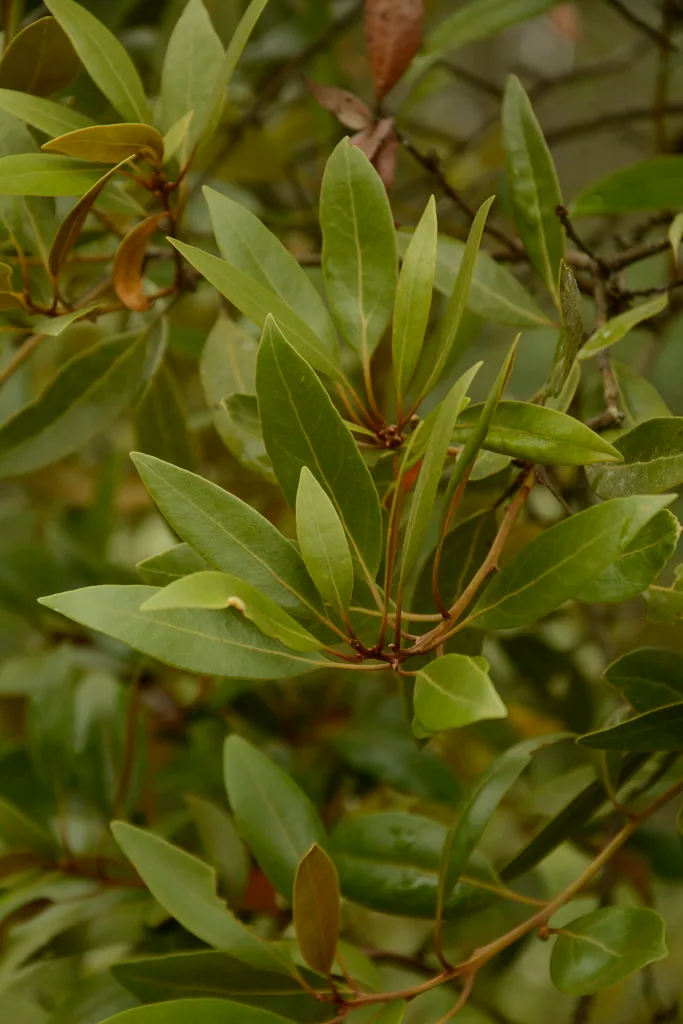
How to Grow and Care for Silk Bay
Tamala humilis
Written by Emilio Marruso · last checked
At a glance
This member of the laurel family is easy to place: it is happy in full sun or partial shade and likes acidic soil. Its leaves can be used fresh or dried, so it brings something useful to the garden as well as greenery. You can start it from seed, and the main trouble to watch for is laurel wilt.
- Sun
Full sun to partial shade
What the sources say (1)
Light: Full sun to partial shade
Light: Full sun (6 or more hours of direct sunlight a day) Partial Shade
— Tamala humilis (Scrub Bay, Silkbay, Silk Bay) | North Carolina Extension Gardener Plant Toolbox [1] - Cold
Survives winters down to 10 °F (−12.2 °C)
Hardy in cold winters · USDA 8a · RHS H5 · Z8
What the sources say (2)
Hardiness, coldest zone: 8a [winter low −12.2 to −9.4 °C (10 to 15 °F)]
USDA Plant Hardiness Zone: 8a, 8b, 9a, 9b, 10a, 10b
— Tamala humilis (Scrub Bay, Silkbay, Silk Bay) | North Carolina Extension Gardener Plant Toolbox [1] Hardiness, warmest zone: 10b [winter low 1.7 to 4.4 °C (35 to 40 °F)]
USDA Plant Hardiness Zone: 8a, 8b, 9a, 9b, 10a, 10b
— Tamala humilis (Scrub Bay, Silkbay, Silk Bay) | North Carolina Extension Gardener Plant Toolbox [1] - Soil
Acidic soil, pH 6.0 or lower
What the sources say (1)
Soil pH, maximum: 6.0
Soil pH: Acid (<6.0) Soil Drainage: Good Drainage Occasionally
— Tamala humilis (Scrub Bay, Silkbay, Silk Bay) | North Carolina Extension Gardener Plant Toolbox [1] - Harvest
The leaves can be used fresh or dried
- Pests
Watch out for laurel wilt
What the sources say (1)
Diseases: laurel wilt
This species is highly susceptible to laurel wilt.
— Tamala humilis (Scrub Bay, Silkbay, Silk Bay) | North Carolina Extension Gardener Plant Toolbox [1] - Propagation
Grows from seed
What the sources say (1)
Propagation: Seed
Recommended Propagation Strategy: Seed Country Or Region Of Origin:
— Tamala humilis (Scrub Bay, Silkbay, Silk Bay) | North Carolina Extension Gardener Plant Toolbox [1]
Overview
Silk bay is a deciduous small tree or large shrub native to Florida. [1] It prefers well-drained to dry sandy soil and full sun, and is moderately tolerant of salt spray. [1]
This record is incomplete: the sources we read do not cover every field yet.
Not yet covered by our sources: Watering, Pruning
Silk Bay care
How to water Silk Bay
Not stated in the sources we read.
How much light Silk Bay needs
Full sun to partial shade
What the sources say (1)
Light:
Full sun (6 or more hours of direct sunlight a day)
Partial ShadeHow much cold Silk Bay can take
Hardiness, coldest zone
8a [winter low −12.2 to −9.4 °C (10 to 15 °F)]
What the sources say (1)
USDA Plant Hardiness Zone:
8a, 8b, 9a, 9b, 10a, 10bHardiness, warmest zone
10b [winter low 1.7 to 4.4 °C (35 to 40 °F)]
What the sources say (1)
USDA Plant Hardiness Zone:
8a, 8b, 9a, 9b, 10a, 10bBest soil for Silk Bay
6.0
What the sources say (1)
Soil pH:
Acid (<6.0)
Soil Drainage:
Good Drainage
OccasionallyHow to propagate Silk Bay
Seed
What the sources say (1)
Recommended Propagation Strategy:
Seed
Country Or Region Of Origin:How to grow Silk Bay
The plant
Family
Lauraceae
What the sources say (1)
Species:
humilis
Family:
Lauraceae
Life Cycle:
Woody
Recommended Propagation Strategy:Pests and diseases
Diseases
laurel wilt
What the sources say (1)
This species is highly susceptible to laurel wilt.Silk Bay pests and problems
Laurel wilt
What the sources say (1)
This species is highly susceptible to laurel wilt. See
— Tamala humilis (Scrub Bay, Silkbay, Silk Bay) | North Carolina Extension Gardener Plant Toolbox [1]
Remedies
Each remedy shows what official sources say about it; traditional remedies without an official source are marked as such. Harmful ones are listed so you know to avoid them.
Treating the plant
laurel wilt
removing and destroying infected trees Official source, not independently tested
Firewood, tree trimmings, or mulch from host trees should not be moved out of counties with records of laurel wilt.
— tfsweb.tamu.edu [2] How: Infected trees should be removed and destroyed by burning, burying, or chipping, and debris disposed of onsite.
Infected trees should be removed and destroyed by burning, burying, or chipping. Debris from trees with laurel wilt should always be disposed of onsite and should never be transported to other areas.
— tfsweb.tamu.edu [2]
Calendar
Pruning
Not stated in the sources we read.
Months as given by the sources, which are mostly from the United States (northern hemisphere). In the southern hemisphere they shift by about six months.
Edibility
Reported by the source, quoted verbatim. Do not eat a plant on the basis of this page alone: identification mistakes can be dangerous.
Edibility: Fresh or dried leaves can be used for
[1]
Similar plants
- Swamp Bay Tamala palustris
- Redbay Tamala borbonia
- California bay Umbellularia californica
- Camphor Tree Cinnamomum camphora
- Japanese Spicebush Lindera obtusiloba
- Pondberry Lindera melissifolia
- Sassafras Sassafras albidum
- Sweet bay Laurus nobilis
Sources
Every value above is quoted from these documents. Links lead to the original publisher.
- Tamala humilis (Scrub Bay, Silkbay, Silk Bay) | North Carolina Extension Gardener Plant Toolbox · plants.ces.ncsu.edu, consulted
- tfsweb.tamu.edu · tfsweb.tamu.edu
Written by Emilio Marruso · last checked