How to Grow and Care for Camphor Tree
Cinnamomum camphora
Written by Emilio Marruso · last checked
Toxic to: Animals · Why
At a glance
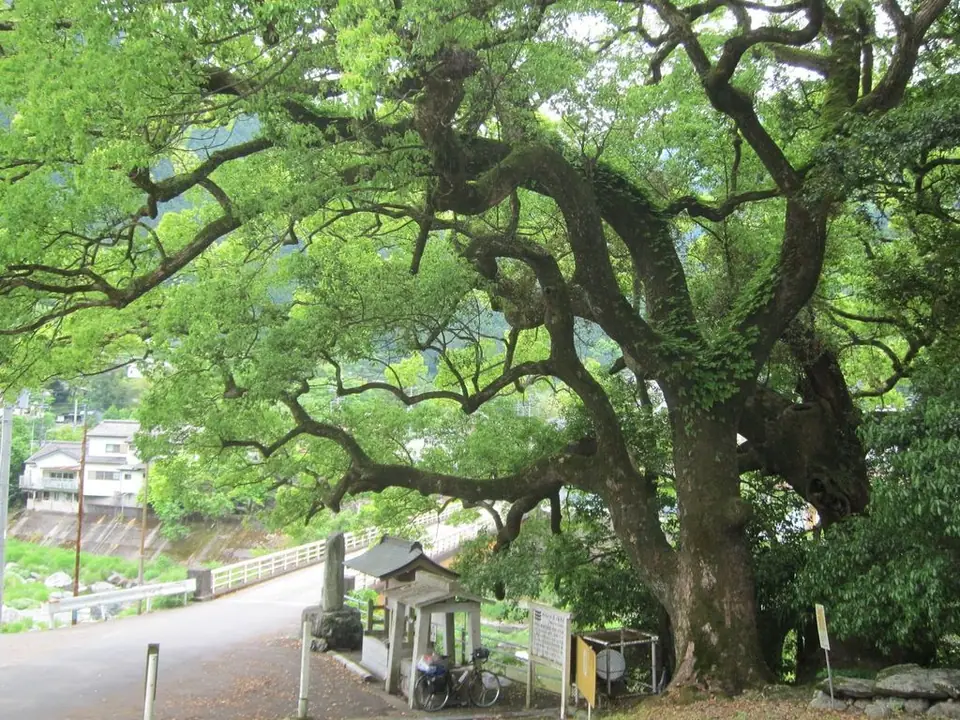
The camphor tree is a grand, easygoing giant: it grows 40–50 ft tall and spreads even wider, 50–70 ft across. It thrives in full sun or partial shade, tolerates dry soil, and resists most pests and diseases. Its black, pea-sized fruit feeds many birds, so give it plenty of room and keep an eye out for new seedlings.
- Sun
Full sun to partial shade
What the sources say (1)
Light: Full sun to partial shade
Light: Full sun (6 or more hours of direct sunlight a day) Partial Shade (Direct sunlight only part of the day, 2-6 hours)
— Cinnamomum camphora (Camphortree, Camphor Tree) | North Carolina Extension Gardener Plant Toolbox [1] - Water
Handles drought and dry soil; never let the soil stay wet
What the sources say (1)
Watering: Drought tolerant; tolerates dry soils
#salt intolerant #dry soils tolerant #drought tolerant #insect resistant #messy #disease resistant
— Cinnamomum camphora (Camphortree, Camphor Tree) | North Carolina Extension Gardener Plant Toolbox [1] - Cold
Survives winters down to 25 °F (−3.9 °C)
Half hardy: mild winters or an unheated greenhouse · USDA 9b · RHS H3 · Z9
What the sources say (2)
Hardiness, coldest zone: 9b [winter low −3.9 to −1.1 °C (25 to 30 °F)]
USDA Plant Hardiness Zone: 9b, 10a, 10b, 11a, 11b
— Cinnamomum camphora (Camphortree, Camphor Tree) | North Carolina Extension Gardener Plant Toolbox [1] Hardiness, warmest zone: 11b [winter low 7.2 to 10 °C (45 to 50 °F)]
USDA Plant Hardiness Zone: 9b, 10a, 10b, 11a, 11b
— Cinnamomum camphora (Camphortree, Camphor Tree) | North Carolina Extension Gardener Plant Toolbox [1] - Pests
Scale insects and mites; can get laurel wilt, and root rot in soil that stays wet
What the sources say (3)
Pests: scales, mites
Insects, Diseases, and Other Plant Problems: Resistant to most pests and diseases. This plant is susceptible to laurel wilt, as well as scales and mites.
— Cinnamomum camphora (Camphortree, Camphor Tree) | North Carolina Extension Gardener Plant Toolbox [1] Diseases: laurel wilt, root rot
Insects, Diseases, and Other Plant Problems: Resistant to most pests and diseases. This plant is susceptible to laurel wilt, as well as scales and mites.
— Cinnamomum camphora (Camphortree, Camphor Tree) | North Carolina Extension Gardener Plant Toolbox [1] Ensure that the soil does not remain wet, as it is susceptible to root rot.
— Cinnamomum camphora (Camphortree, Camphor Tree) | North Carolina Extension Gardener Plant Toolbox [1] - Watch out
Invasive: birds spread its seeds and cut stumps sprout again; pull new seedlings
- Size
40–50 ft tall and 50–70 ft wide
What the sources say (4)
Mature height: 1219-1524 cm (40-50 ft)
Dimensions: Height: 40 ft. 0 in. - 50 ft. 0 in. Width: 50 ft. 0 in. - 70 ft. 0 in.
— Cinnamomum camphora (Camphortree, Camphor Tree) | North Carolina Extension Gardener Plant Toolbox [1] Life expectancy: Up to 150 years Height: 40 to 50 feet Crown: 50 to 70 feet Diameter: Up to 6 feet +
— Camphor Tree - School of Forest, Fisheries, & Geomatics Sciences - Institute of Food and Agricultural Sciences - University of Florida, Institute of Food and Agricultural Sciences - UF/IFAS [4] Mature width: 1524-2134 cm (50-70 ft)
Dimensions: Height: 40 ft. 0 in. - 50 ft. 0 in. Width: 50 ft. 0 in. - 70 ft. 0 in.
— Cinnamomum camphora (Camphortree, Camphor Tree) | North Carolina Extension Gardener Plant Toolbox [1] Life expectancy: Up to 150 years Height: 40 to 50 feet Crown: 50 to 70 feet Diameter: Up to 6 feet +
— Camphor Tree - School of Forest, Fisheries, & Geomatics Sciences - Institute of Food and Agricultural Sciences - University of Florida, Institute of Food and Agricultural Sciences - UF/IFAS [4] - Propagation
Grows from seed
What the sources say (1)
Propagation: Seed
Uses (Ethnobotany): It is used for oils and timber in Asia. Life Cycle: Woody Recommended Propagation Strategy: Seed
— Cinnamomum camphora (Camphortree, Camphor Tree) | North Carolina Extension Gardener Plant Toolbox [1]
Overview
Camphor tree is a large, fast-growing broadleaf evergreen tree native to Japan and Taiwan. [1] It tolerates urban conditions and drought but is weedy and invasive in the southeastern United States, so it is not recommended for planting there. [1][4] Its black fruits are eaten by birds, which spread the seed. [4]
Camphor Tree care
How to water Camphor Tree
Watering
Drought tolerant; tolerates dry soils
What the sources say (1)
#salt intolerant #dry soils tolerant #drought tolerant #insect resistant #messy #disease resistantWatering notes
The sources give different values depending on region, zone or growing conditions.
What each source says
According to NC State Extension: Soil should not remain wet; susceptible to root rot
According to Auburn/ACES (Alabama): Thrives on all but the most saturated sites
According to UF School of Forest, Fisheries, and Geomatics Sciences: Grows aggressively in a range of wet to dry conditions
What the sources say (4)
According to NC State Extension: Ensure that the soil does not remain wet, as it is susceptible to root rot.According to Auburn/ACES (Alabama): thriving on all but the most saturated sites.According to UF School of Forest, Fisheries, and Geomatics Sciences: The camphor tree grows aggressively in a range of wet to dry conditionsEnsure that the soil does not remain wet, as it is susceptible to root rot.How much light Camphor Tree needs
Full sun to partial shade
What the sources say (1)
Light:
Full sun (6 or more hours of direct sunlight a day)
Partial Shade (Direct sunlight only part of the day, 2-6 hours)How much cold Camphor Tree can take
Hardiness, coldest zone
9b [winter low −3.9 to −1.1 °C (25 to 30 °F)]
What the sources say (1)
USDA Plant Hardiness Zone:
9b, 10a, 10b, 11a, 11bHardiness, warmest zone
11b [winter low 7.2 to 10 °C (45 to 50 °F)]
What the sources say (1)
USDA Plant Hardiness Zone:
9b, 10a, 10b, 11a, 11bHow to propagate Camphor Tree
Seed
What the sources say (1)
Uses (Ethnobotany):
It is used for oils and timber in Asia.
Life Cycle:
Woody
Recommended Propagation Strategy:
SeedHow to grow Camphor Tree
The plant
Family
Lauraceae
What the sources say (2)
Genus: Cinnamomum Species: camphora Family: Lauraceae Uses (Ethnobotany): It is used for oils and timber in Asia.Family : Lauraceae (Laurel Family) Introduction History : Native of temperate Asia, introduced to Florida 1870-1875Mature height
1219-1524 cm (40-50 ft)
What the sources say (2)
Dimensions: Height: 40 ft. 0 in. - 50 ft. 0 in. Width: 50 ft. 0 in. - 70 ft. 0 in.Life expectancy: Up to 150 years Height: 40 to 50 feet Crown: 50 to 70 feet Diameter: Up to 6 feet +Mature width
1524-2134 cm (50-70 ft)
What the sources say (2)
Dimensions: Height: 40 ft. 0 in. - 50 ft. 0 in. Width: 50 ft. 0 in. - 70 ft. 0 in.Life expectancy: Up to 150 years Height: 40 to 50 feet Crown: 50 to 70 feet Diameter: Up to 6 feet +Pests and diseases
Pests
scales, mites
What the sources say (1)
Insects, Diseases, and Other Plant Problems: Resistant to most pests and diseases. This plant is susceptible to laurel wilt, as well as scales and mites.Diseases
laurel wilt, root rot
What the sources say (2)
Insects, Diseases, and Other Plant Problems: Resistant to most pests and diseases. This plant is susceptible to laurel wilt, as well as scales and mites.Ensure that the soil does not remain wet, as it is susceptible to root rot.Camphor Tree pests and problems
Laurel wilt, scales and mites
Symptom: Resistant to most pests and diseases but susceptible to laurel wilt, scales and mites.
What to do: The source suggests considering native plants instead.
What the sources say (1)
Resistant to most pests and diseases. This plant is susceptible to laurel wilt, as well as scales and mites.
— Cinnamomum camphora (Camphortree, Camphor Tree) | North Carolina Extension Gardener Plant Toolbox [1] Root rot
Symptom: Susceptible to root rot where soil stays wet.
What to do: Ensure that the soil does not remain wet.
What the sources say (1)
Ensure that the soil does not remain wet, as it is susceptible to root rot.
— Cinnamomum camphora (Camphortree, Camphor Tree) | North Carolina Extension Gardener Plant Toolbox [1] Invasiveness and resprouting
Symptom: Spreads rapidly in disturbed areas via bird-dispersed seed; saplings and larger trees resprout from cut or burnt stumps.
What to do: Apply herbicide to stumps immediately after cutting, or use basal bark spray or stem injections; monitor for new seedlings.
What the sources say (1)
saplings and larger trees will resprout from cut or burnt stumps. To prevent this, it is recommended to apply herbicide to stumps immediately after cutting
— Camphor Tree: History, Identification, and Control - Alabama Cooperative Extension System [5]
Remedies
Each remedy shows what official sources say about it; traditional remedies without an official source are marked as such. Harmful ones are listed so you know to avoid them.
Getting rid of it
camphor tree (unwanted plant)
mowing seedlings and small trees Partly works
How: Seedlings and small trees may be killed through mowing; saplings and larger trees will resprout from cut stumps.
Seedlings and small trees may be killed through mowing or prescribed fire, but saplings and larger trees will resprout from cut or burnt stumps.
— Camphor Tree: History, Identification, and Control - Alabama Cooperative Extension System [5] What the evidence says Seedlings and small trees may be killed through mowing or prescribed fire, but saplings and larger trees will resprout from cut or burnt stumps.
— Camphor Tree: History, Identification, and Control - Alabama Cooperative Extension System [5]
Is Camphor Tree toxic to pets?
Reported by the source, quoted verbatim. This is not medical or veterinary advice: if a person or an animal may have eaten this plant, contact a poison control centre or a veterinarian.
The chemical toxicity of leaf litter from camphor tree may negatively impact growth and survival of riparian invertebrates and aquatic organisms
[3]
Edibility
Reported by the source, quoted verbatim. Do not eat a plant on the basis of this page alone: identification mistakes can be dangerous.
It produces black, pea-sized fruit that serves as a food source for various birds.
[4]
Similar plants
- Cinnamon Cinnamomum verum
- Chinese Cassia Cinnamomum cassia
- California bay Umbellularia californica
- Japanese Spicebush Lindera obtusiloba
- Pondberry Lindera melissifolia
- Sassafras Sassafras albidum
- Silk Bay Tamala humilis
- Swamp Bay Tamala palustris
Sources
Every value above is quoted from these documents. Links lead to the original publisher.
- Cinnamomum camphora (Camphortree, Camphor Tree) | North Carolina Extension Gardener Plant Toolbox · plants.ces.ncsu.edu, consulted
- Camphor Tree - Cinnamomum camphora | North Carolina Extension Gardener Plant Toolbox · plants.ces.ncsu.edu, consulted
- | Center for Aquatic and Invasive Plants | University of Florida, IFAS · plant-directory.ifas.ufl.edu, consulted
- Camphor Tree - School of Forest, Fisheries, & Geomatics Sciences - Institute of Food and Agricultural Sciences - University of Florida, Institute of Food and Agricultural Sciences - UF/IFAS · ffgs.ifas.ufl.edu, consulted
- Camphor Tree: History, Identification, and Control - Alabama Cooperative Extension System · aces.edu, consulted
Written by Emilio Marruso · last checked