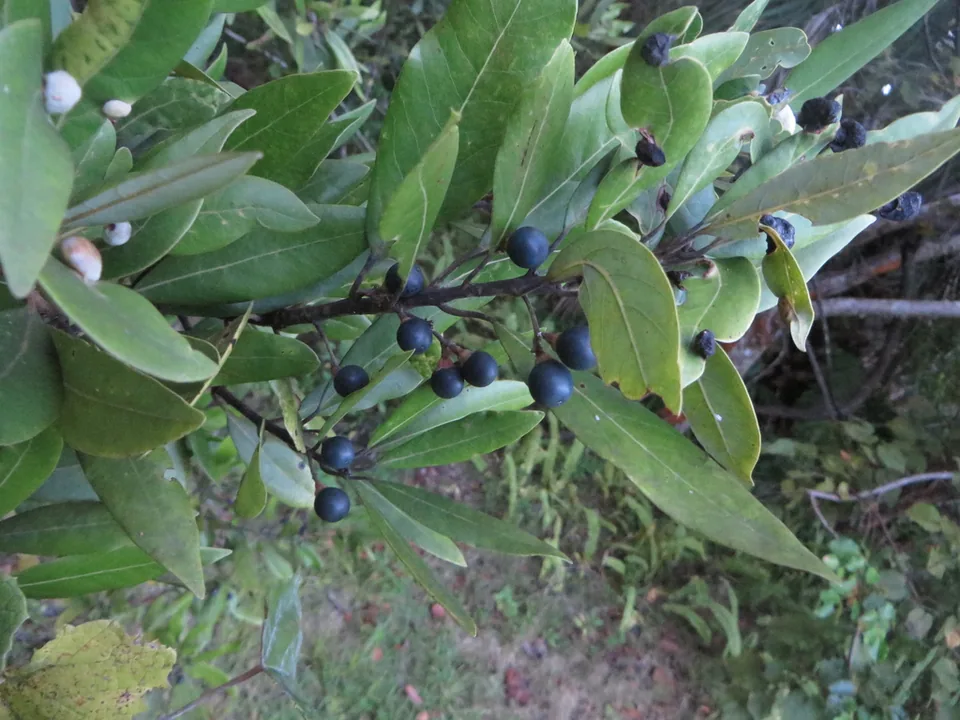
How to Grow and Care for Swamp Bay
Tamala palustris
Written by Emilio Marruso · last checked
At a glance
This member of the laurel family is a flexible choice for the garden: it is happy in full sun and also in partial shade, so it fits many corners of your yard. Its one real enemy is the redbay ambrosia beetle, which spreads laurel wilt, a disease that has killed many of these trees in some areas, so keep a watchful eye on it.
- Sun
Full sun to partial shade
What the sources say (1)
Light: Full sun to partial shade
Light: Full sun (6 or more hours of direct sunlight a day) Partial Shade (Direct sunlight only part of the day, 2-6 hours)
— Tamala palustris (Swamp Bay) | North Carolina Extension Gardener Plant Toolbox [1] - Cold
Survives winters down to 0 °F (−17.8 °C)
Hardy in very cold winters · USDA 7a · RHS H6 · Z7
What the sources say (2)
Hardiness, coldest zone: 7a [winter low −17.8 to −15 °C (0 to 5 °F)]
USDA Plant Hardiness Zone: 7a, 7b, 8a, 8b, 9a, 9b, 10a, 10b, 11a, 11b
— Tamala palustris (Swamp Bay) | North Carolina Extension Gardener Plant Toolbox [1] Hardiness, warmest zone: 11b [winter low 7.2 to 10 °C (45 to 50 °F)]
USDA Plant Hardiness Zone: 7a, 7b, 8a, 8b, 9a, 9b, 10a, 10b, 11a, 11b
— Tamala palustris (Swamp Bay) | North Carolina Extension Gardener Plant Toolbox [1] - Pests
Redbay ambrosia beetle spreads laurel wilt, a disease that has killed many of these trees
What the sources say (2)
Pests: Redbay ambrosia beetle
This tree is in grave danger from a fungus ( Ophiostoma sp.) carried by the Redbay Ambrosia beetle introduced from Asia.
— Tamala palustris (Swamp Bay) | North Carolina Extension Gardener Plant Toolbox [1] Diseases: laurel wilt
Many of the trees in the southeastern part of North Carolina have died. This plant is also susceptible to laurel wilt.
— Tamala palustris (Swamp Bay) | North Carolina Extension Gardener Plant Toolbox [1]
Overview
Swamp bay is a medium-sized evergreen tree in the laurel family native to the southeastern U.S.A. [1] It is in grave danger from a fungus carried by the Redbay Ambrosia beetle and is susceptible to laurel wilt. [1]
This record is incomplete: the sources we read do not cover every field yet.
Not yet covered by our sources: Watering, Pruning, Propagation
Swamp Bay care
How to water Swamp Bay
Not stated in the sources we read.
How much light Swamp Bay needs
Full sun to partial shade
What the sources say (1)
Light:
Full sun (6 or more hours of direct sunlight a day)
Partial Shade (Direct sunlight only part of the day, 2-6 hours)How much cold Swamp Bay can take
Hardiness, coldest zone
7a [winter low −17.8 to −15 °C (0 to 5 °F)]
What the sources say (1)
USDA Plant Hardiness Zone:
7a, 7b, 8a, 8b, 9a, 9b, 10a, 10b, 11a, 11bHardiness, warmest zone
11b [winter low 7.2 to 10 °C (45 to 50 °F)]
What the sources say (1)
USDA Plant Hardiness Zone:
7a, 7b, 8a, 8b, 9a, 9b, 10a, 10b, 11a, 11bHow to propagate Swamp Bay
Not stated in the sources we read.
How to grow Swamp Bay
The plant
Family
Lauraceae
What the sources say (1)
Genus: Tamala Species: palustris Family: Lauraceae Uses (Ethnobotany): Native Americans used the plant medicinally.Pests and diseases
Pests
Redbay ambrosia beetle
What the sources say (1)
This tree is in grave danger from a fungus ( Ophiostoma sp.) carried by the Redbay Ambrosia beetle introduced from Asia.Diseases
laurel wilt
What the sources say (1)
Many of the trees in the southeastern part of North Carolina have died. This plant is also susceptible to laurel wilt.Swamp Bay pests and problems
Redbay ambrosia beetle fungus and laurel wilt
Symptom: Many trees in southeastern North Carolina have died
What the sources say (1)
This tree is in grave danger from a fungus ( Ophiostoma sp.) carried by the Redbay Ambrosia beetle introduced from Asia.
— Tamala palustris (Swamp Bay) | North Carolina Extension Gardener Plant Toolbox [1]
Remedies
Each remedy shows what official sources say about it; traditional remedies without an official source are marked as such. Harmful ones are listed so you know to avoid them.
Treating the plant
laurel wilt
chipping the dead trees Not verified
Traditional remedy, not verified by an official source.
How: A simple technique, chipping the dead trees, can help contain the disease within a small area.
remove affected trees Official source, not independently tested
How: If you have affected trees, they should be removed as soon as possible, because the fungus remains active for at least four months after collapse.
If you have affected trees, they should be removed as soon as possible, because the fungus remains active for at least four months after collapse.
— daytonabeach.gov [2]
Calendar
Pruning
Not stated in the sources we read.
Months as given by the sources, which are mostly from the United States (northern hemisphere). In the southern hemisphere they shift by about six months.
Similar plants
- Silk Bay Tamala humilis
- Redbay Tamala borbonia
- California bay Umbellularia californica
- Camphor Tree Cinnamomum camphora
- Japanese Spicebush Lindera obtusiloba
- Pondberry Lindera melissifolia
- Sassafras Sassafras albidum
- Sweet bay Laurus nobilis
Sources
Every value above is quoted from these documents. Links lead to the original publisher.
- Tamala palustris (Swamp Bay) | North Carolina Extension Gardener Plant Toolbox · plants.ces.ncsu.edu, consulted
- daytonabeach.gov · daytonabeach.gov
Written by Emilio Marruso · last checked