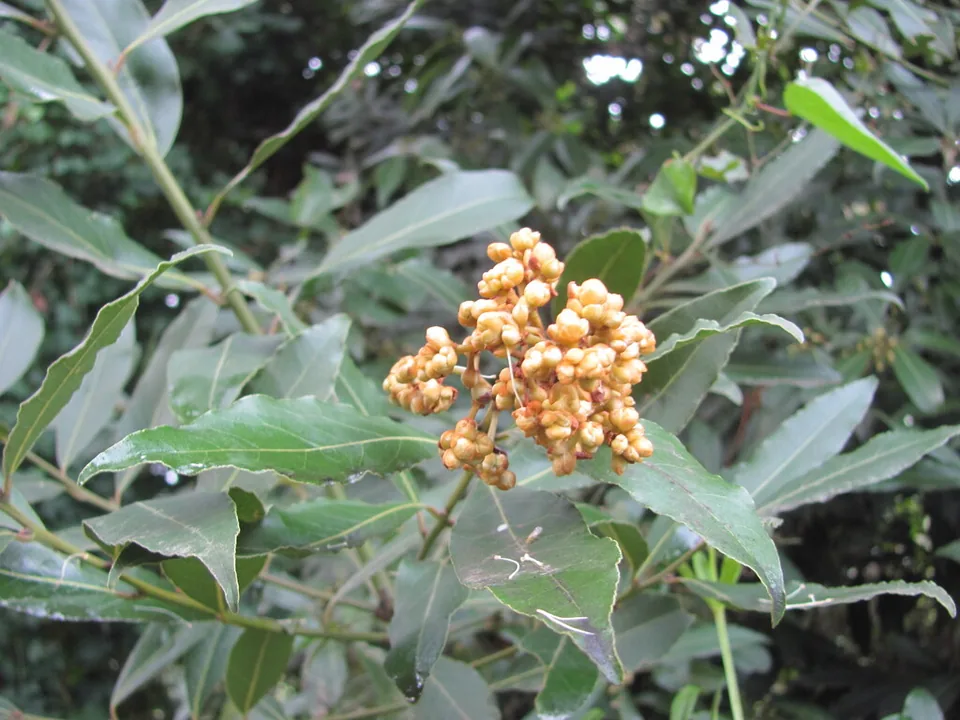
Cómo cultivar y cuidar Laurel
Laurus nobilis
Escrito por Emilio Marruso · última revisión
Tóxica para: Gatos, Perros, Caballos, Personas · Por qué
De un vistazo
El laurel te regala hojas aromáticas para cocinar todo el año, y las más grandes y viejas son las de mejor sabor. Crece a pleno sol o en semisombra, vive feliz en maceta e incluso en interior, y pide poco: riégalo cuando los primeros 2,5 cm de tierra estén secos, sin pasarte. Seca las hojas y guárdalas en recipientes cerrados.
- Sol
Sol pleno o semisombra
Qué dicen las fuentes (2)
Luz: Pleno sol a semisombra
Sweet bay tolerates a variety of well-drained soil types in full sun to partial shade.
— Laurus nobilis (Bay Laurel, Bay Leaf Tree, Bay Tree, Grecian Laurel, Laurel, Laurel Tree, Sweet Bag, Sweet Bay, Tree Laurel, True Laurel) | North Carolina Extension Gardener Plant Toolbox [1] bay trees can be planted in well-drained full-sun to part-shade locations.
— Hey, hey, its sweet bay! - UF/IFAS Extension Charlotte County [4] - Riego
Riega cuando los primeros 2,5 cm de tierra estén secos; sin encharcar y menos en invierno
Qué dicen las fuentes (5)
Riego: Riega cuando la pulgada superior de la mezcla para macetas se seque; tolera períodos cortos de sequía, pero crece mejor con humedad constante.
Water when the top inch of potting mix becomes dry. Bay tolerates short periods of drought but grows best with consistent moisture.
— How do I grow bay laurel? | Yard and Garden [8] place the plant in a full sun location and water when the soil starts to become dry.
— Bay Laurel | Herbs | Illinois Extension | Illinois [6] Notas sobre el riego: No riegues en exceso; un suelo demasiado húmedo provoca pudriciones de la raíz; riega con menos frecuencia en invierno, dejando que el suelo se seque entre riegos; bajo consumo de agua con riego profundo cada 2 a 3 semanas en verano.
Do not keep the soil too moist as that invites root rots and Bay prefers to grow in soil kept on the dry side.
— Bay Laurel | Herbs | Illinois Extension | Illinois [6] Water less frequently during winter, allowing the soil to dry between waterings.
— How do I grow bay laurel? | Yard and Garden [8] Water: Low water use; deep watering every 2 to 3 weeks in summer
— Bay Laurel | UC Master Gardeners of Santa Clara County [7] - Plantación
Planta entre otoño y primavera
Qué dicen las fuentes (2)
Plantación: De otoño a primavera (trasplantes)
Según UC Master Gardeners of Santa Clara County: Transplants: Plant in fall through spring
— Bay Laurel | UC Master Gardeners of Santa Clara County [7] Transplants: Plant in fall through spring - Cuttings: Difficult. Rooting can take months.
— Bay Laurel | UC Master Gardeners of Santa Clara County [7] - Abonado
Abono universal en primavera y durante el crecimiento; muy poco en invierno
Qué dicen las fuentes (6)
Cuándo: Primavera y durante toda la temporada de crecimiento; mucho menos en invierno, cuando el laurel crece poco
Fertilize once in the spring with a slow-release fertilizer or every 6 to 8 weeks with an all-purpose fertilizer at half strength.
— How do I grow bay laurel? | Yard and Garden [8] Fertilizing will be much reduced as bay tends not to grow very much during the winter months.
— Bay Laurel | Herbs | Illinois Extension | Illinois [6] When spring arrives, plants can be moved back outdoors and a regular fertilizer schedule can be resumed.
— Bay Laurel | Herbs | Illinois Extension | Illinois [6] Abonos minerales: Fertilizante de uso general (para todo uso), líquido o a media fuerza, o un fertilizante de liberación lenta una vez en primavera
en contenedores: Fertilize once in the spring with a slow-release fertilizer or every 6 to 8 weeks with an all-purpose fertilizer at half strength.
— How do I grow bay laurel? | Yard and Garden [8] Fertilize once in the spring with a slow-release fertilizer or every 6 to 8 weeks with an all-purpose fertilizer at half strength.
— How do I grow bay laurel? | Yard and Garden [8] Apply a general purpose liquid fertilizer about every 2 weeks during the growing season.
— Bay Laurel | Herbs | Illinois Extension | Illinois [6] - Poda
Pódalo una vez al año, cuando no esté en pleno crecimiento
Qué dicen las fuentes (2)
Poda: Cuando el árbol no está creciendo activamente (anualmente una vez establecido)
Pruning is best done when the tree is not actively growing
— Sweet Bay, Laurus nobilis – Wisconsin Horticulture [2] Cuándo podar: Cuando el árbol no está en crecimiento activo; las hojas para cocinar se cosechan mejor a mediados del verano.
Pruning is best done when the tree is not actively growing to maximize growth, but to maximize flavor, harvest leaves in the mid summer.
— Sweet Bay, Laurus nobilis – Wisconsin Horticulture [2] - Cosecha
Recoge hojas todo el año, mejor las grandes y viejas; más sabor a mediados del verano
Qué dicen las fuentes (5)
Cosecha: Todo el año; mediados de verano para maximizar el sabor
Leaves may be harvested year round. Larger, older leaves tend to provide the strongest and best flavor.
— Bay Laurel | UC Master Gardeners of Santa Clara County [7] Leaves can be harvested year-round from established plants.
— How do I grow bay laurel? | Yard and Garden [8] to maximize flavor, harvest leaves in the mid summer.
— Sweet Bay, Laurus nobilis – Wisconsin Horticulture [2] Cómo cosechar: Cosecha las hojas según sea necesario durante la temporada, todo el año en plantas establecidas; recoge las hojas más grandes y viejas, que tienen el sabor más fuerte y mejor
Leaves can be harvested throughout the season as needed. The larger, older leaves tend to have the strongest and best flavor.
— Bay Laurel | Herbs | Illinois Extension | Illinois [6] Leaves can be harvested year-round from established plants. - Fresh leaves have a stronger flavor than dried leaves.
— How do I grow bay laurel? | Yard and Garden [8] - Polinización
Hay plantas macho y hembra; solo las hembras dan frutos negros, y las abejas las polinizan
Qué dicen las fuentes (3)
Cuajado: Dioicas: flores masculinas y femeninas en plantas separadas.
The plants are dioecious, with star-shaped male and female flowers on separate plants.
— Sweet Bay, Laurus nobilis – Wisconsin Horticulture [2] Qué necesita: Las plantas masculinas y femeninas son separadas; solo las plantas femeninas producen el fruto (drupas negras).
It has separate male and female plants (i.e., it is dioecious), with only the female ones producing the fleshy, black drupes.
— Laurus nobilis (Bay Laurel, Bay Leaf Tree, Bay Tree, Grecian Laurel, Laurel, Laurel Tree, Sweet Bag, Sweet Bay, Tree Laurel, True Laurel) | North Carolina Extension Gardener Plant Toolbox [1] Polinizadores: abejas
Inconspicuous but fragrant, pale yellow-green flowers in spring are followed by small, purplish-black, egg-shaped berries, each with a single seed, on established female trees. Bees pollinate the flowers.
— Sweet Bay, Laurus nobilis – Wisconsin Horticulture [2] - Plagas
Cochinillas, araña roja y trips; el exceso de agua provoca podredumbre de raíz
Qué dicen las fuentes (5)
Plagas: cochinillas, psílidos, arañitas rojas, trips
Scales and psyllids are occasional pests. This plant is susceptible to laurel wilt, phytophthora and root rot.
— Laurus nobilis (Bay Laurel, Bay Leaf Tree, Bay Tree, Grecian Laurel, Laurel, Laurel Tree, Sweet Bag, Sweet Bay, Tree Laurel, True Laurel) | North Carolina Extension Gardener Plant Toolbox [1] Scale insects and spider mites are the most common indoor pests. Inspect plants periodically, especially during winter.
— How do I grow bay laurel? | Yard and Garden [8] Common pests & diseases - Sooty Mold - Armored scales - Psyllids - Thrips
— Bay Laurel | UC Master Gardeners of Santa Clara County [7] Enfermedades: marchitez del laurel, phytophthora, pudrición de raíces, fumagina
Scales and psyllids are occasional pests. This plant is susceptible to laurel wilt, phytophthora and root rot.
— Laurus nobilis (Bay Laurel, Bay Leaf Tree, Bay Tree, Grecian Laurel, Laurel, Laurel Tree, Sweet Bag, Sweet Bay, Tree Laurel, True Laurel) | North Carolina Extension Gardener Plant Toolbox [1] Common pests & diseases - Sooty Mold - Armored scales - Psyllids - Thrips
— Bay Laurel | UC Master Gardeners of Santa Clara County [7] - Atención
Puede perder hojas al pasarlo de dentro a fuera; suele recuperarse
- Tamaño
De 2,4 a 9,1 m de ancho
Qué dicen las fuentes (1)
Anchura adulta: 243.8-914.4 cm (8 a 30 pies)
Dimensions: Height: 8 ft. 0 in. - 12 ft. 0 in. Width: 8 ft. 0 in. - 30 ft. 0 in.
— Laurus nobilis (Bay Laurel, Bay Leaf Tree, Bay Tree, Grecian Laurel, Laurel, Laurel Tree, Sweet Bag, Sweet Bay, Tree Laurel, True Laurel) | North Carolina Extension Gardener Plant Toolbox [1] - Multiplicación
Esquejes en verano o acodo aéreo; los esquejes enraízan con dificultad y pueden tardar meses
Qué dicen las fuentes (5)
Propagación: Semilla fresca; esquejes a medio madurar tomados en verano; acodo aéreo
Bay is difficult to propagate, but it can be grown from fresh seed (germination is rather erratic and the requires warm temperatures), half-ripe cuttings taken in summer (which may take several months), or by air-layering.
— Sweet Bay, Laurus nobilis – Wisconsin Horticulture [2] Esquejes: Esquejes de madera semimadura (semileñosa) en verano o fines de verano, o esquejes de madera blanda a principios del verano; son difíciles de enraizar y pueden tardar varios meses.
Take cuttings – semi-ripe cuttings in late summer or softwood cuttings in early summer.
— [9] half-ripe cuttings taken in summer (which may take several months), or by air-layering.
— Sweet Bay, Laurus nobilis – Wisconsin Horticulture [2] If you attempt propagation, use only fresh seeds and semi-hardwood cutting material.
— Hey, hey, its sweet bay! - UF/IFAS Extension Charlotte County [4] Cuttings can also be taken but they are difficult to root.
— Bay Laurel | Herbs | Illinois Extension | Illinois [6] - Siembra
Siembra solo semilla fresca y con calor; germina despacio y de forma irregular
Qué dicen las fuentes (3)
Germinación: Usa solo semilla fresca; la germinación es errática, pobre y lenta y necesita temperaturas cálidas.
Bay is difficult to propagate, but it can be grown from fresh seed (germination is rather erratic and the requires warm temperatures)
— Sweet Bay, Laurus nobilis – Wisconsin Horticulture [2] Bay can be grown from seed, but it germinates poorly and slowly.
— Bay Laurel | Herbs | Illinois Extension | Illinois [6] If you attempt propagation, use only fresh seeds and semi-hardwood cutting material.
— Hey, hey, its sweet bay! - UF/IFAS Extension Charlotte County [4] - Maceta
Crece en maceta, incluso en interior
Qué dicen las fuentes (4)
- Seguridad
Dañino para gatos, perros y caballos; en personas puede causar vómitos y diarrea
Resumen
El laurel dulce es un árbol o arbusto de hoja perenne de la familia de los laureles, originario de la cuenca mediterránea. [1] Debido a que crece lentamente, se desarrolla bien en contenedores. [2] Es sensible a las heladas y necesita protección contra las heladas en microclimas más fríos. [7]
Citado en inglés, como en la fuente.
Cuidados
Riego
Riego
Riega cuando la pulgada superior de la mezcla para macetas se seque; tolera períodos cortos de sequía, pero crece mejor con humedad constante.
Qué dicen las fuentes (2)
Water when the top inch of potting mix becomes dry. Bay tolerates short periods of drought but grows best with consistent moisture.place the plant in a full sun location and water when the soil starts to become dry.Notas sobre el riego
No riegues en exceso; un suelo demasiado húmedo provoca pudriciones de la raíz; riega con menos frecuencia en invierno, dejando que el suelo se seque entre riegos; bajo consumo de agua con riego profundo cada 2 a 3 semanas en verano.
Qué dicen las fuentes (3)
Do not keep the soil too moist as that invites root rots and Bay prefers to grow in soil kept on the dry side.Water less frequently during winter, allowing the soil to dry between waterings.Water: Low water use; deep watering every 2 to 3 weeks in summerLuz
Pleno sol a semisombra
Qué dicen las fuentes (2)
Sweet bay tolerates a variety of well-drained soil types in full sun to partial shade.bay trees can be planted in well-drained full-sun to part-shade locations.Clima y frío
Rusticidad, zona más fría
Las fuentes dan valores distintos según la región, la zona o las condiciones de cultivo.
Lo que dice cada fuente
Según NC State Extension Plant Toolbox: 8b [mínima invernal de −9,4 a −6,7 °C (de 15 a 20 °F)]
Según University of Wisconsin Extension: 7a [mínima invernal de −17,8 a −15 °C (de 0 a 5 °F)]
Según University of Illinois Extension: 8 [mínima invernal de −12,2 a −6,7 °C (de 10 a 20 °F)]
Qué dicen las fuentes (5)
Según NC State Extension Plant Toolbox: NC Region: Coastal Piedmont USDA Plant Hardiness Zone: 8b, 9a, 9b, 10a, 10bSegún University of Wisconsin Extension: L. nobilis is widely grown as an ornamental plant in mild climates (zones 7a to 10b)Según University of Illinois Extension: Bay laurel is an evergreen shrub or tree in zones 8 and above.NC Region:
Coastal
Piedmont
USDA Plant Hardiness Zone:
8b, 9a, 9b, 10a, 10bL. nobilis is widely grown as an ornamental plant in mild climates (zones 7a to 10b)Rusticidad, zona más cálida
10b [mínima invernal de 1,7 a 4,4 °C (de 35 a 40 °F)]
Lo que dice cada fuente
Según NC State Extension Plant Toolbox: 10b [mínima invernal de 1,7 a 4,4 °C (de 35 a 40 °F)]
Según University of Wisconsin Extension: 10b [mínima invernal de 1,7 a 4,4 °C (de 35 a 40 °F)]
Qué dicen las fuentes (4)
Según NC State Extension Plant Toolbox: NC Region: Coastal Piedmont USDA Plant Hardiness Zone: 8b, 9a, 9b, 10a, 10bSegún University of Wisconsin Extension: L. nobilis is widely grown as an ornamental plant in mild climates (zones 7a to 10b)NC Region:
Coastal
Piedmont
USDA Plant Hardiness Zone:
8b, 9a, 9b, 10a, 10bL. nobilis is widely grown as an ornamental plant in mild climates (zones 7a to 10b)Dónde cultivarla
En interior
Sí
En maceta
Sí
Qué dicen las fuentes (2)
Bay is best grown in a container. Bay can be grown from seed, but it germinates poorly and slowly.Because it is relatively slow growing, it does well in containers.Propagación
Semilla fresca; esquejes a medio madurar tomados en verano; acodo aéreo
Qué dicen las fuentes (1)
Bay is difficult to propagate, but it can be grown from fresh seed (germination is rather erratic and the requires warm temperatures), half-ripe cuttings taken in summer (which may take several months), or by air-layering.Cultivo
La planta
Ciclo de vida
perenne
Qué dicen las fuentes (1)
Frost-sensitive; protect from frost in colder microclimates
- Type: Perennial, evergreen, woodyFamilia
Lauraceae
Qué dicen las fuentes (1)
Laurus nobilis (family Lauraceae) is widely cultivated in many regions of the world, where it is used primarily as a culinary herb.Altura adulta
Anchura adulta
243.8-914.4 cm (8 a 30 pies)
Qué dicen las fuentes (1)
Dimensions:
Height: 8 ft. 0 in. - 12 ft. 0 in.
Width: 8 ft. 0 in. - 30 ft. 0 in.Cosecha y conservación
Cómo cosechar
Cosecha las hojas según sea necesario durante la temporada, todo el año en plantas establecidas; recoge las hojas más grandes y viejas, que tienen el sabor más fuerte y mejor
Qué dicen las fuentes (2)
Leaves can be harvested throughout the season as needed. The larger, older leaves tend to have the strongest and best flavor.Leaves can be harvested year-round from established plants.
- Fresh leaves have a stronger flavor than dried leaves.Conservación
Seca las hojas y luego guárdalas en contenedores sellados
Qué dicen las fuentes (1)
The larger, older leaves tend to have the strongest and best flavor. Dry leaves before storing in sealed containers.Plagas y enfermedades
Plagas
cochinillas, psílidos, arañitas rojas, trips
Qué dicen las fuentes (3)
Scales and psyllids are occasional pests. This plant is susceptible to laurel wilt, phytophthora and root rot.Scale insects and spider mites are the most common indoor pests. Inspect plants periodically, especially during winter.Common pests & diseases
- Sooty Mold
- Armored scales
- Psyllids
- ThripsEnfermedades
marchitez del laurel, phytophthora, pudrición de raíces, fumagina
Qué dicen las fuentes (2)
Scales and psyllids are occasional pests. This plant is susceptible to laurel wilt, phytophthora and root rot.Common pests & diseases
- Sooty Mold
- Armored scales
- Psyllids
- ThripsAbonado
Cuándo
Primavera y durante toda la temporada de crecimiento; mucho menos en invierno, cuando el laurel crece poco
Qué dicen las fuentes (3)
Fertilize once in the spring with a slow-release fertilizer or every 6 to 8 weeks with an all-purpose fertilizer at half strength.Fertilizing will be much reduced as bay tends not to grow very much during the winter months.When spring arrives, plants can be moved back outdoors and a regular fertilizer schedule can be resumed.Frecuencia
Las fuentes no coinciden:
Lo que dice cada fuente
with a liquid fertilizer: Every 2 weeks during the growing season
Qué dicen las fuentes (1)
with a liquid fertilizer: Apply a general purpose liquid fertilizer about every 2 weeks during the growing season.Abonos minerales
Fertilizante de uso general (para todo uso), líquido o a media fuerza, o un fertilizante de liberación lenta una vez en primavera
Lo que dice cada fuente
en contenedores: Fertilizante de liberación lenta una vez en primavera, o fertilizante de uso general a media fuerza cada 6 a 8 semanas
Qué dicen las fuentes (3)
en contenedores: Fertilize once in the spring with a slow-release fertilizer or every 6 to 8 weeks with an all-purpose fertilizer at half strength.Fertilize once in the spring with a slow-release fertilizer or every 6 to 8 weeks with an all-purpose fertilizer at half strength.Apply a general purpose liquid fertilizer about every 2 weeks during the growing season.Raíces
Chupones
Las fuentes dan valores distintos según la región, la zona o las condiciones de cultivo.
Lo que dice cada fuente
árboles estándar (en forma de paleta): Los chupones pueden brotar de las raíces
Qué dicen las fuentes (1)
árboles estándar (en forma de paleta): With standard (lollipop-shaped) bay trees, suckers may sprout from the roots.Propagación
Germinación
Usa solo semilla fresca; la germinación es errática, pobre y lenta y necesita temperaturas cálidas.
Qué dicen las fuentes (3)
Bay is difficult to propagate, but it can be grown from fresh seed (germination is rather erratic and the requires warm temperatures)Bay can be grown from seed, but it germinates poorly and slowly.If you attempt propagation, use only fresh seeds and semi-hardwood cutting material.Esquejes
Esquejes de madera semimadura (semileñosa) en verano o fines de verano, o esquejes de madera blanda a principios del verano; son difíciles de enraizar y pueden tardar varios meses.
Qué dicen las fuentes (4)
Take cuttings – semi-ripe cuttings in late summer or softwood cuttings in early summer.half-ripe cuttings taken in summer (which may take several months), or by air-layering.If you attempt propagation, use only fresh seeds and semi-hardwood cutting material.Cuttings can also be taken but they are difficult to root.Tras la cosecha
Conservación
Hojas: sécalas (planas entre las páginas de un libro viejo bajo un peso) o congélalas para conservar el sabor por más tiempo.
Calor y sequía
Sequía
Tolera períodos cortos de sequía pero crece mejor con humedad constante; una vez establecido en el suelo no debería necesitar riego, mientras que el laurel recién plantado necesita agua en períodos secos durante el primer año. Las plantas en contenedor necesitan riego regular.
Qué dicen las fuentes (4)
Bay tolerates short periods of drought but grows best with consistent moisture.Once established in the ground, bay shouldn’t need watering.Water newly planted bay in dry spells during the first year.Bay is often grown in containers, in which case it needs regular watering and feeding too.Polinización
Cuajado
Dioicas: flores masculinas y femeninas en plantas separadas.
Qué dicen las fuentes (1)
The plants are dioecious, with star-shaped male and female flowers on separate plants.Qué necesita
Las plantas masculinas y femeninas son separadas; solo las plantas femeninas producen el fruto (drupas negras).
Qué dicen las fuentes (1)
It has separate male and female plants (i.e., it is dioecious), with only the female ones producing the fleshy, black drupes.Lo transportan
Insectos
Qué dicen las fuentes (1)
Inconspicuous but fragrant, pale yellow-green flowers in spring are followed by small, purplish-black, egg-shaped berries, each with a single seed, on established female trees. Bees pollinate the flowers.Polinizadores
abejas
Qué dicen las fuentes (1)
Inconspicuous but fragrant, pale yellow-green flowers in spring are followed by small, purplish-black, egg-shaped berries, each with a single seed, on established female trees. Bees pollinate the flowers.Poda
Cuándo podar
Cuando el árbol no está en crecimiento activo; las hojas para cocinar se cosechan mejor a mediados del verano.
Qué dicen las fuentes (1)
Pruning is best done when the tree is not actively growing to maximize growth, but to maximize flavor, harvest leaves in the mid summer.Problemas
Cochinillas
Síntoma: Insectos con aspecto de protuberancias en las hojas y partes leñosas, especialmente en interiores
Qué hacer: Monitorea; inspecciona las plantas periódicamente
Qué dicen las fuentes (1)
This plant has few pests but scale can be a problem, particularly indoors.
— Sweet Bay, Laurus nobilis – Wisconsin Horticulture [2] Marchitez del laurel, fitóftora y pudrición de raíces
Síntoma: Planta susceptible a estas enfermedades
Qué hacer: Evita el riego excesivo y el mal drenaje
Qué dicen las fuentes (1)
This plant is susceptible to laurel wilt, phytophthora and root rot.
— Laurus nobilis (Bay Laurel, Bay Leaf Tree, Bay Tree, Grecian Laurel, Laurel, Laurel Tree, Sweet Bag, Sweet Bay, Tree Laurel, True Laurel) | North Carolina Extension Gardener Plant Toolbox [1] Hojas amarillentas
Síntoma: Las hojas amarillas suelen deberse a riego excesivo o mal drenaje
Qué hacer: Corrige el riego y el drenaje
Qué dicen las fuentes (1)
Yellowing leaves are often caused by overwatering or poor drainage.
— How do I grow bay laurel? | Yard and Garden [8] Cochinillas y arañitas rojas
Síntoma: Plagas más comunes en interiores
Qué hacer: Inspecciona las plantas periódicamente, especialmente durante el invierno
Qué dicen las fuentes (1)
Scale insects and spider mites are the most common indoor pests.
— How do I grow bay laurel? | Yard and Garden [8] Caída de hojas después de mover la planta
Síntoma: Caída de hojas al mover la planta entre ambientes interiores y exteriores
Qué hacer: Las plantas generalmente se recuperan a medida que se adaptan
Qué dicen las fuentes (1)
Leaf drop may occur when plants are moved between indoor and outdoor environments
— How do I grow bay laurel? | Yard and Garden [8]
Remedios
Cada remedio indica qué dicen las fuentes oficiales; los remedios tradicionales sin fuente oficial aparecen marcados. Los perjudiciales están para que sepas evitarlos.
Cuidar la planta
cochinillas harinosas
pulverización con jabón potásico Funciona
Cómo: Rocía diluido según lo recomendado; es eficaz contra cochinillas harinosas, pulgones y residuos de melaza.
Potassium soap : Effective against mealybugs, aphids, and honeydew residue. Spray diluted as recommended.
— en.jardineriaon.com [10] Qué dicen las pruebas For example, insecticidal soap is a safe, effective organic insecticide with minimal environmental impact.
— extension.psu.edu [11]
pulgones
aceite de neem Funciona
Despite these being biological pesticides, it is important to read the directions on the label and wear safety equipment.
— extension.illinois.edu [12] Cómo: Insecticida y fungicida natural, descrito como seguro incluso para laureles utilizados con fines culinarios.
Neem oil : natural insecticide and fungicide, safe even for laurels used for culinary purposes.
— en.jardineriaon.com [10] Qué dicen las pruebas Neem oil is found in the seeds of the neem tree. The active component found in this biological pesticide reduces insect feeding, interferes with hormones -- making it hard to grow or lay eggs -- and acts as a repellent.
— extension.illinois.edu [12]
plagas de insectos
infusión de ajo, cebolla y tomillo No verificado
Remedio tradicional, no verificado por una fuente oficial.
Penn State Extension does not recommend using home remedies for many reasons. They do not come with precise instructions on how to use; they may not be effective; they have the potential to harm humans, pets, and plants;
— extension.psu.edu [13] Cómo: Infusión utilizada como repelente natural para plagas menores o en jardinería orgánica.
mildiu polvoriento
rociado con bicarbonato de sodio No verificado
Remedio tradicional, no verificado por una fuente oficial.
Cómo: Bicarbonato de sodio mezclado con agua.
enfermedades fúngicas
spray de leche diluida No verificado
Remedio tradicional, no verificado por una fuente oficial.
Cómo: Leche diluida rociada sobre las hojas para hongos leves.
vinagre diluido y aceites esenciales No verificado
Remedio tradicional, no verificado por una fuente oficial.
Diluted vinegar and essential oils: can be used with caution for fungal prevention.
— en.jardineriaon.com [10] Cómo: Debe usarse con precaución para la prevención de hongos.
minadores de hojas
arrancando las hojas infestadas Funciona
Cómo: Si las larvas aún están presentes dentro de las hojas, arranca esas hojas y deséchalas.
If there is, pick off those leaves and throw them away.
— web.extension.illinois.edu [14] Qué dicen las pruebas If there is, pick off those leaves and throw them away.
— web.extension.illinois.edu [14]
Venenosa para los animales
Según la fuente, citada textualmente. No es un consejo médico ni veterinario: si una persona o un animal pudo haber ingerido esta planta, contacta con un centro de toxicología o con un veterinario.
Animales
#problem for cats #problem for dogs #problem for horses
[1]La fuente señala el riesgo para este animal pero no explica por qué.
Personas
Poison Symptoms: Vomiting and diarrhea; Large ingestion of whole leaves can cause obstruction
[1]
Calendario
Plantación
De otoño a primavera (trasplantes)
Lo que dice cada fuente
Según UC Master Gardeners of Santa Clara County: De otoño a primavera (trasplantes)
Qué dicen las fuentes (2)
Según UC Master Gardeners of Santa Clara County: Transplants: Plant in fall through springTransplants: Plant in fall through spring
- Cuttings: Difficult. Rooting can take months.Cosecha
Todo el año; mediados de verano para maximizar el sabor
Qué dicen las fuentes (3)
Leaves may be harvested year round. Larger, older leaves tend to provide the strongest and best flavor.Leaves can be harvested year-round from established plants.to maximize flavor, harvest leaves in the mid summer.Poda
Cuando el árbol no está creciendo activamente (anualmente una vez establecido)
Qué dicen las fuentes (1)
Pruning is best done when the tree is not actively growingMeses tal como los dan las fuentes, en su mayoría de Estados Unidos (hemisferio norte). En el hemisferio sur se desplazan unos seis meses.
Respecto a las heladas
Estimación menos precisa: no hay ninguna estación meteorológica a menos de 300 km.
Busca las fechas de heladas por código postal o ciudad
Trasplante: hacia la última helada
Move plants outdoors after the danger of frost has passed in spring (typically mid-May).
— How do I grow bay laurel? | Yard and Garden [8]
Cuenta desde las fechas medias de las heladas de tu zona.
Comestibilidad
Según la fuente, citada textualmente. No comas una planta basándote solo en esta página: los errores de identificación pueden ser peligrosos.
Leaves are used to flavor foods while cooking, but the leaves should not be eaten for a variety of reasons including but not limited to choking and creating cuts inside the digestive tract or/ and mouth because the leaves are sharp.
[1]don’t eat the leaves, they are only used to cook with and flavor dishes.
[4]Always remove bay leaves from soups, stews, and sauces before serving, as the leaves remain stiff and can be a choking hazard.
[8]
Valores orientativos
Valores de una fuente secundaria, no comprobados palabra por palabra como el resto de esta página. Úselos como punto de partida.
- Resiste la sequía
- SíValor orientativo, adáptalo a tu clima · Fuente secundaria
- Suelo
- Bien drenadoValor orientativo, adáptalo a tu clima · Fuente secundaria
- pH del suelo
- 6-7Valor orientativo, adáptalo a tu clima · Fuente secundaria
- Nivel de cuidado
- MedioValor orientativo, adáptalo a tu clima · Fuente secundaria
- Crecimiento
- ModeradoValor orientativo, adáptalo a tu clima · Fuente secundaria
Plantas similares
- Aguacate Persea americana
- California bay Umbellularia californica
- Alcanforero Cinnamomum camphora
- Japanese Spicebush Lindera obtusiloba
- Pondberry Lindera melissifolia
- Sasafrás Sassafras albidum
- Silk Bay Tamala humilis
- Swamp Bay Tamala palustris
Fuentes
Cada valor anterior se cita de estos documentos. Los enlaces llevan al editor original.
- Laurus nobilis (Bay Laurel, Bay Leaf Tree, Bay Tree, Grecian Laurel, Laurel, Laurel Tree, Sweet Bag, Sweet Bay, Tree Laurel, True Laurel) | North Carolina Extension Gardener Plant Toolbox · plants.ces.ncsu.edu, consultado
- Sweet Bay, Laurus nobilis – Wisconsin Horticulture · hort.extension.wisc.edu, consultado
- Grecian Laurel - Laurus nobilis | North Carolina Extension Gardener Plant Toolbox · plants.ces.ncsu.edu, consultado
- Hey, hey, its sweet bay! - UF/IFAS Extension Charlotte County · blogs.ifas.ufl.edu, consultado
- True Laurel - Laurus nobilis | North Carolina Extension Gardener Plant Toolbox · plants.ces.ncsu.edu, consultado
- Bay Laurel | Herbs | Illinois Extension | Illinois · extension.illinois.edu, consultado
- Bay Laurel | UC Master Gardeners of Santa Clara County · ucanr.edu, consultado
- How do I grow bay laurel? | Yard and Garden · yardandgarden.extension.iastate.edu, consultado
- rhs.org.uk · rhs.org.uk
- en.jardineriaon.com · en.jardineriaon.com
- extension.psu.edu · extension.psu.edu
- extension.illinois.edu · extension.illinois.edu
- extension.psu.edu · extension.psu.edu
- web.extension.illinois.edu · web.extension.illinois.edu
Escrito por Emilio Marruso · última revisión