
How to Grow and Care for Snake Plant
Dracaena trifasciata
Written by Emilio Marruso · last checked
Toxic to: Cats, Dogs, Horses, Animals, People · Why
At a glance
The snake plant is an easygoing perennial that grows happily indoors and in containers, reaching up to 4 feet tall, while dwarf kinds stay at 6–7 inches. It asks for very little: let the soil dry between waterings, and in winter water only every one to two months. Feed it monthly in spring and summer, and share it by division or cuttings.
- Water
Let the soil dry between waterings; in winter water only every 1–2 months
What the sources say (4)
Watering: Allow the soil to dry between waterings from spring to autumn; in winter water only every one to two months
In spring to autumn allow the soil to dry between waterings. In winter only water every one to two months.
— Dracaena trifasciata (Golden Birds Nest, Good Luck Plant, Mother-in-law's Tongue, Snake Plant) | North Carolina Extension Gardener Plant Toolbox [1] Water only when it is dry. You can kill it by overwatering
— Snake Plant: A Forgiving, Low-maintenance Houseplant [2] Watering notes: Do not overwater, as the roots will rot; use containers with drainage holes to prevent soggy soil
Well-drained soil and careful watering are a must; do not overwater, as the roots will rot.
— Dracaena trifasciata (Golden Birds Nest, Good Luck Plant, Mother-in-law's Tongue, Snake Plant) | North Carolina Extension Gardener Plant Toolbox [1] Choose containers with drainage holes to prevent soggy soil.
— Snake Plant: A Forgiving, Low-maintenance Houseplant — Allegheny County — Master Gardener [5] - Cold
Survives winters down to 30 °F (−1.1 °C)
Half hardy: mild winters or an unheated greenhouse · USDA 10a · RHS H3 · Z10
What the sources say (2)
Hardiness, coldest zone: 10a [winter low −1.1 to 1.7 °C (30 to 35 °F)]
Soil Drainage: Good Drainage USDA Plant Hardiness Zone: 10a, 10b, 11a, 11b, 12a, 12b
— Dracaena trifasciata (Golden Birds Nest, Good Luck Plant, Mother-in-law's Tongue, Snake Plant) | North Carolina Extension Gardener Plant Toolbox [1] Hardiness, warmest zone: 12b [winter low 12.8 to 15.6 °C (55 to 60 °F)]
Soil Drainage: Good Drainage USDA Plant Hardiness Zone: 10a, 10b, 11a, 11b, 12a, 12b
— Dracaena trifasciata (Golden Birds Nest, Good Luck Plant, Mother-in-law's Tongue, Snake Plant) | North Carolina Extension Gardener Plant Toolbox [1] - Feeding
All-purpose fertilizer at half strength, once a month in spring and summer
What the sources say (6)
When: During the growing season (spring and summer)
For a more robust plant, fertilize monthly during their growing season (spring and summer) with an all-purpose fertilizer at half strength.
— Snake Plant: A Forgiving, Low-maintenance Houseplant — Allegheny County — Master Gardener [5] For a more robust plant, fertilize monthly during the growing season with an all-purpose fertilizer at half strength.
— Snake Plant: A Forgiving, Low-maintenance Houseplant [2] How often: Monthly during the growing season
For a more robust plant, fertilize monthly during the growing season with an all-purpose fertilizer at half strength.
— Snake Plant: A Forgiving, Low-maintenance Houseplant [2] For a more robust plant, fertilize monthly during their growing season (spring and summer) with an all-purpose fertilizer at half strength.
— Snake Plant: A Forgiving, Low-maintenance Houseplant — Allegheny County — Master Gardener [5] Mineral fertilizers: All-purpose fertilizer at half strength
For a more robust plant, fertilize monthly during the growing season with an all-purpose fertilizer at half strength.
— Snake Plant: A Forgiving, Low-maintenance Houseplant [2] For a more robust plant, fertilize monthly during their growing season (spring and summer) with an all-purpose fertilizer at half strength.
— Snake Plant: A Forgiving, Low-maintenance Houseplant — Allegheny County — Master Gardener [5] - Pests
Mealybugs and spider mites now and then; too much water rots the roots
What the sources say (4)
Pests: mealybugs, spider mites
No significant problems. Monitor for mealybugs and spider mites. Overwatering may cause root rot.
— Dracaena trifasciata (Golden Birds Nest, Good Luck Plant, Mother-in-law's Tongue, Snake Plant) | North Carolina Extension Gardener Plant Toolbox [1] Few pests and diseases bother this hardy plant. Due to overwatering, root rot is a common affliction of snake plants. Mealybugs and spider mites occasionally bother this plant.
— Snake Plant: A Forgiving, Low-maintenance Houseplant [2] Diseases: root rot
No significant problems. Monitor for mealybugs and spider mites. Overwatering may cause root rot.
— Dracaena trifasciata (Golden Birds Nest, Good Luck Plant, Mother-in-law's Tongue, Snake Plant) | North Carolina Extension Gardener Plant Toolbox [1] Few pests and diseases bother this hardy plant. Due to overwatering, root rot is a common affliction of snake plants.
— Snake Plant: A Forgiving, Low-maintenance Houseplant [2] - Watch out
Tall plants can tip over: use a heavy pot; crowded roots can break clay pots
- Size
Up to 4 ft tall; dwarf kinds stay at 6–7 inches
What the sources say (2)
Mature height: up to 122 cm (4 ft) for the species; dwarf cultivars 15-18 cm (6-7 in)
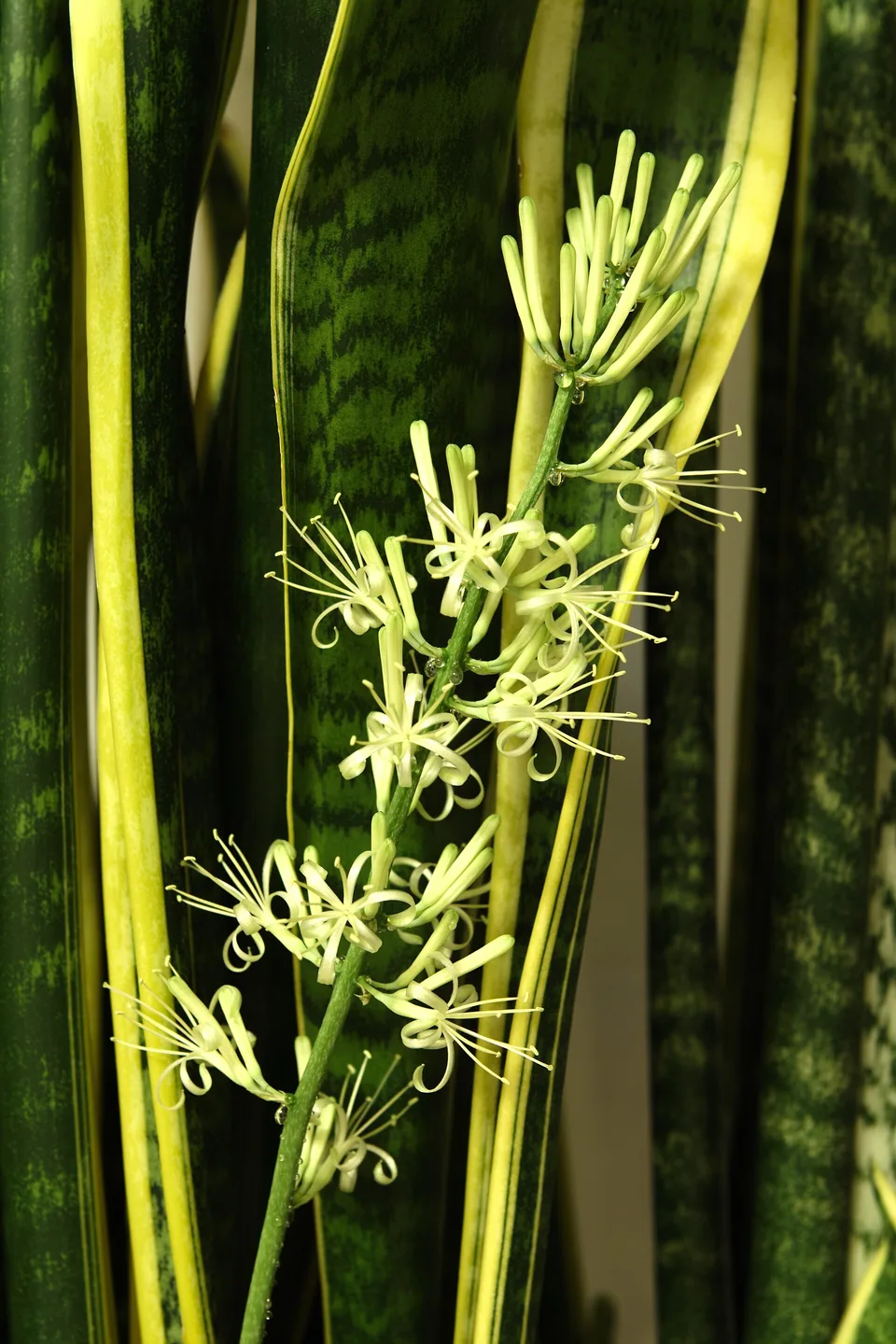
The straight species has green leaves with darker green, irregular, horizontal variegation, and can grow up to 4 feet tall.
— Snake Plant: A Forgiving, Low-maintenance Houseplant [2] Some cultivars of Dracaena trifasciata are dwarf plants that grow only 6-7 inches tall, while the leaves of others reach heights of 2-4 feet.
— Snake plant: A striking and durable houseplant | UGA Extension Forsyth County [6] - Propagation
By division, stem cuttings or leaf cuttings
What the sources say (2)
Propagation: Division, stem cutting, leaf cuttings
Recommended Propagation Strategy: Division Stem Cutting Country Or Region Of Origin:
— Dracaena trifasciata (Golden Birds Nest, Good Luck Plant, Mother-in-law's Tongue, Snake Plant) | North Carolina Extension Gardener Plant Toolbox [1] While you can take leaf cuttings to begin new plants, it is most easily propagated by division.
— Snake Plant: A Forgiving, Low-maintenance Houseplant [2] - Containers
Great indoors, in pots with drainage holes
What the sources say (4)
Indoors: Yes
Snake plant is a long-lived, unfussy, succulent houseplant
— Snake Plant: A Forgiving, Low-maintenance Houseplant [2] In containers: Yes
Snake plant is grown in containers and is used as ground cover or filler in interior landscape designs.
— Dracaena trifasciata (Golden Birds Nest, Good Luck Plant, Mother-in-law's Tongue, Snake Plant) | North Carolina Extension Gardener Plant Toolbox [1] Watering notes: Do not overwater, as the roots will rot; use containers with drainage holes to prevent soggy soil
Well-drained soil and careful watering are a must; do not overwater, as the roots will rot.
— Dracaena trifasciata (Golden Birds Nest, Good Luck Plant, Mother-in-law's Tongue, Snake Plant) | North Carolina Extension Gardener Plant Toolbox [1] Choose containers with drainage holes to prevent soggy soil.
— Snake Plant: A Forgiving, Low-maintenance Houseplant — Allegheny County — Master Gardener [5] - Safety
Toxic if eaten, for people and pets; the sap can irritate skin
Overview
Snake plant is a long-lived, unfussy, succulent houseplant that was moved from the genus Sansevieria to Dracaena. [5] It needs well-drained soil and careful watering, and overwatering can cause root rot. [1] It is propagated most easily by division. [2] Choose a cactus potting mix or one with perlite. [2] If there is damage to a particular leaf, remove it by cutting it off at the soil level. [2]
Snake Plant care
How to water Snake Plant
Watering
Allow the soil to dry between waterings from spring to autumn; in winter water only every one to two months
What the sources say (2)
In spring to autumn allow the soil to dry between waterings. In winter only water every one to two months.Water only when it is dry. You can kill it by overwateringWatering notes
Do not overwater, as the roots will rot; use containers with drainage holes to prevent soggy soil
What the sources say (2)
Well-drained soil and careful watering are a must; do not overwater, as the roots will rot.Choose containers with drainage holes to prevent soggy soil.How much light Snake Plant needs
The sources give different values depending on region, zone or growing conditions.
What each source says
According to NC State Extension: Direct sunlight only part of the day, 2-6 hours; tolerates very low light
According to Penn State Extension: Bright indirect light; tolerates low light; keep out of direct sun
According to UGA Extension: Tolerates a range of light from very low to bright, indirect exposure
NC State · Tolerance: it will tolerate very low light
Penn State · Indoors: Snake plant enjoys bright indirect light but tolerates low-light areas very well.
What the sources say (5)
According to NC State Extension: Place in a location where it will receive direct sunlight only part of the day, 2 to 6 hours, as it will tolerate very low light.According to Penn State Extension: Snake plant enjoys bright indirect light but tolerates low-light areas very well. Keep it out of the direct sun, as it can burn.According to UGA Extension: They can tolerate a range of light, from very low to bright, indirect exposure.NC State · Tolerance: it will tolerate very low lightPenn State · Indoors: Snake plant enjoys bright indirect light but tolerates low-light areas very well.How much cold Snake Plant can take
Hardiness, coldest zone
10a [winter low −1.1 to 1.7 °C (30 to 35 °F)]
What the sources say (1)
Soil Drainage:
Good Drainage
USDA Plant Hardiness Zone:
10a, 10b, 11a, 11b, 12a, 12bHardiness, warmest zone
12b [winter low 12.8 to 15.6 °C (55 to 60 °F)]
What the sources say (1)
Soil Drainage:
Good Drainage
USDA Plant Hardiness Zone:
10a, 10b, 11a, 11b, 12a, 12bWhere to grow Snake Plant
Indoors
Yes
What the sources say (1)
Snake plant is a long-lived, unfussy, succulent houseplantIn containers
Yes
What the sources say (1)
Snake plant is grown in containers and is used as ground cover or filler in interior landscape designs.How to propagate Snake Plant
Division, stem cutting, leaf cuttings
What the sources say (2)
Recommended Propagation Strategy:
Division
Stem Cutting
Country Or Region Of Origin:While you can take leaf cuttings to begin new plants, it is most easily propagated by division.How to grow Snake Plant
The plant
Life cycle
perennial
What the sources say (1)
Snake plant is an erect, clumping, broadleaf evergreen, tropical herbaceous perennial in the asparagus family (Asparagaceae).Family
Asparagaceae
What the sources say (2)
Snake plant is an erect, clumping, broadleaf evergreen, tropical herbaceous perennial in the asparagus family (Asparagaceae).A member of the asparagus family, snake plant is native to tropical western Africa, where it will flower and produce berries.Mature height
up to 122 cm (4 ft) for the species; dwarf cultivars 15-18 cm (6-7 in)
What the sources say (2)
The straight species has green leaves with darker green, irregular, horizontal variegation, and can grow up to 4 feet tall.Some cultivars of Dracaena trifasciata are dwarf plants that grow only 6-7 inches tall, while the leaves of others reach heights of 2-4 feet.Pests and diseases
Pests
mealybugs, spider mites
What the sources say (2)
No significant problems. Monitor for mealybugs and spider mites. Overwatering may cause root rot.Few pests and diseases bother this hardy plant. Due to overwatering, root rot is a common affliction of snake plants. Mealybugs and spider mites occasionally bother this plant.Diseases
root rot
What the sources say (2)
No significant problems. Monitor for mealybugs and spider mites. Overwatering may cause root rot.Few pests and diseases bother this hardy plant. Due to overwatering, root rot is a common affliction of snake plants.Fertilizing
When
During the growing season (spring and summer)
What the sources say (2)
For a more robust plant, fertilize monthly during their growing season (spring and summer) with an all-purpose fertilizer at half strength.For a more robust plant, fertilize monthly during the growing season with an all-purpose fertilizer at half strength.How often
Monthly during the growing season
What the sources say (2)
For a more robust plant, fertilize monthly during the growing season with an all-purpose fertilizer at half strength.For a more robust plant, fertilize monthly during their growing season (spring and summer) with an all-purpose fertilizer at half strength.Mineral fertilizers
All-purpose fertilizer at half strength
What the sources say (2)
For a more robust plant, fertilize monthly during the growing season with an all-purpose fertilizer at half strength.For a more robust plant, fertilize monthly during their growing season (spring and summer) with an all-purpose fertilizer at half strength.Snake Plant pests and problems
Root rot
Symptom: Roots rot in soggy soil after overwatering.
What to do: Water only when the soil is dry and use containers with drainage holes.
What the sources say (2)
Due to overwatering, root rot is a common affliction of snake plants.
— Snake Plant: A Forgiving, Low-maintenance Houseplant [2] Choose containers with drainage holes to prevent soggy soil.
— Snake Plant: A Forgiving, Low-maintenance Houseplant — Allegheny County — Master Gardener [5] Mealybugs and spider mites
Symptom: Occasionally bother the plant.
What the sources say (1)
No significant problems. Monitor for mealybugs and spider mites. Overwatering may cause root rot.
— Dracaena trifasciata (Golden Birds Nest, Good Luck Plant, Mother-in-law's Tongue, Snake Plant) | North Carolina Extension Gardener Plant Toolbox [1] Toppling and broken pots
Symptom: Weight of leaves can topple tall plants; rootbound plants can break clay pots.
What to do: Use a heavy pot for taller varieties.
What the sources say (1)
It is best to choose a heavy pot for the taller varieties because the weight of the leaves can topple the plant over, especially when the soil is dry.
— Snake Plant: A Forgiving, Low-maintenance Houseplant [2]
Remedies
Each remedy shows what official sources say about it; traditional remedies without an official source are marked as such. Harmful ones are listed so you know to avoid them.
Treating the plant
mealybugs
rubbing alcohol swab Not verified
Traditional remedy, not verified by an official source.
Dab any visible mealybug or scale cluster with a cotton swab dipped in 70% isopropyl alcohol, which dissolves their protective wax on contact — but keep the alcohol off the soil.
— plantcarebasics.com [8] Spot-test any soap, oil, or alcohol on one small leaf area 1-2 days before you spray the whole plant, and watch for burn. Never spray in direct sun, above 90F, or on a plant already stressed for water
— plantcarebasics.com [8] How: Remove the mealybugs with cotton swabs dipped in 70% rubbing alcohol.
wiping leaves with a wet cloth Not verified
Traditional remedy, not verified by an official source.
How: Wipe down the leaves on a weekly basis with a wet cloth or paper towel to help remove them.
insecticidal soap spray Works
Spot-test any soap, oil, or alcohol on one small leaf area 1-2 days before you spray the whole plant, and watch for burn. Never spray in direct sun, above 90F, or on a plant already stressed for water
— plantcarebasics.com [8] How: A 1-2% solution, about 2.5-5 tablespoons per gallon, mixed with distilled or bottled water, since hard water weakens the soap.
Insecticidal soap or neem oil: a 1-2% solution, about 2.5-5 tablespoons per gallon, mixed with distilled or bottled water, since hard water weakens the soap
— plantcarebasics.com [8] What the evidence says For example, insecticidal soap is a safe, effective organic insecticide with minimal environmental impact.
— extension.psu.edu [9] neem oil spray Not verified
Traditional remedy, not verified by an official source.
Spot-test any soap, oil, or alcohol on one small leaf area 1-2 days before you spray the whole plant, and watch for burn. Never spray in direct sun, above 90F, or on a plant already stressed for water
— plantcarebasics.com [8] Despite these being biological pesticides, it is important to read the directions on the label and wear safety equipment.
— extension.illinois.edu [10] How: Apply neem oil to control and prevent mealybug recurrence; a 1-2% solution, about 2.5-5 tablespoons per gallon, in distilled or bottled water.
spider mites
rinsing with water Not verified
Traditional remedy, not verified by an official source.
How: Rinse the plant thoroughly with water to remove mites and their webbing.
fungus gnats
diluted dish soap spray Not verified
Traditional remedy, not verified by an official source.
For example, spraying home remedies that contain dish detergent on plants on a sunny day can injure the plant, essentially burning it.
— extension.psu.edu [11] How: Spray a diluted mix of water and dish soap on and around the plant.
sand barrier on the potting mix Not verified
Traditional remedy, not verified by an official source.
How: Keep the potting mix on the dry side and create a one to two inch deep barrier of sand over the top of the potting mix.
root rot
cutting away rotted roots and repotting Not verified
Traditional remedy, not verified by an official source.
How: Remove the plant from the pot, prune away roots that are rotted or rotting (blackened or mushy), let the healthy roots dry for a day, then repot in fresh, well-draining soil.
cinnamon on the roots Not verified
Traditional remedy, not verified by an official source.
How: Sprinkle cinnamon on the roots before repotting.
bacterial infection
diluted hydrogen peroxide spray Not verified
Traditional remedy, not verified by an official source.
How: Spray a diluted hydrogen peroxide solution (1 part peroxide to 4 parts water).
Is Snake Plant toxic to pets?
Reported by the source, quoted verbatim. This is not medical or veterinary advice: if a person or an animal may have eaten this plant, contact a poison control centre or a veterinarian.
Animals
If you have a pet, please note that all species of snake plant are toxic as they contain saponin toxins.
[2]- Toxic principle
all species of snake plant are toxic as they contain saponin toxins.
[2]
Problems: Problem for Cats Problem for Children Problem for Dogs Problem for Horses
[1]- Poisonous parts
Poison Part: Flowers Fruits Leaves Roots Sap/Juice Stems
[1]- Toxic principle
Poison Toxic Principle: Saponins Causes Contact Dermatitis: No
[1]- Symptoms
anorexia, hypersalivation, dilated pupils (cats). The sap can cause skin irritation.
[1]- Symptoms
Toxic if ingested: vomiting (occasionally with blood), depression, nausea, diarrhea, anorexia, hypersalivation, dilated pupils (cats). The sap can cause skin irritation.
[1]- Severity
Poison Severity: Low Poison Symptoms: Toxic if ingested
[1]
People
Toxic if ingested: vomiting (occasionally with blood), depression, nausea, diarrhea, anorexia, hypersalivation, dilated pupils (cats). The sap can cause skin irritation.
[1]- Poisonous parts
Poison Part: Flowers Fruits Leaves Roots Sap/Juice Stems
[1]- Toxic principle
Poison Toxic Principle: Saponins Causes Contact Dermatitis: No
[1]- Symptoms
Toxic if ingested: vomiting (occasionally with blood), depression, nausea, diarrhea, anorexia, hypersalivation, dilated pupils (cats). The sap can cause skin irritation.
[1]- Severity
Poison Severity: Low Poison Symptoms: Toxic if ingested
[1]
Indicative values
Values from a secondary source, not checked word for word like the rest of this page. Use them as a starting point.
- Hours of sun
- 4-6 hoursIndicative value, adapt it to your climate · Secondary source
- Drought tolerant
- yesIndicative value, adapt it to your climate · Secondary source
- Soil
- Well-drainedIndicative value, adapt it to your climate · Secondary source
- Soil pH
- 6-7.5Indicative value, adapt it to your climate · Secondary source
- Growth rate
- LowIndicative value, adapt it to your climate · Secondary source
- Pruning
- March, April, MayIndicative value, adapt it to your climate · Secondary source
Similar plants
- African Spear Dracaena angolensis
- Corn Plant Dracaena fragrans
- Dracaena Dracaena marginata
- Gold Dust Dracaena surculosa
- Lucky Bamboo Dracaena sanderiana
- Queen of Dracaenas Dracaena goldieana
- Whale Fin Dracaena Dracaena masoniana
- Dragon tree Dracaena draco
Sources
Every value above is quoted from these documents. Links lead to the original publisher.
- Dracaena trifasciata (Golden Birds Nest, Good Luck Plant, Mother-in-law's Tongue, Snake Plant) | North Carolina Extension Gardener Plant Toolbox · plants.ces.ncsu.edu, consulted
- Snake Plant: A Forgiving, Low-maintenance Houseplant · extension.psu.edu, consulted
- Snake Plant - Dracaena trifasciata | North Carolina Extension Gardener Plant Toolbox · plants.ces.ncsu.edu, consulted
- Dracaena | North Carolina Extension Gardener Plant Toolbox · plants.ces.ncsu.edu, consulted
- Snake Plant: A Forgiving, Low-maintenance Houseplant — Allegheny County — Master Gardener · extension.psu.edu, consulted
- Snake plant: A striking and durable houseplant | UGA Extension Forsyth County · site.extension.uga.edu, consulted
- How to Propagate Houseplants by Leaf Section Cuttings | Yard and Garden · yardandgarden.extension.iastate.edu, consulted
- plantcarebasics.com · plantcarebasics.com
- extension.psu.edu · extension.psu.edu
- extension.illinois.edu · extension.illinois.edu
- extension.psu.edu · extension.psu.edu
Written by Emilio Marruso · last checked