

How to Grow and Care for Gold Dust
Dracaena surculosa
Written by Emilio Marruso · last checked
Toxic to: Cats, Dogs, People · Why
At a glance
This dracaena is an easygoing houseplant that also grows happily in containers. Give it bright light without direct sun and keep the soil moist through the growing season, and it fills out to 2–3 feet tall and 3–4 feet wide. Just avoid soggy soil, and set it on a pebble tray of water to keep the air humid the way it likes.
- Sun
Bright light, but no direct sun
What the sources say (1)
Light: Bright but not direct light
This easy-to-grow houseplant requires bright but not direct light.
— Dracaena surculosa (Dracena, Florida Beauty, Gold Dust, Gold Dust Dracaena, Spotted Dracaena) | North Carolina Extension Gardener Plant Toolbox [1] - Water
Keep the soil moist while it grows, never soggy; a pebble tray of water keeps the air humid
What the sources say (3)
Watering: Keep the soil moist during the regular growing season
Keep the soil moist during the regular growing season, but overwatering and standing water will cause root rot.
— Dracaena surculosa (Dracena, Florida Beauty, Gold Dust, Gold Dust Dracaena, Spotted Dracaena) | North Carolina Extension Gardener Plant Toolbox [1] Watering notes: Overwatering and standing water cause root rot; keep humidity high with a pebble tray of water
overwatering and standing water will cause root rot
— Dracaena surculosa (Dracena, Florida Beauty, Gold Dust, Gold Dust Dracaena, Spotted Dracaena) | North Carolina Extension Gardener Plant Toolbox [1] keep the humidity high by sitting the pot on a pebble tray with water
— Dracaena surculosa (Dracena, Florida Beauty, Gold Dust, Gold Dust Dracaena, Spotted Dracaena) | North Carolina Extension Gardener Plant Toolbox [1] - Cold
Survives winters down to 20 °F (−6.7 °C)
Hardy in average winters · USDA 9a · RHS H4 · Z9
What the sources say (2)
Hardiness, coldest zone: 9a [winter low −6.7 to −3.9 °C (20 to 25 °F)]
USDA Plant Hardiness Zone: 9a, 10a, 10b, 11a, 11b
— Dracaena surculosa (Dracena, Florida Beauty, Gold Dust, Gold Dust Dracaena, Spotted Dracaena) | North Carolina Extension Gardener Plant Toolbox [1] Hardiness, warmest zone: 11b [winter low 7.2 to 10 °C (45 to 50 °F)]
USDA Plant Hardiness Zone: 9a, 10a, 10b, 11a, 11b
— Dracaena surculosa (Dracena, Florida Beauty, Gold Dust, Gold Dust Dracaena, Spotted Dracaena) | North Carolina Extension Gardener Plant Toolbox [1] - Feeding
Balanced fertilizer every 2 weeks in spring and summer, once a month in fall
What the sources say (4)
When: Spring and summer, with lighter monthly feeding in fall
Dracaena needs moderate to bright indirect light, temperatures of 65-75 degrees, and fertilizing every 2 weeks in spring and summer (balanced fertilizer), monthly feeds in the fall.
— [2] How often: Every 2 weeks in spring and summer; monthly in fall
indoor office conditions: In some office situations, plants may need fertilizer every 2 weeks year-round.
— [2] Dracaena needs moderate to bright indirect light, temperatures of 65-75 degrees, and fertilizing every 2 weeks in spring and summer (balanced fertilizer), monthly feeds in the fall.
— [2] Mineral fertilizers: Balanced fertilizer
Dracaena needs moderate to bright indirect light, temperatures of 65-75 degrees, and fertilizing every 2 weeks in spring and summer (balanced fertilizer), monthly feeds in the fall.
— [2] - Pruning
Prune in winter
What the sources say (1)
Pruning: Winter
Cut back overgrown stems in the winter to rejuvenate the plant
— Dracaena surculosa (Dracena, Florida Beauty, Gold Dust, Gold Dust Dracaena, Spotted Dracaena) | North Carolina Extension Gardener Plant Toolbox [1] - Pests
Root mealybugs can stunt growth; too much water causes root rot
What the sources say (2)
Pests: root mealybugs
Insects, Diseases, and Other Plant Problems: Root mealybugs can stunt growth.
— Dracaena surculosa (Dracena, Florida Beauty, Gold Dust, Gold Dust Dracaena, Spotted Dracaena) | North Carolina Extension Gardener Plant Toolbox [1] Diseases: root rot
Keep the soil moist during the regular growing season, but overwatering and standing water will cause root rot.
— Dracaena surculosa (Dracena, Florida Beauty, Gold Dust, Gold Dust Dracaena, Spotted Dracaena) | North Carolina Extension Gardener Plant Toolbox [1] - Watch out
Too much light browns or drops the leaves; too little fades their color
What the sources say (1)
Signs of deficiency: Pale leaves with faded variegation (also a sign of too little light)
pale leaves with faded variegation patterns signify too little light or not enough fertilizer.
— [2] - Size
2–3 ft tall and 3–4 ft wide
What the sources say (2)
Mature height: 61-91 cm (2-3 ft)
Dimensions: Height: 2 ft. 0 in. - 3 ft. 0 in. Width: 3 ft. 0 in. - 4 ft. 0 in.
— Dracaena surculosa (Dracena, Florida Beauty, Gold Dust, Gold Dust Dracaena, Spotted Dracaena) | North Carolina Extension Gardener Plant Toolbox [1] Mature width: 91-122 cm (3-4 ft)
Dimensions: Height: 2 ft. 0 in. - 3 ft. 0 in. Width: 3 ft. 0 in. - 4 ft. 0 in.
— Dracaena surculosa (Dracena, Florida Beauty, Gold Dust, Gold Dust Dracaena, Spotted Dracaena) | North Carolina Extension Gardener Plant Toolbox [1] - Propagation
From tip or stem cuttings, or by dividing the plant
What the sources say (1)
Propagation: Tip or stem cuttings; division
It may be propagated using a tip or stem cutting of a few leaves or by division.
— Dracaena surculosa (Dracena, Florida Beauty, Gold Dust, Gold Dust Dracaena, Spotted Dracaena) | North Carolina Extension Gardener Plant Toolbox [1] - Containers
Grows indoors and in containers
What the sources say (2)
Indoors: Yes
This easy-to-grow houseplant requires bright but not direct light.
— Dracaena surculosa (Dracena, Florida Beauty, Gold Dust, Gold Dust Dracaena, Spotted Dracaena) | North Carolina Extension Gardener Plant Toolbox [1] In containers: Yes
Gold dust dracaena can be grown outdoors in a container on a patio in the summer
— Dracaena surculosa (Dracena, Florida Beauty, Gold Dust, Gold Dust Dracaena, Spotted Dracaena) | North Carolina Extension Gardener Plant Toolbox [1] - Safety
Toxic to people, cats and dogs if eaten
Overview
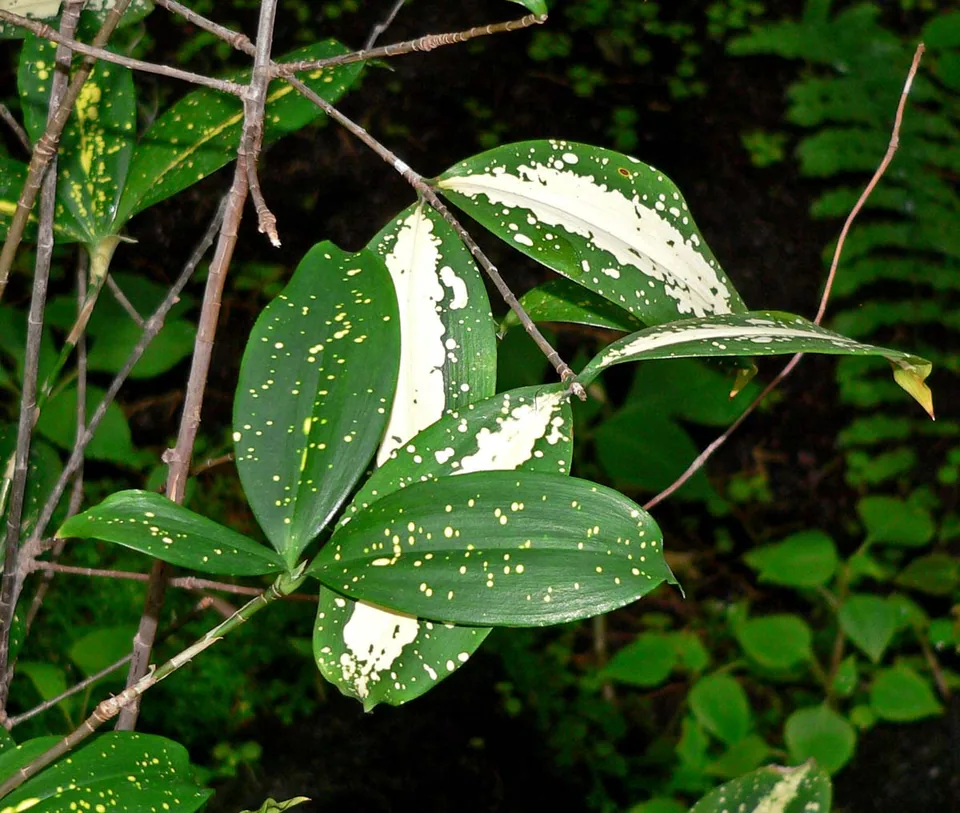
Gold dust dracaena is a slow-growing evergreen houseplant with dark green leaves spotted cream or yellow. [1] It needs bright but not direct light and moist soil, and overwatering causes root rot. [1] It is listed as toxic to humans, cats, and dogs if ingested, with low poison severity. [1]
Gold Dust care
How to water Gold Dust
Watering
Keep the soil moist during the regular growing season
What the sources say (1)
Keep the soil moist during the regular growing season, but overwatering and standing water will cause root rot.Watering notes
Overwatering and standing water cause root rot; keep humidity high with a pebble tray of water
What the sources say (2)
overwatering and standing water will cause root rotkeep the humidity high by sitting the pot on a pebble tray with waterHow much light Gold Dust needs
Bright but not direct light
What the sources say (1)
This easy-to-grow houseplant requires bright but not direct light.How much cold Gold Dust can take
Hardiness, coldest zone
9a [winter low −6.7 to −3.9 °C (20 to 25 °F)]
What the sources say (1)
USDA Plant Hardiness Zone:
9a, 10a, 10b, 11a, 11bHardiness, warmest zone
11b [winter low 7.2 to 10 °C (45 to 50 °F)]
What the sources say (1)
USDA Plant Hardiness Zone:
9a, 10a, 10b, 11a, 11bWhere to grow Gold Dust
Indoors
Yes
What the sources say (1)
This easy-to-grow houseplant requires bright but not direct light.In containers
Yes
What the sources say (1)
Gold dust dracaena can be grown outdoors in a container on a patio in the summerHow to propagate Gold Dust
Tip or stem cuttings; division
What the sources say (1)
It may be propagated using a tip or stem cutting of a few leaves or by division.How to grow Gold Dust
The plant
Life cycle
perennial
What the sources say (1)
Genus:
Dracaena
Species:
surculosa
Family:
Asparagaceae
Life Cycle:
PerennialFamily
Asparagaceae
What the sources say (1)
Genus:
Dracaena
Species:
surculosa
Family:
Asparagaceae
Life Cycle:
PerennialMature height
61-91 cm (2-3 ft)
What the sources say (1)
Dimensions:
Height: 2 ft. 0 in. - 3 ft. 0 in.
Width: 3 ft. 0 in. - 4 ft. 0 in.Mature width
91-122 cm (3-4 ft)
What the sources say (1)
Dimensions:
Height: 2 ft. 0 in. - 3 ft. 0 in.
Width: 3 ft. 0 in. - 4 ft. 0 in.Pests and diseases
Pests
root mealybugs
What the sources say (1)
Insects, Diseases, and Other Plant Problems: Root mealybugs can stunt growth.Diseases
root rot
What the sources say (1)
Keep the soil moist during the regular growing season, but overwatering and standing water will cause root rot.Fertilizing
When
Spring and summer, with lighter monthly feeding in fall
What the sources say (1)
Dracaena needs moderate to bright indirect light, temperatures of 65-75 degrees, and fertilizing every 2 weeks in spring and summer (balanced fertilizer), monthly feeds in the fall.How often
Every 2 weeks in spring and summer; monthly in fall
What each source says
indoor office conditions: Every 2 weeks year-round
What the sources say (2)
indoor office conditions: In some office situations, plants may need fertilizer every 2 weeks year-round.Dracaena needs moderate to bright indirect light, temperatures of 65-75 degrees, and fertilizing every 2 weeks in spring and summer (balanced fertilizer), monthly feeds in the fall.Mineral fertilizers
Balanced fertilizer
What the sources say (1)
Dracaena needs moderate to bright indirect light, temperatures of 65-75 degrees, and fertilizing every 2 weeks in spring and summer (balanced fertilizer), monthly feeds in the fall.Signs of deficiency
Pale leaves with faded variegation (also a sign of too little light)
What the sources say (1)
pale leaves with faded variegation patterns signify too little light or not enough fertilizer.Gold Dust pests and problems
Root mealybugs
Symptom: Root mealybugs can stunt growth.
What the sources say (1)
Root mealybugs can stunt growth.
— Dracaena surculosa (Dracena, Florida Beauty, Gold Dust, Gold Dust Dracaena, Spotted Dracaena) | North Carolina Extension Gardener Plant Toolbox [1] Root rot
Symptom: Overwatering and standing water cause root rot.
What to do: Keep the soil moist during the regular growing season without overwatering or standing water.
What the sources say (1)
Keep the soil moist during the regular growing season, but overwatering and standing water will cause root rot.
— Dracaena surculosa (Dracena, Florida Beauty, Gold Dust, Gold Dust Dracaena, Spotted Dracaena) | North Carolina Extension Gardener Plant Toolbox [1] Browning or dropping leaves from light
Symptom: The leaves will brown or drop if the light is too high, and can lose their intense coloring if the light is too low.
What to do: Provide bright but not direct light.
What the sources say (1)
The leaves will brown or drop if the light is too high, and they can lose their intense coloring if the light is too low.
— Dracaena surculosa (Dracena, Florida Beauty, Gold Dust, Gold Dust Dracaena, Spotted Dracaena) | North Carolina Extension Gardener Plant Toolbox [1]
Remedies
Each remedy shows what official sources say about it; traditional remedies without an official source are marked as such. Harmful ones are listed so you know to avoid them.
Treating the plant
mealybugs
rubbing alcohol swab Partly works
Make sure to test the soap and alcohol mixtures on a small portion of the plant prior to full application because some plants may be sensitive to soap or alcohol.
— planttalk.colostate.edu [3] How: Dab the insects with a cotton swab dipped in rubbing alcohol. Repeat this procedure every week until the bugs are gone.
For smaller infestations, dab the insects with a cotton swab dipped in rubbing alcohol. Repeat this procedure every week until the bugs are gone.
— planttalk.colostate.edu [3] What the evidence says Mealybugs can be managed by noticing them quickly and killing them by hand with a cotton swab dipped in alcohol or with an insecticide
— yardandgarden.extension.iastate.edu [4] diluted rubbing alcohol spray Works
Make sure to test the soap and alcohol mixtures on a small portion of the plant prior to full application because some plants may be sensitive to soap or alcohol.
— planttalk.colostate.edu [3] How: For heavy infestations, spray a mixture of 10 percent rubbing alcohol and 90 percent water directly onto the insects.
For heavy infestations, spray a mixture of 10 percent rubbing alcohol and 90 percent water directly onto the insects.
— planttalk.colostate.edu [3] What the evidence says For heavy infestations, spray a mixture of 10 percent rubbing alcohol and 90 percent water directly onto the insects.
— planttalk.colostate.edu [3] insecticidal soap spray Works
Homemade sprays can also damage leaves sometimes.
— ask.extension.org [5] How: Spray the plants thoroughly with insecticidal soap for houseplants.
spray the plants thoroughly with insecticidal soap for houseplants or a registered houseplant spray.
— ask.extension.org [5] What the evidence says These pests may also be controlled with insecticidal soap.
— planttalk.colostate.edu [3] pruning off infested branches Official source, not independently tested
How: Prune infested branches and remove and destroy heavily infested plants.
Control mealy bugs by pruning infested branches and removing and destroying heavily infested plants.
— planttalk.colostate.edu [3]
aphids
strong water spray Not verified
Traditional remedy, not verified by an official source.
How: If you find just a few bugs, blast them off with a strong spray of water.
scale
neem oil Not verified
Traditional remedy, not verified by an official source.
How: For large infestations, use insecticidal spray or neem oil.
Is Gold Dust toxic to pets?
Reported by the source, quoted verbatim. This is not medical or veterinary advice: if a person or an animal may have eaten this plant, contact a poison control centre or a veterinarian.
Toxic to humans, cats, and dogs if ingested.
[1]- Poisonous parts
Poison Part: Flowers Fruits Leaves Roots Sap/Juice Seeds Stems
[1]- Toxic principle
Poison Toxic Principle: Saponins
[1]- Symptoms
Vomiting (occasionally with blood), depression, anorexia, hypersalivation, dilated pupils (cats)
[1]- Severity
This plant has low severity poison characteristics.
[1]
Calendar
Pruning
Winter
What the sources say (1)
Cut back overgrown stems in the winter to rejuvenate the plantMonths as given by the sources, which are mostly from the United States (northern hemisphere). In the southern hemisphere they shift by about six months.
Indicative values
Values from a secondary source, not checked word for word like the rest of this page. Use them as a starting point.
- Hours of sun
- 5-6 hoursIndicative value, adapt it to your climate · Secondary source
- Drought tolerant
- yesIndicative value, adapt it to your climate · Secondary source
- Soil
- Well-drainedIndicative value, adapt it to your climate · Secondary source
- Soil pH
- 6-6.5Indicative value, adapt it to your climate · Secondary source
- Growth rate
- LowIndicative value, adapt it to your climate · Secondary source
Similar plants
- African Spear Dracaena angolensis
- Corn Plant Dracaena fragrans
- Dracaena Dracaena marginata
- Lucky Bamboo Dracaena sanderiana
- Queen of Dracaenas Dracaena goldieana
- Snake Plant Dracaena trifasciata
- Whale Fin Dracaena Dracaena masoniana
- Dragon tree Dracaena draco
Sources
Every value above is quoted from these documents. Links lead to the original publisher.
- Dracaena surculosa (Dracena, Florida Beauty, Gold Dust, Gold Dust Dracaena, Spotted Dracaena) | North Carolina Extension Gardener Plant Toolbox · plants.ces.ncsu.edu, consulted
- depts.washington.edu · depts.washington.edu
- planttalk.colostate.edu · planttalk.colostate.edu
- yardandgarden.extension.iastate.edu · yardandgarden.extension.iastate.edu
- ask.extension.org · ask.extension.org
Written by Emilio Marruso · last checked