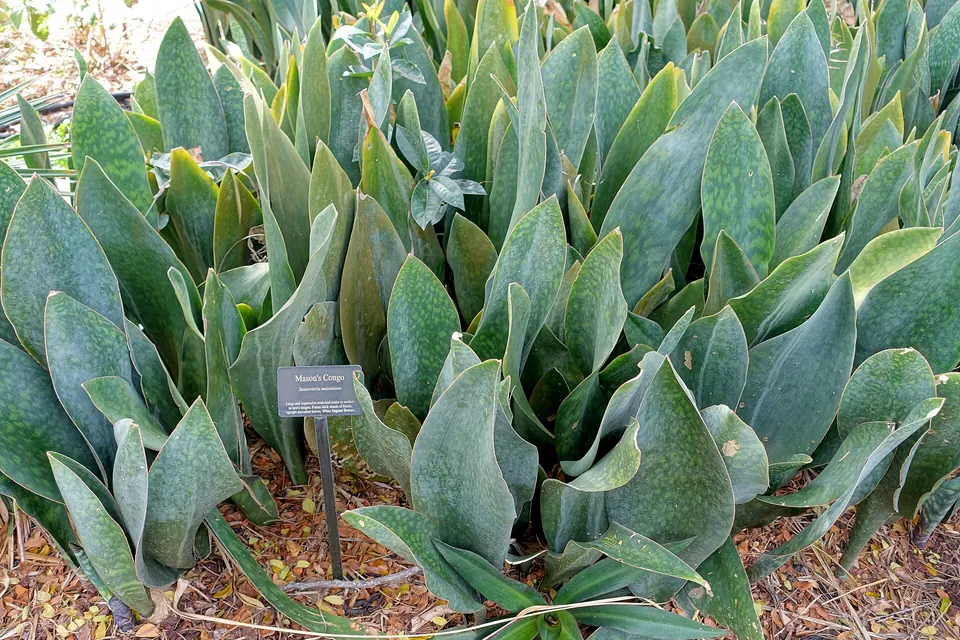

How to Grow and Care for Whale Fin Dracaena
Dracaena masoniana
Written by Emilio Marruso · last checked
Toxic to: Cats, Dogs, People · Why
At a glance
This easygoing plant is very drought tolerant and happy indoors or in a pot. Give it bright, indirect light, let the soil dry out between waterings, and it grows 3 to 5 feet tall. A little half-strength feeding each month in spring and summer is all it asks; just keep it away from pets and children, because it is toxic if eaten.
- Sun
Bright, indirect light; it tolerates low light, but strong direct sun burns the leaves
What the sources say (2)
Light: Bright, indirect light; partial shade (2-6 hours of direct sun); tolerates low light
This plant prefers bright, indirect light, and is tolerant of low light conditions.
— Dracaena masoniana (Mason's Congo Snake Plant, Shark Fin, Shark Fin Plant, Shark Fin Snake Plant, Whale Fin Dracaena, Whale Fin Snake Plant) | North Carolina Extension Gardener Plant Toolbox [1] Light: Partial Shade (Direct sunlight only part of the day, 2-6 hours)
— Dracaena masoniana (Mason's Congo Snake Plant, Shark Fin, Shark Fin Plant, Shark Fin Snake Plant, Whale Fin Dracaena, Whale Fin Snake Plant) | North Carolina Extension Gardener Plant Toolbox [1] - Water
Let the soil dry out between waterings; too much water rots the roots
What the sources say (1)
Watering: Very drought tolerant; allow the growing medium to dry out between waterings; avoid overwatering
It is very drought tolerant, and it is best to allow the growing medium to dry out between watering. Most importantly, avoid overwatering.
— Dracaena masoniana (Mason's Congo Snake Plant, Shark Fin, Shark Fin Plant, Shark Fin Snake Plant, Whale Fin Dracaena, Whale Fin Snake Plant) | North Carolina Extension Gardener Plant Toolbox [1] - Cold
Survives winters down to 20 °F (−6.7 °C)
Hardy in average winters · USDA 9a · RHS H4 · Z9
What the sources say (2)
Hardiness, coldest zone: 9a [winter low −6.7 to −3.9 °C (20 to 25 °F)]
USDA Plant Hardiness Zone: 9a, 9b, 10a, 10b, 11a, 11b
— Dracaena masoniana (Mason's Congo Snake Plant, Shark Fin, Shark Fin Plant, Shark Fin Snake Plant, Whale Fin Dracaena, Whale Fin Snake Plant) | North Carolina Extension Gardener Plant Toolbox [1] Hardiness, warmest zone: 11b [winter low 7.2 to 10 °C (45 to 50 °F)]
USDA Plant Hardiness Zone: 9a, 9b, 10a, 10b, 11a, 11b
— Dracaena masoniana (Mason's Congo Snake Plant, Shark Fin, Shark Fin Plant, Shark Fin Snake Plant, Whale Fin Dracaena, Whale Fin Snake Plant) | North Carolina Extension Gardener Plant Toolbox [1] - Soil
Well-drained mix of perlite, coarse sand and organic matter
What the sources say (1)
Watering notes: Use a planting medium of perlite, coarse sand and organic matter for drainage and aeration
The planting medium should include a mix of perlite, coarse sand, and organic matter to encourage adequate drainage and aeration.
— Dracaena masoniana (Mason's Congo Snake Plant, Shark Fin, Shark Fin Plant, Shark Fin Snake Plant, Whale Fin Dracaena, Whale Fin Snake Plant) | North Carolina Extension Gardener Plant Toolbox [1] - Feeding
All-purpose fertilizer at half strength, once a month in spring and summer
What the sources say (6)
When: During the growing season (spring and summer)
For a more robust plant, fertilize monthly during their growing season (spring and summer) with an all-purpose fertilizer at half strength.
— Snake Plant: A Forgiving, Low-maintenance Houseplant — Allegheny County — Master Gardener [5] For a more robust plant, fertilize monthly during the growing season with an all-purpose fertilizer at half strength.
— Snake Plant: A Forgiving, Low-maintenance Houseplant [4] How often: Monthly during the growing season
For a more robust plant, fertilize monthly during the growing season with an all-purpose fertilizer at half strength.
— Snake Plant: A Forgiving, Low-maintenance Houseplant [4] For a more robust plant, fertilize monthly during their growing season (spring and summer) with an all-purpose fertilizer at half strength.
— Snake Plant: A Forgiving, Low-maintenance Houseplant — Allegheny County — Master Gardener [5] Mineral fertilizers: All-purpose fertilizer at half strength
For a more robust plant, fertilize monthly during the growing season with an all-purpose fertilizer at half strength.
— Snake Plant: A Forgiving, Low-maintenance Houseplant [4] For a more robust plant, fertilize monthly during their growing season (spring and summer) with an all-purpose fertilizer at half strength.
— Snake Plant: A Forgiving, Low-maintenance Houseplant — Allegheny County — Master Gardener [5] - Pests
Watch for spider mites, scale, mealybugs, thrips and aphids; overwatering brings black spot and root rot
What the sources say (2)
Pests: spider mites, scale, mealybugs, thrips, aphids
Monitor for spider mites, scale, mealybugs, thrips, and aphids.
— Dracaena masoniana (Mason's Congo Snake Plant, Shark Fin, Shark Fin Plant, Shark Fin Snake Plant, Whale Fin Dracaena, Whale Fin Snake Plant) | North Carolina Extension Gardener Plant Toolbox [1] Diseases: black spot, root rot
Black spot and root rot can occur from overwatering.
— Dracaena masoniana (Mason's Congo Snake Plant, Shark Fin, Shark Fin Plant, Shark Fin Snake Plant, Whale Fin Dracaena, Whale Fin Snake Plant) | North Carolina Extension Gardener Plant Toolbox [1] - Size
3 to 5 ft tall and 1 to 2 ft wide
What the sources say (2)
Mature height: 91.4-152.4 cm (3-5 ft)
Height: 3 ft. 0 in. - 5 ft. 0 in. Width: 1 ft. 0 in. - 2 ft. 0 in.
— Dracaena masoniana (Mason's Congo Snake Plant, Shark Fin, Shark Fin Plant, Shark Fin Snake Plant, Whale Fin Dracaena, Whale Fin Snake Plant) | North Carolina Extension Gardener Plant Toolbox [1] Mature width: 30.5-61 cm (1-2 ft)
Height: 3 ft. 0 in. - 5 ft. 0 in. Width: 1 ft. 0 in. - 2 ft. 0 in.
— Dracaena masoniana (Mason's Congo Snake Plant, Shark Fin, Shark Fin Plant, Shark Fin Snake Plant, Whale Fin Dracaena, Whale Fin Snake Plant) | North Carolina Extension Gardener Plant Toolbox [1] - Propagation
Divide the plant or root leaf cuttings
What the sources say (1)
Propagation: Division; leaf cuttings
This plant can be propagated by division or leaf cuttings.
— Dracaena masoniana (Mason's Congo Snake Plant, Shark Fin, Shark Fin Plant, Shark Fin Snake Plant, Whale Fin Dracaena, Whale Fin Snake Plant) | North Carolina Extension Gardener Plant Toolbox [1] - Containers
Grows well in containers and indoors
What the sources say (3)
In containers: Yes
Landscape Location: Container Houseplants
— Dracaena masoniana (Mason's Congo Snake Plant, Shark Fin, Shark Fin Plant, Shark Fin Snake Plant, Whale Fin Dracaena, Whale Fin Snake Plant) | North Carolina Extension Gardener Plant Toolbox [1] Indoors: Yes
Landscape Location: Container Houseplants
— Dracaena masoniana (Mason's Congo Snake Plant, Shark Fin, Shark Fin Plant, Shark Fin Snake Plant, Whale Fin Dracaena, Whale Fin Snake Plant) | North Carolina Extension Gardener Plant Toolbox [1] Plant Type: Herbaceous Perennial Houseplant
— Dracaena masoniana (Mason's Congo Snake Plant, Shark Fin, Shark Fin Plant, Shark Fin Snake Plant, Whale Fin Dracaena, Whale Fin Snake Plant) | North Carolina Extension Gardener Plant Toolbox [1] - Safety
Toxic if eaten by people, cats and dogs; the sap can irritate the skin
Overview
Dracaena masoniana is a houseplant, a rhizomatous herbaceous perennial from tropical Central Africa. [1] It prefers bright, indirect light and is very drought tolerant, with the growing medium allowed to dry out between waterings. [1] The leaves and sap are toxic if ingested, to people, cats and dogs. [1]
Whale Fin Dracaena care
How to water Whale Fin Dracaena
Watering
Very drought tolerant; allow the growing medium to dry out between waterings; avoid overwatering
What the sources say (1)
It is very drought tolerant, and it is best to allow the growing medium to dry out between watering. Most importantly, avoid overwatering.Watering notes
Use a planting medium of perlite, coarse sand and organic matter for drainage and aeration
What the sources say (1)
The planting medium should include a mix of perlite, coarse sand, and organic matter to encourage adequate drainage and aeration.How much light Whale Fin Dracaena needs
Bright, indirect light; partial shade (2-6 hours of direct sun); tolerates low light
What the sources say (2)
This plant prefers bright, indirect light, and is tolerant of low light conditions.Light:
Partial Shade (Direct sunlight only part of the day, 2-6 hours)How much cold Whale Fin Dracaena can take
Hardiness, coldest zone
9a [winter low −6.7 to −3.9 °C (20 to 25 °F)]
What the sources say (1)
USDA Plant Hardiness Zone:
9a, 9b, 10a, 10b, 11a, 11bHardiness, warmest zone
11b [winter low 7.2 to 10 °C (45 to 50 °F)]
What the sources say (1)
USDA Plant Hardiness Zone:
9a, 9b, 10a, 10b, 11a, 11bWhere to grow Whale Fin Dracaena
Indoors
Yes
What the sources say (2)
Landscape Location:
Container
HouseplantsPlant Type:
Herbaceous Perennial
HouseplantIn containers
Yes
What the sources say (1)
Landscape Location:
Container
HouseplantsHow to propagate Whale Fin Dracaena
Division; leaf cuttings
What the sources say (1)
This plant can be propagated by division or leaf cuttings.How to grow Whale Fin Dracaena
The plant
Life cycle
perennial
What the sources say (1)
Life Cycle:
Perennial
Recommended Propagation Strategy:
Division
Leaf Cutting
Country Or Region Of Origin:Family
Asparagaceae
What the sources say (1)
Family:
Asparagaceae
Life Cycle:
Perennial
Recommended Propagation Strategy:Mature height
91.4-152.4 cm (3-5 ft)
What the sources say (1)
Height: 3 ft. 0 in. - 5 ft. 0 in.
Width: 1 ft. 0 in. - 2 ft. 0 in.Mature width
30.5-61 cm (1-2 ft)
What the sources say (1)
Height: 3 ft. 0 in. - 5 ft. 0 in.
Width: 1 ft. 0 in. - 2 ft. 0 in.Pests and diseases
Pests
spider mites, scale, mealybugs, thrips, aphids
What the sources say (1)
Monitor for spider mites, scale, mealybugs, thrips, and aphids.Diseases
black spot, root rot
What the sources say (1)
Black spot and root rot can occur from overwatering.Fertilizing
When
During the growing season (spring and summer)
What the sources say (2)
For a more robust plant, fertilize monthly during their growing season (spring and summer) with an all-purpose fertilizer at half strength.For a more robust plant, fertilize monthly during the growing season with an all-purpose fertilizer at half strength.How often
Monthly during the growing season
What the sources say (2)
For a more robust plant, fertilize monthly during the growing season with an all-purpose fertilizer at half strength.For a more robust plant, fertilize monthly during their growing season (spring and summer) with an all-purpose fertilizer at half strength.Mineral fertilizers
All-purpose fertilizer at half strength
What the sources say (2)
For a more robust plant, fertilize monthly during the growing season with an all-purpose fertilizer at half strength.For a more robust plant, fertilize monthly during their growing season (spring and summer) with an all-purpose fertilizer at half strength.Whale Fin Dracaena pests and problems
Sap-sucking pests
Symptom: Spider mites, scale, mealybugs, thrips and aphids may infest the plant.
What to do: Monitor the plant for these pests.
What the sources say (1)
Monitor for spider mites, scale, mealybugs, thrips, and aphids.
— Dracaena masoniana (Mason's Congo Snake Plant, Shark Fin, Shark Fin Plant, Shark Fin Snake Plant, Whale Fin Dracaena, Whale Fin Snake Plant) | North Carolina Extension Gardener Plant Toolbox [1] Black spot and root rot
Symptom: Black spot and root rot occur from overwatering.
What to do: Avoid overwatering and let the growing medium dry out between waterings.
What the sources say (1)
Black spot and root rot can occur from overwatering.
— Dracaena masoniana (Mason's Congo Snake Plant, Shark Fin, Shark Fin Plant, Shark Fin Snake Plant, Whale Fin Dracaena, Whale Fin Snake Plant) | North Carolina Extension Gardener Plant Toolbox [1] Leaf scorch
Symptom: Direct sunlight can scorch the leaves.
What to do: Give bright, indirect light.
What the sources say (1)
Direct sunlight can scorch the leaves.
— Dracaena masoniana (Mason's Congo Snake Plant, Shark Fin, Shark Fin Plant, Shark Fin Snake Plant, Whale Fin Dracaena, Whale Fin Snake Plant) | North Carolina Extension Gardener Plant Toolbox [1]
Remedies
Each remedy shows what official sources say about it; traditional remedies without an official source are marked as such. Harmful ones are listed so you know to avoid them.
Treating the plant
mealybugs
dabbing with a cotton swab dipped in rubbing alcohol Works
Be careful not to get the alcohol on the leaves of the plants as they may be damaged.
— extension.umd.edu [6] Make sure to test the soap and alcohol mixtures on a small portion of the plant prior to full application because some plants may be sensitive to soap or alcohol.
— planttalk.colostate.edu [7] How: Dip a cotton swab in household alcohol and dab it on the individual mealybugs; repeat every week until the bugs are gone.
Dipping a cotton swab in household alcohol and dabbing it on the individual mealybugs can control light infestations.
— extension.umd.edu [6] What the evidence says Dipping a cotton swab in household alcohol and dabbing it on the individual mealybugs can control light infestations.
— extension.umd.edu [6] spray of 10 percent rubbing alcohol and 90 percent water Works
Make sure to test the soap and alcohol mixtures on a small portion of the plant prior to full application because some plants may be sensitive to soap or alcohol.
— planttalk.colostate.edu [7] How: For heavy infestations, spray the mixture directly onto the insects and repeat every week until the bugs are gone.
For heavy infestations, spray a mixture of 10 percent rubbing alcohol and 90 percent water directly onto the insects.
— planttalk.colostate.edu [7] What the evidence says For heavy infestations, spray a mixture of 10 percent rubbing alcohol and 90 percent water directly onto the insects.
— planttalk.colostate.edu [7] insecticidal soap Works
Make sure to test the soap and alcohol mixtures on a small portion of the plant prior to full application because some plants may be sensitive to soap or alcohol.
— planttalk.colostate.edu [7] How: These pests may also be controlled with insecticidal soap; for heavy infestations spray the plants thoroughly, with multiple applications.
For heavy infestations, spray the plants thoroughly with insecticidal soap for indoor plants or a registered houseplant spray.
— extension.umd.edu [6] What the evidence says These pests may also be controlled with insecticidal soap.
— planttalk.colostate.edu [7]
root rot
letting the growing medium dry before watering again Not verified
Traditional remedy, not verified by an official source.
How: Allow the growing medium to dry before watering again, checking deeper than the surface in a substantial pot.
Is Whale Fin Dracaena toxic to pets?
Reported by the source, quoted verbatim. This is not medical or veterinary advice: if a person or an animal may have eaten this plant, contact a poison control centre or a veterinarian.
Animals
The plant is also toxic to cats and dogs, if ingested. Symptoms for cats may include vomiting, difficulty breathing, coughing, or disorientation.
[1]The plant is also toxic to cats and dogs, if ingested.
[1]
People
Toxic to humans, if ingested. Symptoms include nausea, vomiting, diarrhea. The sap may cause skin irritation.
[1]
Indicative values
Values from a secondary source, not checked word for word like the rest of this page. Use them as a starting point.
- Hours of sun
- 2-5 hoursIndicative value, adapt it to your climate · Secondary source
- Drought tolerant
- yesIndicative value, adapt it to your climate · Secondary source
- Soil pH
- 6-7.5Indicative value, adapt it to your climate · Secondary source
- Care level
- MediumIndicative value, adapt it to your climate · Secondary source
- Growth rate
- LowIndicative value, adapt it to your climate · Secondary source
- Pruning
- March, April, May, June, July, August, September, March, April, May, June, JulyIndicative value, adapt it to your climate · Secondary source
Similar plants
- Lucky Bamboo Dracaena sanderiana
- Queen of Dracaenas Dracaena goldieana
- African Spear Dracaena angolensis
- Corn Plant Dracaena fragrans
- Dracaena Dracaena marginata
- Gold Dust Dracaena surculosa
- Snake Plant Dracaena trifasciata
- Dragon tree Dracaena draco
Sources
Every value above is quoted from these documents. Links lead to the original publisher.
- Dracaena masoniana (Mason's Congo Snake Plant, Shark Fin, Shark Fin Plant, Shark Fin Snake Plant, Whale Fin Dracaena, Whale Fin Snake Plant) | North Carolina Extension Gardener Plant Toolbox · plants.ces.ncsu.edu, consulted
- Whale Fin Snake Plant - Dracaena masoniana | North Carolina Extension Gardener Plant Toolbox · plants.ces.ncsu.edu, consulted
- Dracaena | North Carolina Extension Gardener Plant Toolbox · plants.ces.ncsu.edu, consulted
- Snake Plant: A Forgiving, Low-maintenance Houseplant · extension.psu.edu, consulted
- Snake Plant: A Forgiving, Low-maintenance Houseplant — Allegheny County — Master Gardener · extension.psu.edu, consulted
- extension.umd.edu · extension.umd.edu
- planttalk.colostate.edu · planttalk.colostate.edu
Written by Emilio Marruso · last checked