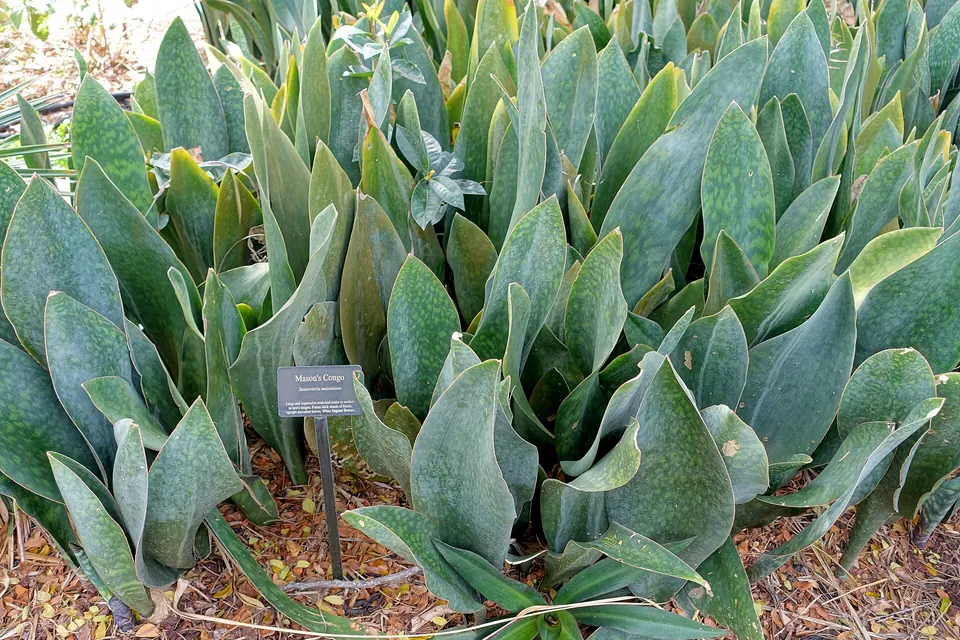

Cómo cultivar y cuidar Whale Fin Dracaena
Dracaena masoniana
Escrito por Emilio Marruso · última revisión
Tóxica para: Gatos, Perros, Personas · Por qué
De un vistazo
Esta planta tan agradecida resiste muy bien la sequía y vive feliz en interior o en maceta. Dale luz intensa pero indirecta, deja que la tierra se seque entre riegos y alcanzará de 0,9 a 1,5 m de alto. Solo pide un abono a media dosis cada mes en primavera y verano; eso sí, mantenla lejos de mascotas y niños, porque es tóxica si se ingiere.
- Sol
Luz intensa pero indirecta; tolera poca luz, pero el sol directo fuerte quema las hojas
Qué dicen las fuentes (2)
Luz: Luz brillante e indirecta; semisombra (2-6 horas de sol directo); tolera poca luz.
This plant prefers bright, indirect light, and is tolerant of low light conditions.
— Dracaena masoniana (Mason's Congo Snake Plant, Shark Fin, Shark Fin Plant, Shark Fin Snake Plant, Whale Fin Dracaena, Whale Fin Snake Plant) | North Carolina Extension Gardener Plant Toolbox [1] Light: Partial Shade (Direct sunlight only part of the day, 2-6 hours)
— Dracaena masoniana (Mason's Congo Snake Plant, Shark Fin, Shark Fin Plant, Shark Fin Snake Plant, Whale Fin Dracaena, Whale Fin Snake Plant) | North Carolina Extension Gardener Plant Toolbox [1] - Riego
Deja que la tierra se seque entre riegos; el exceso de agua pudre las raíces
Qué dicen las fuentes (1)
Riego: Muy tolerante a la sequía; permite que el sustrato se seque entre riegos; evita el riego excesivo.
It is very drought tolerant, and it is best to allow the growing medium to dry out between watering. Most importantly, avoid overwatering.
— Dracaena masoniana (Mason's Congo Snake Plant, Shark Fin, Shark Fin Plant, Shark Fin Snake Plant, Whale Fin Dracaena, Whale Fin Snake Plant) | North Carolina Extension Gardener Plant Toolbox [1] - Frío
Aguanta inviernos de hasta −6,7 °C (20 °F)
Rústica en inviernos normales · USDA 9a · RHS H4 · Z9
Qué dicen las fuentes (2)
Rusticidad, zona más fría: 9a [mínima invernal de −6,7 a −3,9 °C (de 20 a 25 °F)]
USDA Plant Hardiness Zone: 9a, 9b, 10a, 10b, 11a, 11b
— Dracaena masoniana (Mason's Congo Snake Plant, Shark Fin, Shark Fin Plant, Shark Fin Snake Plant, Whale Fin Dracaena, Whale Fin Snake Plant) | North Carolina Extension Gardener Plant Toolbox [1] Rusticidad, zona más cálida: 11b [mínima invernal de 7,2 a 10 °C (de 45 a 50 °F)]
USDA Plant Hardiness Zone: 9a, 9b, 10a, 10b, 11a, 11b
— Dracaena masoniana (Mason's Congo Snake Plant, Shark Fin, Shark Fin Plant, Shark Fin Snake Plant, Whale Fin Dracaena, Whale Fin Snake Plant) | North Carolina Extension Gardener Plant Toolbox [1] - Suelo
Mezcla con buen drenaje de perlita, arena gruesa y materia orgánica
Qué dicen las fuentes (1)
Notas sobre el riego: Usa un medio de plantación de perlita, arena gruesa y materia orgánica para el drenaje y la aireación.
The planting medium should include a mix of perlite, coarse sand, and organic matter to encourage adequate drainage and aeration.
— Dracaena masoniana (Mason's Congo Snake Plant, Shark Fin, Shark Fin Plant, Shark Fin Snake Plant, Whale Fin Dracaena, Whale Fin Snake Plant) | North Carolina Extension Gardener Plant Toolbox [1] - Abonado
Abono universal a media dosis, una vez al mes en primavera y verano
Qué dicen las fuentes (6)
Cuándo: Durante la temporada de crecimiento (primavera y verano)
For a more robust plant, fertilize monthly during their growing season (spring and summer) with an all-purpose fertilizer at half strength.
— Snake Plant: A Forgiving, Low-maintenance Houseplant — Allegheny County — Master Gardener [5] For a more robust plant, fertilize monthly during the growing season with an all-purpose fertilizer at half strength.
— Snake Plant: A Forgiving, Low-maintenance Houseplant [4] Frecuencia: Mensualmente durante la temporada de crecimiento
For a more robust plant, fertilize monthly during the growing season with an all-purpose fertilizer at half strength.
— Snake Plant: A Forgiving, Low-maintenance Houseplant [4] For a more robust plant, fertilize monthly during their growing season (spring and summer) with an all-purpose fertilizer at half strength.
— Snake Plant: A Forgiving, Low-maintenance Houseplant — Allegheny County — Master Gardener [5] Abonos minerales: Fertilizante de uso general a la mitad de la concentración
For a more robust plant, fertilize monthly during the growing season with an all-purpose fertilizer at half strength.
— Snake Plant: A Forgiving, Low-maintenance Houseplant [4] For a more robust plant, fertilize monthly during their growing season (spring and summer) with an all-purpose fertilizer at half strength.
— Snake Plant: A Forgiving, Low-maintenance Houseplant — Allegheny County — Master Gardener [5] - Plagas
Vigila la araña roja, la cochinilla, el cotonet, los trips y el pulgón; regar de más trae manchas negras y podredumbre
Qué dicen las fuentes (2)
Plagas: arañitas rojas, cochinillas, cochinillas harinosas, trips, pulgones
Monitor for spider mites, scale, mealybugs, thrips, and aphids.
— Dracaena masoniana (Mason's Congo Snake Plant, Shark Fin, Shark Fin Plant, Shark Fin Snake Plant, Whale Fin Dracaena, Whale Fin Snake Plant) | North Carolina Extension Gardener Plant Toolbox [1] Enfermedades: mancha negra, pudrición de raíces
Black spot and root rot can occur from overwatering.
— Dracaena masoniana (Mason's Congo Snake Plant, Shark Fin, Shark Fin Plant, Shark Fin Snake Plant, Whale Fin Dracaena, Whale Fin Snake Plant) | North Carolina Extension Gardener Plant Toolbox [1] - Tamaño
De 0,9 a 1,5 m de alto y de 30 a 60 cm de ancho
Qué dicen las fuentes (2)
Altura adulta: 91.4-152.4 cm (3-5 pies)
Height: 3 ft. 0 in. - 5 ft. 0 in. Width: 1 ft. 0 in. - 2 ft. 0 in.
— Dracaena masoniana (Mason's Congo Snake Plant, Shark Fin, Shark Fin Plant, Shark Fin Snake Plant, Whale Fin Dracaena, Whale Fin Snake Plant) | North Carolina Extension Gardener Plant Toolbox [1] Anchura adulta: 30.5-61 cm (1-2 pies)
Height: 3 ft. 0 in. - 5 ft. 0 in. Width: 1 ft. 0 in. - 2 ft. 0 in.
— Dracaena masoniana (Mason's Congo Snake Plant, Shark Fin, Shark Fin Plant, Shark Fin Snake Plant, Whale Fin Dracaena, Whale Fin Snake Plant) | North Carolina Extension Gardener Plant Toolbox [1] - Multiplicación
Divide la planta o enraíza esquejes de hoja
Qué dicen las fuentes (1)
Propagación: División; esquejes de hoja.
This plant can be propagated by division or leaf cuttings.
— Dracaena masoniana (Mason's Congo Snake Plant, Shark Fin, Shark Fin Plant, Shark Fin Snake Plant, Whale Fin Dracaena, Whale Fin Snake Plant) | North Carolina Extension Gardener Plant Toolbox [1] - Maceta
Crece bien en maceta y en interior
Qué dicen las fuentes (3)
En maceta: Sí
Landscape Location: Container Houseplants
— Dracaena masoniana (Mason's Congo Snake Plant, Shark Fin, Shark Fin Plant, Shark Fin Snake Plant, Whale Fin Dracaena, Whale Fin Snake Plant) | North Carolina Extension Gardener Plant Toolbox [1] En interior: Sí
Landscape Location: Container Houseplants
— Dracaena masoniana (Mason's Congo Snake Plant, Shark Fin, Shark Fin Plant, Shark Fin Snake Plant, Whale Fin Dracaena, Whale Fin Snake Plant) | North Carolina Extension Gardener Plant Toolbox [1] Plant Type: Herbaceous Perennial Houseplant
— Dracaena masoniana (Mason's Congo Snake Plant, Shark Fin, Shark Fin Plant, Shark Fin Snake Plant, Whale Fin Dracaena, Whale Fin Snake Plant) | North Carolina Extension Gardener Plant Toolbox [1] - Seguridad
Tóxica si la comen personas, gatos o perros; la savia puede irritar la piel
Resumen
La Dracaena masoniana es una planta de interior, una herbácea perenne rizomatosa de la África Central tropical. [1] Prefiere luz brillante e indirecta y es muy tolerante a la sequía, permitiendo que el medio de cultivo se seque entre riegos. [1] Las hojas y la savia son tóxicas si se ingieren, para personas, gatos y perros. [1]
Citado en inglés, como en la fuente.
Cuidados
Riego
Riego
Muy tolerante a la sequía; permite que el sustrato se seque entre riegos; evita el riego excesivo.
Qué dicen las fuentes (1)
It is very drought tolerant, and it is best to allow the growing medium to dry out between watering. Most importantly, avoid overwatering.Notas sobre el riego
Usa un medio de plantación de perlita, arena gruesa y materia orgánica para el drenaje y la aireación.
Qué dicen las fuentes (1)
The planting medium should include a mix of perlite, coarse sand, and organic matter to encourage adequate drainage and aeration.Luz
Luz brillante e indirecta; semisombra (2-6 horas de sol directo); tolera poca luz.
Qué dicen las fuentes (2)
This plant prefers bright, indirect light, and is tolerant of low light conditions.Light:
Partial Shade (Direct sunlight only part of the day, 2-6 hours)Clima y frío
Rusticidad, zona más fría
9a [mínima invernal de −6,7 a −3,9 °C (de 20 a 25 °F)]
Qué dicen las fuentes (1)
USDA Plant Hardiness Zone:
9a, 9b, 10a, 10b, 11a, 11bRusticidad, zona más cálida
11b [mínima invernal de 7,2 a 10 °C (de 45 a 50 °F)]
Qué dicen las fuentes (1)
USDA Plant Hardiness Zone:
9a, 9b, 10a, 10b, 11a, 11bDónde cultivarla
En interior
Sí
Qué dicen las fuentes (2)
Landscape Location:
Container
HouseplantsPlant Type:
Herbaceous Perennial
HouseplantEn maceta
Sí
Qué dicen las fuentes (1)
Landscape Location:
Container
HouseplantsPropagación
División; esquejes de hoja.
Qué dicen las fuentes (1)
This plant can be propagated by division or leaf cuttings.Cultivo
La planta
Ciclo de vida
perenne
Qué dicen las fuentes (1)
Life Cycle:
Perennial
Recommended Propagation Strategy:
Division
Leaf Cutting
Country Or Region Of Origin:Familia
Asparagáceas
Qué dicen las fuentes (1)
Family:
Asparagaceae
Life Cycle:
Perennial
Recommended Propagation Strategy:Altura adulta
91.4-152.4 cm (3-5 pies)
Qué dicen las fuentes (1)
Height: 3 ft. 0 in. - 5 ft. 0 in.
Width: 1 ft. 0 in. - 2 ft. 0 in.Anchura adulta
30.5-61 cm (1-2 pies)
Qué dicen las fuentes (1)
Height: 3 ft. 0 in. - 5 ft. 0 in.
Width: 1 ft. 0 in. - 2 ft. 0 in.Plagas y enfermedades
Plagas
arañitas rojas, cochinillas, cochinillas harinosas, trips, pulgones
Qué dicen las fuentes (1)
Monitor for spider mites, scale, mealybugs, thrips, and aphids.Enfermedades
mancha negra, pudrición de raíces
Qué dicen las fuentes (1)
Black spot and root rot can occur from overwatering.Abonado
Cuándo
Durante la temporada de crecimiento (primavera y verano)
Qué dicen las fuentes (2)
For a more robust plant, fertilize monthly during their growing season (spring and summer) with an all-purpose fertilizer at half strength.For a more robust plant, fertilize monthly during the growing season with an all-purpose fertilizer at half strength.Frecuencia
Mensualmente durante la temporada de crecimiento
Qué dicen las fuentes (2)
For a more robust plant, fertilize monthly during the growing season with an all-purpose fertilizer at half strength.For a more robust plant, fertilize monthly during their growing season (spring and summer) with an all-purpose fertilizer at half strength.Abonos minerales
Fertilizante de uso general a la mitad de la concentración
Qué dicen las fuentes (2)
For a more robust plant, fertilize monthly during the growing season with an all-purpose fertilizer at half strength.For a more robust plant, fertilize monthly during their growing season (spring and summer) with an all-purpose fertilizer at half strength.Problemas
Plagas que succionan savia
Síntoma: Las arañitas rojas, cochinillas, cochinillas harinosas, trips y pulgones pueden infestar la planta.
Qué hacer: Vigila la planta para detectar estas plagas.
Qué dicen las fuentes (1)
Monitor for spider mites, scale, mealybugs, thrips, and aphids.
— Dracaena masoniana (Mason's Congo Snake Plant, Shark Fin, Shark Fin Plant, Shark Fin Snake Plant, Whale Fin Dracaena, Whale Fin Snake Plant) | North Carolina Extension Gardener Plant Toolbox [1] Mancha negra y pudrición de la raíz.
Síntoma: La mancha negra y la pudrición de la raíz ocurren por el exceso de riego.
Qué hacer: Evita el riego excesivo y deja que el sustrato se seque entre riegos.
Qué dicen las fuentes (1)
Black spot and root rot can occur from overwatering.
— Dracaena masoniana (Mason's Congo Snake Plant, Shark Fin, Shark Fin Plant, Shark Fin Snake Plant, Whale Fin Dracaena, Whale Fin Snake Plant) | North Carolina Extension Gardener Plant Toolbox [1] Quemadura de hojas
Síntoma: La luz solar directa puede quemar las hojas.
Qué hacer: Da luz brillante e indirecta.
Qué dicen las fuentes (1)
Direct sunlight can scorch the leaves.
— Dracaena masoniana (Mason's Congo Snake Plant, Shark Fin, Shark Fin Plant, Shark Fin Snake Plant, Whale Fin Dracaena, Whale Fin Snake Plant) | North Carolina Extension Gardener Plant Toolbox [1]
Remedios
Cada remedio indica qué dicen las fuentes oficiales; los remedios tradicionales sin fuente oficial aparecen marcados. Los perjudiciales están para que sepas evitarlos.
Cuidar la planta
cochinillas harinosas
Aplica con un hisopo de algodón empapado en alcohol isopropílico. Funciona
Be careful not to get the alcohol on the leaves of the plants as they may be damaged.
— extension.umd.edu [6] Make sure to test the soap and alcohol mixtures on a small portion of the plant prior to full application because some plants may be sensitive to soap or alcohol.
— planttalk.colostate.edu [7] Cómo: Moja un hisopo de algodón en alcohol doméstico y aplícalo sobre cada cochinilla harinosa; repite cada semana hasta que desaparezcan.
Dipping a cotton swab in household alcohol and dabbing it on the individual mealybugs can control light infestations.
— extension.umd.edu [6] Qué dicen las pruebas Dipping a cotton swab in household alcohol and dabbing it on the individual mealybugs can control light infestations.
— extension.umd.edu [6] rociado de 10 por ciento de alcohol isopropílico y 90 por ciento de agua Funciona
Make sure to test the soap and alcohol mixtures on a small portion of the plant prior to full application because some plants may be sensitive to soap or alcohol.
— planttalk.colostate.edu [7] Cómo: Para infestaciones graves, rocía la mezcla directamente sobre los insectos y repite cada semana hasta que desaparezcan.
For heavy infestations, spray a mixture of 10 percent rubbing alcohol and 90 percent water directly onto the insects.
— planttalk.colostate.edu [7] Qué dicen las pruebas For heavy infestations, spray a mixture of 10 percent rubbing alcohol and 90 percent water directly onto the insects.
— planttalk.colostate.edu [7] jabón insecticida Funciona
Make sure to test the soap and alcohol mixtures on a small portion of the plant prior to full application because some plants may be sensitive to soap or alcohol.
— planttalk.colostate.edu [7] Cómo: Estas plagas también se pueden controlar con jabón insecticida; para infestaciones graves, rocía las plantas a fondo, con varias aplicaciones.
For heavy infestations, spray the plants thoroughly with insecticidal soap for indoor plants or a registered houseplant spray.
— extension.umd.edu [6] Qué dicen las pruebas These pests may also be controlled with insecticidal soap.
— planttalk.colostate.edu [7]
pudrición de la raíz
Deja que el sustrato se seque antes de volver a regar. No verificado
Remedio tradicional, no verificado por una fuente oficial.
Cómo: Deja que el sustrato se seque antes de volver a regar, revisando más allá de la superficie en una maceta grande.
Venenosa para los animales
Según la fuente, citada textualmente. No es un consejo médico ni veterinario: si una persona o un animal pudo haber ingerido esta planta, contacta con un centro de toxicología o con un veterinario.
Animales
The plant is also toxic to cats and dogs, if ingested. Symptoms for cats may include vomiting, difficulty breathing, coughing, or disorientation.
[1]The plant is also toxic to cats and dogs, if ingested.
[1]
Personas
Toxic to humans, if ingested. Symptoms include nausea, vomiting, diarrhea. The sap may cause skin irritation.
[1]
Valores orientativos
Valores de una fuente secundaria, no comprobados palabra por palabra como el resto de esta página. Úselos como punto de partida.
- Horas de sol
- 2-5 horasValor orientativo, adáptalo a tu clima · Fuente secundaria
- Resiste la sequía
- SíValor orientativo, adáptalo a tu clima · Fuente secundaria
- pH del suelo
- 6-7.5Valor orientativo, adáptalo a tu clima · Fuente secundaria
- Nivel de cuidado
- MedioValor orientativo, adáptalo a tu clima · Fuente secundaria
- Crecimiento
- BajoValor orientativo, adáptalo a tu clima · Fuente secundaria
- Poda
- marzo, abril, mayo, junio, julio, agosto, septiembre, marzo, abril, mayo, junio, julioValor orientativo, adáptalo a tu clima · Fuente secundaria
Plantas similares
- Lucky Bamboo Dracaena sanderiana
- Queen of Dracaenas Dracaena goldieana
- African Spear Dracaena angolensis
- Corn Plant Dracaena fragrans
- Dracaena Dracaena marginata
- Gold Dust Dracaena surculosa
- Snake Plant Dracaena trifasciata
- Drago de Canarias Dracaena draco
Fuentes
Cada valor anterior se cita de estos documentos. Los enlaces llevan al editor original.
- Dracaena masoniana (Mason's Congo Snake Plant, Shark Fin, Shark Fin Plant, Shark Fin Snake Plant, Whale Fin Dracaena, Whale Fin Snake Plant) | North Carolina Extension Gardener Plant Toolbox · plants.ces.ncsu.edu, consultado
- Whale Fin Snake Plant - Dracaena masoniana | North Carolina Extension Gardener Plant Toolbox · plants.ces.ncsu.edu, consultado
- Dracaena | North Carolina Extension Gardener Plant Toolbox · plants.ces.ncsu.edu, consultado
- Snake Plant: A Forgiving, Low-maintenance Houseplant · extension.psu.edu, consultado
- Snake Plant: A Forgiving, Low-maintenance Houseplant — Allegheny County — Master Gardener · extension.psu.edu, consultado
- extension.umd.edu · extension.umd.edu
- planttalk.colostate.edu · planttalk.colostate.edu
Escrito por Emilio Marruso · última revisión