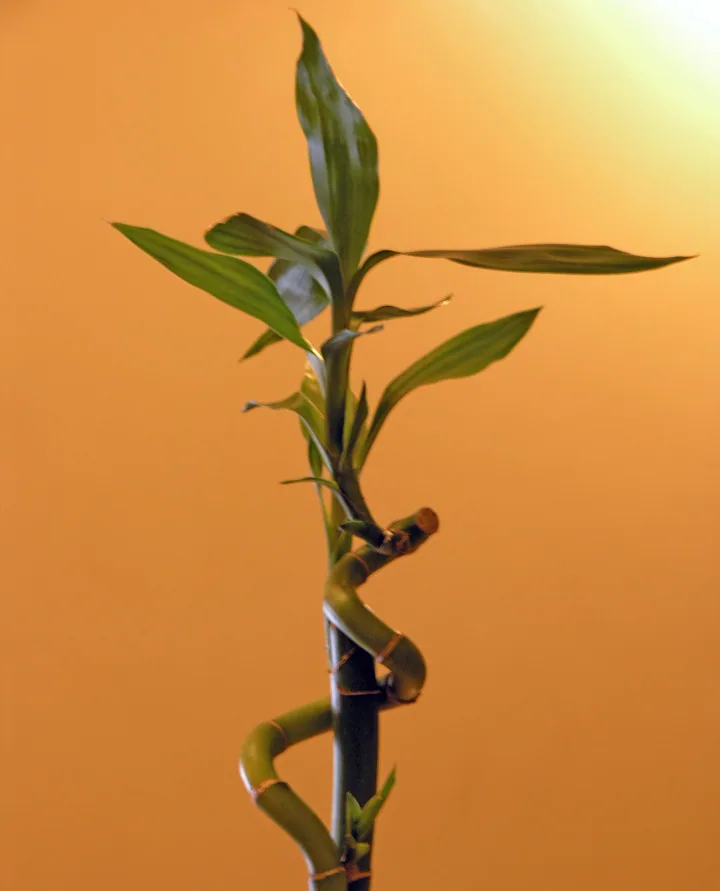
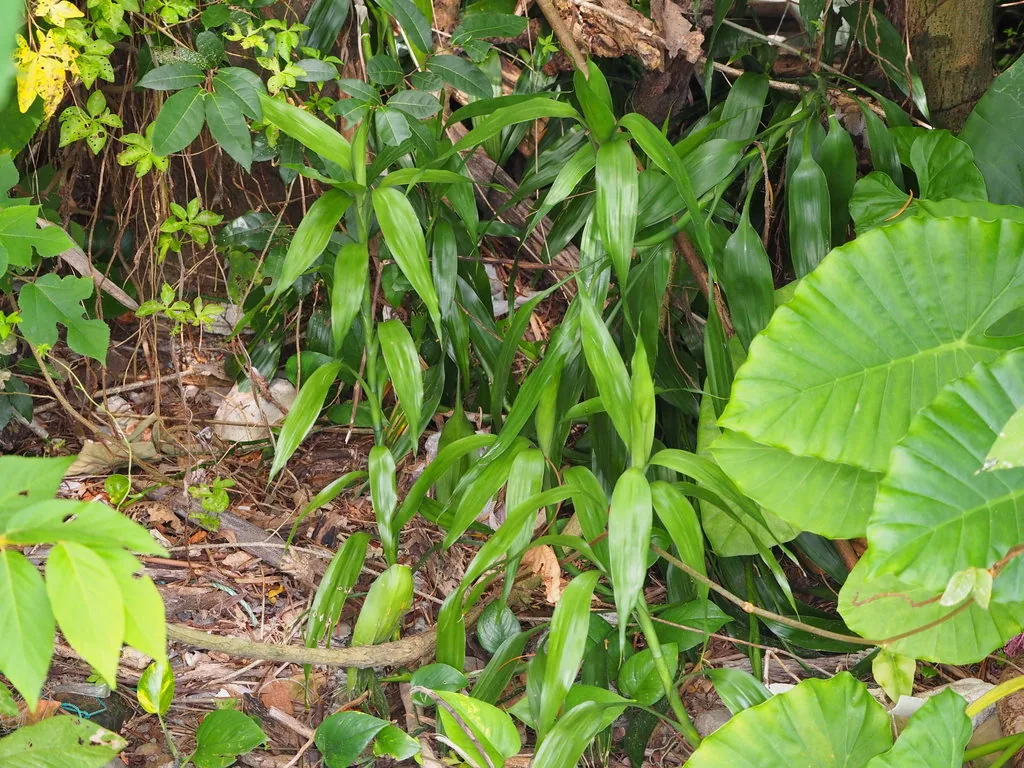

Cómo cultivar y cuidar Lucky Bamboo
Dracaena sanderiana
Escrito por Emilio Marruso · última revisión
Tóxica para: Gatos, Perros, Animales, Personas · Por qué
De un vistazo
El bambú de la suerte es una planta de interior agradecida que crece feliz con luz brillante indirecta, en tierra o simplemente con las raíces en agua. Cambia el agua cada semana, dale un poco de abono suave y esta planta perenne seguirá creciendo. ¿Quieres más plantas? Pon un brote nuevo en agua y normalmente echará raíces en 2 o 3 semanas.
- Sol
Luz brillante indirecta en interior; semisombra si la sacas fuera en verano
Qué dicen las fuentes (5)
Luz: Semisombra al aire libre en verano o luz indirecta brillante en interiores
En interiores: Place lucky bamboo in a room with bright, indirect light, such as those facing east or north.
— How To Grow and Care for Lucky Bamboo (Dracaena Sanderiana) | Home & Garden Information Center [2] Al aire libre en verano: It performs well in containers with partial shade outdoors in summer or bright but indirect light indoors all year.
— Dracaena sanderiana (Chinese Water Bamboo, Friendship Bamboo, Lucky Bamboo, Ribbon Plant, Water Bamboo) | North Carolina Extension Gardener Plant Toolbox [1] Según NC State Extension (attributes): Light: Dappled Sunlight (Shade through upper canopy all day) Deep shade (Less than 2 hours to no direct sunlight)
— Dracaena sanderiana (Chinese Water Bamboo, Friendship Bamboo, Lucky Bamboo, Ribbon Plant, Water Bamboo) | North Carolina Extension Gardener Plant Toolbox [1] It performs well in containers with partial shade outdoors in summer or bright but indirect light indoors all year.
— Dracaena sanderiana (Chinese Water Bamboo, Friendship Bamboo, Lucky Bamboo, Ribbon Plant, Water Bamboo) | North Carolina Extension Gardener Plant Toolbox [1] Direct sunlight will damage the leaves, causing them to turn brown.
— How To Grow and Care for Lucky Bamboo (Dracaena Sanderiana) | Home & Garden Information Center [2] - Riego
Riega cuando los 2,5 cm de arriba estén secos; si crece en agua, usa agua sin cloro y cámbiala cada semana
Qué dicen las fuentes (6)
Riego: Riega cuando la pulgada superior del suelo esté seca y deja que drene por completo; también se puede cultivar con raíces y al menos una pulgada [2,5 cm] de tallo sumergidos en agua
Cultivada en suelo: Water the pot when the top inch of soil is dry. Allow it to drain thoroughly.
— How To Grow and Care for Lucky Bamboo (Dracaena Sanderiana) | Home & Garden Information Center [2] Cultivada en agua: The stems of lucky bamboo should be submerged in enough water to cover the roots and at least one inch of the stem.
— How To Grow and Care for Lucky Bamboo (Dracaena Sanderiana) | Home & Garden Information Center [2] Water the pot when the top inch of soil is dry. Allow it to drain thoroughly. Do not leave water in a saucer underneath the pot.
— How To Grow and Care for Lucky Bamboo (Dracaena Sanderiana) | Home & Garden Information Center [2] The stems of lucky bamboo should be submerged in enough water to cover the roots and at least one inch of the stem.
— How To Grow and Care for Lucky Bamboo (Dracaena Sanderiana) | Home & Garden Information Center [2] Notas sobre el riego: Usa agua sin cloro y cámbiala semanalmente; no dejes agua en el platillo; el exceso de riego puede causar hojas amarillentas y pudrición del tallo
It requires a moist potting mix, or it can be grown in chlorine-free water. Change the water weekly (to prevent mosquitoes) and provide a weak liquid fertilizer.
— Dracaena sanderiana (Chinese Water Bamboo, Friendship Bamboo, Lucky Bamboo, Ribbon Plant, Water Bamboo) | North Carolina Extension Gardener Plant Toolbox [1] Overwatering can cause yellowing of the leaves and rotting of the stems. Low humidity can cause browning of the leaf tips.
— Dracaena sanderiana (Chinese Water Bamboo, Friendship Bamboo, Lucky Bamboo, Ribbon Plant, Water Bamboo) | North Carolina Extension Gardener Plant Toolbox [1] - Frío
Aguanta inviernos de hasta −1,1 °C (30 °F)
Semirrústica: inviernos suaves o invernadero sin calefacción · USDA 10 · RHS H3 · Z10
Qué dicen las fuentes (2)
Rusticidad, zona más fría: 10 [mínima invernal de −1,1 a 4,4 °C (de 30 a 40 °F)]
Lucky bamboo is hardy in zones 10 to 12.
— How To Grow and Care for Lucky Bamboo (Dracaena Sanderiana) | Home & Garden Information Center [2] Rusticidad, zona más cálida: 12 [mínima invernal de 10 a 15,6 °C (de 50 a 60 °F)]
Lucky bamboo is hardy in zones 10 to 12.
— How To Grow and Care for Lucky Bamboo (Dracaena Sanderiana) | Home & Garden Information Center [2] - Abonado
Abono líquido suave para plantas de interior; si crece en agua, usa un cuarto de la dosis
Qué dicen las fuentes (4)
Abonos minerales: fertilizante líquido para plantas de interior, débil
cultivada en agua: Fertilize every other month with a liquid houseplant fertilizer at 1/4 the recommended rate.
— How To Grow and Care for Lucky Bamboo (Dracaena Sanderiana) | Home & Garden Information Center [2] en tierra: Fertilize with a houseplant fertilizer monthly during the growing season.
— How To Grow and Care for Lucky Bamboo (Dracaena Sanderiana) | Home & Garden Information Center [2] Fertilize every other month with a liquid houseplant fertilizer at 1/4 the recommended rate.
— How To Grow and Care for Lucky Bamboo (Dracaena Sanderiana) | Home & Garden Information Center [2] Change the water weekly (to prevent mosquitoes) and provide a weak liquid fertilizer.
— Dracaena sanderiana (Chinese Water Bamboo, Friendship Bamboo, Lucky Bamboo, Ribbon Plant, Water Bamboo) | North Carolina Extension Gardener Plant Toolbox [1] - Plagas
Araña roja, cochinillas y pulgones; quítalos a mano o enjuaga las hojas
Qué dicen las fuentes (2)
Plagas: cochinillas harinosas, ácaros, cochinillas, arañitas rojas, pulgones
No serious insect pests or diseases. Monitor for mealybugs, mites and scale insects.
— Dracaena sanderiana (Chinese Water Bamboo, Friendship Bamboo, Lucky Bamboo, Ribbon Plant, Water Bamboo) | North Carolina Extension Gardener Plant Toolbox [1] Pests include spider mites, mealy bugs, and aphids.
— How To Grow and Care for Lucky Bamboo (Dracaena Sanderiana) | Home & Garden Information Center [2] - Atención
El exceso de agua amarillea las hojas y pudre los tallos; no dejes agua en el plato
Qué dicen las fuentes (2)
Notas sobre el riego: Usa agua sin cloro y cámbiala semanalmente; no dejes agua en el platillo; el exceso de riego puede causar hojas amarillentas y pudrición del tallo
It requires a moist potting mix, or it can be grown in chlorine-free water. Change the water weekly (to prevent mosquitoes) and provide a weak liquid fertilizer.
— Dracaena sanderiana (Chinese Water Bamboo, Friendship Bamboo, Lucky Bamboo, Ribbon Plant, Water Bamboo) | North Carolina Extension Gardener Plant Toolbox [1] Overwatering can cause yellowing of the leaves and rotting of the stems. Low humidity can cause browning of the leaf tips.
— Dracaena sanderiana (Chinese Water Bamboo, Friendship Bamboo, Lucky Bamboo, Ribbon Plant, Water Bamboo) | North Carolina Extension Gardener Plant Toolbox [1] - Multiplicación
Pon un brote nuevo en agua; suele echar raíces en 2 o 3 semanas
Qué dicen las fuentes (2)
Propagación: Esquejes de tallo; un brote de nuevo crecimiento se coloca en agua y las raíces generalmente se forman en 2 a 3 semanas
Cut a shoot of new growth off the main stem. - Remove the lowest leaves. - Place the shoot in water. - New roots will usually form within 2 to 3 weeks.
— How To Grow and Care for Lucky Bamboo (Dracaena Sanderiana) | Home & Garden Information Center [2] Life Cycle: Perennial Woody Recommended Propagation Strategy: Stem Cutting
— Dracaena sanderiana (Chinese Water Bamboo, Friendship Bamboo, Lucky Bamboo, Ribbon Plant, Water Bamboo) | North Carolina Extension Gardener Plant Toolbox [1] - Maceta
Ideal en interior, en maceta con tierra o en un recipiente con agua
Qué dicen las fuentes (6)
En interior: Sí
Lucky bamboo is a popular, easy-to-grow and undemanding houseplant outside of the tropical zone.
— Dracaena sanderiana (Chinese Water Bamboo, Friendship Bamboo, Lucky Bamboo, Ribbon Plant, Water Bamboo) | North Carolina Extension Gardener Plant Toolbox [1] En maceta: Sí
It performs well in containers with partial shade outdoors in summer or bright but indirect light indoors all year.
— Dracaena sanderiana (Chinese Water Bamboo, Friendship Bamboo, Lucky Bamboo, Ribbon Plant, Water Bamboo) | North Carolina Extension Gardener Plant Toolbox [1] Riego: Riega cuando la pulgada superior del suelo esté seca y deja que drene por completo; también se puede cultivar con raíces y al menos una pulgada [2,5 cm] de tallo sumergidos en agua
Cultivada en suelo: Water the pot when the top inch of soil is dry. Allow it to drain thoroughly.
— How To Grow and Care for Lucky Bamboo (Dracaena Sanderiana) | Home & Garden Information Center [2] Cultivada en agua: The stems of lucky bamboo should be submerged in enough water to cover the roots and at least one inch of the stem.
— How To Grow and Care for Lucky Bamboo (Dracaena Sanderiana) | Home & Garden Information Center [2] Water the pot when the top inch of soil is dry. Allow it to drain thoroughly. Do not leave water in a saucer underneath the pot.
— How To Grow and Care for Lucky Bamboo (Dracaena Sanderiana) | Home & Garden Information Center [2] The stems of lucky bamboo should be submerged in enough water to cover the roots and at least one inch of the stem.
— How To Grow and Care for Lucky Bamboo (Dracaena Sanderiana) | Home & Garden Information Center [2] - Seguridad
Tóxica para gatos y perros; no se come y su savia puede irritar la piel
Resumen
El bambú de la suerte es una planta de interior tropical que se puede cultivar en agua o en tierra para macetas bien drenada. [2][1] Prefiere luz indirecta brillante en interiores y se propaga por esquejes de tallo. [2][1]
Citado en inglés, como en la fuente.
Cuidados
Las medidas entre corchetes son nuestra conversión al otro sistema de unidades; el texto citado no cambia.
Riego
Riego
Riega cuando la pulgada superior del suelo esté seca y deja que drene por completo; también se puede cultivar con raíces y al menos una pulgada [2,5 cm] de tallo sumergidos en agua
Lo que dice cada fuente
Cultivada en suelo: Riega cuando la pulgada superior del suelo esté seca y deja que drene por completo
Cultivada en agua: Tallos sumergidos en suficiente agua para cubrir las raíces y al menos una pulgada [2,5 cm] del tallo; cambia el agua semanalmente
Qué dicen las fuentes (4)
Cultivada en suelo: Water the pot when the top inch of soil is dry. Allow it to drain thoroughly.Cultivada en agua: The stems of lucky bamboo should be submerged in enough water to cover the roots and at least one inch of the stem.Water the pot when the top inch of soil is dry. Allow it to drain thoroughly. Do not leave water in a saucer underneath the pot.The stems of lucky bamboo should be submerged in enough water to cover the roots and at least one inch of the stem.Notas sobre el riego
Usa agua sin cloro y cámbiala semanalmente; no dejes agua en el platillo; el exceso de riego puede causar hojas amarillentas y pudrición del tallo
Qué dicen las fuentes (2)
It requires a moist potting mix, or it can be grown in chlorine-free water. Change the water weekly (to prevent mosquitoes) and provide a weak liquid fertilizer.Overwatering can cause yellowing of the leaves and rotting of the stems. Low humidity can cause browning of the leaf tips.Luz
Semisombra al aire libre en verano o luz indirecta brillante en interiores
Lo que dice cada fuente
En interiores: Luz indirecta brillante
Al aire libre en verano: Semisombra
Según NC State Extension (attributes): Luz filtrada a sombra profunda
Qué dicen las fuentes (5)
En interiores: Place lucky bamboo in a room with bright, indirect light, such as those facing east or north.Al aire libre en verano: It performs well in containers with partial shade outdoors in summer or bright but indirect light indoors all year.Según NC State Extension (attributes): Light:
Dappled Sunlight (Shade through upper canopy all day)
Deep shade (Less than 2 hours to no direct sunlight)It performs well in containers with partial shade outdoors in summer or bright but indirect light indoors all year.Direct sunlight will damage the leaves, causing them to turn brown.Clima y frío
Rusticidad, zona más fría
10 [mínima invernal de −1,1 a 4,4 °C (de 30 a 40 °F)]
Qué dicen las fuentes (1)
Lucky bamboo is hardy in zones 10 to 12.Rusticidad, zona más cálida
12 [mínima invernal de 10 a 15,6 °C (de 50 a 60 °F)]
Qué dicen las fuentes (1)
Lucky bamboo is hardy in zones 10 to 12.Dónde cultivarla
En interior
Sí
Qué dicen las fuentes (1)
Lucky bamboo is a popular, easy-to-grow and undemanding houseplant outside of the tropical zone.En maceta
Sí
Qué dicen las fuentes (1)
It performs well in containers with partial shade outdoors in summer or bright but indirect light indoors all year.Propagación
Esquejes de tallo; un brote de nuevo crecimiento se coloca en agua y las raíces generalmente se forman en 2 a 3 semanas
Qué dicen las fuentes (2)
Cut a shoot of new growth off the main stem.
- Remove the lowest leaves.
- Place the shoot in water.
- New roots will usually form within 2 to 3 weeks.Life Cycle:
Perennial
Woody
Recommended Propagation Strategy:
Stem CuttingCultivo
La planta
Ciclo de vida
perenne
Qué dicen las fuentes (1)
Lucky bamboo is not a bamboo at all. It is a tropical, perennial shrub from West Africa and a member of the asparagus family (Asparagaceae).Familia
Asparagáceas
Qué dicen las fuentes (1)
Lucky bamboo is not a bamboo at all. It is a tropical, perennial shrub from West Africa and a member of the asparagus family (Asparagaceae).Plagas y enfermedades
Plagas
cochinillas harinosas, ácaros, cochinillas, arañitas rojas, pulgones
Qué dicen las fuentes (2)
No serious insect pests or diseases. Monitor for mealybugs, mites and scale insects.Pests include spider mites, mealy bugs, and aphids.Abonado
Cuándo
Las fuentes dan valores distintos según la región, la zona o las condiciones de cultivo.
Lo que dice cada fuente
en tierra: Durante la temporada de crecimiento
Qué dicen las fuentes (1)
en tierra: Fertilize with a houseplant fertilizer monthly during the growing season.Frecuencia
Las fuentes dan valores distintos según la región, la zona o las condiciones de cultivo.
Lo que dice cada fuente
cultivada en agua: Cada dos meses
en tierra: Mensualmente durante la temporada de crecimiento
Qué dicen las fuentes (2)
cultivada en agua: Fertilize every other month with a liquid houseplant fertilizer at 1/4 the recommended rate.en tierra: Fertilize with a houseplant fertilizer monthly during the growing season.Abonos minerales
fertilizante líquido para plantas de interior, débil
Lo que dice cada fuente
cultivada en agua: fertilizante líquido para plantas de interior a un cuarto de la dosis recomendada
en tierra: fertilizante para plantas de interior
Qué dicen las fuentes (4)
cultivada en agua: Fertilize every other month with a liquid houseplant fertilizer at 1/4 the recommended rate.en tierra: Fertilize with a houseplant fertilizer monthly during the growing season.Fertilize every other month with a liquid houseplant fertilizer at 1/4 the recommended rate.Change the water weekly (to prevent mosquitoes) and provide a weak liquid fertilizer.Problemas
Riego excesivo
Síntoma: Amarillamiento de las hojas y pudrición de los tallos
Qué hacer: Evita el exceso de riego
Qué dicen las fuentes (1)
Overwatering can cause yellowing of the leaves and rotting of the stems. Low humidity can cause browning of the leaf tips.
— Dracaena sanderiana (Chinese Water Bamboo, Friendship Bamboo, Lucky Bamboo, Ribbon Plant, Water Bamboo) | North Carolina Extension Gardener Plant Toolbox [1] Plagas
Síntoma: Arañitas rojas, cochinillas harinosas y pulgones
Qué hacer: Retíralos a mano, enjuaga las hojas o usa aceite de neem o jabón insecticida
Qué dicen las fuentes (1)
Pests include spider mites, mealy bugs, and aphids. - These pests can be removed by hand, by rinsing the leaves off, or by using neem oil or insecticidal soap.
— How To Grow and Care for Lucky Bamboo (Dracaena Sanderiana) | Home & Garden Information Center [2]
Remedios
Cada remedio indica qué dicen las fuentes oficiales; los remedios tradicionales sin fuente oficial aparecen marcados. Los perjudiciales están para que sepas evitarlos.
Cuidar la planta
cochinillas harinosas
eliminación manual Funciona
Cómo: Estas plagas se pueden eliminar a mano.
These pests can be removed by hand, by rinsing the leaves off, or by using neem oil or insecticidal soap.
— How To Grow and Care for Lucky Bamboo (Dracaena Sanderiana) | Home & Garden Information Center [2] Qué dicen las pruebas These pests can be removed by hand, by rinsing the leaves off, or by using neem oil or insecticidal soap.
— How To Grow and Care for Lucky Bamboo (Dracaena Sanderiana) | Home & Garden Information Center [2] alcohol isopropílico al 70% No verificado
Remedio tradicional, no verificado por una fuente oficial.
Always test a small hidden part of the plant 24 hours before a full spray
— gardeningknowhow.com [6] Cómo: Algunos sitios recomiendan alcohol isopropílico al 70% para controlar las plagas de la drácena.
pulgones
enjuagando las hojas Funciona
Cómo: Estas plagas se pueden eliminar enjuagando las hojas.
These pests can be removed by hand, by rinsing the leaves off, or by using neem oil or insecticidal soap.
— How To Grow and Care for Lucky Bamboo (Dracaena Sanderiana) | Home & Garden Information Center [2] Qué dicen las pruebas These pests can be removed by hand, by rinsing the leaves off, or by using neem oil or insecticidal soap.
— How To Grow and Care for Lucky Bamboo (Dracaena Sanderiana) | Home & Garden Information Center [2]
ácaros araña
spray de aceite de neem Funciona en parte
Cómo: Estas plagas se pueden eliminar usando aceite de neem.
These pests can be removed by hand, by rinsing the leaves off, or by using neem oil or insecticidal soap.
— How To Grow and Care for Lucky Bamboo (Dracaena Sanderiana) | Home & Garden Information Center [2] Qué dicen las pruebas However, neem oil is not effective against every insect and disease, and often must be frequently reapplied to reach the desired outcome.
— extension.unh.edu [4] spray de jabón insecticida Funciona
Cómo: Estas plagas se pueden eliminar usando jabón insecticida.
These pests can be removed by hand, by rinsing the leaves off, or by using neem oil or insecticidal soap.
— How To Grow and Care for Lucky Bamboo (Dracaena Sanderiana) | Home & Garden Information Center [2] Qué dicen las pruebas For example, insecticidal soap is a safe, effective organic insecticide with minimal environmental impact.
— extension.psu.edu [5]
Venenosa para los animales
Según la fuente, citada textualmente. No es un consejo médico ni veterinario: si una persona o un animal pudo haber ingerido esta planta, contacta con un centro de toxicología o con un veterinario.
Animales
Toxic, if ingested, for cats and dogs. Vomiting (occasionally with blood), depression, anorexia, hypersalivation, dilated pupils (cats).
[1]- Partes venenosas
Poison Part: Flowers Fruits Leaves Roots Sap/Juice Stems
[1]- Principio tóxico
Poison Toxic Principle: Saponins Causes Contact Dermatitis: No
[1]- Síntomas
Vomiting (occasionally with blood), depression, anorexia, hypersalivation, dilated pupils (cats).
[1]- Gravedad
Poison Severity: Low Poison Symptoms: Toxic, if ingested, for cats and dogs.
[1]
Lucky bamboo is toxic to pets and causes skin irritation in humans.
[2]- Partes venenosas
Poison Part: Flowers Fruits Leaves Roots Sap/Juice Stems
[1]- Principio tóxico
Poison Toxic Principle: Saponins Causes Contact Dermatitis: No
[1]- Síntomas
Humans should not eat this plant. The sap can cause skin irritation.
[1]- Gravedad
Poison Severity: Low Poison Symptoms: Toxic, if ingested, for cats and dogs.
[1]
Personas
Humans should not eat this plant. The sap can cause skin irritation.
[1]- Partes venenosas
Poison Part: Flowers Fruits Leaves Roots Sap/Juice Stems
[1]- Principio tóxico
Poison Toxic Principle: Saponins Causes Contact Dermatitis: No
[1]- Síntomas
Humans should not eat this plant. The sap can cause skin irritation.
[1]- Gravedad
Poison Severity: Low Poison Symptoms: Toxic, if ingested, for cats and dogs.
[1]
Calendario
Respecto a las heladas
Estimación menos precisa: no hay ninguna estación meteorológica a menos de 300 km.
Busca las fechas de heladas por código postal o ciudad
Trasplante: hacia la última helada
Like most houseplants, lucky bamboo can be placed outdoors in a shady area after the danger of frost has passed in late spring.
— How To Grow and Care for Lucky Bamboo (Dracaena Sanderiana) | Home & Garden Information Center [2]
Cuenta desde las fechas medias de las heladas de tu zona.
Valores orientativos
Valores de una fuente secundaria, no comprobados palabra por palabra como el resto de esta página. Úselos como punto de partida.
- Altura adulta
- 91.4-152.4 cm (3-5 pies)Valor orientativo, adáptalo a tu clima · Fuente secundaria
- Horas de sol
- 4-6 horasValor orientativo, adáptalo a tu clima · Fuente secundaria
- Resiste la sequía
- SíValor orientativo, adáptalo a tu clima · Fuente secundaria
- pH del suelo
- 6-6.5Valor orientativo, adáptalo a tu clima · Fuente secundaria
- Nivel de cuidado
- MedioValor orientativo, adáptalo a tu clima · Fuente secundaria
- Crecimiento
- BajoValor orientativo, adáptalo a tu clima · Fuente secundaria
- Poda
- Marzo, abril, mayo, marzo, abril, mayoValor orientativo, adáptalo a tu clima · Fuente secundaria
Plantas similares
- Queen of Dracaenas Dracaena goldieana
- Whale Fin Dracaena Dracaena masoniana
- African Spear Dracaena angolensis
- Corn Plant Dracaena fragrans
- Dracaena Dracaena marginata
- Gold Dust Dracaena surculosa
- Snake Plant Dracaena trifasciata
- Drago de Canarias Dracaena draco
Fuentes
Cada valor anterior se cita de estos documentos. Los enlaces llevan al editor original.
- Dracaena sanderiana (Chinese Water Bamboo, Friendship Bamboo, Lucky Bamboo, Ribbon Plant, Water Bamboo) | North Carolina Extension Gardener Plant Toolbox · plants.ces.ncsu.edu, consultado
- How To Grow and Care for Lucky Bamboo (Dracaena Sanderiana) | Home & Garden Information Center · hgic.clemson.edu, consultado
- Dracaena | North Carolina Extension Gardener Plant Toolbox · plants.ces.ncsu.edu, consultado
- extension.unh.edu · extension.unh.edu
- extension.psu.edu · extension.psu.edu
- gardeningknowhow.com · gardeningknowhow.com
Escrito por Emilio Marruso · última revisión