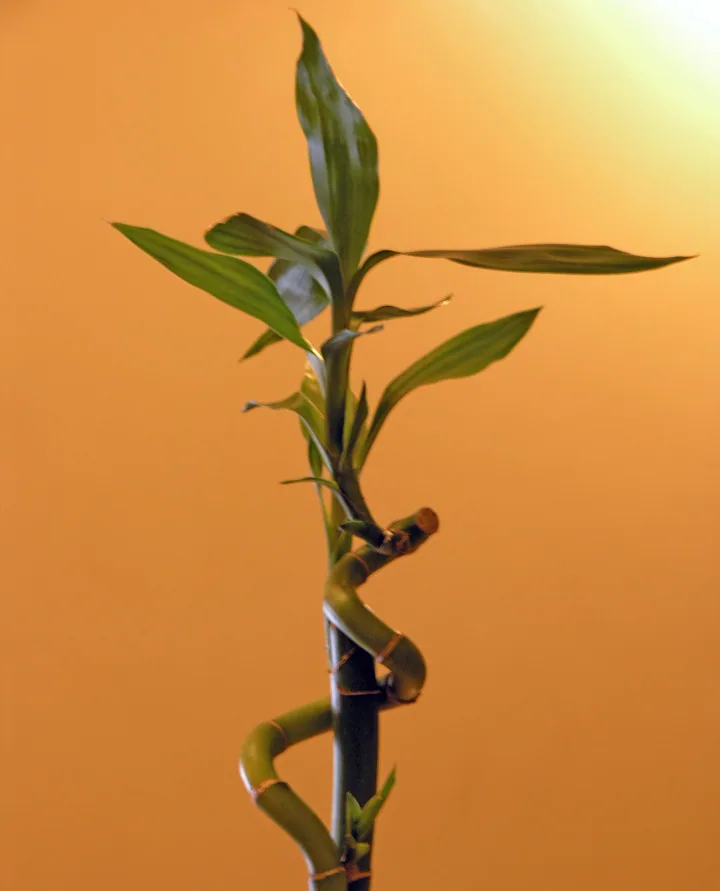
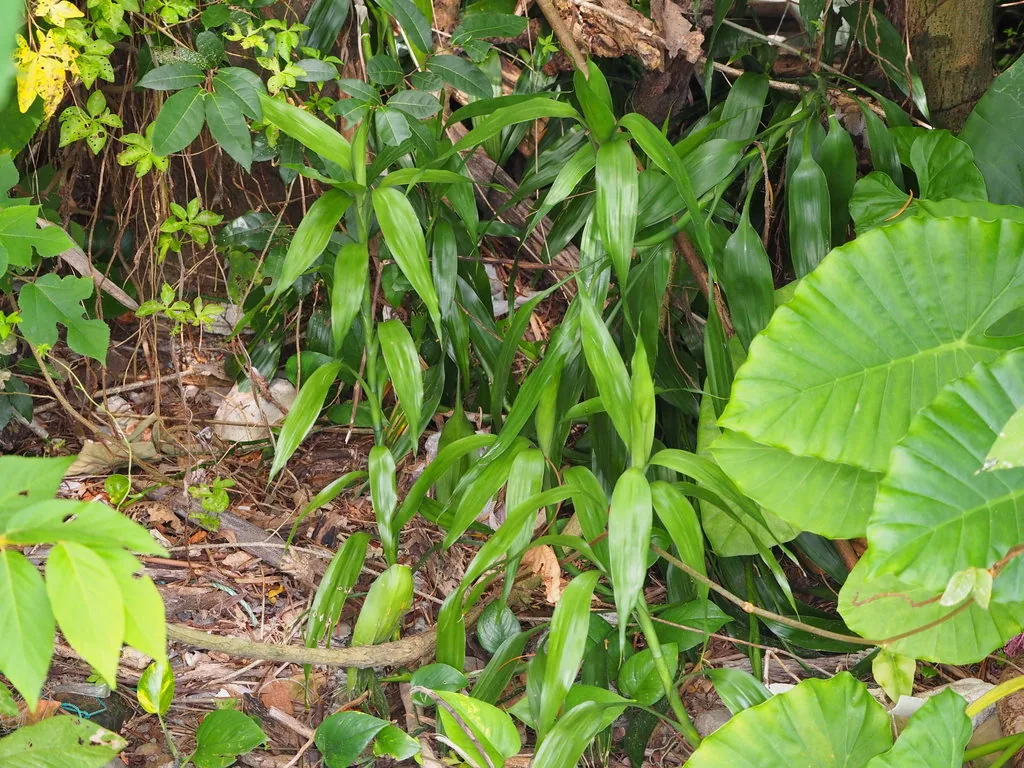

How to Grow and Care for Lucky Bamboo
Dracaena sanderiana
Written by Emilio Marruso · last checked
Toxic to: Cats, Dogs, Animals, People · Why
At a glance
Lucky bamboo is a forgiving houseplant that grows happily in bright indirect light, either in soil or with its roots simply sitting in water. Change the water every week, give it a little weak fertilizer, and this perennial keeps on growing. Want more plants? Put a new shoot in water, and roots usually appear within 2 to 3 weeks.
- Sun
Bright indirect light indoors; partial shade if it goes outside in summer
What the sources say (5)
Light: Partial shade outdoors in summer or bright indirect light indoors
Indoors: Place lucky bamboo in a room with bright, indirect light, such as those facing east or north.
— How To Grow and Care for Lucky Bamboo (Dracaena Sanderiana) | Home & Garden Information Center [2] Outdoors in summer: It performs well in containers with partial shade outdoors in summer or bright but indirect light indoors all year.
— Dracaena sanderiana (Chinese Water Bamboo, Friendship Bamboo, Lucky Bamboo, Ribbon Plant, Water Bamboo) | North Carolina Extension Gardener Plant Toolbox [1] According to NC State Extension (attributes): Light: Dappled Sunlight (Shade through upper canopy all day) Deep shade (Less than 2 hours to no direct sunlight)
— Dracaena sanderiana (Chinese Water Bamboo, Friendship Bamboo, Lucky Bamboo, Ribbon Plant, Water Bamboo) | North Carolina Extension Gardener Plant Toolbox [1] It performs well in containers with partial shade outdoors in summer or bright but indirect light indoors all year.
— Dracaena sanderiana (Chinese Water Bamboo, Friendship Bamboo, Lucky Bamboo, Ribbon Plant, Water Bamboo) | North Carolina Extension Gardener Plant Toolbox [1] Direct sunlight will damage the leaves, causing them to turn brown.
— How To Grow and Care for Lucky Bamboo (Dracaena Sanderiana) | Home & Garden Information Center [2] - Water
Water when the top inch of soil is dry; if grown in water, use chlorine-free water and change it weekly
What the sources say (6)
Watering: Water when the top inch of soil is dry and allow to drain thoroughly; can also be grown with roots and at least one inch [2.5 cm] of stem submerged in water
Grown in soil: Water the pot when the top inch of soil is dry. Allow it to drain thoroughly.
— How To Grow and Care for Lucky Bamboo (Dracaena Sanderiana) | Home & Garden Information Center [2] Grown in water: The stems of lucky bamboo should be submerged in enough water to cover the roots and at least one inch of the stem.
— How To Grow and Care for Lucky Bamboo (Dracaena Sanderiana) | Home & Garden Information Center [2] Water the pot when the top inch of soil is dry. Allow it to drain thoroughly. Do not leave water in a saucer underneath the pot.
— How To Grow and Care for Lucky Bamboo (Dracaena Sanderiana) | Home & Garden Information Center [2] The stems of lucky bamboo should be submerged in enough water to cover the roots and at least one inch of the stem.
— How To Grow and Care for Lucky Bamboo (Dracaena Sanderiana) | Home & Garden Information Center [2] Watering notes: Use chlorine-free water and change it weekly; do not leave water in the saucer; overwatering can cause yellowing leaves and stem rot
It requires a moist potting mix, or it can be grown in chlorine-free water. Change the water weekly (to prevent mosquitoes) and provide a weak liquid fertilizer.
— Dracaena sanderiana (Chinese Water Bamboo, Friendship Bamboo, Lucky Bamboo, Ribbon Plant, Water Bamboo) | North Carolina Extension Gardener Plant Toolbox [1] Overwatering can cause yellowing of the leaves and rotting of the stems. Low humidity can cause browning of the leaf tips.
— Dracaena sanderiana (Chinese Water Bamboo, Friendship Bamboo, Lucky Bamboo, Ribbon Plant, Water Bamboo) | North Carolina Extension Gardener Plant Toolbox [1] - Cold
Survives winters down to 30 °F (−1.1 °C)
Half hardy: mild winters or an unheated greenhouse · USDA 10 · RHS H3 · Z10
What the sources say (2)
Hardiness, coldest zone: 10 [winter low −1.1 to 4.4 °C (30 to 40 °F)]
Lucky bamboo is hardy in zones 10 to 12.
— How To Grow and Care for Lucky Bamboo (Dracaena Sanderiana) | Home & Garden Information Center [2] Hardiness, warmest zone: 12 [winter low 10 to 15.6 °C (50 to 60 °F)]
Lucky bamboo is hardy in zones 10 to 12.
— How To Grow and Care for Lucky Bamboo (Dracaena Sanderiana) | Home & Garden Information Center [2] - Feeding
Weak liquid houseplant fertilizer; in water, use a quarter of the usual dose
What the sources say (4)
Mineral fertilizers: Weak liquid houseplant fertilizer
grown in water: Fertilize every other month with a liquid houseplant fertilizer at 1/4 the recommended rate.
— How To Grow and Care for Lucky Bamboo (Dracaena Sanderiana) | Home & Garden Information Center [2] in soil: Fertilize with a houseplant fertilizer monthly during the growing season.
— How To Grow and Care for Lucky Bamboo (Dracaena Sanderiana) | Home & Garden Information Center [2] Fertilize every other month with a liquid houseplant fertilizer at 1/4 the recommended rate.
— How To Grow and Care for Lucky Bamboo (Dracaena Sanderiana) | Home & Garden Information Center [2] Change the water weekly (to prevent mosquitoes) and provide a weak liquid fertilizer.
— Dracaena sanderiana (Chinese Water Bamboo, Friendship Bamboo, Lucky Bamboo, Ribbon Plant, Water Bamboo) | North Carolina Extension Gardener Plant Toolbox [1] - Pests
Spider mites, mealybugs, scale and aphids; remove them by hand or rinse the leaves
What the sources say (2)
Pests: mealybugs, mites, scale insects, spider mites, aphids
No serious insect pests or diseases. Monitor for mealybugs, mites and scale insects.
— Dracaena sanderiana (Chinese Water Bamboo, Friendship Bamboo, Lucky Bamboo, Ribbon Plant, Water Bamboo) | North Carolina Extension Gardener Plant Toolbox [1] Pests include spider mites, mealy bugs, and aphids.
— How To Grow and Care for Lucky Bamboo (Dracaena Sanderiana) | Home & Garden Information Center [2] - Watch out
Too much water yellows the leaves and rots the stems; never leave water in the saucer
What the sources say (2)
Watering notes: Use chlorine-free water and change it weekly; do not leave water in the saucer; overwatering can cause yellowing leaves and stem rot
It requires a moist potting mix, or it can be grown in chlorine-free water. Change the water weekly (to prevent mosquitoes) and provide a weak liquid fertilizer.
— Dracaena sanderiana (Chinese Water Bamboo, Friendship Bamboo, Lucky Bamboo, Ribbon Plant, Water Bamboo) | North Carolina Extension Gardener Plant Toolbox [1] Overwatering can cause yellowing of the leaves and rotting of the stems. Low humidity can cause browning of the leaf tips.
— Dracaena sanderiana (Chinese Water Bamboo, Friendship Bamboo, Lucky Bamboo, Ribbon Plant, Water Bamboo) | North Carolina Extension Gardener Plant Toolbox [1] - Propagation
Put a new shoot in water; roots usually form in 2 to 3 weeks
What the sources say (2)
Propagation: Stem cuttings; a shoot of new growth is placed in water and roots usually form within 2 to 3 weeks
Cut a shoot of new growth off the main stem. - Remove the lowest leaves. - Place the shoot in water. - New roots will usually form within 2 to 3 weeks.
— How To Grow and Care for Lucky Bamboo (Dracaena Sanderiana) | Home & Garden Information Center [2] Life Cycle: Perennial Woody Recommended Propagation Strategy: Stem Cutting
— Dracaena sanderiana (Chinese Water Bamboo, Friendship Bamboo, Lucky Bamboo, Ribbon Plant, Water Bamboo) | North Carolina Extension Gardener Plant Toolbox [1] - Containers
Great indoors, in a pot of soil or a container of water
What the sources say (6)
Indoors: Yes
Lucky bamboo is a popular, easy-to-grow and undemanding houseplant outside of the tropical zone.
— Dracaena sanderiana (Chinese Water Bamboo, Friendship Bamboo, Lucky Bamboo, Ribbon Plant, Water Bamboo) | North Carolina Extension Gardener Plant Toolbox [1] In containers: Yes
It performs well in containers with partial shade outdoors in summer or bright but indirect light indoors all year.
— Dracaena sanderiana (Chinese Water Bamboo, Friendship Bamboo, Lucky Bamboo, Ribbon Plant, Water Bamboo) | North Carolina Extension Gardener Plant Toolbox [1] Watering: Water when the top inch of soil is dry and allow to drain thoroughly; can also be grown with roots and at least one inch [2.5 cm] of stem submerged in water
Grown in soil: Water the pot when the top inch of soil is dry. Allow it to drain thoroughly.
— How To Grow and Care for Lucky Bamboo (Dracaena Sanderiana) | Home & Garden Information Center [2] Grown in water: The stems of lucky bamboo should be submerged in enough water to cover the roots and at least one inch of the stem.
— How To Grow and Care for Lucky Bamboo (Dracaena Sanderiana) | Home & Garden Information Center [2] Water the pot when the top inch of soil is dry. Allow it to drain thoroughly. Do not leave water in a saucer underneath the pot.
— How To Grow and Care for Lucky Bamboo (Dracaena Sanderiana) | Home & Garden Information Center [2] The stems of lucky bamboo should be submerged in enough water to cover the roots and at least one inch of the stem.
— How To Grow and Care for Lucky Bamboo (Dracaena Sanderiana) | Home & Garden Information Center [2] - Safety
Toxic to cats and dogs; people shouldn't eat it, and the sap can irritate skin
Overview
Lucky bamboo is a tropical houseplant that can be grown in water or in well-drained potting soil. [2][1] It prefers bright indirect light indoors and is propagated by stem cuttings. [2][1]
Lucky Bamboo care
Measurements in square brackets are our conversion into the other unit system; the quoted text is unchanged.
How to water Lucky Bamboo
Watering
Water when the top inch of soil is dry and allow to drain thoroughly; can also be grown with roots and at least one inch [2.5 cm] of stem submerged in water
What each source says
Grown in soil: Water when the top inch of soil is dry and allow to drain thoroughly
Grown in water: Stems submerged in enough water to cover the roots and at least one inch [2.5 cm] of the stem; change the water weekly
What the sources say (4)
Grown in soil: Water the pot when the top inch of soil is dry. Allow it to drain thoroughly.Grown in water: The stems of lucky bamboo should be submerged in enough water to cover the roots and at least one inch of the stem.Water the pot when the top inch of soil is dry. Allow it to drain thoroughly. Do not leave water in a saucer underneath the pot.The stems of lucky bamboo should be submerged in enough water to cover the roots and at least one inch of the stem.Watering notes
Use chlorine-free water and change it weekly; do not leave water in the saucer; overwatering can cause yellowing leaves and stem rot
What the sources say (2)
It requires a moist potting mix, or it can be grown in chlorine-free water. Change the water weekly (to prevent mosquitoes) and provide a weak liquid fertilizer.Overwatering can cause yellowing of the leaves and rotting of the stems. Low humidity can cause browning of the leaf tips.How much light Lucky Bamboo needs
Partial shade outdoors in summer or bright indirect light indoors
What each source says
Indoors: Bright indirect light
Outdoors in summer: Partial shade
According to NC State Extension (attributes): Dappled sunlight to deep shade
What the sources say (5)
Indoors: Place lucky bamboo in a room with bright, indirect light, such as those facing east or north.Outdoors in summer: It performs well in containers with partial shade outdoors in summer or bright but indirect light indoors all year.According to NC State Extension (attributes): Light:
Dappled Sunlight (Shade through upper canopy all day)
Deep shade (Less than 2 hours to no direct sunlight)It performs well in containers with partial shade outdoors in summer or bright but indirect light indoors all year.Direct sunlight will damage the leaves, causing them to turn brown.How much cold Lucky Bamboo can take
Hardiness, coldest zone
10 [winter low −1.1 to 4.4 °C (30 to 40 °F)]
What the sources say (1)
Lucky bamboo is hardy in zones 10 to 12.Hardiness, warmest zone
12 [winter low 10 to 15.6 °C (50 to 60 °F)]
What the sources say (1)
Lucky bamboo is hardy in zones 10 to 12.Where to grow Lucky Bamboo
Indoors
Yes
What the sources say (1)
Lucky bamboo is a popular, easy-to-grow and undemanding houseplant outside of the tropical zone.In containers
Yes
What the sources say (1)
It performs well in containers with partial shade outdoors in summer or bright but indirect light indoors all year.How to propagate Lucky Bamboo
Stem cuttings; a shoot of new growth is placed in water and roots usually form within 2 to 3 weeks
What the sources say (2)
Cut a shoot of new growth off the main stem.
- Remove the lowest leaves.
- Place the shoot in water.
- New roots will usually form within 2 to 3 weeks.Life Cycle:
Perennial
Woody
Recommended Propagation Strategy:
Stem CuttingHow to grow Lucky Bamboo
The plant
Life cycle
perennial
What the sources say (1)
Lucky bamboo is not a bamboo at all. It is a tropical, perennial shrub from West Africa and a member of the asparagus family (Asparagaceae).Family
Asparagaceae
What the sources say (1)
Lucky bamboo is not a bamboo at all. It is a tropical, perennial shrub from West Africa and a member of the asparagus family (Asparagaceae).Pests and diseases
Pests
mealybugs, mites, scale insects, spider mites, aphids
What the sources say (2)
No serious insect pests or diseases. Monitor for mealybugs, mites and scale insects.Pests include spider mites, mealy bugs, and aphids.Fertilizing
When
The sources give different values depending on region, zone or growing conditions.
What each source says
in soil: During the growing season
What the sources say (1)
in soil: Fertilize with a houseplant fertilizer monthly during the growing season.How often
The sources give different values depending on region, zone or growing conditions.
What each source says
grown in water: Every other month
in soil: Monthly during the growing season
What the sources say (2)
grown in water: Fertilize every other month with a liquid houseplant fertilizer at 1/4 the recommended rate.in soil: Fertilize with a houseplant fertilizer monthly during the growing season.Mineral fertilizers
Weak liquid houseplant fertilizer
What each source says
grown in water: Liquid houseplant fertilizer at a quarter of the recommended rate
in soil: Houseplant fertilizer
What the sources say (4)
grown in water: Fertilize every other month with a liquid houseplant fertilizer at 1/4 the recommended rate.in soil: Fertilize with a houseplant fertilizer monthly during the growing season.Fertilize every other month with a liquid houseplant fertilizer at 1/4 the recommended rate.Change the water weekly (to prevent mosquitoes) and provide a weak liquid fertilizer.Lucky Bamboo pests and problems
Overwatering
Symptom: Yellowing of the leaves and rotting of the stems
What to do: Avoid overwatering
What the sources say (1)
Overwatering can cause yellowing of the leaves and rotting of the stems. Low humidity can cause browning of the leaf tips.
— Dracaena sanderiana (Chinese Water Bamboo, Friendship Bamboo, Lucky Bamboo, Ribbon Plant, Water Bamboo) | North Carolina Extension Gardener Plant Toolbox [1] Pests
Symptom: Spider mites, mealy bugs and aphids
What to do: Remove by hand, rinse the leaves, or use neem oil or insecticidal soap
What the sources say (1)
Pests include spider mites, mealy bugs, and aphids. - These pests can be removed by hand, by rinsing the leaves off, or by using neem oil or insecticidal soap.
— How To Grow and Care for Lucky Bamboo (Dracaena Sanderiana) | Home & Garden Information Center [2]
Remedies
Each remedy shows what official sources say about it; traditional remedies without an official source are marked as such. Harmful ones are listed so you know to avoid them.
Treating the plant
mealybugs
removing by hand Works
How: These pests can be removed by hand.
These pests can be removed by hand, by rinsing the leaves off, or by using neem oil or insecticidal soap.
— How To Grow and Care for Lucky Bamboo (Dracaena Sanderiana) | Home & Garden Information Center [2] What the evidence says These pests can be removed by hand, by rinsing the leaves off, or by using neem oil or insecticidal soap.
— How To Grow and Care for Lucky Bamboo (Dracaena Sanderiana) | Home & Garden Information Center [2] 70% isopropyl alcohol Not verified
Traditional remedy, not verified by an official source.
Always test a small hidden part of the plant 24 hours before a full spray
— gardeningknowhow.com [6] How: Some sites advise 70% isopropyl alcohol for managing dracaena pests.
aphids
rinsing the leaves off Works
How: These pests can be removed by rinsing the leaves off.
These pests can be removed by hand, by rinsing the leaves off, or by using neem oil or insecticidal soap.
— How To Grow and Care for Lucky Bamboo (Dracaena Sanderiana) | Home & Garden Information Center [2] What the evidence says These pests can be removed by hand, by rinsing the leaves off, or by using neem oil or insecticidal soap.
— How To Grow and Care for Lucky Bamboo (Dracaena Sanderiana) | Home & Garden Information Center [2]
spider mites
neem oil spray Partly works
How: These pests can be removed by using neem oil.
These pests can be removed by hand, by rinsing the leaves off, or by using neem oil or insecticidal soap.
— How To Grow and Care for Lucky Bamboo (Dracaena Sanderiana) | Home & Garden Information Center [2] What the evidence says However, neem oil is not effective against every insect and disease, and often must be frequently reapplied to reach the desired outcome.
— extension.unh.edu [4] insecticidal soap spray Works
How: These pests can be removed by using insecticidal soap.
These pests can be removed by hand, by rinsing the leaves off, or by using neem oil or insecticidal soap.
— How To Grow and Care for Lucky Bamboo (Dracaena Sanderiana) | Home & Garden Information Center [2] What the evidence says For example, insecticidal soap is a safe, effective organic insecticide with minimal environmental impact.
— extension.psu.edu [5]
Is Lucky Bamboo toxic to pets?
Reported by the source, quoted verbatim. This is not medical or veterinary advice: if a person or an animal may have eaten this plant, contact a poison control centre or a veterinarian.
Animals
Toxic, if ingested, for cats and dogs. Vomiting (occasionally with blood), depression, anorexia, hypersalivation, dilated pupils (cats).
[1]- Poisonous parts
Poison Part: Flowers Fruits Leaves Roots Sap/Juice Stems
[1]- Toxic principle
Poison Toxic Principle: Saponins Causes Contact Dermatitis: No
[1]- Symptoms
Vomiting (occasionally with blood), depression, anorexia, hypersalivation, dilated pupils (cats).
[1]- Severity
Poison Severity: Low Poison Symptoms: Toxic, if ingested, for cats and dogs.
[1]
Lucky bamboo is toxic to pets and causes skin irritation in humans.
[2]- Poisonous parts
Poison Part: Flowers Fruits Leaves Roots Sap/Juice Stems
[1]- Toxic principle
Poison Toxic Principle: Saponins Causes Contact Dermatitis: No
[1]- Symptoms
Humans should not eat this plant. The sap can cause skin irritation.
[1]- Severity
Poison Severity: Low Poison Symptoms: Toxic, if ingested, for cats and dogs.
[1]
People
Humans should not eat this plant. The sap can cause skin irritation.
[1]- Poisonous parts
Poison Part: Flowers Fruits Leaves Roots Sap/Juice Stems
[1]- Toxic principle
Poison Toxic Principle: Saponins Causes Contact Dermatitis: No
[1]- Symptoms
Humans should not eat this plant. The sap can cause skin irritation.
[1]- Severity
Poison Severity: Low Poison Symptoms: Toxic, if ingested, for cats and dogs.
[1]
Calendar
Relative to frost
Less precise estimate: there is no weather station within 300 km.
Find frost dates by ZIP code or city
Transplant: around the last frost
Like most houseplants, lucky bamboo can be placed outdoors in a shady area after the danger of frost has passed in late spring.
— How To Grow and Care for Lucky Bamboo (Dracaena Sanderiana) | Home & Garden Information Center [2]
Count from the average frost dates where you live.
Indicative values
Values from a secondary source, not checked word for word like the rest of this page. Use them as a starting point.
- Mature height
- 91.4-152.4 cm (3-5 ft)Indicative value, adapt it to your climate · Secondary source
- Hours of sun
- 4-6 hoursIndicative value, adapt it to your climate · Secondary source
- Drought tolerant
- yesIndicative value, adapt it to your climate · Secondary source
- Soil pH
- 6-6.5Indicative value, adapt it to your climate · Secondary source
- Care level
- MediumIndicative value, adapt it to your climate · Secondary source
- Growth rate
- LowIndicative value, adapt it to your climate · Secondary source
- Pruning
- March, April, May, March, April, MayIndicative value, adapt it to your climate · Secondary source
Similar plants
- Queen of Dracaenas Dracaena goldieana
- Whale Fin Dracaena Dracaena masoniana
- African Spear Dracaena angolensis
- Corn Plant Dracaena fragrans
- Dracaena Dracaena marginata
- Gold Dust Dracaena surculosa
- Snake Plant Dracaena trifasciata
- Dragon tree Dracaena draco
Sources
Every value above is quoted from these documents. Links lead to the original publisher.
- Dracaena sanderiana (Chinese Water Bamboo, Friendship Bamboo, Lucky Bamboo, Ribbon Plant, Water Bamboo) | North Carolina Extension Gardener Plant Toolbox · plants.ces.ncsu.edu, consulted
- How To Grow and Care for Lucky Bamboo (Dracaena Sanderiana) | Home & Garden Information Center · hgic.clemson.edu, consulted
- Dracaena | North Carolina Extension Gardener Plant Toolbox · plants.ces.ncsu.edu, consulted
- extension.unh.edu · extension.unh.edu
- extension.psu.edu · extension.psu.edu
- gardeningknowhow.com · gardeningknowhow.com
Written by Emilio Marruso · last checked