
Cómo cultivar y cuidar Snake Plant
Dracaena trifasciata
Escrito por Emilio Marruso · última revisión
Tóxica para: Gatos, Perros, Caballos, Animales, Personas · Por qué
De un vistazo
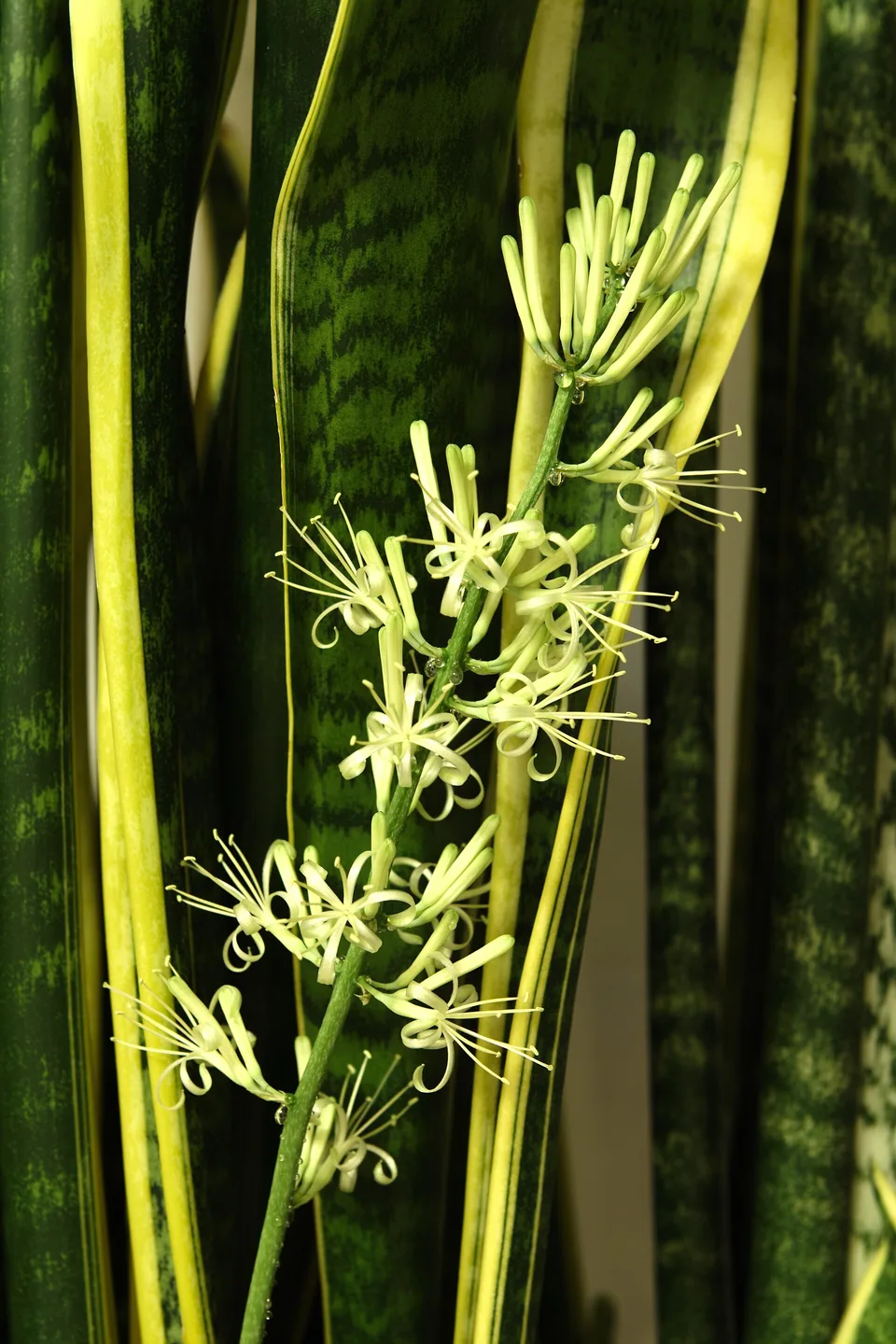
La sansevieria es una planta perenne y agradecida que crece feliz en interior y en maceta: alcanza hasta 1,2 m, y las variedades enanas se quedan en 15–18 cm. Pide muy poco: deja secar la tierra entre riegos y en invierno riega solo cada uno o dos meses. Abónala una vez al mes en primavera y verano, y multiplícala por división o esquejes.
- Riego
Deja secar la tierra entre riegos; en invierno riega solo cada 1–2 meses
Qué dicen las fuentes (4)
Riego: Deja que la tierra se seque entre riegos desde primavera hasta otoño; en invierno riega solo cada uno a dos meses
In spring to autumn allow the soil to dry between waterings. In winter only water every one to two months.
— Dracaena trifasciata (Golden Birds Nest, Good Luck Plant, Mother-in-law's Tongue, Snake Plant) | North Carolina Extension Gardener Plant Toolbox [1] Water only when it is dry. You can kill it by overwatering
— Snake Plant: A Forgiving, Low-maintenance Houseplant [2] Notas sobre el riego: No riegues en exceso, ya que las raíces se pudrirán; usa contenedores con agujeros de drenaje para evitar tierra empapada
Well-drained soil and careful watering are a must; do not overwater, as the roots will rot.
— Dracaena trifasciata (Golden Birds Nest, Good Luck Plant, Mother-in-law's Tongue, Snake Plant) | North Carolina Extension Gardener Plant Toolbox [1] Choose containers with drainage holes to prevent soggy soil.
— Snake Plant: A Forgiving, Low-maintenance Houseplant — Allegheny County — Master Gardener [5] - Frío
Aguanta inviernos de hasta −1,1 °C (30 °F)
Semirrústica: inviernos suaves o invernadero sin calefacción · USDA 10a · RHS H3 · Z10
Qué dicen las fuentes (2)
Rusticidad, zona más fría: 10a [mínima invernal de −1,1 a 1,7 °C (de 30 a 35 °F)]
Soil Drainage: Good Drainage USDA Plant Hardiness Zone: 10a, 10b, 11a, 11b, 12a, 12b
— Dracaena trifasciata (Golden Birds Nest, Good Luck Plant, Mother-in-law's Tongue, Snake Plant) | North Carolina Extension Gardener Plant Toolbox [1] Rusticidad, zona más cálida: 12b [mínima invernal de 12,8 a 15,6 °C (de 55 a 60 °F)]
Soil Drainage: Good Drainage USDA Plant Hardiness Zone: 10a, 10b, 11a, 11b, 12a, 12b
— Dracaena trifasciata (Golden Birds Nest, Good Luck Plant, Mother-in-law's Tongue, Snake Plant) | North Carolina Extension Gardener Plant Toolbox [1] - Abonado
Abono universal a media dosis, una vez al mes en primavera y verano
Qué dicen las fuentes (6)
Cuándo: Durante la temporada de crecimiento (primavera y verano)
For a more robust plant, fertilize monthly during their growing season (spring and summer) with an all-purpose fertilizer at half strength.
— Snake Plant: A Forgiving, Low-maintenance Houseplant — Allegheny County — Master Gardener [5] For a more robust plant, fertilize monthly during the growing season with an all-purpose fertilizer at half strength.
— Snake Plant: A Forgiving, Low-maintenance Houseplant [2] Frecuencia: Mensualmente durante la temporada de crecimiento
For a more robust plant, fertilize monthly during the growing season with an all-purpose fertilizer at half strength.
— Snake Plant: A Forgiving, Low-maintenance Houseplant [2] For a more robust plant, fertilize monthly during their growing season (spring and summer) with an all-purpose fertilizer at half strength.
— Snake Plant: A Forgiving, Low-maintenance Houseplant — Allegheny County — Master Gardener [5] Abonos minerales: Fertilizante de uso general a la mitad de la concentración
For a more robust plant, fertilize monthly during the growing season with an all-purpose fertilizer at half strength.
— Snake Plant: A Forgiving, Low-maintenance Houseplant [2] For a more robust plant, fertilize monthly during their growing season (spring and summer) with an all-purpose fertilizer at half strength.
— Snake Plant: A Forgiving, Low-maintenance Houseplant — Allegheny County — Master Gardener [5] - Plagas
Cochinillas algodonosas y araña roja de vez en cuando; el exceso de riego pudre las raíces
Qué dicen las fuentes (4)
Plagas: cochinillas harinosas, arañitas rojas
No significant problems. Monitor for mealybugs and spider mites. Overwatering may cause root rot.
— Dracaena trifasciata (Golden Birds Nest, Good Luck Plant, Mother-in-law's Tongue, Snake Plant) | North Carolina Extension Gardener Plant Toolbox [1] Few pests and diseases bother this hardy plant. Due to overwatering, root rot is a common affliction of snake plants. Mealybugs and spider mites occasionally bother this plant.
— Snake Plant: A Forgiving, Low-maintenance Houseplant [2] Enfermedades: pudrición de la raíz
No significant problems. Monitor for mealybugs and spider mites. Overwatering may cause root rot.
— Dracaena trifasciata (Golden Birds Nest, Good Luck Plant, Mother-in-law's Tongue, Snake Plant) | North Carolina Extension Gardener Plant Toolbox [1] Few pests and diseases bother this hardy plant. Due to overwatering, root rot is a common affliction of snake plants.
— Snake Plant: A Forgiving, Low-maintenance Houseplant [2] - Atención
Las plantas altas pueden volcar: usa una maceta pesada; las raíces apretadas pueden romper el barro
- Tamaño
Hasta 1,2 m de alto; las variedades enanas se quedan en 15–18 cm
Qué dicen las fuentes (2)
Altura adulta: hasta 122 cm (4 pies) para la especie; cultivares enanos 15-18 cm (6-7 pulgadas)
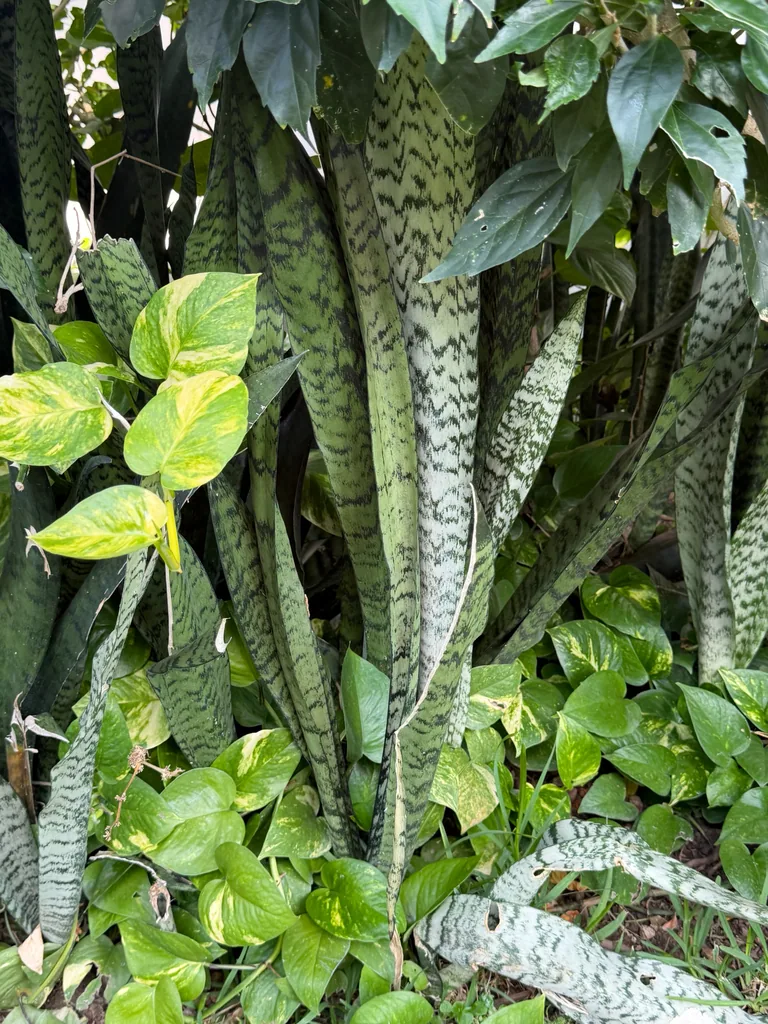
The straight species has green leaves with darker green, irregular, horizontal variegation, and can grow up to 4 feet tall.
— Snake Plant: A Forgiving, Low-maintenance Houseplant [2] Some cultivars of Dracaena trifasciata are dwarf plants that grow only 6-7 inches tall, while the leaves of others reach heights of 2-4 feet.
— Snake plant: A striking and durable houseplant | UGA Extension Forsyth County [6] - Multiplicación
Por división, esquejes de tallo o esquejes de hoja
Qué dicen las fuentes (2)
Propagación: División, esquejes de tallo, esquejes de hoja
Recommended Propagation Strategy: Division Stem Cutting Country Or Region Of Origin:
— Dracaena trifasciata (Golden Birds Nest, Good Luck Plant, Mother-in-law's Tongue, Snake Plant) | North Carolina Extension Gardener Plant Toolbox [1] While you can take leaf cuttings to begin new plants, it is most easily propagated by division.
— Snake Plant: A Forgiving, Low-maintenance Houseplant [2] - Maceta
Ideal en interior, en macetas con agujeros de drenaje
Qué dicen las fuentes (4)
En interior: Sí
Snake plant is a long-lived, unfussy, succulent houseplant
— Snake Plant: A Forgiving, Low-maintenance Houseplant [2] En maceta: Sí
Snake plant is grown in containers and is used as ground cover or filler in interior landscape designs.
— Dracaena trifasciata (Golden Birds Nest, Good Luck Plant, Mother-in-law's Tongue, Snake Plant) | North Carolina Extension Gardener Plant Toolbox [1] Notas sobre el riego: No riegues en exceso, ya que las raíces se pudrirán; usa contenedores con agujeros de drenaje para evitar tierra empapada
Well-drained soil and careful watering are a must; do not overwater, as the roots will rot.
— Dracaena trifasciata (Golden Birds Nest, Good Luck Plant, Mother-in-law's Tongue, Snake Plant) | North Carolina Extension Gardener Plant Toolbox [1] Choose containers with drainage holes to prevent soggy soil.
— Snake Plant: A Forgiving, Low-maintenance Houseplant — Allegheny County — Master Gardener [5] - Seguridad
Tóxica si se ingiere, para personas y animales; la savia puede irritar la piel
Resumen
La planta serpiente es una planta de interior suculenta, longeva y sin complicaciones que fue trasladada del género Sansevieria a Dracaena. [5] Necesita suelo bien drenado y riego cuidadoso, y el exceso de riego puede causar pudrición de la raíz. [1] Se propaga más fácilmente por división. [2] Elige un sustrato para cactus o uno con perlita. [2] Si una hoja está dañada, córtala al nivel del sustrato. [2]
Citado en inglés, como en la fuente.
Cuidados
Riego
Riego
Deja que la tierra se seque entre riegos desde primavera hasta otoño; en invierno riega solo cada uno a dos meses
Qué dicen las fuentes (2)
In spring to autumn allow the soil to dry between waterings. In winter only water every one to two months.Water only when it is dry. You can kill it by overwateringNotas sobre el riego
No riegues en exceso, ya que las raíces se pudrirán; usa contenedores con agujeros de drenaje para evitar tierra empapada
Qué dicen las fuentes (2)
Well-drained soil and careful watering are a must; do not overwater, as the roots will rot.Choose containers with drainage holes to prevent soggy soil.Luz
Las fuentes dan valores distintos según la región, la zona o las condiciones de cultivo.
Lo que dice cada fuente
Según NC State Extension: Luz solar directa solo parte del día, 2-6 horas; tolera luz muy baja
Según Penn State Extension: Luz indirecta brillante; tolera poca luz; evita el sol directo
Según UGA Extension: Tolera una gama de luz desde muy baja hasta brillante, exposición indirecta
NC State · Tolerancia: Tolera muy poca luz
Penn State · Interior: La sansevieria prefiere luz indirecta intensa, pero tolera muy bien los lugares con poca luz.
Qué dicen las fuentes (5)
Según NC State Extension: Place in a location where it will receive direct sunlight only part of the day, 2 to 6 hours, as it will tolerate very low light.Según Penn State Extension: Snake plant enjoys bright indirect light but tolerates low-light areas very well. Keep it out of the direct sun, as it can burn.Según UGA Extension: They can tolerate a range of light, from very low to bright, indirect exposure.NC State · Tolerancia: it will tolerate very low lightPenn State · Interior: Snake plant enjoys bright indirect light but tolerates low-light areas very well.Clima y frío
Rusticidad, zona más fría
10a [mínima invernal de −1,1 a 1,7 °C (de 30 a 35 °F)]
Qué dicen las fuentes (1)
Soil Drainage:
Good Drainage
USDA Plant Hardiness Zone:
10a, 10b, 11a, 11b, 12a, 12bRusticidad, zona más cálida
12b [mínima invernal de 12,8 a 15,6 °C (de 55 a 60 °F)]
Qué dicen las fuentes (1)
Soil Drainage:
Good Drainage
USDA Plant Hardiness Zone:
10a, 10b, 11a, 11b, 12a, 12bDónde cultivarla
En interior
Sí
Qué dicen las fuentes (1)
Snake plant is a long-lived, unfussy, succulent houseplantEn maceta
Sí
Qué dicen las fuentes (1)
Snake plant is grown in containers and is used as ground cover or filler in interior landscape designs.Propagación
División, esquejes de tallo, esquejes de hoja
Qué dicen las fuentes (2)
Recommended Propagation Strategy:
Division
Stem Cutting
Country Or Region Of Origin:While you can take leaf cuttings to begin new plants, it is most easily propagated by division.Cultivo
La planta
Ciclo de vida
perenne
Qué dicen las fuentes (1)
Snake plant is an erect, clumping, broadleaf evergreen, tropical herbaceous perennial in the asparagus family (Asparagaceae).Familia
Asparagáceas
Qué dicen las fuentes (2)
Snake plant is an erect, clumping, broadleaf evergreen, tropical herbaceous perennial in the asparagus family (Asparagaceae).A member of the asparagus family, snake plant is native to tropical western Africa, where it will flower and produce berries.Altura adulta
hasta 122 cm (4 pies) para la especie; cultivares enanos 15-18 cm (6-7 pulgadas)
Qué dicen las fuentes (2)
The straight species has green leaves with darker green, irregular, horizontal variegation, and can grow up to 4 feet tall.Some cultivars of Dracaena trifasciata are dwarf plants that grow only 6-7 inches tall, while the leaves of others reach heights of 2-4 feet.Plagas y enfermedades
Plagas
cochinillas harinosas, arañitas rojas
Qué dicen las fuentes (2)
No significant problems. Monitor for mealybugs and spider mites. Overwatering may cause root rot.Few pests and diseases bother this hardy plant. Due to overwatering, root rot is a common affliction of snake plants. Mealybugs and spider mites occasionally bother this plant.Enfermedades
pudrición de la raíz
Qué dicen las fuentes (2)
No significant problems. Monitor for mealybugs and spider mites. Overwatering may cause root rot.Few pests and diseases bother this hardy plant. Due to overwatering, root rot is a common affliction of snake plants.Abonado
Cuándo
Durante la temporada de crecimiento (primavera y verano)
Qué dicen las fuentes (2)
For a more robust plant, fertilize monthly during their growing season (spring and summer) with an all-purpose fertilizer at half strength.For a more robust plant, fertilize monthly during the growing season with an all-purpose fertilizer at half strength.Frecuencia
Mensualmente durante la temporada de crecimiento
Qué dicen las fuentes (2)
For a more robust plant, fertilize monthly during the growing season with an all-purpose fertilizer at half strength.For a more robust plant, fertilize monthly during their growing season (spring and summer) with an all-purpose fertilizer at half strength.Abonos minerales
Fertilizante de uso general a la mitad de la concentración
Qué dicen las fuentes (2)
For a more robust plant, fertilize monthly during the growing season with an all-purpose fertilizer at half strength.For a more robust plant, fertilize monthly during their growing season (spring and summer) with an all-purpose fertilizer at half strength.Problemas
Podredumbre de la raíz
Síntoma: Las raíces se pudren en suelo empapado después de regar en exceso.
Qué hacer: Riega solo cuando el suelo esté seco y usa contenedores con agujeros de drenaje.
Qué dicen las fuentes (2)
Due to overwatering, root rot is a common affliction of snake plants.
— Snake Plant: A Forgiving, Low-maintenance Houseplant [2] Choose containers with drainage holes to prevent soggy soil.
— Snake Plant: A Forgiving, Low-maintenance Houseplant — Allegheny County — Master Gardener [5] Cochinillas harinosas y arañitas rojas
Síntoma: Molestan ocasionalmente a la planta.
Qué dicen las fuentes (1)
No significant problems. Monitor for mealybugs and spider mites. Overwatering may cause root rot.
— Dracaena trifasciata (Golden Birds Nest, Good Luck Plant, Mother-in-law's Tongue, Snake Plant) | North Carolina Extension Gardener Plant Toolbox [1] Caída y macetas rotas
Síntoma: El peso de las hojas puede derribar plantas altas; las plantas con raíces apretadas pueden romper macetas de barro.
Qué hacer: Usa una maceta pesada para variedades más altas.
Qué dicen las fuentes (1)
It is best to choose a heavy pot for the taller varieties because the weight of the leaves can topple the plant over, especially when the soil is dry.
— Snake Plant: A Forgiving, Low-maintenance Houseplant [2]
Remedios
Cada remedio indica qué dicen las fuentes oficiales; los remedios tradicionales sin fuente oficial aparecen marcados. Los perjudiciales están para que sepas evitarlos.
Cuidar la planta
cochinillas harinosas
hisopo con alcohol isopropílico No verificado
Remedio tradicional, no verificado por una fuente oficial.
Dab any visible mealybug or scale cluster with a cotton swab dipped in 70% isopropyl alcohol, which dissolves their protective wax on contact — but keep the alcohol off the soil.
— plantcarebasics.com [8] Spot-test any soap, oil, or alcohol on one small leaf area 1-2 days before you spray the whole plant, and watch for burn. Never spray in direct sun, above 90F, or on a plant already stressed for water
— plantcarebasics.com [8] Cómo: Retira las cochinillas con hisopos de algodón mojados en alcohol isopropílico al 70%.
limpiando las hojas con un paño húmedo No verificado
Remedio tradicional, no verificado por una fuente oficial.
Cómo: Limpia las hojas semanalmente con un paño húmedo o toalla de papel para ayudar a eliminarlas.
spray de jabón insecticida Funciona
Spot-test any soap, oil, or alcohol on one small leaf area 1-2 days before you spray the whole plant, and watch for burn. Never spray in direct sun, above 90F, or on a plant already stressed for water
— plantcarebasics.com [8] Cómo: Una solución al 1-2%, unas 2.5-5 cucharadas por galón, mezclada con agua destilada o embotellada, ya que el agua dura debilita el jabón.
Insecticidal soap or neem oil: a 1-2% solution, about 2.5-5 tablespoons per gallon, mixed with distilled or bottled water, since hard water weakens the soap
— plantcarebasics.com [8] Qué dicen las pruebas For example, insecticidal soap is a safe, effective organic insecticide with minimal environmental impact.
— extension.psu.edu [9] spray de aceite de neem No verificado
Remedio tradicional, no verificado por una fuente oficial.
Spot-test any soap, oil, or alcohol on one small leaf area 1-2 days before you spray the whole plant, and watch for burn. Never spray in direct sun, above 90F, or on a plant already stressed for water
— plantcarebasics.com [8] Despite these being biological pesticides, it is important to read the directions on the label and wear safety equipment.
— extension.illinois.edu [10] Cómo: Aplica aceite de neem para controlar y prevenir la recurrencia de la cochinilla; una solución al 1-2%, unas 2.5-5 cucharadas por galón, en agua destilada o embotellada.
ácaros araña
Enjuaga con agua. No verificado
Remedio tradicional, no verificado por una fuente oficial.
Cómo: Enjuaga la planta completamente con agua para eliminar los ácaros y sus telarañas.
mosquitos de los hongos
rociado con jabón diluido No verificado
Remedio tradicional, no verificado por una fuente oficial.
For example, spraying home remedies that contain dish detergent on plants on a sunny day can injure the plant, essentially burning it.
— extension.psu.edu [11] Cómo: Rocía una mezcla diluida de agua y jabón para platos sobre la planta y alrededor de ella.
barrera de arena sobre la mezcla para macetas No verificado
Remedio tradicional, no verificado por una fuente oficial.
Cómo: Mantén la mezcla para macetas en el lado seco y crea una barrera de arena de uno a dos pulgadas de profundidad sobre la parte superior de la mezcla para macetas.
pudrición de la raíz
cortando las raíces podridas y trasplantando No verificado
Remedio tradicional, no verificado por una fuente oficial.
Cómo: Saca la planta de la maceta, poda las raíces que estén podridas o en proceso de pudrición (ennegrecidas o blandas), deja que las raíces sanas se sequen durante un día y luego trasplanta en tierra fresca con buen drenaje.
canela en las raíces No verificado
Remedio tradicional, no verificado por una fuente oficial.
Cómo: Espolvorea canela sobre las raíces antes de trasplantar.
infección bacteriana
spray de peróxido de hidrógeno diluido No verificado
Remedio tradicional, no verificado por una fuente oficial.
Cómo: Rocía una solución de peróxido de hidrógeno diluido (1 parte de peróxido por 4 partes de agua).
Venenosa para los animales
Según la fuente, citada textualmente. No es un consejo médico ni veterinario: si una persona o un animal pudo haber ingerido esta planta, contacta con un centro de toxicología o con un veterinario.
Alternativas seguras para gatos y perros
Animales
If you have a pet, please note that all species of snake plant are toxic as they contain saponin toxins.
[2]- Principio tóxico
all species of snake plant are toxic as they contain saponin toxins.
[2]
Problems: Problem for Cats Problem for Children Problem for Dogs Problem for Horses
[1]- Partes venenosas
Poison Part: Flowers Fruits Leaves Roots Sap/Juice Stems
[1]- Principio tóxico
Poison Toxic Principle: Saponins Causes Contact Dermatitis: No
[1]- Síntomas
anorexia, hypersalivation, dilated pupils (cats). The sap can cause skin irritation.
[1]- Síntomas
Toxic if ingested: vomiting (occasionally with blood), depression, nausea, diarrhea, anorexia, hypersalivation, dilated pupils (cats). The sap can cause skin irritation.
[1]- Gravedad
Poison Severity: Low Poison Symptoms: Toxic if ingested
[1]
Personas
Toxic if ingested: vomiting (occasionally with blood), depression, nausea, diarrhea, anorexia, hypersalivation, dilated pupils (cats). The sap can cause skin irritation.
[1]- Partes venenosas
Poison Part: Flowers Fruits Leaves Roots Sap/Juice Stems
[1]- Principio tóxico
Poison Toxic Principle: Saponins Causes Contact Dermatitis: No
[1]- Síntomas
Toxic if ingested: vomiting (occasionally with blood), depression, nausea, diarrhea, anorexia, hypersalivation, dilated pupils (cats). The sap can cause skin irritation.
[1]- Gravedad
Poison Severity: Low Poison Symptoms: Toxic if ingested
[1]
Valores orientativos
Valores de una fuente secundaria, no comprobados palabra por palabra como el resto de esta página. Úselos como punto de partida.
- Horas de sol
- 4-6 horasValor orientativo, adáptalo a tu clima · Fuente secundaria
- Resiste la sequía
- SíValor orientativo, adáptalo a tu clima · Fuente secundaria
- Suelo
- Bien drenadoValor orientativo, adáptalo a tu clima · Fuente secundaria
- pH del suelo
- 6-7.5Valor orientativo, adáptalo a tu clima · Fuente secundaria
- Crecimiento
- BajoValor orientativo, adáptalo a tu clima · Fuente secundaria
- Poda
- marzo, abril, mayoValor orientativo, adáptalo a tu clima · Fuente secundaria
Plantas similares
- African Spear Dracaena angolensis
- Corn Plant Dracaena fragrans
- Dracaena Dracaena marginata
- Gold Dust Dracaena surculosa
- Lucky Bamboo Dracaena sanderiana
- Queen of Dracaenas Dracaena goldieana
- Whale Fin Dracaena Dracaena masoniana
- Drago de Canarias Dracaena draco
Fuentes
Cada valor anterior se cita de estos documentos. Los enlaces llevan al editor original.
- Dracaena trifasciata (Golden Birds Nest, Good Luck Plant, Mother-in-law's Tongue, Snake Plant) | North Carolina Extension Gardener Plant Toolbox · plants.ces.ncsu.edu, consultado
- Snake Plant: A Forgiving, Low-maintenance Houseplant · extension.psu.edu, consultado
- Snake Plant - Dracaena trifasciata | North Carolina Extension Gardener Plant Toolbox · plants.ces.ncsu.edu, consultado
- Dracaena | North Carolina Extension Gardener Plant Toolbox · plants.ces.ncsu.edu, consultado
- Snake Plant: A Forgiving, Low-maintenance Houseplant — Allegheny County — Master Gardener · extension.psu.edu, consultado
- Snake plant: A striking and durable houseplant | UGA Extension Forsyth County · site.extension.uga.edu, consultado
- How to Propagate Houseplants by Leaf Section Cuttings | Yard and Garden · yardandgarden.extension.iastate.edu, consultado
- plantcarebasics.com · plantcarebasics.com
- extension.psu.edu · extension.psu.edu
- extension.illinois.edu · extension.illinois.edu
- extension.psu.edu · extension.psu.edu
Escrito por Emilio Marruso · última revisión