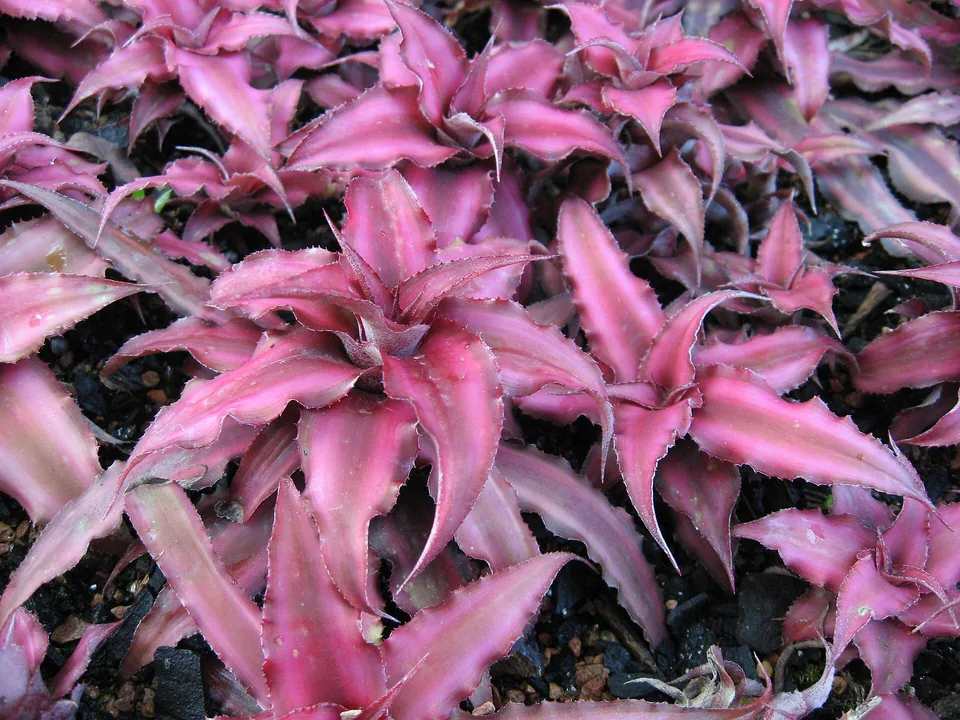

How to Grow and Care for Earth Star
Cryptanthus bivittatus
Written by Emilio Marruso · last checked
Not toxic to cats and dogs, according to the sources · Sources
At a glance
This easygoing bromeliad is happy indoors or in a pot, and it is safe around cats and dogs. Give it dappled light or partial shade with gentle morning and evening sun, and water whenever the soil feels dry to the touch. New plants are easy to get: just divide its little offsets, called pups.
- Sun
Dappled light or partial shade; morning and evening sun only, midday sun bleaches the leaves
What the sources say (2)
Light: Dappled sunlight to partial shade; morning and evening sun is best, midday sun is too strong
Light: Dappled Sunlight (Shade through upper canopy all day) Partial Shade (Direct sunlight only part of the day, 2-6 hours)
— Cryptanthus bivittatus (Dwarf Rose-Stripe Star, Earth Star, Earth Star Bromeliad, Green earth star, Pink Starlite, Red Star Bromeliad, Starfish plant, Star Plant, Vary-leaf star) | North Carolina Extension Gardener Plant Toolbox [1] Morning and evening sun is best; the midday sun is too strong for these plants.
— Cryptanthus bivittatus (Dwarf Rose-Stripe Star, Earth Star, Earth Star Bromeliad, Green earth star, Pink Starlite, Red Star Bromeliad, Starfish plant, Star Plant, Vary-leaf star) | North Carolina Extension Gardener Plant Toolbox [1] - Water
Water at the roots when the soil is dry to the touch
What the sources say (4)
Watering: Water when the soil is dry to the touch
Watering should be done when the soil is dry to the touch.
— Cryptanthus bivittatus (Dwarf Rose-Stripe Star, Earth Star, Earth Star Bromeliad, Green earth star, Pink Starlite, Red Star Bromeliad, Starfish plant, Star Plant, Vary-leaf star) | North Carolina Extension Gardener Plant Toolbox [1] Watering notes: Water at the root zone; in hotter climates regular watering is best
hotter climates: When grown in hotter climates, regular watering is best.
— Cryptanthus bivittatus (Dwarf Rose-Stripe Star, Earth Star, Earth Star Bromeliad, Green earth star, Pink Starlite, Red Star Bromeliad, Starfish plant, Star Plant, Vary-leaf star) | North Carolina Extension Gardener Plant Toolbox [1] It requires well-drained, humus-rich soil and is watered at the root zone.
— Cryptanthus bivittatus (Dwarf Rose-Stripe Star, Earth Star, Earth Star Bromeliad, Green earth star, Pink Starlite, Red Star Bromeliad, Starfish plant, Star Plant, Vary-leaf star) | North Carolina Extension Gardener Plant Toolbox [1] When grown in hotter climates, regular watering is best.
— Cryptanthus bivittatus (Dwarf Rose-Stripe Star, Earth Star, Earth Star Bromeliad, Green earth star, Pink Starlite, Red Star Bromeliad, Starfish plant, Star Plant, Vary-leaf star) | North Carolina Extension Gardener Plant Toolbox [1] - Cold
Survives winters down to 10 °F (−12.2 °C)
Hardy in cold winters · USDA 8a · RHS H5 · Z8
What the sources say (2)
Hardiness, coldest zone: 8a [winter low −12.2 to −9.4 °C (10 to 15 °F)]
USDA Plant Hardiness Zone: 8a, 8b, 9a, 9b, 10a, 10b, 11a, 11b
— Cryptanthus bivittatus (Dwarf Rose-Stripe Star, Earth Star, Earth Star Bromeliad, Green earth star, Pink Starlite, Red Star Bromeliad, Starfish plant, Star Plant, Vary-leaf star) | North Carolina Extension Gardener Plant Toolbox [1] Hardiness, warmest zone: 11b [winter low 7.2 to 10 °C (45 to 50 °F)]
USDA Plant Hardiness Zone: 8a, 8b, 9a, 9b, 10a, 10b, 11a, 11b
— Cryptanthus bivittatus (Dwarf Rose-Stripe Star, Earth Star, Earth Star Bromeliad, Green earth star, Pink Starlite, Red Star Bromeliad, Starfish plant, Star Plant, Vary-leaf star) | North Carolina Extension Gardener Plant Toolbox [1] - Soil
Acidic soil, pH 6.0 or lower
What the sources say (1)
Soil pH, maximum: 6.0
Soil pH: Acid (<6.0) Soil Drainage: Good Drainage
— Cryptanthus bivittatus (Dwarf Rose-Stripe Star, Earth Star, Earth Star Bromeliad, Green earth star, Pink Starlite, Red Star Bromeliad, Starfish plant, Star Plant, Vary-leaf star) | North Carolina Extension Gardener Plant Toolbox [1] - Pests
Watch for mealybugs, scale and mites
What the sources say (1)
Pests: mealybugs, scale, mites
the usual greenhouse pests (mealybugs, scale, mites) can be an issue
— Cryptanthus bivittatus (Dwarf Rose-Stripe Star, Earth Star, Earth Star Bromeliad, Green earth star, Pink Starlite, Red Star Bromeliad, Starfish plant, Star Plant, Vary-leaf star) | North Carolina Extension Gardener Plant Toolbox [1] - Propagation
Divide the pups, or grow it from seed
What the sources say (2)
Propagation: Division of offsets (pups); seed
Propagate this plant by dividing its offsets, commonly called pups.
— Cryptanthus bivittatus (Dwarf Rose-Stripe Star, Earth Star, Earth Star Bromeliad, Green earth star, Pink Starlite, Red Star Bromeliad, Starfish plant, Star Plant, Vary-leaf star) | North Carolina Extension Gardener Plant Toolbox [1] Recommended Propagation Strategy: Division Seed
— Cryptanthus bivittatus (Dwarf Rose-Stripe Star, Earth Star, Earth Star Bromeliad, Green earth star, Pink Starlite, Red Star Bromeliad, Starfish plant, Star Plant, Vary-leaf star) | North Carolina Extension Gardener Plant Toolbox [1] - Containers
Grows well in pots and indoors
What the sources say (2)
In containers: Yes
Landscape Location: Container Houseplants Patio
— Cryptanthus bivittatus (Dwarf Rose-Stripe Star, Earth Star, Earth Star Bromeliad, Green earth star, Pink Starlite, Red Star Bromeliad, Starfish plant, Star Plant, Vary-leaf star) | North Carolina Extension Gardener Plant Toolbox [1] Indoors: Yes
now cultivated as a houseplant or conservatory plant throughout the world
— Cryptanthus bivittatus (Dwarf Rose-Stripe Star, Earth Star, Earth Star Bromeliad, Green earth star, Pink Starlite, Red Star Bromeliad, Starfish plant, Star Plant, Vary-leaf star) | North Carolina Extension Gardener Plant Toolbox [1] - Safety
Not toxic to cats or dogs
Overview
Earth star is a terrestrial bromeliad native to Brazil, grown as a houseplant for its showy foliage. [1] It is watered at the root zone when the soil is dry to the touch. [1]
Earth Star care
How to water Earth Star
Watering
Water when the soil is dry to the touch
What the sources say (1)
Watering should be done when the soil is dry to the touch.Watering notes
Water at the root zone; in hotter climates regular watering is best
What each source says
hotter climates: Regular watering is best
What the sources say (3)
hotter climates: When grown in hotter climates, regular watering is best.It requires well-drained, humus-rich soil and is watered at the root zone.When grown in hotter climates, regular watering is best.How much light Earth Star needs
Dappled sunlight to partial shade; morning and evening sun is best, midday sun is too strong
What the sources say (2)
Light:
Dappled Sunlight (Shade through upper canopy all day)
Partial Shade (Direct sunlight only part of the day, 2-6 hours)Morning and evening sun is best; the midday sun is too strong for these plants.How much cold Earth Star can take
Hardiness, coldest zone
8a [winter low −12.2 to −9.4 °C (10 to 15 °F)]
What the sources say (1)
USDA Plant Hardiness Zone:
8a, 8b, 9a, 9b, 10a, 10b, 11a, 11bHardiness, warmest zone
11b [winter low 7.2 to 10 °C (45 to 50 °F)]
What the sources say (1)
USDA Plant Hardiness Zone:
8a, 8b, 9a, 9b, 10a, 10b, 11a, 11bBest soil for Earth Star
6.0
What the sources say (1)
Soil pH:
Acid (<6.0)
Soil Drainage:
Good DrainageWhere to grow Earth Star
Indoors
Yes
What the sources say (1)
now cultivated as a houseplant or conservatory plant throughout the worldIn containers
Yes
What the sources say (1)
Landscape Location:
Container
Houseplants
PatioHow to propagate Earth Star
Division of offsets (pups); seed
What the sources say (2)
Propagate this plant by dividing its offsets, commonly called pups.Recommended Propagation Strategy:
Division
SeedHow to grow Earth Star
The plant
Life cycle
perennial
What the sources say (1)
Genus:
Cryptanthus
Species:
bivittatus
Family:
Bromeliaceae
Uses (Ethnobotany):
Houseplant or Terrarium
Life Cycle:
PerennialFamily
Bromeliaceae
What the sources say (1)
Genus:
Cryptanthus
Species:
bivittatus
Family:
Bromeliaceae
Uses (Ethnobotany):
Houseplant or Terrarium
Life Cycle:
PerennialPests and diseases
Pests
mealybugs, scale, mites
What the sources say (1)
the usual greenhouse pests (mealybugs, scale, mites) can be an issueEarth Star pests and problems
Greenhouse pests
Symptom: Mealybugs, scale and mites can be an issue.
What the sources say (1)
the usual greenhouse pests (mealybugs, scale, mites) can be an issue
— Cryptanthus bivittatus (Dwarf Rose-Stripe Star, Earth Star, Earth Star Bromeliad, Green earth star, Pink Starlite, Red Star Bromeliad, Starfish plant, Star Plant, Vary-leaf star) | North Carolina Extension Gardener Plant Toolbox [1] Too much sun
Symptom: Foliage heats up, leaves bleach and shrivel.
What to do: Morning and evening sun is best; midday sun is too strong.
What the sources say (1)
too much sun can cause the foliage to heat up, causing the leaves to bleach and shrivel
— Cryptanthus bivittatus (Dwarf Rose-Stripe Star, Earth Star, Earth Star Bromeliad, Green earth star, Pink Starlite, Red Star Bromeliad, Starfish plant, Star Plant, Vary-leaf star) | North Carolina Extension Gardener Plant Toolbox [1]
Remedies
Each remedy shows what official sources say about it; traditional remedies without an official source are marked as such. Harmful ones are listed so you know to avoid them.
Treating the plant
mealybugs
swabbing with rubbing alcohol Works
Test the solution out on a small part of the plant 1 to 2 days beforehand to make sure it does not cause leaf burn (phytotoxicity).
— ipm.ucanr.edu [6] How: Swab the mealybugs with rubbing alcohol; on small houseplant infestations dab a 70% or weaker isopropyl alcohol solution with a cotton swab.
They can usually be controlled through manual removal or swabbing with rubbing alcohol.
— bromeliads.info [5] What the evidence says On small infestations on houseplants, a 70% or less solution of isopropyl (rubbing) alcohol in water may be dabbed directly on mealybugs with a cotton swab to kill them or remove them.
— ipm.ucanr.edu [6] insecticidal soap spray Partly works
Be sure to test for phytotoxicity of these materials prior to treatment as well.
— ipm.ucanr.edu [6] How: Apply insecticidal soap directly on the immature mealybugs.
Insecticidal soaps, horticultural oils, and neem oil applied directly to immature mealybugs can reduce numbers.
— ipm.ucanr.edu [6] What the evidence says Insecticidal soaps, horticultural oils, and neem oil applied directly to immature mealybugs can reduce numbers.
— ipm.ucanr.edu [6] neem oil spray Partly works
Be sure to test for phytotoxicity of these materials prior to treatment as well.
— ipm.ucanr.edu [6] How: Apply neem oil directly on the immature mealybugs.
Insecticidal soaps, horticultural oils, and neem oil applied directly to immature mealybugs can reduce numbers.
— ipm.ucanr.edu [6] What the evidence says Insecticidal soaps, horticultural oils, and neem oil applied directly to immature mealybugs can reduce numbers.
— ipm.ucanr.edu [6]
mealybugs and scale
manual removal Not verified
Traditional remedy, not verified by an official source.
How: Remove the insects by hand.
spider mites
strong water spray in the shower Partly works
How: Put the plant in the bathtub or shower and spray with a strong but fine mist of water, washing the mites off frequently.
It is easier to just put the houseplant in the bathtub or shower and spray with a strong, but fine mist of water.
— swyg.nmsu.edu [7] What the evidence says a handheld sprayer filled with water will work. If you wish, you can add insecticidal soap to the water to enhance its effect. Washing the spider mites from the plant frequently will reduce their numbers and their damage.
— swyg.nmsu.edu [7] insecticidal soap spray Official source, not independently tested
If you can delay, apply the insecticidal soap to a small portion of the plant to check for phytotoxicity
— swyg.nmsu.edu [7] How: Spray the plant with insecticidal soap, on the top and bottom of leaves and stems.
If the plants cannot be moved to the bathtub or shower, you can spray the plant with insecticidal soap.
— swyg.nmsu.edu [7]
Is Earth Star poisonous?
Reported by the source, quoted verbatim. This is not medical or veterinary advice: if a person or an animal may have eaten this plant, contact a poison control centre or a veterinarian.
Indicative values
Values from a secondary source, not checked word for word like the rest of this page. Use them as a starting point.
- Hours of sun
- 4-6 hoursIndicative value, adapt it to your climate · Secondary source
- Drought tolerant
- yesIndicative value, adapt it to your climate · Secondary source
- Soil
- Acidic, Well-drainedIndicative value, adapt it to your climate · Secondary source
- Growth rate
- ModerateIndicative value, adapt it to your climate · Secondary source
- Pruning
- March, AprilIndicative value, adapt it to your climate · Secondary source
Similar plants
- Zebra Plant Cryptanthus zonatus
- Amazonian Zebra Plant Aechmea chantinii
- Flaming Sword Vriesea splendens
- Spanish moss Tillandsia usneoides
- Urn Plant Aechmea fasciata
- Air Plant Tillandsia ionantha
- Air Plant Tillandsia xerographica
- Pineapple Ananas comosus
Sources
Every value above is quoted from these documents. Links lead to the original publisher.
- Cryptanthus bivittatus (Dwarf Rose-Stripe Star, Earth Star, Earth Star Bromeliad, Green earth star, Pink Starlite, Red Star Bromeliad, Starfish plant, Star Plant, Vary-leaf star) | North Carolina Extension Gardener Plant Toolbox · plants.ces.ncsu.edu, consulted
- Twinkle, twinkle, little earth star - UF/IFAS Extension Charlotte County · blogs.ifas.ufl.edu, consulted
- Vary-leaf star - Cryptanthus bivittatus | North Carolina Extension Gardener Plant Toolbox · plants.ces.ncsu.edu, consulted
- Red Star Bromeliad - Cryptanthus bivittatus | North Carolina Extension Gardener Plant Toolbox · plants.ces.ncsu.edu, consulted
- bromeliads.info · bromeliads.info
- ipm.ucanr.edu · ipm.ucanr.edu
- swyg.nmsu.edu · swyg.nmsu.edu
Written by Emilio Marruso · last checked