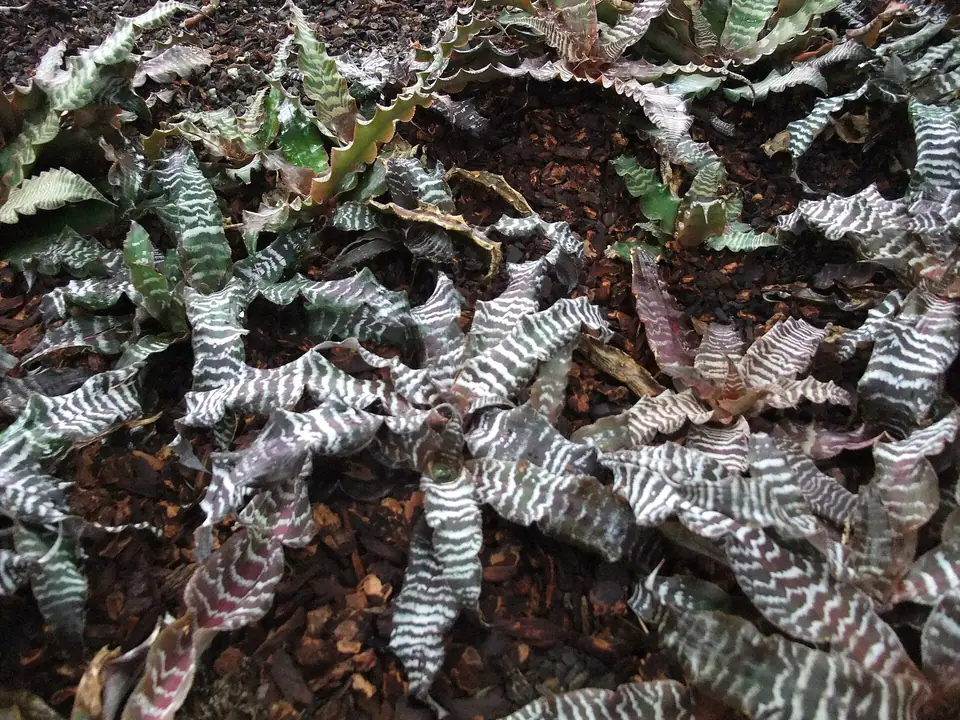
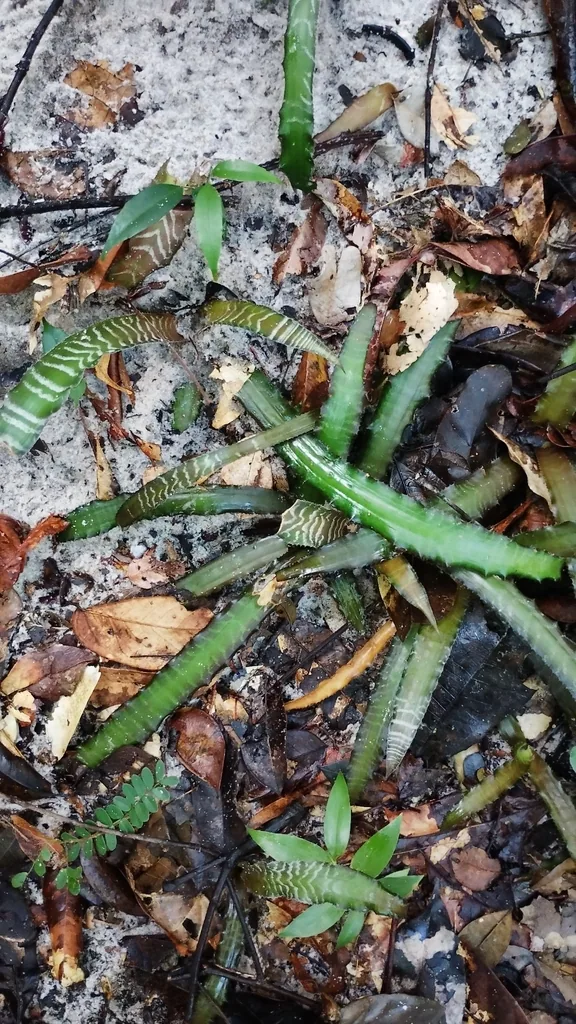

How to Grow and Care for Zebra Plant
Cryptanthus zonatus
Written by Emilio Marruso · last checked
Not toxic to cats and dogs, according to the sources · Sources
At a glance
This compact bromeliad makes a perfect houseplant: it stays 6 inches to 1 foot tall and grows happily in a pot indoors. Give it bright indirect light, a well-drained potting mix and a little liquid feed from spring to fall. It's non-toxic for cats and dogs, and you can make new plants simply by dividing it.
- Sun
Bright indirect light
What the sources say (1)
Light: Bright indirect light
Provide it with bright indirect light for the best leaf color.
— Cryptanthus zonatus (Crypanthus, Earth Star, Pheasant Plant, Star Fish Plant, Zebra Plant) | North Carolina Extension Gardener Plant Toolbox [1] - Cold
Survives winters down to 30 °F (−1.1 °C)
Half hardy: mild winters or an unheated greenhouse · USDA 10a · RHS H3 · Z10
What the sources say (2)
Hardiness, coldest zone: 10a [winter low −1.1 to 1.7 °C (30 to 35 °F)]
USDA Plant Hardiness Zone: 10a, 10b, 11a, 11b, 12a, 12b
— Cryptanthus zonatus (Crypanthus, Earth Star, Pheasant Plant, Star Fish Plant, Zebra Plant) | North Carolina Extension Gardener Plant Toolbox [1] Hardiness, warmest zone: 12b [winter low 12.8 to 15.6 °C (55 to 60 °F)]
USDA Plant Hardiness Zone: 10a, 10b, 11a, 11b, 12a, 12b
— Cryptanthus zonatus (Crypanthus, Earth Star, Pheasant Plant, Star Fish Plant, Zebra Plant) | North Carolina Extension Gardener Plant Toolbox [1] - Soil
Use a potting mix that drains well
What the sources say (1)
Watering notes: Use a potting mixture with good drainage
For potting, use a mixture with good drainage. Warmth and humidity are essential.
— Cryptanthus zonatus (Crypanthus, Earth Star, Pheasant Plant, Star Fish Plant, Zebra Plant) | North Carolina Extension Gardener Plant Toolbox [1] - Feeding
Balanced liquid feed at half strength every 2–4 weeks, mid-spring to early fall
What the sources say (5)
When: From spring to autumn (mid-spring through early fall)
For ground-rooting (terrestrial) bromeliads , such as pineapples ( Ananas comosus var. variegatus ) and Cryptanthus – apply a half-strength balanced liquid feed to the compost every two to four weeks, from spring to autumn
— [3] They cannot be mounted and need to be grown in rich, organic soil. Allow the mixture to dry slightly between watering and fertilize monthly from mid-spring through early fall.
— [4] How often: Every 2 to 4 weeks, or monthly
For ground-rooting (terrestrial) bromeliads , such as pineapples ( Ananas comosus var. variegatus ) and Cryptanthus – apply a half-strength balanced liquid feed to the compost every two to four weeks, from spring to autumn
— [3] They cannot be mounted and need to be grown in rich, organic soil. Allow the mixture to dry slightly between watering and fertilize monthly from mid-spring through early fall.
— [4] Mineral fertilizers: Balanced liquid feed at half strength, applied to the potting mix
For ground-rooting (terrestrial) bromeliads , such as pineapples ( Ananas comosus var. variegatus ) and Cryptanthus – apply a half-strength balanced liquid feed to the compost every two to four weeks, from spring to autumn
— [3] - Pests
Now and then mealybugs and scale
What the sources say (1)
Pests: mealybugs, scale
Insects, Diseases, and Other Plant Problems; Mealybugs and scale are occasional problems.
— Cryptanthus zonatus (Crypanthus, Earth Star, Pheasant Plant, Star Fish Plant, Zebra Plant) | North Carolina Extension Gardener Plant Toolbox [1] - Size
6 in to 1 ft tall, 1 ft to 1 ft 4 in wide
What the sources say (2)
Mature height: 15.24-30.48 cm (6 in-1 ft)
Height: 0 ft. 6 in. - 1 ft. 0 in. Width: 1 ft. 0 in. - 1 ft. 4 in.
— Cryptanthus zonatus (Crypanthus, Earth Star, Pheasant Plant, Star Fish Plant, Zebra Plant) | North Carolina Extension Gardener Plant Toolbox [1] Mature width: 30.48-40.64 cm (1 ft-1 ft 4 in)
Height: 0 ft. 6 in. - 1 ft. 0 in. Width: 1 ft. 0 in. - 1 ft. 4 in.
— Cryptanthus zonatus (Crypanthus, Earth Star, Pheasant Plant, Star Fish Plant, Zebra Plant) | North Carolina Extension Gardener Plant Toolbox [1] - Propagation
Make new plants by dividing it
What the sources say (1)
Propagation: Division
Recommended Propagation Strategy: Division Country Or Region Of Origin: Brazil
— Cryptanthus zonatus (Crypanthus, Earth Star, Pheasant Plant, Star Fish Plant, Zebra Plant) | North Carolina Extension Gardener Plant Toolbox [1] - Containers
Grows well in pots, indoors too
What the sources say (2)
In containers: Yes
#humidity tolerant #groundcover #non-toxic for cats #non-toxic for horses #non-toxic for dogs #container plant
— Cryptanthus zonatus (Crypanthus, Earth Star, Pheasant Plant, Star Fish Plant, Zebra Plant) | North Carolina Extension Gardener Plant Toolbox [1] Indoors: Yes
Zebra plant is a tropical, terrestrial, evergreen herbaceous perennial in the pineapple family (Bromeliaceae) grown as a house plant in NC.
— Cryptanthus zonatus (Crypanthus, Earth Star, Pheasant Plant, Star Fish Plant, Zebra Plant) | North Carolina Extension Gardener Plant Toolbox [1] - Safety
Non-toxic for cats, dogs and horses
Overview
A tropical evergreen perennial from Brazil grown as a house plant. [1] It needs bright indirect light, warmth and humidity, and too much sun bleaches the leaves. [1] It is listed as non-toxic for cats, horses and dogs. [1]
This record is incomplete: the sources we read do not cover every field yet.
Not yet covered by our sources: Watering
Zebra Plant care
How to water Zebra Plant
Watering
Not stated in the sources we read.
Watering notes
Use a potting mixture with good drainage
What the sources say (1)
For potting, use a mixture with good drainage. Warmth and humidity are essential.How much light Zebra Plant needs
Bright indirect light
What the sources say (1)
Provide it with bright indirect light for the best leaf color.How much cold Zebra Plant can take
Hardiness, coldest zone
10a [winter low −1.1 to 1.7 °C (30 to 35 °F)]
What the sources say (1)
USDA Plant Hardiness Zone:
10a, 10b, 11a, 11b, 12a, 12bHardiness, warmest zone
12b [winter low 12.8 to 15.6 °C (55 to 60 °F)]
What the sources say (1)
USDA Plant Hardiness Zone:
10a, 10b, 11a, 11b, 12a, 12bWhere to grow Zebra Plant
Indoors
Yes
What the sources say (1)
Zebra plant is a tropical, terrestrial, evergreen herbaceous perennial in the pineapple family (Bromeliaceae) grown as a house plant in NC.In containers
Yes
What the sources say (1)
#humidity tolerant #groundcover #non-toxic for cats #non-toxic for horses #non-toxic for dogs #container plantHow to propagate Zebra Plant
Division
What the sources say (1)
Recommended Propagation Strategy:
Division
Country Or Region Of Origin:
BrazilHow to grow Zebra Plant
The plant
Life cycle
perennial
What the sources say (1)
Genus: Cryptanthus Species: zonatus Family: Bromeliaceae Life Cycle: PerennialFamily
Bromeliaceae
What the sources say (1)
Genus: Cryptanthus Species: zonatus Family: Bromeliaceae Life Cycle: PerennialMature height
15.24-30.48 cm (6 in-1 ft)
What the sources say (1)
Height: 0 ft. 6 in. - 1 ft. 0 in. Width: 1 ft. 0 in. - 1 ft. 4 in.Mature width
30.48-40.64 cm (1 ft-1 ft 4 in)
What the sources say (1)
Height: 0 ft. 6 in. - 1 ft. 0 in. Width: 1 ft. 0 in. - 1 ft. 4 in.Pests and diseases
Pests
mealybugs, scale
What the sources say (1)
Insects, Diseases, and Other Plant Problems; Mealybugs and scale are occasional problems.Fertilizing
When
From spring to autumn (mid-spring through early fall)
What the sources say (2)
For ground-rooting (terrestrial) bromeliads , such as pineapples ( Ananas comosus var. variegatus ) and Cryptanthus – apply a half-strength balanced liquid feed to the compost every two to four weeks, from spring to autumnThey cannot be mounted and need to be grown in rich, organic soil. Allow the mixture to dry slightly between watering and fertilize monthly from mid-spring through early fall.How often
Every 2 to 4 weeks, or monthly
What the sources say (2)
For ground-rooting (terrestrial) bromeliads , such as pineapples ( Ananas comosus var. variegatus ) and Cryptanthus – apply a half-strength balanced liquid feed to the compost every two to four weeks, from spring to autumnThey cannot be mounted and need to be grown in rich, organic soil. Allow the mixture to dry slightly between watering and fertilize monthly from mid-spring through early fall.Mineral fertilizers
Balanced liquid feed at half strength, applied to the potting mix
What the sources say (1)
For ground-rooting (terrestrial) bromeliads , such as pineapples ( Ananas comosus var. variegatus ) and Cryptanthus – apply a half-strength balanced liquid feed to the compost every two to four weeks, from spring to autumnZebra Plant pests and problems
Mealybugs and scale
Symptom: Occasional insect problems
What to do: No management given in the source.
What the sources say (1)
Insects, Diseases, and Other Plant Problems; Mealybugs and scale are occasional problems.
— Cryptanthus zonatus (Crypanthus, Earth Star, Pheasant Plant, Star Fish Plant, Zebra Plant) | North Carolina Extension Gardener Plant Toolbox [1]
Remedies
Each remedy shows what official sources say about it; traditional remedies without an official source are marked as such. Harmful ones are listed so you know to avoid them.
Treating the plant
mealybugs
cotton swab dipped in alcohol Partly works
Be careful not to get the alcohol on the leaves of the plants as they may be damaged.
— extension.umd.edu [5] Make sure to test the soap and alcohol mixtures on a small portion of the plant prior to full application because some plants may be sensitive to soap or alcohol.
— planttalk.colostate.edu [6] How: Dip a cotton swab in household alcohol and dab it on the individual mealybugs; mealybugs treated with alcohol turn light brown.
Dipping a cotton swab in household alcohol and dabbing it on the individual mealybugs can control light infestations.
— extension.umd.edu [5] What the evidence says Dipping a cotton swab in household alcohol and dabbing it on the individual mealybugs can control light infestations.
— extension.umd.edu [5] insecticidal soap spray Official source, not independently tested
Make sure to test the soap and alcohol mixtures on a small portion of the plant prior to full application because some plants may be sensitive to soap or alcohol.
— planttalk.colostate.edu [6] How: For heavy infestations, spray the plants thoroughly with insecticidal soap for indoor plants; multiple applications will most likely be necessary.
For heavy infestations, spray the plants thoroughly with insecticidal soap for indoor plants or a registered houseplant spray.
— extension.umd.edu [5]
scale insects
picking off or rubbing off the scales Official source, not independently tested
How: Pick off individual scales or gently scrub (or rub) the scales loose from the leaves and stems.
One possibility is to pick off individual scales or gently scrub (or rub) the scales loose from the leaves and stems.
— yardandgarden.extension.iastate.edu [7] alcohol-soaked cotton swab Official source, not independently tested
Make sure to test the soap and alcohol mixtures on a small portion of the plant prior to full application because some plants may be sensitive to soap or alcohol.
— planttalk.colostate.edu [6] How: Dab each scale with an alcohol-soaked cotton swab on lightly-infested plants.
Dabbing each scale with an alcohol-soaked cotton swab is another possibility on lightly-infested plants.
— yardandgarden.extension.iastate.edu [7] mild dishwashing detergent solution Official source, not independently tested
How: Use a dilute solution of 1 Tbs of detergent per quart of water, applied with a sprayer or a soft cloth while washing infested leaves and stems.
You can use a mild dishwashing detergent in place of commercial insecticide soaps. Use a dilute solution of 1 Tbs of detergent per quart of water.
— yardandgarden.extension.iastate.edu [7]
Is Zebra Plant poisonous?
Reported by the source, quoted verbatim. This is not medical or veterinary advice: if a person or an animal may have eaten this plant, contact a poison control centre or a veterinarian.
#groundcover #non-toxic for cats #non-toxic for horses #non-toxic for dogs
[1]The source flags the risk for this animal but does not explain why.
Similar plants
- Earth Star Cryptanthus bivittatus
- Air Plant Tillandsia ionantha
- Air Plant Tillandsia xerographica
- Amazonian Zebra Plant Aechmea chantinii
- Flaming Sword Vriesea splendens
- Pineapple Ananas comosus
- Scarlet Star Guzmania lingulata
- Spanish moss Tillandsia usneoides
Sources
Every value above is quoted from these documents. Links lead to the original publisher.
- Cryptanthus zonatus (Crypanthus, Earth Star, Pheasant Plant, Star Fish Plant, Zebra Plant) | North Carolina Extension Gardener Plant Toolbox · plants.ces.ncsu.edu, consulted
- Zebra Plant - Cryptanthus zonatus | North Carolina Extension Gardener Plant Toolbox · plants.ces.ncsu.edu, consulted
- rhs.org.uk · rhs.org.uk
- hgic.clemson.edu · hgic.clemson.edu
- extension.umd.edu · extension.umd.edu
- planttalk.colostate.edu · planttalk.colostate.edu
- yardandgarden.extension.iastate.edu · yardandgarden.extension.iastate.edu
Written by Emilio Marruso · last checked