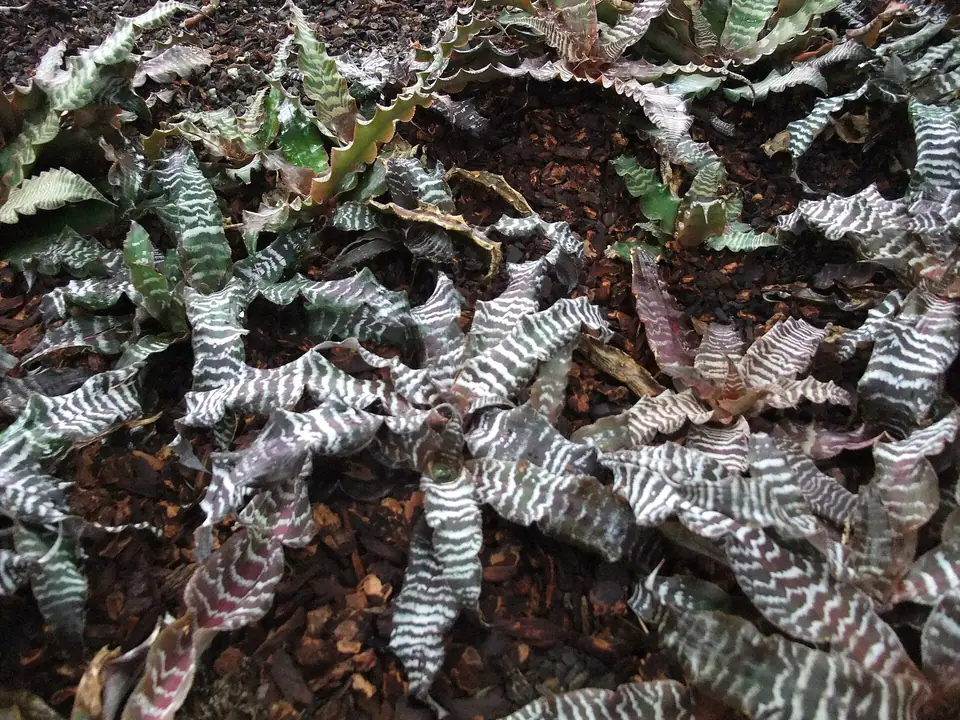
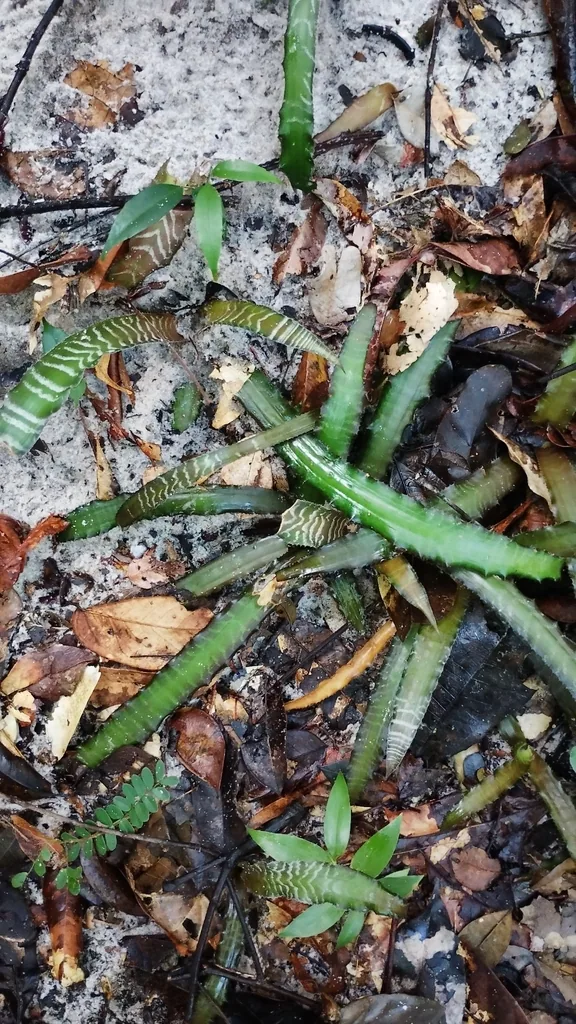

Cómo cultivar y cuidar Zebra Plant
Cryptanthus zonatus
Escrito por Emilio Marruso · última revisión
No tóxica para gatos y perros, según las fuentes · Fuentes
De un vistazo
Esta bromelia compacta es perfecta para interior: mide de 15 a 30 cm de alto y crece feliz en maceta. Dale luz brillante indirecta, un sustrato con buen drenaje y un poco de abono líquido de primavera a otoño. No es tóxica para gatos ni perros, y puedes conseguir plantas nuevas simplemente dividiéndola.
- Sol
Luz brillante indirecta
Qué dicen las fuentes (1)
Luz: Luz indirecta brillante
Provide it with bright indirect light for the best leaf color.
— Cryptanthus zonatus (Crypanthus, Earth Star, Pheasant Plant, Star Fish Plant, Zebra Plant) | North Carolina Extension Gardener Plant Toolbox [1] - Frío
Aguanta inviernos de hasta −1,1 °C (30 °F)
Semirrústica: inviernos suaves o invernadero sin calefacción · USDA 10a · RHS H3 · Z10
Qué dicen las fuentes (2)
Rusticidad, zona más fría: 10a [mínima invernal de −1,1 a 1,7 °C (de 30 a 35 °F)]
USDA Plant Hardiness Zone: 10a, 10b, 11a, 11b, 12a, 12b
— Cryptanthus zonatus (Crypanthus, Earth Star, Pheasant Plant, Star Fish Plant, Zebra Plant) | North Carolina Extension Gardener Plant Toolbox [1] Rusticidad, zona más cálida: 12b [mínima invernal de 12,8 a 15,6 °C (de 55 a 60 °F)]
USDA Plant Hardiness Zone: 10a, 10b, 11a, 11b, 12a, 12b
— Cryptanthus zonatus (Crypanthus, Earth Star, Pheasant Plant, Star Fish Plant, Zebra Plant) | North Carolina Extension Gardener Plant Toolbox [1] - Suelo
Usa un sustrato con buen drenaje
Qué dicen las fuentes (1)
Notas sobre el riego: Usa una mezcla para macetas con buen drenaje
For potting, use a mixture with good drainage. Warmth and humidity are essential.
— Cryptanthus zonatus (Crypanthus, Earth Star, Pheasant Plant, Star Fish Plant, Zebra Plant) | North Carolina Extension Gardener Plant Toolbox [1] - Abonado
Abono líquido equilibrado a media dosis cada 2–4 semanas, de mediados de primavera a principios de otoño
Qué dicen las fuentes (5)
Cuándo: De primavera a otoño (desde mediados de primavera hasta principios de otoño)
For ground-rooting (terrestrial) bromeliads , such as pineapples ( Ananas comosus var. variegatus ) and Cryptanthus – apply a half-strength balanced liquid feed to the compost every two to four weeks, from spring to autumn
— [3] They cannot be mounted and need to be grown in rich, organic soil. Allow the mixture to dry slightly between watering and fertilize monthly from mid-spring through early fall.
— [4] Frecuencia: Cada 2 a 4 semanas, o mensual
For ground-rooting (terrestrial) bromeliads , such as pineapples ( Ananas comosus var. variegatus ) and Cryptanthus – apply a half-strength balanced liquid feed to the compost every two to four weeks, from spring to autumn
— [3] They cannot be mounted and need to be grown in rich, organic soil. Allow the mixture to dry slightly between watering and fertilize monthly from mid-spring through early fall.
— [4] Abonos minerales: Abono líquido equilibrado a media concentración, aplicado a la mezcla para macetas
For ground-rooting (terrestrial) bromeliads , such as pineapples ( Ananas comosus var. variegatus ) and Cryptanthus – apply a half-strength balanced liquid feed to the compost every two to four weeks, from spring to autumn
— [3] - Plagas
De vez en cuando, cochinilla algodonosa y cochinilla
Qué dicen las fuentes (1)
Plagas: cochinillas, escamas
Insects, Diseases, and Other Plant Problems; Mealybugs and scale are occasional problems.
— Cryptanthus zonatus (Crypanthus, Earth Star, Pheasant Plant, Star Fish Plant, Zebra Plant) | North Carolina Extension Gardener Plant Toolbox [1] - Tamaño
De 15 a 30 cm de alto y de 30 a 41 cm de ancho
Qué dicen las fuentes (2)
Altura adulta: 15.24-30.48 cm (6 in-1 ft)
Height: 0 ft. 6 in. - 1 ft. 0 in. Width: 1 ft. 0 in. - 1 ft. 4 in.
— Cryptanthus zonatus (Crypanthus, Earth Star, Pheasant Plant, Star Fish Plant, Zebra Plant) | North Carolina Extension Gardener Plant Toolbox [1] Anchura adulta: 30.48-40.64 cm (1 pie-1 pie 4 pulgadas)
Height: 0 ft. 6 in. - 1 ft. 0 in. Width: 1 ft. 0 in. - 1 ft. 4 in.
— Cryptanthus zonatus (Crypanthus, Earth Star, Pheasant Plant, Star Fish Plant, Zebra Plant) | North Carolina Extension Gardener Plant Toolbox [1] - Multiplicación
Consigue plantas nuevas dividiéndola
Qué dicen las fuentes (1)
Propagación: División.
Recommended Propagation Strategy: Division Country Or Region Of Origin: Brazil
— Cryptanthus zonatus (Crypanthus, Earth Star, Pheasant Plant, Star Fish Plant, Zebra Plant) | North Carolina Extension Gardener Plant Toolbox [1] - Maceta
Crece bien en maceta, también en interior
Qué dicen las fuentes (2)
En maceta: Sí
#humidity tolerant #groundcover #non-toxic for cats #non-toxic for horses #non-toxic for dogs #container plant
— Cryptanthus zonatus (Crypanthus, Earth Star, Pheasant Plant, Star Fish Plant, Zebra Plant) | North Carolina Extension Gardener Plant Toolbox [1] En interior: Sí
Zebra plant is a tropical, terrestrial, evergreen herbaceous perennial in the pineapple family (Bromeliaceae) grown as a house plant in NC.
— Cryptanthus zonatus (Crypanthus, Earth Star, Pheasant Plant, Star Fish Plant, Zebra Plant) | North Carolina Extension Gardener Plant Toolbox [1] - Seguridad
No es tóxica para gatos, perros ni caballos
Resumen
Una perenne tropical siempreverde de Brasil cultivada como planta de interior. [1] Necesita luz indirecta brillante, calor y humedad, y demasiado sol decolora las hojas. [1] Está catalogada como no tóxica para gatos, caballos y perros. [1]
Citado en inglés, como en la fuente.
Esta ficha está incompleta: las fuentes consultadas aún no cubren todos los campos.
Aún no cubierto por nuestras fuentes: Riego
Cuidados
Riego
Riego
No figura en las fuentes consultadas.
Notas sobre el riego
Usa una mezcla para macetas con buen drenaje
Qué dicen las fuentes (1)
For potting, use a mixture with good drainage. Warmth and humidity are essential.Luz
Luz indirecta brillante
Qué dicen las fuentes (1)
Provide it with bright indirect light for the best leaf color.Clima y frío
Rusticidad, zona más fría
10a [mínima invernal de −1,1 a 1,7 °C (de 30 a 35 °F)]
Qué dicen las fuentes (1)
USDA Plant Hardiness Zone:
10a, 10b, 11a, 11b, 12a, 12bRusticidad, zona más cálida
12b [mínima invernal de 12,8 a 15,6 °C (de 55 a 60 °F)]
Qué dicen las fuentes (1)
USDA Plant Hardiness Zone:
10a, 10b, 11a, 11b, 12a, 12bDónde cultivarla
En interior
Sí
Qué dicen las fuentes (1)
Zebra plant is a tropical, terrestrial, evergreen herbaceous perennial in the pineapple family (Bromeliaceae) grown as a house plant in NC.En maceta
Sí
Qué dicen las fuentes (1)
#humidity tolerant #groundcover #non-toxic for cats #non-toxic for horses #non-toxic for dogs #container plantPropagación
División.
Qué dicen las fuentes (1)
Recommended Propagation Strategy:
Division
Country Or Region Of Origin:
BrazilCultivo
La planta
Ciclo de vida
perenne
Qué dicen las fuentes (1)
Genus: Cryptanthus Species: zonatus Family: Bromeliaceae Life Cycle: PerennialFamilia
Bromeliaceae
Qué dicen las fuentes (1)
Genus: Cryptanthus Species: zonatus Family: Bromeliaceae Life Cycle: PerennialAltura adulta
15.24-30.48 cm (6 in-1 ft)
Qué dicen las fuentes (1)
Height: 0 ft. 6 in. - 1 ft. 0 in. Width: 1 ft. 0 in. - 1 ft. 4 in.Anchura adulta
30.48-40.64 cm (1 pie-1 pie 4 pulgadas)
Qué dicen las fuentes (1)
Height: 0 ft. 6 in. - 1 ft. 0 in. Width: 1 ft. 0 in. - 1 ft. 4 in.Plagas y enfermedades
Plagas
cochinillas, escamas
Qué dicen las fuentes (1)
Insects, Diseases, and Other Plant Problems; Mealybugs and scale are occasional problems.Abonado
Cuándo
De primavera a otoño (desde mediados de primavera hasta principios de otoño)
Qué dicen las fuentes (2)
For ground-rooting (terrestrial) bromeliads , such as pineapples ( Ananas comosus var. variegatus ) and Cryptanthus – apply a half-strength balanced liquid feed to the compost every two to four weeks, from spring to autumnThey cannot be mounted and need to be grown in rich, organic soil. Allow the mixture to dry slightly between watering and fertilize monthly from mid-spring through early fall.Frecuencia
Cada 2 a 4 semanas, o mensual
Qué dicen las fuentes (2)
For ground-rooting (terrestrial) bromeliads , such as pineapples ( Ananas comosus var. variegatus ) and Cryptanthus – apply a half-strength balanced liquid feed to the compost every two to four weeks, from spring to autumnThey cannot be mounted and need to be grown in rich, organic soil. Allow the mixture to dry slightly between watering and fertilize monthly from mid-spring through early fall.Abonos minerales
Abono líquido equilibrado a media concentración, aplicado a la mezcla para macetas
Qué dicen las fuentes (1)
For ground-rooting (terrestrial) bromeliads , such as pineapples ( Ananas comosus var. variegatus ) and Cryptanthus – apply a half-strength balanced liquid feed to the compost every two to four weeks, from spring to autumnProblemas
Cochinillas harinosas y cochinillas
Síntoma: Problemas ocasionales de insectos
Qué hacer: No se proporciona manejo en la fuente.
Qué dicen las fuentes (1)
Insects, Diseases, and Other Plant Problems; Mealybugs and scale are occasional problems.
— Cryptanthus zonatus (Crypanthus, Earth Star, Pheasant Plant, Star Fish Plant, Zebra Plant) | North Carolina Extension Gardener Plant Toolbox [1]
Remedios
Cada remedio indica qué dicen las fuentes oficiales; los remedios tradicionales sin fuente oficial aparecen marcados. Los perjudiciales están para que sepas evitarlos.
Cuidar la planta
cochinillas harinosas
hisopo de algodón empapado en alcohol Funciona en parte
Be careful not to get the alcohol on the leaves of the plants as they may be damaged.
— extension.umd.edu [5] Make sure to test the soap and alcohol mixtures on a small portion of the plant prior to full application because some plants may be sensitive to soap or alcohol.
— planttalk.colostate.edu [6] Cómo: Moja un hisopo de algodón en alcohol doméstico y aplícalo sobre las cochinillas individuales; las cochinillas tratadas con alcohol se vuelven de color marrón claro.
Dipping a cotton swab in household alcohol and dabbing it on the individual mealybugs can control light infestations.
— extension.umd.edu [5] Qué dicen las pruebas Dipping a cotton swab in household alcohol and dabbing it on the individual mealybugs can control light infestations.
— extension.umd.edu [5] spray de jabón insecticida Fuente oficial, sin prueba independiente
Make sure to test the soap and alcohol mixtures on a small portion of the plant prior to full application because some plants may be sensitive to soap or alcohol.
— planttalk.colostate.edu [6] Cómo: Para infestaciones graves, rocía las plantas a fondo con jabón insecticida para plantas de interior; probablemente serán necesarias varias aplicaciones.
For heavy infestations, spray the plants thoroughly with insecticidal soap for indoor plants or a registered houseplant spray.
— extension.umd.edu [5]
cochinillas
arrancando o frotando las escamas Fuente oficial, sin prueba independiente
Cómo: Arranca las escamas individuales o frota suavemente (o restriega) las escamas para soltarlas de las hojas y los tallos.
One possibility is to pick off individual scales or gently scrub (or rub) the scales loose from the leaves and stems.
— yardandgarden.extension.iastate.edu [7] hisopo de algodón empapado en alcohol Fuente oficial, sin prueba independiente
Make sure to test the soap and alcohol mixtures on a small portion of the plant prior to full application because some plants may be sensitive to soap or alcohol.
— planttalk.colostate.edu [6] Cómo: Aplica a cada escama un hisopo de algodón empapado en alcohol en plantas con infestación leve.
Dabbing each scale with an alcohol-soaked cotton swab is another possibility on lightly-infested plants.
— yardandgarden.extension.iastate.edu [7] solución de detergente suave para lavar platos Fuente oficial, sin prueba independiente
Cómo: Usa una solución diluida de 1 cucharada de detergente por cuarto de agua, aplicada con un rociador o un paño suave mientras lavas las hojas y tallos infestados.
You can use a mild dishwashing detergent in place of commercial insecticide soaps. Use a dilute solution of 1 Tbs of detergent per quart of water.
— yardandgarden.extension.iastate.edu [7]
Toxicidad
Según la fuente, citada textualmente. No es un consejo médico ni veterinario: si una persona o un animal pudo haber ingerido esta planta, contacta con un centro de toxicología o con un veterinario.
#groundcover #non-toxic for cats #non-toxic for horses #non-toxic for dogs
[1]La fuente señala el riesgo para este animal pero no explica por qué.
Plantas similares
- Earth Star Cryptanthus bivittatus
- Air Plant Tillandsia ionantha
- Pie de gallo Tillandsia xerographica
- Cebra Aechmea chantinii
- Flaming Sword Vriesea splendens
- Piña Ananas comosus
- Flor del incienso en México Guzmania lingulata
- Musgo español Tillandsia usneoides
Fuentes
Cada valor anterior se cita de estos documentos. Los enlaces llevan al editor original.
- Cryptanthus zonatus (Crypanthus, Earth Star, Pheasant Plant, Star Fish Plant, Zebra Plant) | North Carolina Extension Gardener Plant Toolbox · plants.ces.ncsu.edu, consultado
- Zebra Plant - Cryptanthus zonatus | North Carolina Extension Gardener Plant Toolbox · plants.ces.ncsu.edu, consultado
- rhs.org.uk · rhs.org.uk
- hgic.clemson.edu · hgic.clemson.edu
- extension.umd.edu · extension.umd.edu
- planttalk.colostate.edu · planttalk.colostate.edu
- yardandgarden.extension.iastate.edu · yardandgarden.extension.iastate.edu
Escrito por Emilio Marruso · última revisión