
Cómo cultivar y cuidar Flaming Sword
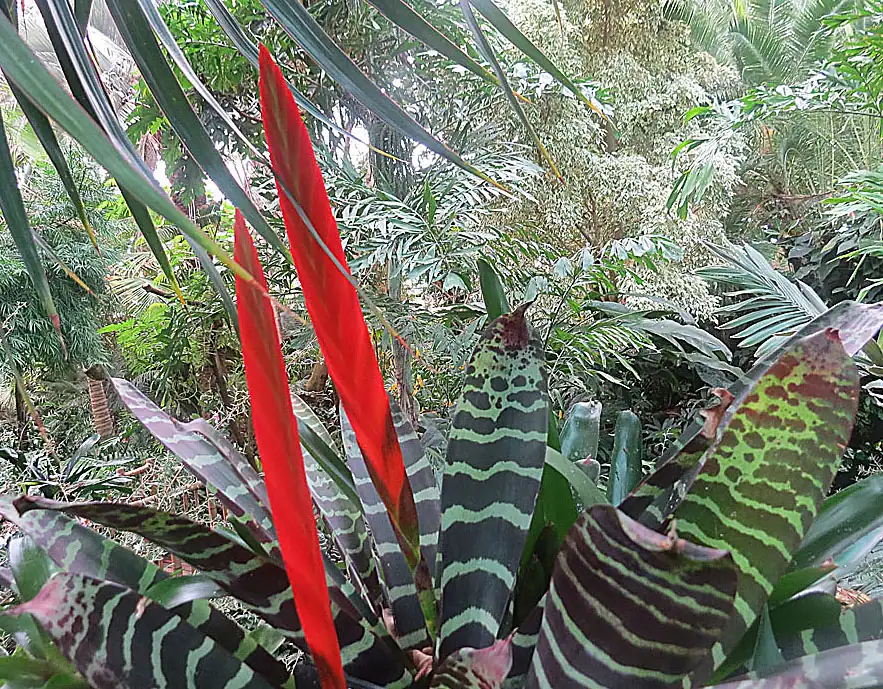
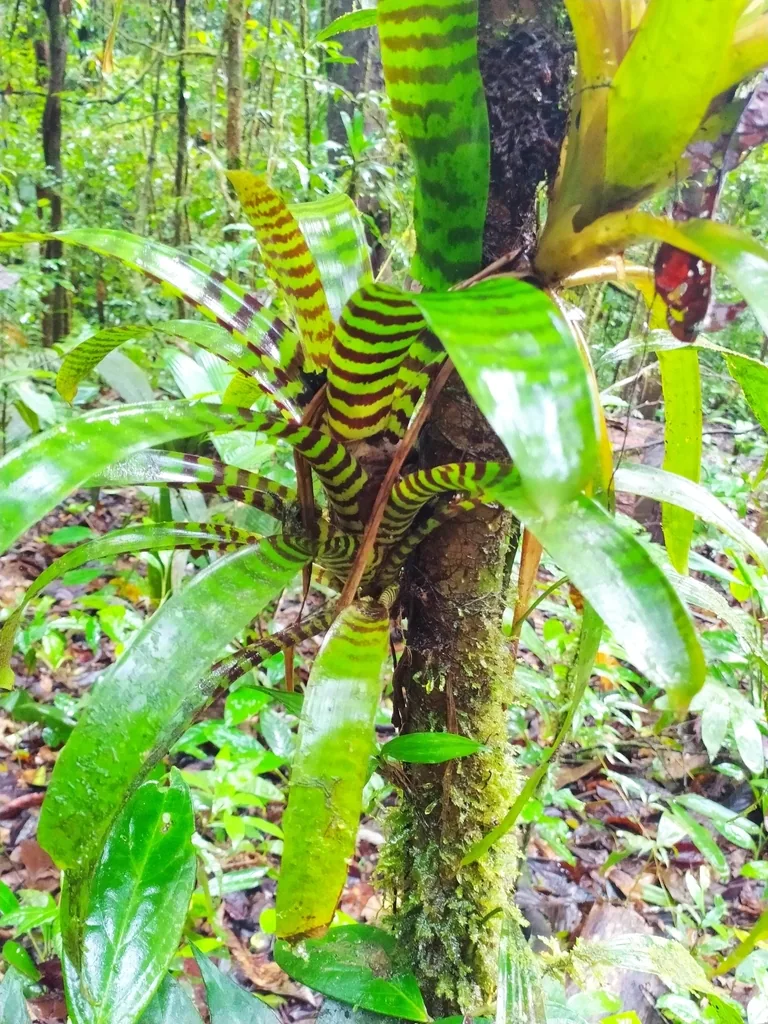
Vriesea splendens
Escrito por Emilio Marruso · última revisión
De un vistazo
Esta bromelia perenne vive feliz en interior o en maceta y lleva un toque tropical a tu casa. Dale luz intensa pero indirecta y mantén su roseta central llena de agua, cambiándola cada 2 semanas. Alcanza 61–91 cm de alto y, con el tiempo, produce hijuelos que puedes usar para conseguir plantas nuevas.
- Sol
Luz intensa e indirecta o semisombra
Qué dicen las fuentes (3)
Luz: Luz brillante e indirecta o semisombra.
The flaming sword prefers bright, indirect sunlight to partial shade and grows best in a potting mix or orchid mix.
— Lutheria splendens (Flaming Sword) | North Carolina Extension Gardener Plant Toolbox [1] Cultural Conditions: Light: Partial Shade (Direct sunlight only part of the day, 2-6 hours)
— Lutheria splendens (Flaming Sword) | North Carolina Extension Gardener Plant Toolbox [1] Light : Bright indirect light year-round, with some direct sun in the winter.
— Bromeliad Plant Growing Specifications - Vriesea Splendens And Hybrids | Bromeliad Plant Care [5] - Riego
Mantén la roseta central llena y cambia el agua cada 2 semanas; deja secar la mitad superior del sustrato
Qué dicen las fuentes (5)
Riego: Riega a través de la copa central; mantén la mezcla para macetas húmeda pero bien drenada y deja que la mitad superior se seque entre riegos.
The plant is watered through its central cup, and the soil should be moist but well-drained. Allow the top half of the potting mix to dry out between waterings.
— Lutheria splendens (Flaming Sword) | North Carolina Extension Gardener Plant Toolbox [1] Vriesea flaming sword info says watering for this plant should be minimal. Soil should be no more than lightly moist and never allowed to completely dry out.
— Flaming Sword Houseplant - Vriesea Flaming Sword Info And Care | Gardening Know How [2] Notas sobre el riego: Mantén la copa central llena de agua; rellena el depósito cada 2 semanas con agua fresca; alta humedad (50%)
As with other bromeliads, the flaming sword houseplant has a cup or tank in the middle of the plant. Keep this cup filled with water.
— Flaming Sword Houseplant - Vriesea Flaming Sword Info And Care | Gardening Know How [2] Water : Keep soil lightly moist at all times, and refill reservoir every 2 weeks with fresh water.
— Bromeliad Plant Growing Specifications - Vriesea Splendens And Hybrids | Bromeliad Plant Care [5] Fifty percent humidity is necessary for optimum performance of Vriesea flaming sword.
— Flaming Sword Houseplant - Vriesea Flaming Sword Info And Care | Gardening Know How [2] - Frío
Aguanta inviernos de hasta −1,1 °C (30 °F)
Semirrústica: inviernos suaves o invernadero sin calefacción · USDA 10a · RHS H3 · Z10
Qué dicen las fuentes (2)
Rusticidad, zona más fría: 10a [mínima invernal de −1,1 a 1,7 °C (de 30 a 35 °F)]
USDA Plant Hardiness Zone: 10a, 10b, 11a, 11b, 12a, 12b
— Lutheria splendens (Flaming Sword) | North Carolina Extension Gardener Plant Toolbox [1] Rusticidad, zona más cálida: 12b [mínima invernal de 12,8 a 15,6 °C (de 55 a 60 °F)]
USDA Plant Hardiness Zone: 10a, 10b, 11a, 11b, 12a, 12b
— Lutheria splendens (Flaming Sword) | North Carolina Extension Gardener Plant Toolbox [1] - Suelo
Sustrato bien drenado con pH no superior a 6,0
Qué dicen las fuentes (1)
pH del suelo, máximo: 6.0
Soil Texture: Loam (Silt) Soil pH: Acid (<6.0) Soil Drainage: Good Drainage Moist Occasionally Dry
— Lutheria splendens (Flaming Sword) | North Carolina Extension Gardener Plant Toolbox [1] - Plagas
Vigila la cochinilla y la cochinilla algodonosa; también puede sufrir manchas en las hojas y podredumbre blanda
Qué dicen las fuentes (2)
Plagas: Cochinillas, cochinillas harinosas
This plant may be susceptible to scale and mealybugs. Leaf spots and bacterial soft rot can occur.
— Lutheria splendens (Flaming Sword) | North Carolina Extension Gardener Plant Toolbox [1] Enfermedades: Manchas foliares, pudrición blanda bacteriana
This plant may be susceptible to scale and mealybugs. Leaf spots and bacterial soft rot can occur.
— Lutheria splendens (Flaming Sword) | North Carolina Extension Gardener Plant Toolbox [1] - Tamaño
61–91 cm de alto y 46–61 cm de ancho
Qué dicen las fuentes (2)
Altura adulta: 61-91 cm (2-3 pies)
The plant can reach up to about 2 to 3 feet tall and 1.5 to 2 feet wide.
— Lutheria splendens (Flaming Sword) | North Carolina Extension Gardener Plant Toolbox [1] Anchura adulta: 46-61 cm (1.5-2 pies)
The plant can reach up to about 2 to 3 feet tall and 1.5 to 2 feet wide.
— Lutheria splendens (Flaming Sword) | North Carolina Extension Gardener Plant Toolbox [1] - Multiplicación
Más fácil con hijuelos o por división; la semilla no es fiable
Qué dicen las fuentes (2)
Propagación: Hijuelos (pups); división; semilla (poco fiable)
Propagation of the flaming sword can be done by using the seed, but this method is unreliable. It is much easier to propagate the offsets or pups that the parent plant produces at the base or center of its rosette.
— Lutheria splendens (Flaming Sword) | North Carolina Extension Gardener Plant Toolbox [1] Uses (Ethnobotany): Used as a medicine and for ornamental purposes. Life Cycle: Perennial Recommended Propagation Strategy: Division
— Lutheria splendens (Flaming Sword) | North Carolina Extension Gardener Plant Toolbox [1] - Maceta
Crece bien en maceta, también en interior
Qué dicen las fuentes (3)
En maceta: Sí
The flaming sword is frequently used as a container plant and is often seen at indoor business sites.
— Lutheria splendens (Flaming Sword) | North Carolina Extension Gardener Plant Toolbox [1] En interior: Sí
The flaming sword is frequently used as a container plant and is often seen at indoor business sites.
— Lutheria splendens (Flaming Sword) | North Carolina Extension Gardener Plant Toolbox [1] The flaming sword houseplant, Vriesea splendens , is one of the most common bromeliads used for indoor decoration and is one of the showiest.
— Flaming Sword Houseplant - Vriesea Flaming Sword Info And Care | Gardening Know How [2]
Resumen
La espada flamígera es una bromelia perenne epífita originaria de las selvas tropicales desde el este de Colombia hasta Trinidad y Tobago. [1] Prefiere luz brillante e indirecta o semisombra y se riega a través de su copa central. [1] Se propaga principalmente a partir de los hijuelos (pups) que produce la planta madre; la planta madre muere después de la floración. [1]
Citado en inglés, como en la fuente.
Cuidados
Riego
Riego
Riega a través de la copa central; mantén la mezcla para macetas húmeda pero bien drenada y deja que la mitad superior se seque entre riegos.
Qué dicen las fuentes (2)
The plant is watered through its central cup, and the soil should be moist but well-drained. Allow the top half of the potting mix to dry out between waterings.Vriesea flaming sword info says watering for this plant should be minimal. Soil should be no more than lightly moist and never allowed to completely dry out.Notas sobre el riego
Mantén la copa central llena de agua; rellena el depósito cada 2 semanas con agua fresca; alta humedad (50%)
Qué dicen las fuentes (3)
As with other bromeliads, the flaming sword houseplant has a cup or tank in the middle of the plant. Keep this cup filled with water.Water : Keep soil lightly moist at all times, and refill reservoir every 2 weeks with fresh water.Fifty percent humidity is necessary for optimum performance of Vriesea flaming sword.Luz
Luz brillante e indirecta o semisombra.
Qué dicen las fuentes (3)
The flaming sword prefers bright, indirect sunlight to partial shade and grows best in a potting mix or orchid mix.Cultural Conditions: Light: Partial Shade (Direct sunlight only part of the day, 2-6 hours)Light : Bright indirect light year-round, with some direct sun in the winter.Clima y frío
Rusticidad, zona más fría
10a [mínima invernal de −1,1 a 1,7 °C (de 30 a 35 °F)]
Qué dicen las fuentes (1)
USDA Plant Hardiness Zone: 10a, 10b, 11a, 11b, 12a, 12bRusticidad, zona más cálida
12b [mínima invernal de 12,8 a 15,6 °C (de 55 a 60 °F)]
Qué dicen las fuentes (1)
USDA Plant Hardiness Zone: 10a, 10b, 11a, 11b, 12a, 12bSuelo
6.0
Qué dicen las fuentes (1)
Soil Texture: Loam (Silt) Soil pH: Acid (<6.0) Soil Drainage: Good Drainage Moist Occasionally DryDónde cultivarla
En interior
Sí
Qué dicen las fuentes (2)
The flaming sword is frequently used as a container plant and is often seen at indoor business sites.The flaming sword houseplant, Vriesea splendens , is one of the most common bromeliads used for indoor decoration and is one of the showiest.En maceta
Sí
Qué dicen las fuentes (1)
The flaming sword is frequently used as a container plant and is often seen at indoor business sites.Propagación
Hijuelos (pups); división; semilla (poco fiable)
Qué dicen las fuentes (2)
Propagation of the flaming sword can be done by using the seed, but this method is unreliable. It is much easier to propagate the offsets or pups that the parent plant produces at the base or center of its rosette.Uses (Ethnobotany): Used as a medicine and for ornamental purposes. Life Cycle: Perennial Recommended Propagation Strategy: DivisionCultivo
La planta
Ciclo de vida
perenne
Qué dicen las fuentes (1)
The flaming sword is an epiphytic herbaceous perennial that is native to the tropical rain forests of Eastern Colombia to Trinidad and Tobago.Familia
Bromeliaceae
Qué dicen las fuentes (1)
It is a member of the pineapple family (Bromeliaceae). The genus name honors Harry E. Luther, an American botanist and bromeliad expert.Altura adulta
61-91 cm (2-3 pies)
Qué dicen las fuentes (1)
The plant can reach up to about 2 to 3 feet tall and 1.5 to 2 feet wide.Anchura adulta
46-61 cm (1.5-2 pies)
Qué dicen las fuentes (1)
The plant can reach up to about 2 to 3 feet tall and 1.5 to 2 feet wide.Plagas y enfermedades
Plagas
Cochinillas, cochinillas harinosas
Qué dicen las fuentes (1)
This plant may be susceptible to scale and mealybugs. Leaf spots and bacterial soft rot can occur.Enfermedades
Manchas foliares, pudrición blanda bacteriana
Qué dicen las fuentes (1)
This plant may be susceptible to scale and mealybugs. Leaf spots and bacterial soft rot can occur.Problemas
Cochinillas y cochinillas harinosas.
Síntoma: La planta puede ser susceptible a cochinillas y a las cochinillas harinosas.
Qué dicen las fuentes (1)
This plant may be susceptible to scale and mealybugs. Leaf spots and bacterial soft rot can occur.
— Lutheria splendens (Flaming Sword) | North Carolina Extension Gardener Plant Toolbox [1]
Remedios
Cada remedio indica qué dicen las fuentes oficiales; los remedios tradicionales sin fuente oficial aparecen marcados. Los perjudiciales están para que sepas evitarlos.
Cuidar la planta
cochinillas y cochinillas harinosas
aceite hortícola No verificado
Remedio tradicional, no verificado por una fuente oficial.
Cómo: Aísla la planta afectada para evitar que se propague a otras plantas y trátala con aceite hortícola según las recomendaciones del fabricante.
pudrición bacteriana en el centro de la copa
vacía y rellena la copa central No verificado
Remedio tradicional, no verificado por una fuente oficial.
Cómo: Vacía y rellena la copa central cada 5-7 días para evitar el crecimiento de bacterias que pueden hacer que el agua huela mal.
Valores orientativos
Valores de una fuente secundaria, no comprobados palabra por palabra como el resto de esta página. Úselos como punto de partida.
- Horas de sol
- 4-6 horasValor orientativo, adáptalo a tu clima · Fuente secundaria
- Nivel de cuidado
- MedioValor orientativo, adáptalo a tu clima · Fuente secundaria
- Crecimiento
- BajoValor orientativo, adáptalo a tu clima · Fuente secundaria
- Poda
- Marzo, Abril, Mayo, Junio, Julio, AgostoValor orientativo, adáptalo a tu clima · Fuente secundaria
Plantas similares
- Cebra Aechmea chantinii
- Earth Star Cryptanthus bivittatus
- Musgo español Tillandsia usneoides
- Piñuela Aechmea fasciata
- Air Plant Tillandsia ionantha
- Pie de gallo Tillandsia xerographica
- Piña Ananas comosus
- Flor del incienso en México Guzmania lingulata
Fuentes
Cada valor anterior se cita de estos documentos. Los enlaces llevan al editor original.
- Lutheria splendens (Flaming Sword) | North Carolina Extension Gardener Plant Toolbox · plants.ces.ncsu.edu, consultado
- Flaming Sword Houseplant - Vriesea Flaming Sword Info And Care | Gardening Know How · gardeningknowhow.com, consultado
- How to Grow Vriesea - Flaming Sword · harvesttotable.com, consultado
- Learn How to Grow Flaming Sword Bromeliads (Vriesea) · gardenerspath.com, consultado
- Bromeliad Plant Growing Specifications - Vriesea Splendens And Hybrids | Bromeliad Plant Care · bromeliads.info, consultado
- Vriesea splendens (VRISP)[Overview]| EPPO Global Database · gd.eppo.int, consultado
Escrito por Emilio Marruso · última revisión