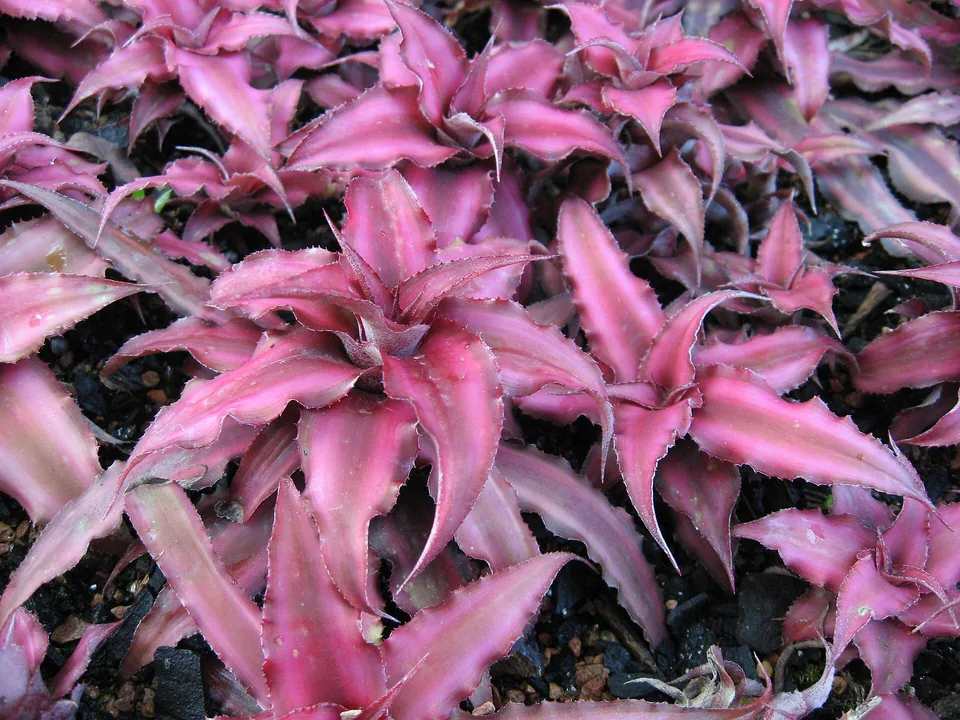

Cómo cultivar y cuidar Earth Star
Cryptanthus bivittatus
Escrito por Emilio Marruso · última revisión
No tóxica para gatos y perros, según las fuentes · Fuentes
De un vistazo
Esta bromelia tan agradecida vive feliz en interior o en maceta, y no es tóxica para gatos ni perros. Dale luz filtrada o semisombra, con el sol suave de la mañana y de la tarde, y riégala cuando la tierra esté seca al tacto. Conseguir plantas nuevas es fácil: basta con dividir sus hijuelos.
- Sol
Luz filtrada o semisombra; solo sol de mañana y de tarde, el del mediodía decolora las hojas
Qué dicen las fuentes (2)
Luz: Luz filtrada a semisombra; el sol de la mañana y el de la tarde es lo mejor, el sol del mediodía es demasiado fuerte
Light: Dappled Sunlight (Shade through upper canopy all day) Partial Shade (Direct sunlight only part of the day, 2-6 hours)
— Cryptanthus bivittatus (Dwarf Rose-Stripe Star, Earth Star, Earth Star Bromeliad, Green earth star, Pink Starlite, Red Star Bromeliad, Starfish plant, Star Plant, Vary-leaf star) | North Carolina Extension Gardener Plant Toolbox [1] Morning and evening sun is best; the midday sun is too strong for these plants.
— Cryptanthus bivittatus (Dwarf Rose-Stripe Star, Earth Star, Earth Star Bromeliad, Green earth star, Pink Starlite, Red Star Bromeliad, Starfish plant, Star Plant, Vary-leaf star) | North Carolina Extension Gardener Plant Toolbox [1] - Riego
Riega junto a las raíces cuando la tierra esté seca al tacto
Qué dicen las fuentes (4)
Riego: Riega cuando el suelo esté seco al tacto
Watering should be done when the soil is dry to the touch.
— Cryptanthus bivittatus (Dwarf Rose-Stripe Star, Earth Star, Earth Star Bromeliad, Green earth star, Pink Starlite, Red Star Bromeliad, Starfish plant, Star Plant, Vary-leaf star) | North Carolina Extension Gardener Plant Toolbox [1] Notas sobre el riego: Riega en la zona de las raíces; en climas más cálidos, el riego regular es lo mejor.
climas más cálidos: When grown in hotter climates, regular watering is best.
— Cryptanthus bivittatus (Dwarf Rose-Stripe Star, Earth Star, Earth Star Bromeliad, Green earth star, Pink Starlite, Red Star Bromeliad, Starfish plant, Star Plant, Vary-leaf star) | North Carolina Extension Gardener Plant Toolbox [1] It requires well-drained, humus-rich soil and is watered at the root zone.
— Cryptanthus bivittatus (Dwarf Rose-Stripe Star, Earth Star, Earth Star Bromeliad, Green earth star, Pink Starlite, Red Star Bromeliad, Starfish plant, Star Plant, Vary-leaf star) | North Carolina Extension Gardener Plant Toolbox [1] When grown in hotter climates, regular watering is best.
— Cryptanthus bivittatus (Dwarf Rose-Stripe Star, Earth Star, Earth Star Bromeliad, Green earth star, Pink Starlite, Red Star Bromeliad, Starfish plant, Star Plant, Vary-leaf star) | North Carolina Extension Gardener Plant Toolbox [1] - Frío
Aguanta inviernos de hasta −12,2 °C (10 °F)
Rústica en inviernos fríos · USDA 8a · RHS H5 · Z8
Qué dicen las fuentes (2)
Rusticidad, zona más fría: 8a [mínima invernal de −12,2 a −9,4 °C (de 10 a 15 °F)]
USDA Plant Hardiness Zone: 8a, 8b, 9a, 9b, 10a, 10b, 11a, 11b
— Cryptanthus bivittatus (Dwarf Rose-Stripe Star, Earth Star, Earth Star Bromeliad, Green earth star, Pink Starlite, Red Star Bromeliad, Starfish plant, Star Plant, Vary-leaf star) | North Carolina Extension Gardener Plant Toolbox [1] Rusticidad, zona más cálida: 11b [mínima invernal de 7,2 a 10 °C (de 45 a 50 °F)]
USDA Plant Hardiness Zone: 8a, 8b, 9a, 9b, 10a, 10b, 11a, 11b
— Cryptanthus bivittatus (Dwarf Rose-Stripe Star, Earth Star, Earth Star Bromeliad, Green earth star, Pink Starlite, Red Star Bromeliad, Starfish plant, Star Plant, Vary-leaf star) | North Carolina Extension Gardener Plant Toolbox [1] - Suelo
Suelo ácido, pH 6,0 como máximo
Qué dicen las fuentes (1)
pH del suelo, máximo: 6.0
Soil pH: Acid (<6.0) Soil Drainage: Good Drainage
— Cryptanthus bivittatus (Dwarf Rose-Stripe Star, Earth Star, Earth Star Bromeliad, Green earth star, Pink Starlite, Red Star Bromeliad, Starfish plant, Star Plant, Vary-leaf star) | North Carolina Extension Gardener Plant Toolbox [1] - Plagas
Vigila la cochinilla algodonosa, la cochinilla y los ácaros
Qué dicen las fuentes (1)
Plagas: cochinillas, escamas, ácaros
the usual greenhouse pests (mealybugs, scale, mites) can be an issue
— Cryptanthus bivittatus (Dwarf Rose-Stripe Star, Earth Star, Earth Star Bromeliad, Green earth star, Pink Starlite, Red Star Bromeliad, Starfish plant, Star Plant, Vary-leaf star) | North Carolina Extension Gardener Plant Toolbox [1] - Multiplicación
Divide los hijuelos o multiplícala por semilla
Qué dicen las fuentes (2)
Propagación: División de hijuelos; semilla
Propagate this plant by dividing its offsets, commonly called pups.
— Cryptanthus bivittatus (Dwarf Rose-Stripe Star, Earth Star, Earth Star Bromeliad, Green earth star, Pink Starlite, Red Star Bromeliad, Starfish plant, Star Plant, Vary-leaf star) | North Carolina Extension Gardener Plant Toolbox [1] Recommended Propagation Strategy: Division Seed
— Cryptanthus bivittatus (Dwarf Rose-Stripe Star, Earth Star, Earth Star Bromeliad, Green earth star, Pink Starlite, Red Star Bromeliad, Starfish plant, Star Plant, Vary-leaf star) | North Carolina Extension Gardener Plant Toolbox [1] - Maceta
Crece bien en maceta y en interior
Qué dicen las fuentes (2)
En maceta: Sí
Landscape Location: Container Houseplants Patio
— Cryptanthus bivittatus (Dwarf Rose-Stripe Star, Earth Star, Earth Star Bromeliad, Green earth star, Pink Starlite, Red Star Bromeliad, Starfish plant, Star Plant, Vary-leaf star) | North Carolina Extension Gardener Plant Toolbox [1] En interior: Sí
now cultivated as a houseplant or conservatory plant throughout the world
— Cryptanthus bivittatus (Dwarf Rose-Stripe Star, Earth Star, Earth Star Bromeliad, Green earth star, Pink Starlite, Red Star Bromeliad, Starfish plant, Star Plant, Vary-leaf star) | North Carolina Extension Gardener Plant Toolbox [1] - Seguridad
No es tóxica para gatos ni perros
Resumen
La estrella de tierra es una bromelia terrestre nativa de Brasil, cultivada como planta de interior por su follaje vistoso. [1] Se riega en la zona de las raíces cuando el suelo está seco al tacto. [1]
Citado en inglés, como en la fuente.
Cuidados
Riego
Riego
Riega cuando el suelo esté seco al tacto
Qué dicen las fuentes (1)
Watering should be done when the soil is dry to the touch.Notas sobre el riego
Riega en la zona de las raíces; en climas más cálidos, el riego regular es lo mejor.
Lo que dice cada fuente
climas más cálidos: El riego regular es lo mejor
Qué dicen las fuentes (3)
climas más cálidos: When grown in hotter climates, regular watering is best.It requires well-drained, humus-rich soil and is watered at the root zone.When grown in hotter climates, regular watering is best.Luz
Luz filtrada a semisombra; el sol de la mañana y el de la tarde es lo mejor, el sol del mediodía es demasiado fuerte
Qué dicen las fuentes (2)
Light:
Dappled Sunlight (Shade through upper canopy all day)
Partial Shade (Direct sunlight only part of the day, 2-6 hours)Morning and evening sun is best; the midday sun is too strong for these plants.Clima y frío
Rusticidad, zona más fría
8a [mínima invernal de −12,2 a −9,4 °C (de 10 a 15 °F)]
Qué dicen las fuentes (1)
USDA Plant Hardiness Zone:
8a, 8b, 9a, 9b, 10a, 10b, 11a, 11bRusticidad, zona más cálida
11b [mínima invernal de 7,2 a 10 °C (de 45 a 50 °F)]
Qué dicen las fuentes (1)
USDA Plant Hardiness Zone:
8a, 8b, 9a, 9b, 10a, 10b, 11a, 11bSuelo
6.0
Qué dicen las fuentes (1)
Soil pH:
Acid (<6.0)
Soil Drainage:
Good DrainageDónde cultivarla
En interior
Sí
Qué dicen las fuentes (1)
now cultivated as a houseplant or conservatory plant throughout the worldEn maceta
Sí
Qué dicen las fuentes (1)
Landscape Location:
Container
Houseplants
PatioPropagación
División de hijuelos; semilla
Qué dicen las fuentes (2)
Propagate this plant by dividing its offsets, commonly called pups.Recommended Propagation Strategy:
Division
SeedCultivo
La planta
Ciclo de vida
perenne
Qué dicen las fuentes (1)
Genus:
Cryptanthus
Species:
bivittatus
Family:
Bromeliaceae
Uses (Ethnobotany):
Houseplant or Terrarium
Life Cycle:
PerennialFamilia
Bromeliaceae
Qué dicen las fuentes (1)
Genus:
Cryptanthus
Species:
bivittatus
Family:
Bromeliaceae
Uses (Ethnobotany):
Houseplant or Terrarium
Life Cycle:
PerennialPlagas y enfermedades
Plagas
cochinillas, escamas, ácaros
Qué dicen las fuentes (1)
the usual greenhouse pests (mealybugs, scale, mites) can be an issueProblemas
Plagas de invernadero
Síntoma: Las cochinillas harinosas, las cochinillas y los ácaros pueden ser un problema.
Qué dicen las fuentes (1)
the usual greenhouse pests (mealybugs, scale, mites) can be an issue
— Cryptanthus bivittatus (Dwarf Rose-Stripe Star, Earth Star, Earth Star Bromeliad, Green earth star, Pink Starlite, Red Star Bromeliad, Starfish plant, Star Plant, Vary-leaf star) | North Carolina Extension Gardener Plant Toolbox [1] Demasiado sol
Síntoma: El follaje se calienta, las hojas se blanquean y se marchitan.
Qué hacer: El sol de la mañana y el de la tarde es lo mejor; el sol del mediodía es demasiado fuerte.
Qué dicen las fuentes (1)
too much sun can cause the foliage to heat up, causing the leaves to bleach and shrivel
— Cryptanthus bivittatus (Dwarf Rose-Stripe Star, Earth Star, Earth Star Bromeliad, Green earth star, Pink Starlite, Red Star Bromeliad, Starfish plant, Star Plant, Vary-leaf star) | North Carolina Extension Gardener Plant Toolbox [1]
Remedios
Cada remedio indica qué dicen las fuentes oficiales; los remedios tradicionales sin fuente oficial aparecen marcados. Los perjudiciales están para que sepas evitarlos.
Cuidar la planta
cochinillas harinosas
Limpia con alcohol isopropílico Funciona
Test the solution out on a small part of the plant 1 to 2 days beforehand to make sure it does not cause leaf burn (phytotoxicity).
— ipm.ucanr.edu [6] Cómo: Limpia las cochinillas con alcohol isopropílico; en infestaciones pequeñas de plantas de interior, aplica una solución de alcohol isopropílico al 70% o más débil con un hisopo de algodón.
They can usually be controlled through manual removal or swabbing with rubbing alcohol.
— bromeliads.info [5] Qué dicen las pruebas On small infestations on houseplants, a 70% or less solution of isopropyl (rubbing) alcohol in water may be dabbed directly on mealybugs with a cotton swab to kill them or remove them.
— ipm.ucanr.edu [6] spray de jabón insecticida Funciona en parte
Be sure to test for phytotoxicity of these materials prior to treatment as well.
— ipm.ucanr.edu [6] Cómo: Aplica jabón insecticida directamente sobre las cochinillas inmaduras.
Insecticidal soaps, horticultural oils, and neem oil applied directly to immature mealybugs can reduce numbers.
— ipm.ucanr.edu [6] Qué dicen las pruebas Insecticidal soaps, horticultural oils, and neem oil applied directly to immature mealybugs can reduce numbers.
— ipm.ucanr.edu [6] spray de aceite de neem Funciona en parte
Be sure to test for phytotoxicity of these materials prior to treatment as well.
— ipm.ucanr.edu [6] Cómo: Aplica aceite de neem directamente sobre las cochinillas inmaduras.
Insecticidal soaps, horticultural oils, and neem oil applied directly to immature mealybugs can reduce numbers.
— ipm.ucanr.edu [6] Qué dicen las pruebas Insecticidal soaps, horticultural oils, and neem oil applied directly to immature mealybugs can reduce numbers.
— ipm.ucanr.edu [6]
cochinillas harinosas y cochinillas
eliminación manual No verificado
Remedio tradicional, no verificado por una fuente oficial.
Cómo: Retira los insectos con la mano.
ácaros araña
Rociado fuerte con agua en la ducha Funciona en parte
Cómo: Coloca la planta en la bañera o ducha y rocía con una niebla fuerte pero fina de agua, lavando los ácaros con frecuencia.
It is easier to just put the houseplant in the bathtub or shower and spray with a strong, but fine mist of water.
— swyg.nmsu.edu [7] Qué dicen las pruebas a handheld sprayer filled with water will work. If you wish, you can add insecticidal soap to the water to enhance its effect. Washing the spider mites from the plant frequently will reduce their numbers and their damage.
— swyg.nmsu.edu [7] spray de jabón insecticida Fuente oficial, sin prueba independiente
If you can delay, apply the insecticidal soap to a small portion of the plant to check for phytotoxicity
— swyg.nmsu.edu [7] Cómo: Rocía la planta con jabón insecticida, por la parte superior e inferior de las hojas y los tallos.
If the plants cannot be moved to the bathtub or shower, you can spray the plant with insecticidal soap.
— swyg.nmsu.edu [7]
Toxicidad
Según la fuente, citada textualmente. No es un consejo médico ni veterinario: si una persona o un animal pudo haber ingerido esta planta, contacta con un centro de toxicología o con un veterinario.
Valores orientativos
Valores de una fuente secundaria, no comprobados palabra por palabra como el resto de esta página. Úselos como punto de partida.
- Horas de sol
- 4-6 horasValor orientativo, adáptalo a tu clima · Fuente secundaria
- Resiste la sequía
- SíValor orientativo, adáptalo a tu clima · Fuente secundaria
- Suelo
- Ácido, Bien drenadoValor orientativo, adáptalo a tu clima · Fuente secundaria
- Crecimiento
- ModeradoValor orientativo, adáptalo a tu clima · Fuente secundaria
- Poda
- Marzo, abrilValor orientativo, adáptalo a tu clima · Fuente secundaria
Plantas similares
- Zebra Plant Cryptanthus zonatus
- Cebra Aechmea chantinii
- Flaming Sword Vriesea splendens
- Musgo español Tillandsia usneoides
- Piñuela Aechmea fasciata
- Air Plant Tillandsia ionantha
- Pie de gallo Tillandsia xerographica
- Piña Ananas comosus
Fuentes
Cada valor anterior se cita de estos documentos. Los enlaces llevan al editor original.
- Cryptanthus bivittatus (Dwarf Rose-Stripe Star, Earth Star, Earth Star Bromeliad, Green earth star, Pink Starlite, Red Star Bromeliad, Starfish plant, Star Plant, Vary-leaf star) | North Carolina Extension Gardener Plant Toolbox · plants.ces.ncsu.edu, consultado
- Twinkle, twinkle, little earth star - UF/IFAS Extension Charlotte County · blogs.ifas.ufl.edu, consultado
- Vary-leaf star - Cryptanthus bivittatus | North Carolina Extension Gardener Plant Toolbox · plants.ces.ncsu.edu, consultado
- Red Star Bromeliad - Cryptanthus bivittatus | North Carolina Extension Gardener Plant Toolbox · plants.ces.ncsu.edu, consultado
- bromeliads.info · bromeliads.info
- ipm.ucanr.edu · ipm.ucanr.edu
- swyg.nmsu.edu · swyg.nmsu.edu
Escrito por Emilio Marruso · última revisión