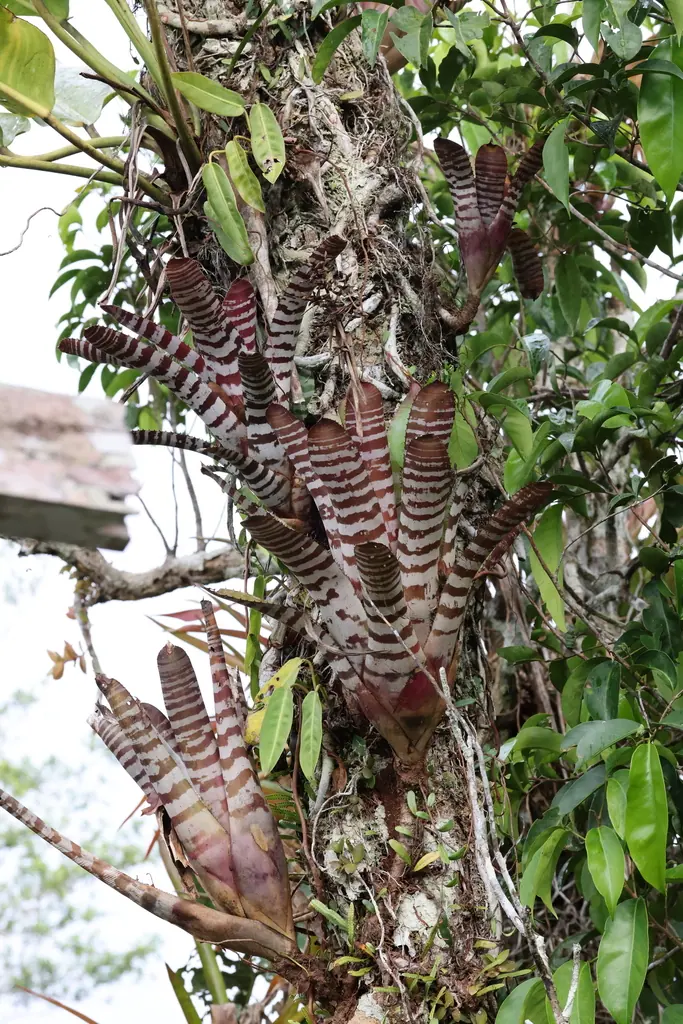
Cómo cultivar y cuidar Cebra
Aechmea chantinii
Escrito por Emilio Marruso · última revisión
No tóxica para gatos y perros, según las fuentes · Fuentes
De un vistazo
Esta bromelia tan vistosa es una planta de interior agradecida que guarda su propia agua en un depósito central, en el corazón de sus hojas. Dale luz intensa e indirecta y una maceta, y crecerá de 30 cm a 90 cm de alto. No es tóxica para gatos ni perros, y produce hijuelos que puedes plantar aparte y regalar a tus amigos.
- Sol
Luz intensa e indirecta; acepta desde sol pleno hasta semisombra
Qué dicen las fuentes (2)
Luz: Luz brillante e indirecta; pleno sol a semisombra.
The plant thrives in bright, indirect light and moist, fasting-draining potting mix.
— Aechmea chantinii (Amazonian Zebra Plant, Queen of the Aechmeas, Queen of the Bromeliads) | North Carolina Extension Gardener Plant Toolbox [1] Light: Full sun (6 or more hours of direct sunlight a day) Partial Shade (Direct sunlight only part of the day, 2-6 hours)
— Aechmea chantinii (Amazonian Zebra Plant, Queen of the Aechmeas, Queen of the Bromeliads) | North Carolina Extension Gardener Plant Toolbox [1] - Riego
Riega cuando los 5 cm de arriba de la tierra estén secos; mejor con agua de lluvia o destilada
Qué dicen las fuentes (4)
Riego: Riega cuando las 2 pulgadas [5,1 cm] superiores de la tierra estén secas, o revisa el centro de la roseta.
Water the plant when the top 2 inches of the soil are dry or check the center of the rosette.
— Aechmea chantinii (Amazonian Zebra Plant, Queen of the Aechmeas, Queen of the Bromeliads) | North Carolina Extension Gardener Plant Toolbox [1] Notas sobre el riego: Almacena agua en un tanque central; vacía y enjuaga el tanque al menos una vez al mes; se sugiere agua destilada o agua de lluvia para prevenir la acumulación de sales; el exceso de riego puede causar pudrición de raíces.
The tank will need to be emptied and rinsed out at least once a month to help prevent insect pests.
— Aechmea chantinii (Amazonian Zebra Plant, Queen of the Aechmeas, Queen of the Bromeliads) | North Carolina Extension Gardener Plant Toolbox [1] Distilled water or rainwater is suggested to prevent the build-up of salts that can damage the plant.
— Aechmea chantinii (Amazonian Zebra Plant, Queen of the Aechmeas, Queen of the Bromeliads) | North Carolina Extension Gardener Plant Toolbox [1] Overwatering can cause root rot. More information on
— Aechmea chantinii (Amazonian Zebra Plant, Queen of the Aechmeas, Queen of the Bromeliads) | North Carolina Extension Gardener Plant Toolbox [1] - Frío
Aguanta inviernos de hasta −6,7 °C (20 °F)
Rústica en inviernos normales · USDA 9a · RHS H4 · Z9
Qué dicen las fuentes (2)
Rusticidad, zona más fría: 9a [mínima invernal de −6,7 a −3,9 °C (de 20 a 25 °F)]
USDA Plant Hardiness Zone: 9a, 9b, 10a, 10b, 11a, 11b
— Aechmea chantinii (Amazonian Zebra Plant, Queen of the Aechmeas, Queen of the Bromeliads) | North Carolina Extension Gardener Plant Toolbox [1] Rusticidad, zona más cálida: 11b [mínima invernal de 7,2 a 10 °C (de 45 a 50 °F)]
USDA Plant Hardiness Zone: 9a, 9b, 10a, 10b, 11a, 11b
— Aechmea chantinii (Amazonian Zebra Plant, Queen of the Aechmeas, Queen of the Bromeliads) | North Carolina Extension Gardener Plant Toolbox [1] - Suelo
Suelo con un pH no superior a 6,0
Qué dicen las fuentes (1)
pH del suelo, máximo: 6.0
Soil pH: Acid (<6.0) Soil Drainage: Good Drainage
— Aechmea chantinii (Amazonian Zebra Plant, Queen of the Aechmeas, Queen of the Bromeliads) | North Carolina Extension Gardener Plant Toolbox [1] - Abonado
Abono líquido a mitad de dosis, vertido en el depósito central
Qué dicen las fuentes (1)
Abonos minerales: Fertilizante líquido diluido a la mitad de su concentración, vertido en el tanque central para que el rebose llegue al cepellón
Water and liquid fertilizer (diluted to half-strength) should be applied to the central tank, allowing any overflow to trickle down into the root ball.
— Aechmea (Aechmea, Silver Vase Plant, Urn Plant, Vase Plant) | North Carolina Extension Gardener Plant Toolbox [2] - Plagas
Vigila la cochinilla algodonosa, la araña roja y la cochinilla; el exceso de agua pudre las raíces
Qué dicen las fuentes (2)
Plagas: cochinillas harinosas, arañitas rojas, cochinillas
Insects, Diseases, and Other Plant Problems: Monitor for mealybugs, spider mites, and scale. Overwatering can cause root rot.
— Aechmea chantinii (Amazonian Zebra Plant, Queen of the Aechmeas, Queen of the Bromeliads) | North Carolina Extension Gardener Plant Toolbox [1] Enfermedades: pudrición de la raíz
Insects, Diseases, and Other Plant Problems: Monitor for mealybugs, spider mites, and scale. Overwatering can cause root rot.
— Aechmea chantinii (Amazonian Zebra Plant, Queen of the Aechmeas, Queen of the Bromeliads) | North Carolina Extension Gardener Plant Toolbox [1] - Atención
Vacía y enjuaga el depósito central al menos una vez al mes
Qué dicen las fuentes (3)
Notas sobre el riego: Almacena agua en un tanque central; vacía y enjuaga el tanque al menos una vez al mes; se sugiere agua destilada o agua de lluvia para prevenir la acumulación de sales; el exceso de riego puede causar pudrición de raíces.
The tank will need to be emptied and rinsed out at least once a month to help prevent insect pests.
— Aechmea chantinii (Amazonian Zebra Plant, Queen of the Aechmeas, Queen of the Bromeliads) | North Carolina Extension Gardener Plant Toolbox [1] Distilled water or rainwater is suggested to prevent the build-up of salts that can damage the plant.
— Aechmea chantinii (Amazonian Zebra Plant, Queen of the Aechmeas, Queen of the Bromeliads) | North Carolina Extension Gardener Plant Toolbox [1] Overwatering can cause root rot. More information on
— Aechmea chantinii (Amazonian Zebra Plant, Queen of the Aechmeas, Queen of the Bromeliads) | North Carolina Extension Gardener Plant Toolbox [1] - Tamaño
De 30 a 90 cm de alto y de 60 a 90 cm de ancho
Qué dicen las fuentes (2)
Altura adulta: 30.48-91.44 cm (1-3 pies)
The Amazonian zebra plant grows 1 to 3 feet tall and 2 to 3 feet wide.
— Aechmea chantinii (Amazonian Zebra Plant, Queen of the Aechmeas, Queen of the Bromeliads) | North Carolina Extension Gardener Plant Toolbox [1] Anchura adulta: 60.96-91.44 cm (2-3 pies)
The Amazonian zebra plant grows 1 to 3 feet tall and 2 to 3 feet wide.
— Aechmea chantinii (Amazonian Zebra Plant, Queen of the Aechmeas, Queen of the Bromeliads) | North Carolina Extension Gardener Plant Toolbox [1] - Multiplicación
Separa los hijuelos cuando alcancen un tercio del tamaño de la planta madre
Qué dicen las fuentes (1)
Propagación: Los hijuelos (brotes) se retiran cuando tienen aproximadamente un tercio del tamaño de la planta adulta.
When these offsets are approximately one-third the size of the adult, they can be removed and potted up as new plants.
— Aechmea chantinii (Amazonian Zebra Plant, Queen of the Aechmeas, Queen of the Bromeliads) | North Carolina Extension Gardener Plant Toolbox [1] - Maceta
Crece bien en maceta, también en interior
Qué dicen las fuentes (2)
En maceta: Sí
#houseplant #showy flowers #container plant #acidic soils tolerant
— Aechmea chantinii (Amazonian Zebra Plant, Queen of the Aechmeas, Queen of the Bromeliads) | North Carolina Extension Gardener Plant Toolbox [1] En interior: Sí
The Amazonian zebra plant is popular as an ornamental houseplant
— Aechmea chantinii (Amazonian Zebra Plant, Queen of the Aechmeas, Queen of the Bromeliads) | North Carolina Extension Gardener Plant Toolbox [1] - Seguridad
No es tóxica para gatos ni perros
Resumen
Aechmea chantinii es una bromelia de interior que prospera con luz brillante e indirecta y una mezcla para macetas de drenaje rápido. [1] Almacena agua en un tanque central y se riega cuando las 2 pulgadas [5,1 cm] superiores de la tierra están secas. [1] La planta florece una vez y luego muere, después de producir retoños que se pueden trasplantar a macetas. [1]
Citado en inglés, como en la fuente.
Cuidados
Las medidas entre corchetes son nuestra conversión al otro sistema de unidades; el texto citado no cambia.
Riego
Riego
Riega cuando las 2 pulgadas [5,1 cm] superiores de la tierra estén secas, o revisa el centro de la roseta.
Qué dicen las fuentes (1)
Water the plant when the top 2 inches of the soil are dry or check the center of the rosette.Notas sobre el riego
Almacena agua en un tanque central; vacía y enjuaga el tanque al menos una vez al mes; se sugiere agua destilada o agua de lluvia para prevenir la acumulación de sales; el exceso de riego puede causar pudrición de raíces.
Qué dicen las fuentes (3)
The tank will need to be emptied and rinsed out at least once a month to help prevent insect pests.Distilled water or rainwater is suggested to prevent the build-up of salts that can damage the plant.Overwatering can cause root rot.
More information onLuz
Luz brillante e indirecta; pleno sol a semisombra.
Qué dicen las fuentes (2)
The plant thrives in bright, indirect light and moist, fasting-draining potting mix.Light:
Full sun (6 or more hours of direct sunlight a day)
Partial Shade (Direct sunlight only part of the day, 2-6 hours)Clima y frío
Rusticidad, zona más fría
9a [mínima invernal de −6,7 a −3,9 °C (de 20 a 25 °F)]
Qué dicen las fuentes (1)
USDA Plant Hardiness Zone:
9a, 9b, 10a, 10b, 11a, 11bRusticidad, zona más cálida
11b [mínima invernal de 7,2 a 10 °C (de 45 a 50 °F)]
Qué dicen las fuentes (1)
USDA Plant Hardiness Zone:
9a, 9b, 10a, 10b, 11a, 11bSuelo
6.0
Qué dicen las fuentes (1)
Soil pH:
Acid (<6.0)
Soil Drainage:
Good DrainageDónde cultivarla
En interior
Sí
Qué dicen las fuentes (1)
The Amazonian zebra plant is popular as an ornamental houseplantEn maceta
Sí
Qué dicen las fuentes (1)
#houseplant #showy flowers #container plant #acidic soils tolerantPropagación
Los hijuelos (brotes) se retiran cuando tienen aproximadamente un tercio del tamaño de la planta adulta.
Qué dicen las fuentes (1)
When these offsets are approximately one-third the size of the adult, they can be removed and potted up as new plants.Cultivo
La planta
Ciclo de vida
perenne
Qué dicen las fuentes (1)
The Amazonian zebra plant is tropical evergreen herbaceous perennial that is a member of the pineapple family (Bromeliaceae) and is native to Tropical South America.Familia
Bromeliaceae
Qué dicen las fuentes (1)
The Amazonian zebra plant is tropical evergreen herbaceous perennial that is a member of the pineapple family (Bromeliaceae) and is native to Tropical South America.Altura adulta
30.48-91.44 cm (1-3 pies)
Qué dicen las fuentes (1)
The Amazonian zebra plant grows 1 to 3 feet tall and 2 to 3 feet wide.Anchura adulta
60.96-91.44 cm (2-3 pies)
Qué dicen las fuentes (1)
The Amazonian zebra plant grows 1 to 3 feet tall and 2 to 3 feet wide.Plagas y enfermedades
Plagas
cochinillas harinosas, arañitas rojas, cochinillas
Qué dicen las fuentes (1)
Insects, Diseases, and Other Plant Problems: Monitor for mealybugs, spider mites, and scale. Overwatering can cause root rot.Enfermedades
pudrición de la raíz
Qué dicen las fuentes (1)
Insects, Diseases, and Other Plant Problems: Monitor for mealybugs, spider mites, and scale. Overwatering can cause root rot.Abonado
Abonos minerales
Fertilizante líquido diluido a la mitad de su concentración, vertido en el tanque central para que el rebose llegue al cepellón
Qué dicen las fuentes (1)
Water and liquid fertilizer (diluted to half-strength) should be applied to the central tank, allowing any overflow to trickle down into the root ball.Problemas
Cochinillas harinosas, arañitas rojas y cochinillas
Síntoma: Plagas comunes a las que prestar atención.
Qué hacer: Supervisa la planta; vacía y enjuaga el tanque central mensualmente.
Qué dicen las fuentes (1)
Monitor for mealybugs, spider mites, and scale. Overwatering
— Aechmea chantinii (Amazonian Zebra Plant, Queen of the Aechmeas, Queen of the Bromeliads) | North Carolina Extension Gardener Plant Toolbox [1] Podredumbre de la raíz
Síntoma: El riego excesivo puede causar pudrición de la raíz
Qué dicen las fuentes (1)
Overwatering can cause root rot. More information on
— Aechmea chantinii (Amazonian Zebra Plant, Queen of the Aechmeas, Queen of the Bromeliads) | North Carolina Extension Gardener Plant Toolbox [1]
Remedios
Cada remedio indica qué dicen las fuentes oficiales; los remedios tradicionales sin fuente oficial aparecen marcados. Los perjudiciales están para que sepas evitarlos.
Cuidar la planta
cochinillas harinosas
hisopo de algodón con alcohol isopropílico Funciona
Make sure to test the soap and alcohol mixtures on a small portion of the plant prior to full application because some plants may be sensitive to soap or alcohol.
— planttalk.colostate.edu [4] Cómo: Usa un hisopo de algodón con alcohol isopropílico para limpiar las colonias de cochinillas harinosas, y luego aplica un chorro fuerte de agua para eliminar los huevos.
Manual removal is the easiest and most practical control option; use a cotton swab of rubbing alcohol to swipe mealybug colonies.
— bromeliads.info [3] Qué dicen las pruebas For smaller infestations, dab the insects with a cotton swab dipped in rubbing alcohol. Repeat this procedure every week until the bugs are gone.
— planttalk.colostate.edu [4]
cochinilla
hisopo de algodón y alcohol isopropílico No verificado
Remedio tradicional, no verificado por una fuente oficial.
Cómo: Retira la cochinilla adulta a mano o con un hisopo de algodón y alcohol isopropílico, luego lava bien la planta para eliminar los huevos.
jabones insecticidas No verificado
Remedio tradicional, no verificado por una fuente oficial.
Cómo: Los jabones insecticidas se aplican varias veces, cada tres a siete días.
criaderos de mosquitos en el tanque
chorro fuerte de agua para enjuagar el tanque Funciona
Cómo: Enjuaga los tanques con agua fresca varias veces a la semana en clima cálido para que el agua vieja se vaya.
Flush the tanks several times a week during warm weather. Simply spray them with fresh water so that the old water washes away and the reservoir is renewed.
— hortmag.com [5] Qué dicen las pruebas A good strong hosing will flush the water with larvae out of your bromeliads. Do this at least once a week to disrupt the mosquitoes' life cycle.
— miamidade.gov [6] aceite de cocina en el tanque Funciona
Cómo: Coloca unas gotas de aceite de cocina en el tanque cada pocas semanas para ahogar las larvas.
Place several drops of cooking oil in the bromeliad’s tank every few weeks to smother larvae.
— hortmag.com [5] Qué dicen las pruebas Either quickly spray the surface of any water in the plant with non-stick cooking spray, or place a few drops of cooking oil in the water.
— miamidade.gov [6] Gránulos de Bti en el tanque Funciona
Cómo: Coloca unos gránulos de Bti en el tanque cada cuatro a seis semanas.
Treat the bromeliad’s tank with Bti, a bacterium that will kill mosquito larvae without harming the plant or other wildlife.
— hortmag.com [5] Qué dicen las pruebas Regular applications of granular Bti-based larvicides are safe for plants, pets and wildlife.
— Aechmea (Aechmea, Silver Vase Plant, Urn Plant, Vase Plant) | North Carolina Extension Gardener Plant Toolbox [2]
pudrición de la corona
Enjuaga la copa central No verificado
Remedio tradicional, no verificado por una fuente oficial.
Cómo: Enjuaga la copa de la bromelia al menos cada dos semanas, usando solo agua destilada o de lluvia.
Toxicidad
Según la fuente, citada textualmente. No es un consejo médico ni veterinario: si una persona o un animal pudo haber ingerido esta planta, contacta con un centro de toxicología o con un veterinario.
Plantas similares
- Piñuela Aechmea fasciata
- Earth Star Cryptanthus bivittatus
- Flaming Sword Vriesea splendens
- Musgo español Tillandsia usneoides
- Air Plant Tillandsia ionantha
- Pie de gallo Tillandsia xerographica
- Piña Ananas comosus
- Flor del incienso en México Guzmania lingulata
Fuentes
Cada valor anterior se cita de estos documentos. Los enlaces llevan al editor original.
- Aechmea chantinii (Amazonian Zebra Plant, Queen of the Aechmeas, Queen of the Bromeliads) | North Carolina Extension Gardener Plant Toolbox · plants.ces.ncsu.edu, consultado
- Aechmea (Aechmea, Silver Vase Plant, Urn Plant, Vase Plant) | North Carolina Extension Gardener Plant Toolbox · plants.ces.ncsu.edu, consultado
- bromeliads.info · bromeliads.info
- planttalk.colostate.edu · planttalk.colostate.edu
- hortmag.com · hortmag.com
- miamidade.gov · miamidade.gov
Escrito por Emilio Marruso · última revisión