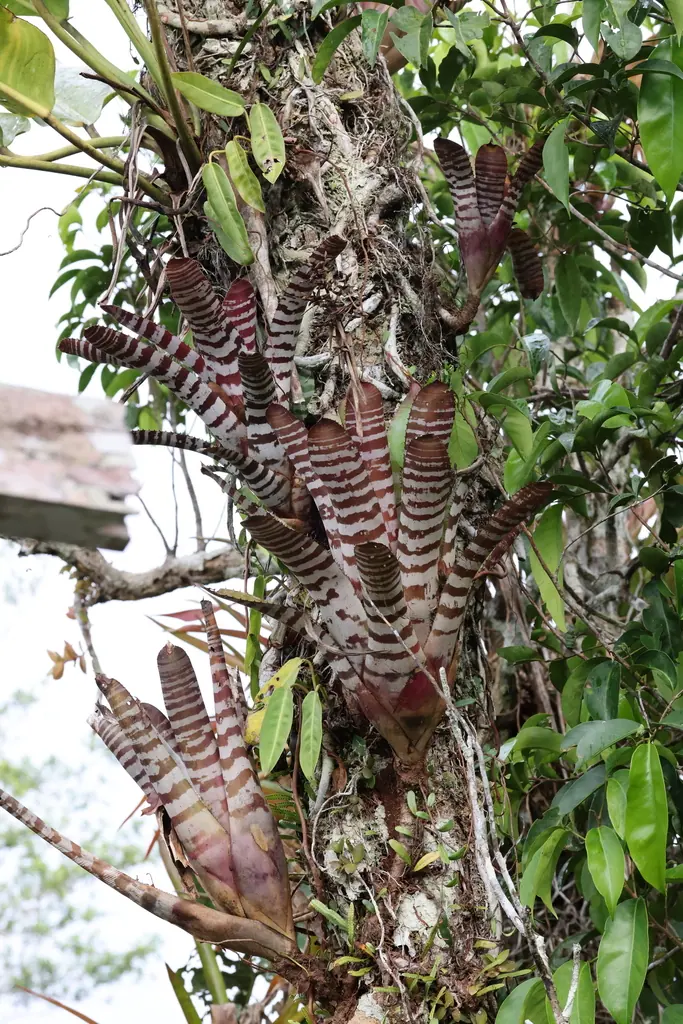
How to Grow and Care for Amazonian Zebra Plant
Aechmea chantinii
Written by Emilio Marruso · last checked
Not toxic to cats and dogs, according to the sources · Sources
At a glance
This colorful bromeliad is a friendly houseplant that holds its own water in a central cup at the heart of its leaves. Give it bright, indirect light and a pot, and it will grow 1–3 ft tall. It's safe for cats and dogs, and it makes new baby plants you can pot up to share with friends.
- Sun
Bright, indirect light; it can take anything from full sun to partial shade
What the sources say (2)
Light: Bright, indirect light; full sun to partial shade
The plant thrives in bright, indirect light and moist, fasting-draining potting mix.
— Aechmea chantinii (Amazonian Zebra Plant, Queen of the Aechmeas, Queen of the Bromeliads) | North Carolina Extension Gardener Plant Toolbox [1] Light: Full sun (6 or more hours of direct sunlight a day) Partial Shade (Direct sunlight only part of the day, 2-6 hours)
— Aechmea chantinii (Amazonian Zebra Plant, Queen of the Aechmeas, Queen of the Bromeliads) | North Carolina Extension Gardener Plant Toolbox [1] - Water
Water when the top 2 inches of soil are dry; rainwater or distilled water is best
What the sources say (4)
Watering: Water when the top 2 inches [5.1 cm] of soil are dry, or check the center of the rosette
Water the plant when the top 2 inches of the soil are dry or check the center of the rosette.
— Aechmea chantinii (Amazonian Zebra Plant, Queen of the Aechmeas, Queen of the Bromeliads) | North Carolina Extension Gardener Plant Toolbox [1] Watering notes: Stores water in a central tank; empty and rinse the tank at least once a month; distilled water or rainwater suggested to prevent salt build-up; overwatering can cause root rot
The tank will need to be emptied and rinsed out at least once a month to help prevent insect pests.
— Aechmea chantinii (Amazonian Zebra Plant, Queen of the Aechmeas, Queen of the Bromeliads) | North Carolina Extension Gardener Plant Toolbox [1] Distilled water or rainwater is suggested to prevent the build-up of salts that can damage the plant.
— Aechmea chantinii (Amazonian Zebra Plant, Queen of the Aechmeas, Queen of the Bromeliads) | North Carolina Extension Gardener Plant Toolbox [1] Overwatering can cause root rot. More information on
— Aechmea chantinii (Amazonian Zebra Plant, Queen of the Aechmeas, Queen of the Bromeliads) | North Carolina Extension Gardener Plant Toolbox [1] - Cold
Survives winters down to 20 °F (−6.7 °C)
Hardy in average winters · USDA 9a · RHS H4 · Z9
What the sources say (2)
Hardiness, coldest zone: 9a [winter low −6.7 to −3.9 °C (20 to 25 °F)]
USDA Plant Hardiness Zone: 9a, 9b, 10a, 10b, 11a, 11b
— Aechmea chantinii (Amazonian Zebra Plant, Queen of the Aechmeas, Queen of the Bromeliads) | North Carolina Extension Gardener Plant Toolbox [1] Hardiness, warmest zone: 11b [winter low 7.2 to 10 °C (45 to 50 °F)]
USDA Plant Hardiness Zone: 9a, 9b, 10a, 10b, 11a, 11b
— Aechmea chantinii (Amazonian Zebra Plant, Queen of the Aechmeas, Queen of the Bromeliads) | North Carolina Extension Gardener Plant Toolbox [1] - Soil
Soil with a pH no higher than 6.0
What the sources say (1)
Soil pH, maximum: 6.0
Soil pH: Acid (<6.0) Soil Drainage: Good Drainage
— Aechmea chantinii (Amazonian Zebra Plant, Queen of the Aechmeas, Queen of the Bromeliads) | North Carolina Extension Gardener Plant Toolbox [1] - Feeding
Liquid fertilizer at half strength, poured into the central cup
What the sources say (1)
Mineral fertilizers: Liquid fertilizer diluted to half strength, poured into the central tank so the overflow reaches the root ball
Water and liquid fertilizer (diluted to half-strength) should be applied to the central tank, allowing any overflow to trickle down into the root ball.
— Aechmea (Aechmea, Silver Vase Plant, Urn Plant, Vase Plant) | North Carolina Extension Gardener Plant Toolbox [2] - Pests
Watch for mealybugs, spider mites and scale; too much water causes root rot
What the sources say (2)
Pests: mealybugs, spider mites, scale
Insects, Diseases, and Other Plant Problems: Monitor for mealybugs, spider mites, and scale. Overwatering can cause root rot.
— Aechmea chantinii (Amazonian Zebra Plant, Queen of the Aechmeas, Queen of the Bromeliads) | North Carolina Extension Gardener Plant Toolbox [1] Diseases: root rot
Insects, Diseases, and Other Plant Problems: Monitor for mealybugs, spider mites, and scale. Overwatering can cause root rot.
— Aechmea chantinii (Amazonian Zebra Plant, Queen of the Aechmeas, Queen of the Bromeliads) | North Carolina Extension Gardener Plant Toolbox [1] - Watch out
Empty and rinse the central cup at least once a month
What the sources say (3)
Watering notes: Stores water in a central tank; empty and rinse the tank at least once a month; distilled water or rainwater suggested to prevent salt build-up; overwatering can cause root rot
The tank will need to be emptied and rinsed out at least once a month to help prevent insect pests.
— Aechmea chantinii (Amazonian Zebra Plant, Queen of the Aechmeas, Queen of the Bromeliads) | North Carolina Extension Gardener Plant Toolbox [1] Distilled water or rainwater is suggested to prevent the build-up of salts that can damage the plant.
— Aechmea chantinii (Amazonian Zebra Plant, Queen of the Aechmeas, Queen of the Bromeliads) | North Carolina Extension Gardener Plant Toolbox [1] Overwatering can cause root rot. More information on
— Aechmea chantinii (Amazonian Zebra Plant, Queen of the Aechmeas, Queen of the Bromeliads) | North Carolina Extension Gardener Plant Toolbox [1] - Size
1–3 ft tall and 2–3 ft wide
What the sources say (2)
Mature height: 30.48-91.44 cm (1-3 ft)
The Amazonian zebra plant grows 1 to 3 feet tall and 2 to 3 feet wide.
— Aechmea chantinii (Amazonian Zebra Plant, Queen of the Aechmeas, Queen of the Bromeliads) | North Carolina Extension Gardener Plant Toolbox [1] Mature width: 60.96-91.44 cm (2-3 ft)
The Amazonian zebra plant grows 1 to 3 feet tall and 2 to 3 feet wide.
— Aechmea chantinii (Amazonian Zebra Plant, Queen of the Aechmeas, Queen of the Bromeliads) | North Carolina Extension Gardener Plant Toolbox [1] - Propagation
Remove the baby plants once they are one-third the size of the parent
What the sources say (1)
Propagation: Offsets (pups) removed when about one-third the size of the adult plant
When these offsets are approximately one-third the size of the adult, they can be removed and potted up as new plants.
— Aechmea chantinii (Amazonian Zebra Plant, Queen of the Aechmeas, Queen of the Bromeliads) | North Carolina Extension Gardener Plant Toolbox [1] - Containers
Grows well in a pot, indoors too
What the sources say (2)
In containers: Yes
#houseplant #showy flowers #container plant #acidic soils tolerant
— Aechmea chantinii (Amazonian Zebra Plant, Queen of the Aechmeas, Queen of the Bromeliads) | North Carolina Extension Gardener Plant Toolbox [1] Indoors: Yes
The Amazonian zebra plant is popular as an ornamental houseplant
— Aechmea chantinii (Amazonian Zebra Plant, Queen of the Aechmeas, Queen of the Bromeliads) | North Carolina Extension Gardener Plant Toolbox [1] - Safety
Not toxic to cats or dogs
Overview
Aechmea chantinii is a bromeliad houseplant that thrives in bright, indirect light and a fast-draining potting mix. [1] It stores water in a central tank and is watered when the top 2 inches [5.1 cm] of soil are dry. [1] The plant blooms once and then dies, after producing offsets that can be potted up. [1]
Amazonian Zebra Plant care
Measurements in square brackets are our conversion into the other unit system; the quoted text is unchanged.
How to water Amazonian Zebra Plant
Watering
Water when the top 2 inches [5.1 cm] of soil are dry, or check the center of the rosette
What the sources say (1)
Water the plant when the top 2 inches of the soil are dry or check the center of the rosette.Watering notes
Stores water in a central tank; empty and rinse the tank at least once a month; distilled water or rainwater suggested to prevent salt build-up; overwatering can cause root rot
What the sources say (3)
The tank will need to be emptied and rinsed out at least once a month to help prevent insect pests.Distilled water or rainwater is suggested to prevent the build-up of salts that can damage the plant.Overwatering can cause root rot.
More information onHow much light Amazonian Zebra Plant needs
Bright, indirect light; full sun to partial shade
What the sources say (2)
The plant thrives in bright, indirect light and moist, fasting-draining potting mix.Light:
Full sun (6 or more hours of direct sunlight a day)
Partial Shade (Direct sunlight only part of the day, 2-6 hours)How much cold Amazonian Zebra Plant can take
Hardiness, coldest zone
9a [winter low −6.7 to −3.9 °C (20 to 25 °F)]
What the sources say (1)
USDA Plant Hardiness Zone:
9a, 9b, 10a, 10b, 11a, 11bHardiness, warmest zone
11b [winter low 7.2 to 10 °C (45 to 50 °F)]
What the sources say (1)
USDA Plant Hardiness Zone:
9a, 9b, 10a, 10b, 11a, 11bBest soil for Amazonian Zebra Plant
6.0
What the sources say (1)
Soil pH:
Acid (<6.0)
Soil Drainage:
Good DrainageWhere to grow Amazonian Zebra Plant
Indoors
Yes
What the sources say (1)
The Amazonian zebra plant is popular as an ornamental houseplantIn containers
Yes
What the sources say (1)
#houseplant #showy flowers #container plant #acidic soils tolerantHow to propagate Amazonian Zebra Plant
Offsets (pups) removed when about one-third the size of the adult plant
What the sources say (1)
When these offsets are approximately one-third the size of the adult, they can be removed and potted up as new plants.How to grow Amazonian Zebra Plant
The plant
Life cycle
perennial
What the sources say (1)
The Amazonian zebra plant is tropical evergreen herbaceous perennial that is a member of the pineapple family (Bromeliaceae) and is native to Tropical South America.Family
Bromeliaceae
What the sources say (1)
The Amazonian zebra plant is tropical evergreen herbaceous perennial that is a member of the pineapple family (Bromeliaceae) and is native to Tropical South America.Mature height
30.48-91.44 cm (1-3 ft)
What the sources say (1)
The Amazonian zebra plant grows 1 to 3 feet tall and 2 to 3 feet wide.Mature width
60.96-91.44 cm (2-3 ft)
What the sources say (1)
The Amazonian zebra plant grows 1 to 3 feet tall and 2 to 3 feet wide.Pests and diseases
Pests
mealybugs, spider mites, scale
What the sources say (1)
Insects, Diseases, and Other Plant Problems: Monitor for mealybugs, spider mites, and scale. Overwatering can cause root rot.Diseases
root rot
What the sources say (1)
Insects, Diseases, and Other Plant Problems: Monitor for mealybugs, spider mites, and scale. Overwatering can cause root rot.Fertilizing
Mineral fertilizers
Liquid fertilizer diluted to half strength, poured into the central tank so the overflow reaches the root ball
What the sources say (1)
Water and liquid fertilizer (diluted to half-strength) should be applied to the central tank, allowing any overflow to trickle down into the root ball.Amazonian Zebra Plant pests and problems
Mealybugs, spider mites and scale
Symptom: Common pests to monitor for
What to do: Monitor the plant; empty and rinse the central tank monthly
What the sources say (1)
Monitor for mealybugs, spider mites, and scale. Overwatering
— Aechmea chantinii (Amazonian Zebra Plant, Queen of the Aechmeas, Queen of the Bromeliads) | North Carolina Extension Gardener Plant Toolbox [1] Root rot
Symptom: Overwatering can cause root rot
What the sources say (1)
Overwatering can cause root rot. More information on
— Aechmea chantinii (Amazonian Zebra Plant, Queen of the Aechmeas, Queen of the Bromeliads) | North Carolina Extension Gardener Plant Toolbox [1]
Remedies
Each remedy shows what official sources say about it; traditional remedies without an official source are marked as such. Harmful ones are listed so you know to avoid them.
Treating the plant
mealybugs
cotton swab with rubbing alcohol Works
Make sure to test the soap and alcohol mixtures on a small portion of the plant prior to full application because some plants may be sensitive to soap or alcohol.
— planttalk.colostate.edu [4] How: Use a cotton swab of rubbing alcohol to swipe mealybug colonies, then follow up with a strong spray of water to remove any eggs.
Manual removal is the easiest and most practical control option; use a cotton swab of rubbing alcohol to swipe mealybug colonies.
— bromeliads.info [3] What the evidence says For smaller infestations, dab the insects with a cotton swab dipped in rubbing alcohol. Repeat this procedure every week until the bugs are gone.
— planttalk.colostate.edu [4]
scale
cotton swab and rubbing alcohol Not verified
Traditional remedy, not verified by an official source.
How: Remove the adult scale by hand or with a cotton swab and rubbing alcohol, then wash the plant thoroughly to remove eggs.
insecticidal soaps Not verified
Traditional remedy, not verified by an official source.
How: Insecticidal soaps are applied several times, every three to seven days.
mosquito breeding in tank
strong hosing to flush the tank Works
How: Flush the tanks with fresh water several times a week in warm weather so the old water washes away.
Flush the tanks several times a week during warm weather. Simply spray them with fresh water so that the old water washes away and the reservoir is renewed.
— hortmag.com [5] What the evidence says A good strong hosing will flush the water with larvae out of your bromeliads. Do this at least once a week to disrupt the mosquitoes' life cycle.
— miamidade.gov [6] cooking oil in the tank Works
How: Place several drops of cooking oil in the tank every few weeks to smother larvae.
Place several drops of cooking oil in the bromeliad’s tank every few weeks to smother larvae.
— hortmag.com [5] What the evidence says Either quickly spray the surface of any water in the plant with non-stick cooking spray, or place a few drops of cooking oil in the water.
— miamidade.gov [6] Bti granules in the tank Works
How: Place a few Bti granules in the tank every four to six weeks.
Treat the bromeliad’s tank with Bti, a bacterium that will kill mosquito larvae without harming the plant or other wildlife.
— hortmag.com [5] What the evidence says Regular applications of granular Bti-based larvicides are safe for plants, pets and wildlife.
— Aechmea (Aechmea, Silver Vase Plant, Urn Plant, Vase Plant) | North Carolina Extension Gardener Plant Toolbox [2]
crown rot
rinsing the central cup Not verified
Traditional remedy, not verified by an official source.
How: Rinse the cup of the bromeliad at least every other week, using only distilled or rainwater.
Is Amazonian Zebra Plant poisonous?
Reported by the source, quoted verbatim. This is not medical or veterinary advice: if a person or an animal may have eaten this plant, contact a poison control centre or a veterinarian.
Similar plants
- Urn Plant Aechmea fasciata
- Earth Star Cryptanthus bivittatus
- Flaming Sword Vriesea splendens
- Spanish moss Tillandsia usneoides
- Air Plant Tillandsia ionantha
- Air Plant Tillandsia xerographica
- Pineapple Ananas comosus
- Scarlet Star Guzmania lingulata
Sources
Every value above is quoted from these documents. Links lead to the original publisher.
- Aechmea chantinii (Amazonian Zebra Plant, Queen of the Aechmeas, Queen of the Bromeliads) | North Carolina Extension Gardener Plant Toolbox · plants.ces.ncsu.edu, consulted
- Aechmea (Aechmea, Silver Vase Plant, Urn Plant, Vase Plant) | North Carolina Extension Gardener Plant Toolbox · plants.ces.ncsu.edu, consulted
- bromeliads.info · bromeliads.info
- planttalk.colostate.edu · planttalk.colostate.edu
- hortmag.com · hortmag.com
- miamidade.gov · miamidade.gov
Written by Emilio Marruso · last checked