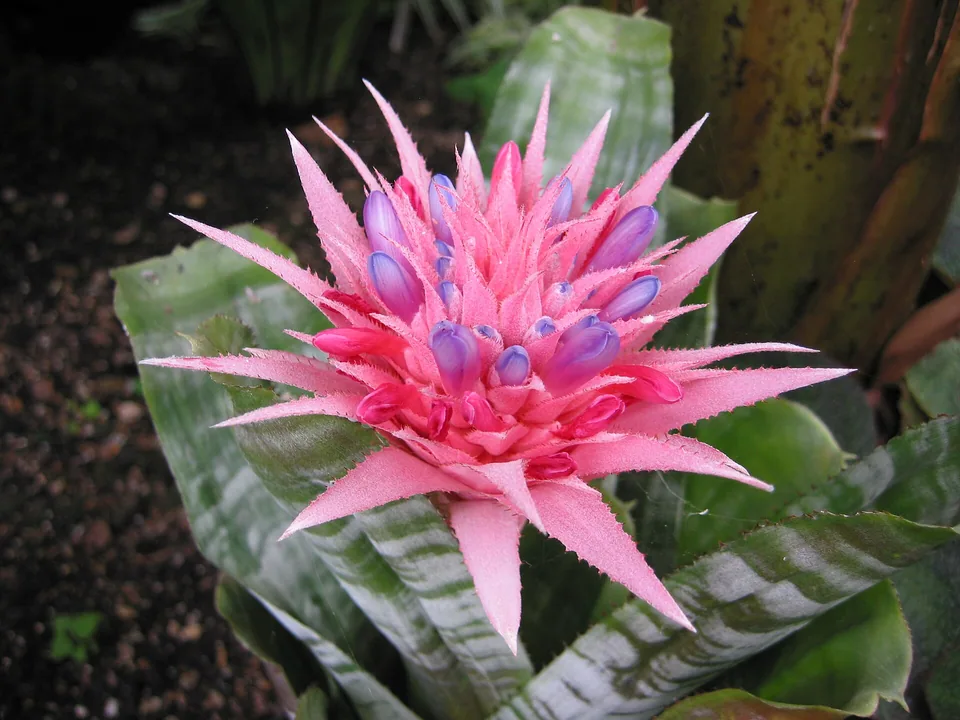


How to Grow and Care for Urn Plant
Aechmea fasciata
Written by Emilio Marruso · last checked
Not toxic to cats and dogs, according to the sources · Sources
At a glance
This bromeliad is a striking houseplant that is happy in bright, indirect light and grows well in a pot. Its secret is simple: keep 1 inch of water in its central cup and change it once a month. It is non-toxic for cats, dogs and horses, and its offsets let you grow new plants for free.
- Sun
Bright, indirect light to partial shade
What the sources say (1)
Light: Bright, indirect light to partial shade
This plant prefers bright, indirect light to partial shade. For houseplants, it requires a consistently moist
— Aechmea fasciata (Silver Vase Bromeliad, Silver Vase Plant, Urn Plant) | North Carolina Extension Gardener Plant Toolbox [1] - Water
Keep 1 inch of water in the central cup, change it monthly; soil moist, less water in winter
What the sources say (3)
Watering: Keep a small amount (about 1 inch [2.5 cm]) of water in the central cup continuously; keep the potting medium consistently moist and well drained
It is best to have a small amount (about 1 inch) of water in the central cup continuously.
— Aechmea fasciata (Silver Vase Bromeliad, Silver Vase Plant, Urn Plant) | North Carolina Extension Gardener Plant Toolbox [1] For houseplants, it requires a consistently moist, well-drained potting medium such as an orchid mix.
— Aechmea fasciata (Silver Vase Bromeliad, Silver Vase Plant, Urn Plant) | North Carolina Extension Gardener Plant Toolbox [1] Watering notes: Remove and change the water in the central cup once a month to prevent stagnation; reduce watering in winter
The water in the central cup needs to be removed and changed once a month to prevent water stagnation that can breed insect pests. Watering should be reduced during the winter months.
— Aechmea fasciata (Silver Vase Bromeliad, Silver Vase Plant, Urn Plant) | North Carolina Extension Gardener Plant Toolbox [1] - Cold
Survives winters down to 30 °F (−1.1 °C)
Half hardy: mild winters or an unheated greenhouse · USDA 10a · RHS H3 · Z10
What the sources say (2)
Hardiness, coldest zone: 10a [winter low −1.1 to 1.7 °C (30 to 35 °F)]
USDA Plant Hardiness Zone: 10a, 10b, 11a, 11b
— Aechmea fasciata (Silver Vase Bromeliad, Silver Vase Plant, Urn Plant) | North Carolina Extension Gardener Plant Toolbox [1] Hardiness, warmest zone: 11b [winter low 7.2 to 10 °C (45 to 50 °F)]
USDA Plant Hardiness Zone: 10a, 10b, 11a, 11b
— Aechmea fasciata (Silver Vase Bromeliad, Silver Vase Plant, Urn Plant) | North Carolina Extension Gardener Plant Toolbox [1] - Feeding
Liquid fertilizer at half strength, poured into the central cup
What the sources say (1)
Mineral fertilizers: Liquid fertilizer diluted to half strength, poured into the central tank so the overflow reaches the root ball
Water and liquid fertilizer (diluted to half-strength) should be applied to the central tank, allowing any overflow to trickle down into the root ball.
— Aechmea (Aechmea, Silver Vase Plant, Urn Plant, Vase Plant) | North Carolina Extension Gardener Plant Toolbox [2] - Pests
Scale and mealybugs; too much water brings root rot, crown rot and leaf spot
What the sources say (2)
Pests: scale, mealybugs
Monitor for scale and mealybugs. Overwatering can cause root rot. Leaf spot and crown rot can also occur.
— Aechmea fasciata (Silver Vase Bromeliad, Silver Vase Plant, Urn Plant) | North Carolina Extension Gardener Plant Toolbox [1] Diseases: root rot, leaf spot, crown rot
Monitor for scale and mealybugs. Overwatering can cause root rot. Leaf spot and crown rot can also occur.
— Aechmea fasciata (Silver Vase Bromeliad, Silver Vase Plant, Urn Plant) | North Carolina Extension Gardener Plant Toolbox [1] - Watch out
Don't overwater, and empty and rinse the central cup regularly so insects can't breed there
- Size
1 to 3 ft tall and 1 to 2 ft wide
What the sources say (2)
Mature height: 30.5-91.4 cm (1 to 3 ft)
The plant grows 1 to 3 feet tall and 1 to 2 feet wide and forms a basal rosette that resembles an urn or vase.
— Aechmea fasciata (Silver Vase Bromeliad, Silver Vase Plant, Urn Plant) | North Carolina Extension Gardener Plant Toolbox [1] Mature width: 30.5-61 cm (1 to 2 ft)
The plant grows 1 to 3 feet tall and 1 to 2 feet wide and forms a basal rosette that resembles an urn or vase.
— Aechmea fasciata (Silver Vase Bromeliad, Silver Vase Plant, Urn Plant) | North Carolina Extension Gardener Plant Toolbox [1] - Propagation
Move the offsets to their own pots once they are 6 inches tall
What the sources say (1)
Propagation: Division (offsets or pups transplanted once 6 inches [15 cm] tall)
Offsets or pups form at the base of the parent plant before the parent dies. These offsets can be transplanted to grow new plants. The offsets should be 6 inches tall before transplanting.
— Aechmea fasciata (Silver Vase Bromeliad, Silver Vase Plant, Urn Plant) | North Carolina Extension Gardener Plant Toolbox [1] - Containers
Grows well in a pot, indoors too
What the sources say (2)
In containers: Yes
In warmer climates, they may be planted outdoors in mass plantings, as a groundcover, or in containers.
— Aechmea fasciata (Silver Vase Bromeliad, Silver Vase Plant, Urn Plant) | North Carolina Extension Gardener Plant Toolbox [1] Indoors: Yes
The urn plant thrives indoors, and its showy blooms are long-lasting.
— Aechmea fasciata (Silver Vase Bromeliad, Silver Vase Plant, Urn Plant) | North Carolina Extension Gardener Plant Toolbox [1] - Safety
Non-toxic for cats, dogs and horses, but it has spines
Overview
Aechmea fasciata is an evergreen, herbaceous perennial epiphyte from southeastern Brazil that is popular as a houseplant. [1] It prefers bright, indirect light to partial shade and about 1 inch [2.5 cm] of water kept in the central cup. [1] It blooms only once and dies, but forms offsets that can be transplanted to grow new plants. [1]
Urn Plant care
Measurements in square brackets are our conversion into the other unit system; the quoted text is unchanged.
How to water Urn Plant
Watering
Keep a small amount (about 1 inch [2.5 cm]) of water in the central cup continuously; keep the potting medium consistently moist and well drained
What the sources say (2)
It is best to have a small amount (about 1 inch) of water in the central cup continuously.For houseplants, it requires a consistently moist, well-drained potting medium such as an orchid mix.Watering notes
Remove and change the water in the central cup once a month to prevent stagnation; reduce watering in winter
What the sources say (1)
The water in the central cup needs to be removed and changed once a month to prevent water stagnation that can breed insect pests. Watering should be reduced during the winter months.How much light Urn Plant needs
Bright, indirect light to partial shade
What the sources say (1)
This plant prefers bright, indirect light to partial shade. For houseplants, it requires a consistently moistHow much cold Urn Plant can take
Hardiness, coldest zone
10a [winter low −1.1 to 1.7 °C (30 to 35 °F)]
What the sources say (1)
USDA Plant Hardiness Zone:
10a, 10b, 11a, 11bHardiness, warmest zone
11b [winter low 7.2 to 10 °C (45 to 50 °F)]
What the sources say (1)
USDA Plant Hardiness Zone:
10a, 10b, 11a, 11bWhere to grow Urn Plant
Indoors
Yes
What the sources say (1)
The urn plant thrives indoors, and its showy blooms are long-lasting.In containers
Yes
What the sources say (1)
In warmer climates, they may be planted outdoors in mass plantings, as a groundcover, or in containers.How to propagate Urn Plant
Division (offsets or pups transplanted once 6 inches [15 cm] tall)
What the sources say (1)
Offsets or pups form at the base of the parent plant before the parent dies. These offsets can be transplanted to grow new plants. The offsets should be 6 inches tall before transplanting.How to grow Urn Plant
The plant
Life cycle
perennial
What the sources say (1)
The urn plant or silver vase plant is an evergreen, herbaceous perennial epiphyte native to the wet tropical areas of southeastern Brazil.Family
Bromeliaceae
What the sources say (1)
This exotic plant is a popular houseplant and has strikingly large pink blooms and silvery foliage. It is a member of the pineapple family (Bromeliaceae).Mature height
30.5-91.4 cm (1 to 3 ft)
What the sources say (1)
The plant grows 1 to 3 feet tall and 1 to 2 feet wide and forms a basal rosette that resembles an urn or vase.Mature width
30.5-61 cm (1 to 2 ft)
What the sources say (1)
The plant grows 1 to 3 feet tall and 1 to 2 feet wide and forms a basal rosette that resembles an urn or vase.Pests and diseases
Pests
scale, mealybugs
What the sources say (1)
Monitor for scale and mealybugs. Overwatering can cause root rot. Leaf spot and crown rot can also occur.Diseases
root rot, leaf spot, crown rot
What the sources say (1)
Monitor for scale and mealybugs. Overwatering can cause root rot. Leaf spot and crown rot can also occur.Fertilizing
Mineral fertilizers
Liquid fertilizer diluted to half strength, poured into the central tank so the overflow reaches the root ball
What the sources say (1)
Water and liquid fertilizer (diluted to half-strength) should be applied to the central tank, allowing any overflow to trickle down into the root ball.Urn Plant pests and problems
Overwatering and rots
Symptom: Root rot, leaf spot and crown rot
What to do: Avoid overwatering
What the sources say (1)
Monitor for scale and mealybugs. Overwatering can cause root rot. Leaf spot and crown rot can also occur.
— Aechmea fasciata (Silver Vase Bromeliad, Silver Vase Plant, Urn Plant) | North Carolina Extension Gardener Plant Toolbox [1] Scale and mealybugs
Symptom: Infestation by scale and mealybugs
What to do: Monitor the plant
What the sources say (1)
Monitor for scale and mealybugs. Overwatering can cause root rot. Leaf spot and crown rot can also occur.
— Aechmea fasciata (Silver Vase Bromeliad, Silver Vase Plant, Urn Plant) | North Carolina Extension Gardener Plant Toolbox [1] Brown leaf tips
Symptom: Brown leaf tips
What to do: Provide adequate water and avoid cold temperatures
What the sources say (1)
Brown leaf tips can occur if the plant gets inadequate water or is exposed to cold temperatures.
— Aechmea fasciata (Silver Vase Bromeliad, Silver Vase Plant, Urn Plant) | North Carolina Extension Gardener Plant Toolbox [1] Insects breeding in the central cup
Symptom: Insects breed in the trapped water
What to do: Empty and rinse the central cup regularly
What the sources say (1)
Insects can breed in the trapped water in the central cup if not emptied and rinsed regularly.
— Aechmea fasciata (Silver Vase Bromeliad, Silver Vase Plant, Urn Plant) | North Carolina Extension Gardener Plant Toolbox [1]
Remedies
Each remedy shows what official sources say about it; traditional remedies without an official source are marked as such. Harmful ones are listed so you know to avoid them.
Treating the plant
mealybugs
rubbing alcohol swab Not verified
Traditional remedy, not verified by an official source.
How: swipe the mealybugs with a cotton swab and isopropyl alcohol if the infestation is small
strong water spray Not verified
Traditional remedy, not verified by an official source.
How: wash the plant with a strong water spray to remove residual eggs
insecticidal soap spray Works
TIP: Always do a patch test before applying any treatment to your plant.
— plantcaretoday.com [3] How: 4 tsp liquid dish soap (not detergent) in 1 quart of water; spray generously, including the soil surface, and rinse the plants after two hours
Decant the mixture into a spray bottle and spray the soapy water on your affected plants generously.
— plantcaretoday.com [3] What the evidence says For example, insecticidal soap is a safe, effective organic insecticide with minimal environmental impact.
— extension.psu.edu [4]
scale
removing scale by hand Works
How: remove the adult scale by hand or with a cotton swab and rubbing alcohol, then wash the plant thoroughly
Scale can be managed by removing the adult by hand or with a cotton swab and rubbing alcohol.
— bromeliads.info [5] What the evidence says Many insect and disease issues can be solved in the home garden by hand-picking insects or clipping and disposing of diseased plant parts.
— extension.unh.edu [6]
insects breeding in the central cup
changing the central cup water Official source, not independently tested
How: remove and change the water in the central cup once a month
The water in the central cup needs to be removed and changed once a month to prevent water stagnation that can breed insect pests.
— Aechmea fasciata (Silver Vase Bromeliad, Silver Vase Plant, Urn Plant) | North Carolina Extension Gardener Plant Toolbox [1]
crown rot
rinsing the central cup Not verified
Traditional remedy, not verified by an official source.
How: rinse the cup at least every other week; use only distilled or rainwater
Is Urn Plant poisonous?
Reported by the source, quoted verbatim. This is not medical or veterinary advice: if a person or an animal may have eaten this plant, contact a poison control centre or a veterinarian.
#non-toxic for cats #colorful bracts #houseplant #herbaceous perennial #slow growing #drought tolerant #interesting flowers #groundcover #interesting leaves #container plant #spines #mass planting #non-toxic for horses #non-toxic for dogs
[1]The source flags the risk for this animal but does not explain why.
Indicative values
Values from a secondary source, not checked word for word like the rest of this page. Use them as a starting point.
- Drought tolerant
- yesIndicative value, adapt it to your climate · Secondary source
- Soil
- Well-drainedIndicative value, adapt it to your climate · Secondary source
- Soil pH
- 5.5-6Indicative value, adapt it to your climate · Secondary source
- Care level
- ModerateIndicative value, adapt it to your climate · Secondary source
- Growth rate
- LowIndicative value, adapt it to your climate · Secondary source
- Pruning
- March, April, May, June, July, August, September, May, June, July, December, January, FebruaryIndicative value, adapt it to your climate · Secondary source
Similar plants
- Amazonian Zebra Plant Aechmea chantinii
- Earth Star Cryptanthus bivittatus
- Flaming Sword Vriesea splendens
- Spanish moss Tillandsia usneoides
- Air Plant Tillandsia ionantha
- Air Plant Tillandsia xerographica
- Pineapple Ananas comosus
- Scarlet Star Guzmania lingulata
Sources
Every value above is quoted from these documents. Links lead to the original publisher.
- Aechmea fasciata (Silver Vase Bromeliad, Silver Vase Plant, Urn Plant) | North Carolina Extension Gardener Plant Toolbox · plants.ces.ncsu.edu, consulted
- Aechmea (Aechmea, Silver Vase Plant, Urn Plant, Vase Plant) | North Carolina Extension Gardener Plant Toolbox · plants.ces.ncsu.edu, consulted
- plantcaretoday.com · plantcaretoday.com
- extension.psu.edu · extension.psu.edu
- bromeliads.info · bromeliads.info
- extension.unh.edu · extension.unh.edu
Written by Emilio Marruso · last checked