
How to Grow and Care for Spanish moss
Tillandsia usneoides
Written by Emilio Marruso · last checked
Toxic to: People · Why
At a glance
Spanish moss is a carefree beauty: outdoors it needs no watering and no feeding at all, just full sun to partial shade and the high humidity it loves. Its soft strands grow from 10 inches to 3 feet long, and it can live indoors too with only occasional watering. Share it easily by dividing a clump and watch it spread.
- Sun
Full sun to partial shade
What the sources say (2)
Light: Full sun to partial shade
Full sun (6 or more hours of direct sunlight a day)
— Tillandsia usneoides (Graybeard, Long Moss, Old Man's Beard, Spanish Moss) | North Carolina Extension Gardener Plant Toolbox [1] Partial Shade (Direct sunlight only part of the day, 2-6 hours)
— Tillandsia usneoides (Graybeard, Long Moss, Old Man's Beard, Spanish Moss) | North Carolina Extension Gardener Plant Toolbox [1] - Water
No watering outdoors; indoors water now and then and let it dry between waterings; needs high humidity
What the sources say (6)
Watering: No watering needed outdoors; indoors occasional watering, allowing the plant to dry between waterings
grown outside: Spanish moss needs no watering or fertilizing when grown outside.
— Tillandsia usneoides (Graybeard, Long Moss, Old Man's Beard, Spanish Moss) | North Carolina Extension Gardener Plant Toolbox [1] indoor plants: Indoor plants will need occasional watering (allowing the plant to dry between waterings)
— Tillandsia usneoides (Graybeard, Long Moss, Old Man's Beard, Spanish Moss) | North Carolina Extension Gardener Plant Toolbox [1] Spanish moss needs no watering or fertilizing when grown outside.
— Tillandsia usneoides (Graybeard, Long Moss, Old Man's Beard, Spanish Moss) | North Carolina Extension Gardener Plant Toolbox [1] Indoor plants will need occasional watering (allowing the plant to dry between waterings) and will benefit from periodic application of liquid fertilizer
— Tillandsia usneoides (Graybeard, Long Moss, Old Man's Beard, Spanish Moss) | North Carolina Extension Gardener Plant Toolbox [1] Watering notes: Needs high humidity
It needs high humidity and pollution-free conditions to grow.
— Tillandsia usneoides (Graybeard, Long Moss, Old Man's Beard, Spanish Moss) | North Carolina Extension Gardener Plant Toolbox [1] Indoors: Yes
It can be grown indoors with bright light and humid conditions.
— Tillandsia usneoides (Graybeard, Long Moss, Old Man's Beard, Spanish Moss) | North Carolina Extension Gardener Plant Toolbox [1] - Cold
Survives winters down to 10 °F (−12.2 °C)
Hardy in cold winters · USDA 8a · RHS H5 · Z8
What the sources say (2)
Hardiness, coldest zone: 8a [winter low −12.2 to −9.4 °C (10 to 15 °F)]
8a, 8b, 9a, 9b, 10a, 10b, 11a, 11b
— Tillandsia usneoides (Graybeard, Long Moss, Old Man's Beard, Spanish Moss) | North Carolina Extension Gardener Plant Toolbox [1] Hardiness, warmest zone: 11b [winter low 7.2 to 10 °C (45 to 50 °F)]
8a, 8b, 9a, 9b, 10a, 10b, 11a, 11b
— Tillandsia usneoides (Graybeard, Long Moss, Old Man's Beard, Spanish Moss) | North Carolina Extension Gardener Plant Toolbox [1] - Feeding
Outdoors it needs no fertilizer
What the sources say (4)
Watering: No watering needed outdoors; indoors occasional watering, allowing the plant to dry between waterings
grown outside: Spanish moss needs no watering or fertilizing when grown outside.
— Tillandsia usneoides (Graybeard, Long Moss, Old Man's Beard, Spanish Moss) | North Carolina Extension Gardener Plant Toolbox [1] indoor plants: Indoor plants will need occasional watering (allowing the plant to dry between waterings)
— Tillandsia usneoides (Graybeard, Long Moss, Old Man's Beard, Spanish Moss) | North Carolina Extension Gardener Plant Toolbox [1] Spanish moss needs no watering or fertilizing when grown outside.
— Tillandsia usneoides (Graybeard, Long Moss, Old Man's Beard, Spanish Moss) | North Carolina Extension Gardener Plant Toolbox [1] Indoor plants will need occasional watering (allowing the plant to dry between waterings) and will benefit from periodic application of liquid fertilizer
— Tillandsia usneoides (Graybeard, Long Moss, Old Man's Beard, Spanish Moss) | North Carolina Extension Gardener Plant Toolbox [1] - Pruning
Trim it now and then so it doesn't get too heavy
- Harvest
Not food for people: it has been used to feed cattle
- Watch out
Heavy clumps can weigh down or break tree branches and shade their leaves
- Size
10 in to 3 ft high, 6 in to 2 ft wide
What the sources say (2)
Mature height: 25-91 cm (10 in to 3 ft)
Height: 0 ft. 10 in. - 3 ft. 0 in. Width: 0 ft. 6 in. - 2 ft. 0 in.
— Tillandsia usneoides (Graybeard, Long Moss, Old Man's Beard, Spanish Moss) | North Carolina Extension Gardener Plant Toolbox [1] Mature width: 15-61 cm (6 in to 2 ft)
Height: 0 ft. 10 in. - 3 ft. 0 in. Width: 0 ft. 6 in. - 2 ft. 0 in.
— Tillandsia usneoides (Graybeard, Long Moss, Old Man's Beard, Spanish Moss) | North Carolina Extension Gardener Plant Toolbox [1] - Propagation
Divide a clump or grow it from seed
What the sources say (2)
Propagation: Division; seed
It is readily propagated by division by tearing off a piece of the plant and placing it on a suitable support, such as a tree limb, driftwood, or wooden basket.
— Tillandsia usneoides (Graybeard, Long Moss, Old Man's Beard, Spanish Moss) | North Carolina Extension Gardener Plant Toolbox [1] The slender long stems attach themselves to trees, either when the seed germinates on the limb or when a fragment of the plant blown by the wind lodges in the tree.
— Tillandsia usneoides (Graybeard, Long Moss, Old Man's Beard, Spanish Moss) | North Carolina Extension Gardener Plant Toolbox [1] - Safety
Moss lying on the ground often hides chiggers that can cause a skin rash
Overview
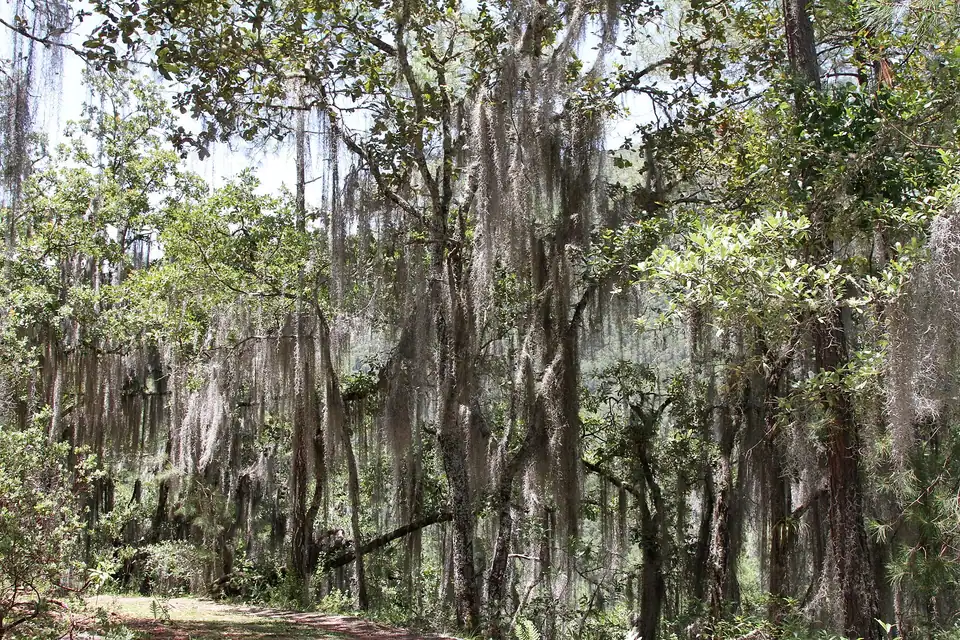
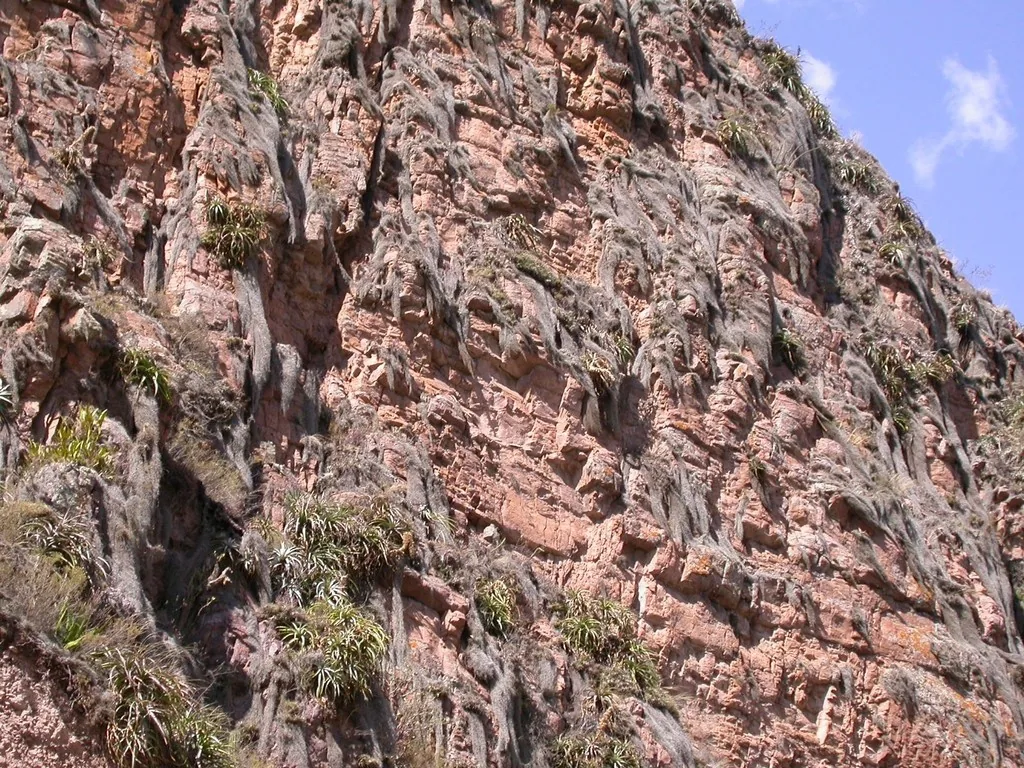
Spanish moss is an epiphytic evergreen perennial in the pineapple family, with no roots, that takes moisture and nutrients through scales on its stems and leaves. [1] It can be grown outdoors in suitable zones or indoors with bright light and humid conditions. [1] It is not parasitic on trees and uses them only for support. [2]
This record is incomplete: the sources we read do not cover every field yet.
Not yet covered by our sources: In containers
Spanish moss care
How to water Spanish moss
Watering
No watering needed outdoors; indoors occasional watering, allowing the plant to dry between waterings
What each source says
grown outside: No watering or fertilizing needed
indoor plants: Occasional watering, allowing the plant to dry between waterings
What the sources say (4)
grown outside: Spanish moss needs no watering or fertilizing when grown outside.indoor plants: Indoor plants will need occasional watering (allowing the plant to dry between waterings)Spanish moss needs no watering or fertilizing when grown outside.Indoor plants will need occasional watering (allowing the plant to dry between waterings) and will benefit from periodic application of liquid fertilizerWatering notes
Needs high humidity
What the sources say (1)
It needs high humidity and pollution-free conditions to grow.How much light Spanish moss needs
Full sun to partial shade
What the sources say (2)
Full sun (6 or more hours of direct sunlight a day)Partial Shade (Direct sunlight only part of the day, 2-6 hours)How much cold Spanish moss can take
Hardiness, coldest zone
8a [winter low −12.2 to −9.4 °C (10 to 15 °F)]
What the sources say (1)
8a, 8b, 9a, 9b, 10a, 10b, 11a, 11bHardiness, warmest zone
11b [winter low 7.2 to 10 °C (45 to 50 °F)]
What the sources say (1)
8a, 8b, 9a, 9b, 10a, 10b, 11a, 11bWhere to grow Spanish moss
Indoors
Yes
What the sources say (1)
It can be grown indoors with bright light and humid conditions.In containers
Not stated in the sources we read.
How to propagate Spanish moss
Division; seed
What the sources say (2)
It is readily propagated by division by tearing off a piece of the plant and placing it on a suitable support, such as a tree limb, driftwood, or wooden basket.The slender long stems attach themselves to trees, either when the seed germinates on the limb or when a fragment of the plant blown by the wind lodges in the tree.How to grow Spanish moss
The plant
Life cycle
perennial
What the sources say (1)
Spanish moss is an epiphytic, evergreen herbaceous perennial in the pineapple family (Bromeliaceae). It is native to the southern USA, along with Mexico, Central and much of South America.Family
Bromeliaceae
What the sources say (1)
Spanish moss is an epiphytic, evergreen herbaceous perennial in the pineapple family (Bromeliaceae). It is native to the southern USA, along with Mexico, Central and much of South America.Mature height
25-91 cm (10 in to 3 ft)
What the sources say (1)
Height: 0 ft. 10 in. - 3 ft. 0 in.
Width: 0 ft. 6 in. - 2 ft. 0 in.Mature width
15-61 cm (6 in to 2 ft)
What the sources say (1)
Height: 0 ft. 10 in. - 3 ft. 0 in.
Width: 0 ft. 6 in. - 2 ft. 0 in.Fertilizing
How often
The sources give different values depending on region, zone or growing conditions.
What each source says
outdoors: No fertilizing needed
indoors: Periodic
What the sources say (2)
outdoors: Spanish moss needs no watering or fertilizing when grown outside.indoors: Indoor plants will need occasional watering (allowing the plant to dry between waterings) and will benefit from periodic application of liquid fertilizer (diluted to half-strength or less).Mineral fertilizers
The sources give different values depending on region, zone or growing conditions.
What each source says
indoors: Liquid fertilizer diluted to half strength or less
What the sources say (1)
indoors: Indoor plants will need occasional watering (allowing the plant to dry between waterings) and will benefit from periodic application of liquid fertilizer (diluted to half-strength or less).Spanish moss pests and problems
Branch breakage and shading
Symptom: Heavy moss can weigh down and sometimes break branches and shade tree leaves.
What to do: Occasional pruning prevents it becoming too heavy; an arborist can remove it by hand, though it grows back.
What the sources say (2)
It will need occasional pruning to prevent it from becoming too heavy and causing branch breakage or causing too much shading for the tree.
— Tillandsia usneoides (Graybeard, Long Moss, Old Man's Beard, Spanish Moss) | North Carolina Extension Gardener Plant Toolbox [1] If you want to remove Spanish moss, have an arborist remove it by hand. However, it will grow back after a while.
— Sustainability-Spanish Moss - Solutions for Your Life - University of Florida, Institute of Food and Agricultural Sciences - UF/IFAS [2]
Remedies
Each remedy shows what official sources say about it; traditional remedies without an official source are marked as such. Harmful ones are listed so you know to avoid them.
Getting rid of it
spanish moss on trees
removing the moss by hand Partly works
How: Remove the moss by hand as it grows; it may still grow back or be carried back by birds. For large trees the source suggests calling an arborist.
In fact, the best way to kill the moss is to remove it as it grows by hand.
— gardeningknowhow.com [3] What the evidence says If you want to remove Spanish moss, have an arborist remove it by hand. However, it will grow back after a while.
— Sustainability-Spanish Moss - Solutions for Your Life - University of Florida, Institute of Food and Agricultural Sciences - UF/IFAS [2] watering and fertilizing the host tree Partly works
How: Providing adequate fertilizer and water to the trees normally reduces the growth rate of Spanish moss.
you can normally reduce the growth rate of Spanish moss simply by providing adequate fertilizer and water to your trees.
— gardeningknowhow.com [3] What the evidence says Increasing tree vigor by proper watering and fertilization is one way to restrict the growth of Spanish moss.
— hgic.clemson.edu [4] baking soda spray Not verified
Traditional remedy, not verified by an official source.
Baking soda has a high salt content, so it shouldn't be used on trees with new, tender growth, as this can cause damage.
— gardeningknowhow.com [3] How: Remove as much of the moss as possible by hand, then spray the affected trees; the source cites 1/4 cup (60 ml) of baking soda or potassium bicarbonate per gallon (4 L) of spray.
copper sulfate spray Not verified
Traditional remedy, not verified by an official source.
However, copper-based sprays can cause damage to tender growth on trees and any overspray may become potentially harmful to the surrounding landscape.
— gardeningknowhow.com [3] How: Premixed copper sulfate sprays, or one part copper sulfate and one part lime to ten parts water; spray before budding out or later in the season.
Is Spanish moss poisonous?
Reported by the source, quoted verbatim. This is not medical or veterinary advice: if a person or an animal may have eaten this plant, contact a poison control centre or a veterinarian.
Edibility
Reported by the source, quoted verbatim. Do not eat a plant on the basis of this page alone: identification mistakes can be dangerous.
It has been used as fodder for cattle.
[1]
Indicative values
Values from a secondary source, not checked word for word like the rest of this page. Use them as a starting point.
- Drought tolerant
- yesIndicative value, adapt it to your climate · Secondary source
- Soil pH
- 5.5-6Indicative value, adapt it to your climate · Secondary source
- Growth rate
- LowIndicative value, adapt it to your climate · Secondary source
- Pruning
- March, April, MarchIndicative value, adapt it to your climate · Secondary source
Similar plants
- Air Plant Tillandsia ionantha
- Air Plant Tillandsia xerographica
- Amazonian Zebra Plant Aechmea chantinii
- Earth Star Cryptanthus bivittatus
- Flaming Sword Vriesea splendens
- Urn Plant Aechmea fasciata
- Pineapple Ananas comosus
- Scarlet Star Guzmania lingulata
Sources
Every value above is quoted from these documents. Links lead to the original publisher.
- Tillandsia usneoides (Graybeard, Long Moss, Old Man's Beard, Spanish Moss) | North Carolina Extension Gardener Plant Toolbox · plants.ces.ncsu.edu, consulted
- Sustainability-Spanish Moss - Solutions for Your Life - University of Florida, Institute of Food and Agricultural Sciences - UF/IFAS · sfyl.ifas.ufl.edu, consulted
- gardeningknowhow.com · gardeningknowhow.com
- hgic.clemson.edu · hgic.clemson.edu
Written by Emilio Marruso · last checked