

How to Grow and Care for Buttonbush
Cephalanthus occidentalis
Written by Emilio Marruso · last checked
Toxic to: Horses, People · Why
At a glance
Buttonbush is the plant for the wet spot in your yard: it loves consistently moist to wet soil and even tolerates standing water up to 3 feet deep. Give it full sun to partial shade, and its flowers will draw butterflies, bees and other pollinators, while ducks may eat its seeds. Just never let it dry out.
- Sun
Full sun to partial shade
What the sources say (3)
Light: Full sun to partial shade
Buttonbush needs consistently moist to wet, rich soils in full to partial sun.
— Cephalanthus occidentalis (Buttonbush, Button Bush) | North Carolina Extension Gardener Plant Toolbox [1] Buttonbush requires full sun to partial shade in moist to wet soils.
— Common Buttonbush | Home & Garden Information Center [3] Cephalanthus occidentalis prefers moderate to wet soil with full sun to partial shade.
— Buttonbush – Gardening Solutions [5] - Water
Keep the soil moist to wet; it takes standing water up to 3 ft but no drought
What the sources say (5)
Watering: Consistently moist to wet soils; supplemental watering is necessary where full-sun sites may dry out, as it cannot tolerate drought
Buttonbush needs consistently moist to wet, rich soils in full to partial sun.
— Cephalanthus occidentalis (Buttonbush, Button Bush) | North Carolina Extension Gardener Plant Toolbox [1] Supplemental watering will be necessary for full sun locations that may dry out because buttonbush cannot tolerate drought.
— Common Buttonbush | Home & Garden Information Center [3] In the home landscape, it needs moderate irrigation to keep the soil moist, especially in drier areas.
— Buttonbush – Gardening Solutions [5] Watering notes: Tolerates standing water up to 3 feet [91 cm]; not tolerant of dry soil
It does well in swamps, streambanks, riverbanks, lakes and in standing water up to 3 feet.
— Cephalanthus occidentalis (Buttonbush, Button Bush) | North Carolina Extension Gardener Plant Toolbox [1] Hydrologic zone : Wet/moist; not tolerant of dry soil
— Rain Garden Plants: Buttonbush [2] - Soil
Moist to wet acidic soil, pH up to 6.0
What the sources say (4)
Soil pH, maximum: 6.0
Soil pH: Acid (<6.0) Soil Drainage: Frequent Standing Water
— Cephalanthus occidentalis (Buttonbush, Button Bush) | North Carolina Extension Gardener Plant Toolbox [1] Watering: Consistently moist to wet soils; supplemental watering is necessary where full-sun sites may dry out, as it cannot tolerate drought
Buttonbush needs consistently moist to wet, rich soils in full to partial sun.
— Cephalanthus occidentalis (Buttonbush, Button Bush) | North Carolina Extension Gardener Plant Toolbox [1] Supplemental watering will be necessary for full sun locations that may dry out because buttonbush cannot tolerate drought.
— Common Buttonbush | Home & Garden Information Center [3] In the home landscape, it needs moderate irrigation to keep the soil moist, especially in drier areas.
— Buttonbush – Gardening Solutions [5] - Pruning
Prune while dormant or in early spring, before new growth starts
What the sources say (2)
Pruning: Dormant season or early spring before new growth begins
Prune in dormant season or early spring before new growth begins.
— Rain Garden Plants: Buttonbush [2] rejuvenate the shrub by cutting it close to its base or crown in early spring before new growth emerges
— Common Buttonbush | Home & Garden Information Center [3] - Watch out
In shade or dry soil it flowers poorly and can lose leaves and branches
- Propagation
Grow new plants from seed or stem cuttings
What the sources say (2)
Propagation: Seed, stem cutting
Recommended Propagation Strategy: Seed Stem Cutting Country Or Region
— Cephalanthus occidentalis (Buttonbush, Button Bush) | North Carolina Extension Gardener Plant Toolbox [1] Seeds and cuttings require moist, sandy soil with poor drainage.
— Buttonbush – Gardening Solutions [5] - Safety
The bark is poisonous: eating it causes vomiting and convulsions; harmful to horses too
Overview
Buttonbush is a deciduous, perennial shrub native to eastern and southern North America, Central America and Cuba. [1] It needs consistently moist to wet soils in full to partial sun and does well in standing water up to 3 feet [91 cm]. [1] Pruning is done in the dormant season or in early spring before new growth begins. [2]
Buttonbush care
Measurements in square brackets are our conversion into the other unit system; the quoted text is unchanged.
How to water Buttonbush
Watering
Consistently moist to wet soils; supplemental watering is necessary where full-sun sites may dry out, as it cannot tolerate drought
What the sources say (3)
Buttonbush needs consistently moist to wet, rich soils in full to partial sun.Supplemental watering will be necessary for full sun locations that may dry out because buttonbush cannot tolerate drought.In the home landscape, it needs moderate irrigation to keep the soil moist, especially in drier areas.Watering notes
Tolerates standing water up to 3 feet [91 cm]; not tolerant of dry soil
What the sources say (2)
It does well in swamps, streambanks, riverbanks, lakes and in standing water up to 3 feet.Hydrologic zone : Wet/moist; not tolerant of dry soilHow much light Buttonbush needs
Full sun to partial shade
What the sources say (3)
Buttonbush needs consistently moist to wet, rich soils in full to partial sun.Buttonbush requires full sun to partial shade in moist to wet soils.Cephalanthus occidentalis prefers moderate to wet soil with full sun to partial shade.How much cold Buttonbush can take
Hardiness, coldest zone
The sources give different values depending on region, zone or growing conditions.
What each source says
According to NC State Extension: 5a [winter low −28.9 to −26.1 °C (−20 to −15 °F)]
According to Penn State Extension: 4 [winter low −34.4 to −28.9 °C (−30 to −20 °F)]
According to Clemson Cooperative Extension: 5 [winter low −28.9 to −23.3 °C (−20 to −10 °F)]
According to UF/IFAS Extension: 5 [winter low −28.9 to −23.3 °C (−20 to −10 °F)]
What the sources say (4)
According to NC State Extension: USDA Plant Hardiness Zone:
5a, 5b, 6a, 6b, 7a, 7b, 8a, 8b, 9a, 9bAccording to Penn State Extension: Hardiness zone: 4 to 10According to Clemson Cooperative Extension: Buttonbush (USDA Cold Hardiness Zones 5 to 11)According to UF/IFAS Extension: Buttonbush thrives in USDA Hardiness Zones 5 through 10.Hardiness, warmest zone
The sources give different values depending on region, zone or growing conditions.
What each source says
According to NC State Extension: 9b [winter low −3.9 to −1.1 °C (25 to 30 °F)]
According to Penn State Extension: 10 [winter low −1.1 to 4.4 °C (30 to 40 °F)]
According to Clemson Cooperative Extension: 11 [winter low 4.4 to 10 °C (40 to 50 °F)]
According to UF/IFAS Extension: 10 [winter low −1.1 to 4.4 °C (30 to 40 °F)]
What the sources say (4)
According to NC State Extension: USDA Plant Hardiness Zone:
5a, 5b, 6a, 6b, 7a, 7b, 8a, 8b, 9a, 9bAccording to Penn State Extension: Hardiness zone: 4 to 10According to Clemson Cooperative Extension: Buttonbush (USDA Cold Hardiness Zones 5 to 11)According to UF/IFAS Extension: Buttonbush thrives in USDA Hardiness Zones 5 through 10.Best soil for Buttonbush
6.0
What the sources say (1)
Soil pH:
Acid (<6.0)
Soil Drainage:
Frequent Standing WaterHow to propagate Buttonbush
Seed, stem cutting
What the sources say (2)
Recommended Propagation Strategy:
Seed
Stem Cutting
Country Or RegionSeeds and cuttings require moist, sandy soil with poor drainage.How to grow Buttonbush
The plant
Life cycle
perennial
What the sources say (2)
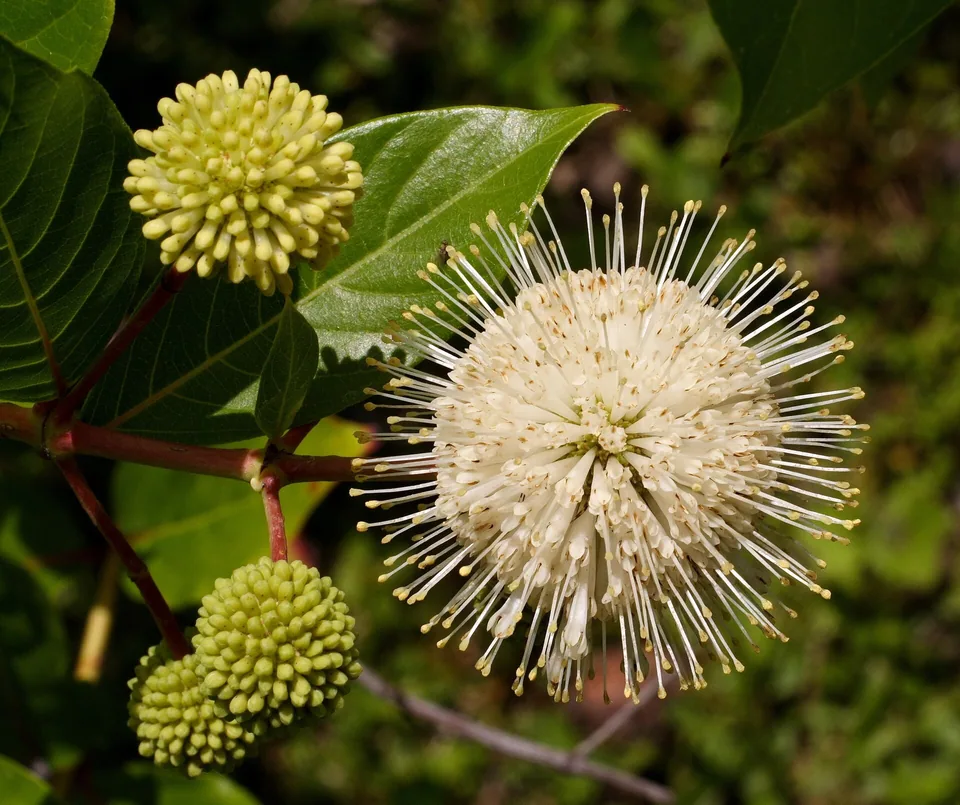
Buttonbush is a deciduous, perennial shrub in the madder family (Rubiaceae) native to eastern and southern North AmericaButtonbush ( Cephalanthus occidentalis ) is a multistemmed, perennial shrub that has white, tubular flowers clustered in pincushion-like spheres.Family
Rubiaceae
What the sources say (1)
Buttonbush is a deciduous, perennial shrub in the madder family (Rubiaceae) native to eastern and southern North AmericaMature height
Buttonbush pests and problems
Poor flowering in shade or dry soil
Symptom: Flowering is poor in the shade or in dry soils
What to do: Plant in full to partial sun in consistently moist to wet soil
What the sources say (2)
Flowering is poor in the shade or in dry soils.
— Cephalanthus occidentalis (Buttonbush, Button Bush) | North Carolina Extension Gardener Plant Toolbox [1] Buttonbush needs consistently moist to wet, rich soils in full to partial sun.
— Cephalanthus occidentalis (Buttonbush, Button Bush) | North Carolina Extension Gardener Plant Toolbox [1] Leaf loss and branch dieback
Symptom: Leaf loss and branch dieback
What to do: Plant in the proper site with moist conditions
What the sources say (1)
Planting it in the proper site with moist conditions will help to prevent leaf loss and branch dieback.
— Common Buttonbush | Home & Garden Information Center [3]
Remedies
Each remedy shows what official sources say about it; traditional remedies without an official source are marked as such. Harmful ones are listed so you know to avoid them.
Treating the plant
leaf beetles
insecticidal soap or neem oil spray Works
How: Apply insecticidal soap or neem oil directly to the affected areas.
Treat infestations by applying insecticidal soap or neem oil directly to the affected areas.
— dallascountymastergardeners.org [7] What the evidence says insecticidal soap is a safe, effective organic insecticide with minimal environmental impact.
— extension.psu.edu [8]
spider mites
strong jet of water Not verified
Traditional remedy, not verified by an official source.
How: Spray with a strong jet of water and increase humidity around the plant.
powdery mildew
good air circulation and no overhead watering Not verified
Traditional remedy, not verified by an official source.
How: Ensure good air circulation and avoid overhead watering.
Getting rid of it
spreading
cutting and digging up roots Official source, not independently tested
Physical control is difficult because it can re-establish from seeds or remaining roots.
— aquaplant.tamu.edu [9] How: Cut the shrub and dig up the root system.
Buttonbush can be cut, and the root systems can be dug up.
— aquaplant.tamu.edu [9] goat grazing Official source, not independently tested
How: Goats forage on emergent vegetation.
There is no known biological control for Buttonbush; however, goats are known to forage on many types of emergent vegetation.
— aquaplant.tamu.edu [9]
Is Buttonbush toxic to pets?
Reported by the source, quoted verbatim. This is not medical or veterinary advice: if a person or an animal may have eaten this plant, contact a poison control centre or a veterinarian.
Animals
Erosion Fire Heat Wet Soil Problems: Problem for Horses
[1]The source flags the risk for this animal but does not explain why.
People
The toxin is found in the bark. Ingestion of the bark can cause vomiting, convulsions and paralysis.
[1]
Calendar
Pruning
Dormant season or early spring before new growth begins
Months as given by the sources, which are mostly from the United States (northern hemisphere). In the southern hemisphere they shift by about six months.
Edibility
Reported by the source, quoted verbatim. Do not eat a plant on the basis of this page alone: identification mistakes can be dangerous.
Buttonbush seeds may be eaten by ducks, and the flowers are popular with butterflies, bees, and other pollinators.
[6]
Indicative values
Values from a secondary source, not checked word for word like the rest of this page. Use them as a starting point.
- Hours of sun
- 8-12 hoursIndicative value, adapt it to your climate · Secondary source
- Soil
- Sandy Loamy Clay Humus RockyIndicative value, adapt it to your climate · Secondary source
- Care level
- MediumIndicative value, adapt it to your climate · Secondary source
- Growth rate
- ModerateIndicative value, adapt it to your climate · Secondary source
Similar plants
- Azure Bluet Houstonia caerulea
- Buttonweed Diodia virginiana
- Chinese Buttonbush Adina rubella
- Cleavers Galium aparine
- Coffee Coffea arabica
- Firebush Hamelia patens
- Gardenia Gardenia jasminoides
- Jungle Geranium Ixora coccinea
Sources
Every value above is quoted from these documents. Links lead to the original publisher.
- Cephalanthus occidentalis (Buttonbush, Button Bush) | North Carolina Extension Gardener Plant Toolbox · plants.ces.ncsu.edu, consulted
- Rain Garden Plants: Buttonbush · extension.psu.edu, consulted
- Common Buttonbush | Home & Garden Information Center · hgic.clemson.edu, consulted
- Cephalanthus occidentalis - Buttonbush | Nursery Crop Extension Research · nursery-crop-extension.ca.uky.edu, consulted
- Buttonbush – Gardening Solutions · gardeningsolutions.ifas.ufl.edu, consulted
- Buttonbush | Cephalanthus occidentalis | Mississippi State University Extension Service · extension.msstate.edu, consulted
- dallascountymastergardeners.org · dallascountymastergardeners.org
- extension.psu.edu · extension.psu.edu
- aquaplant.tamu.edu · aquaplant.tamu.edu
Written by Emilio Marruso · last checked