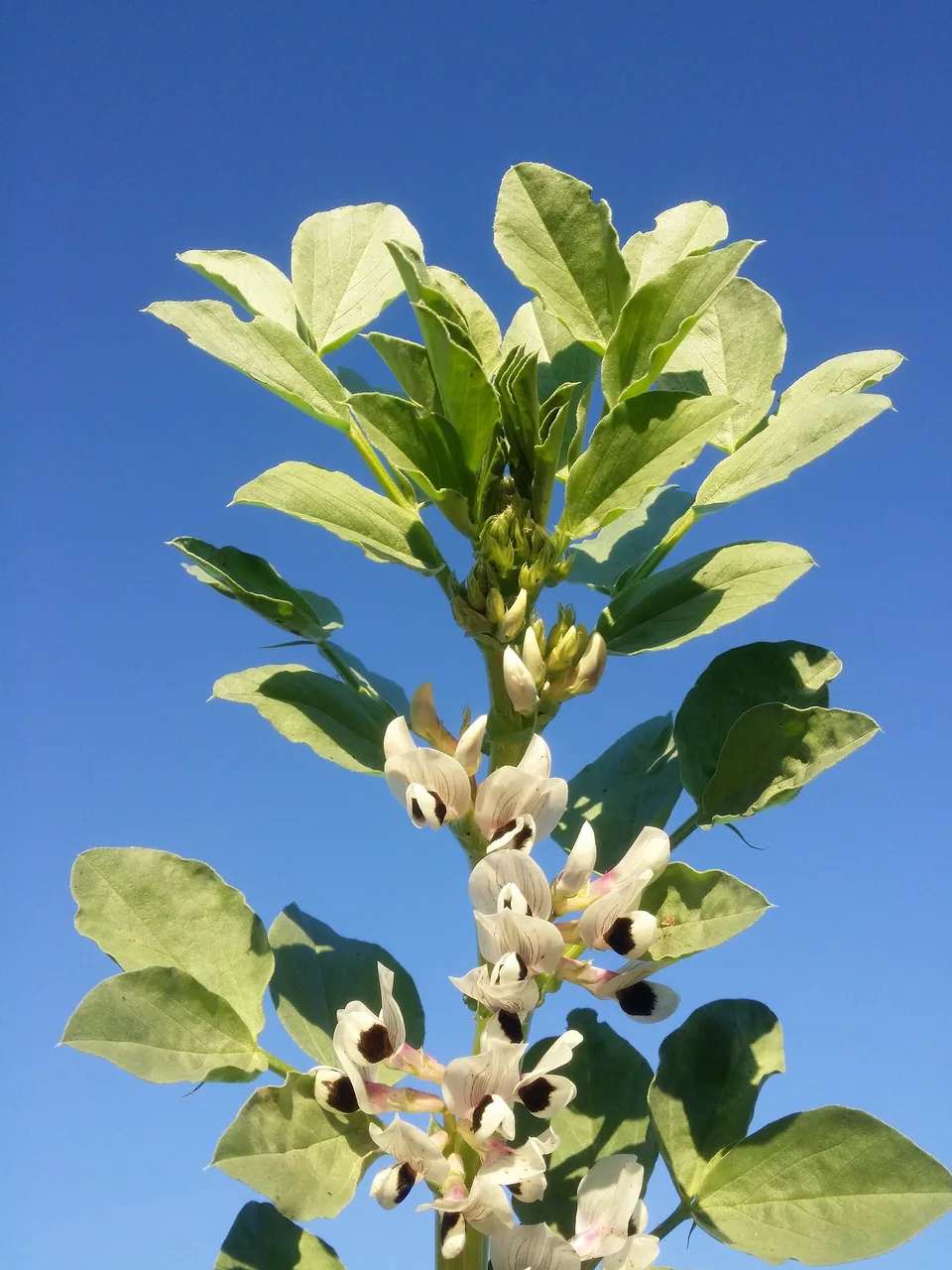
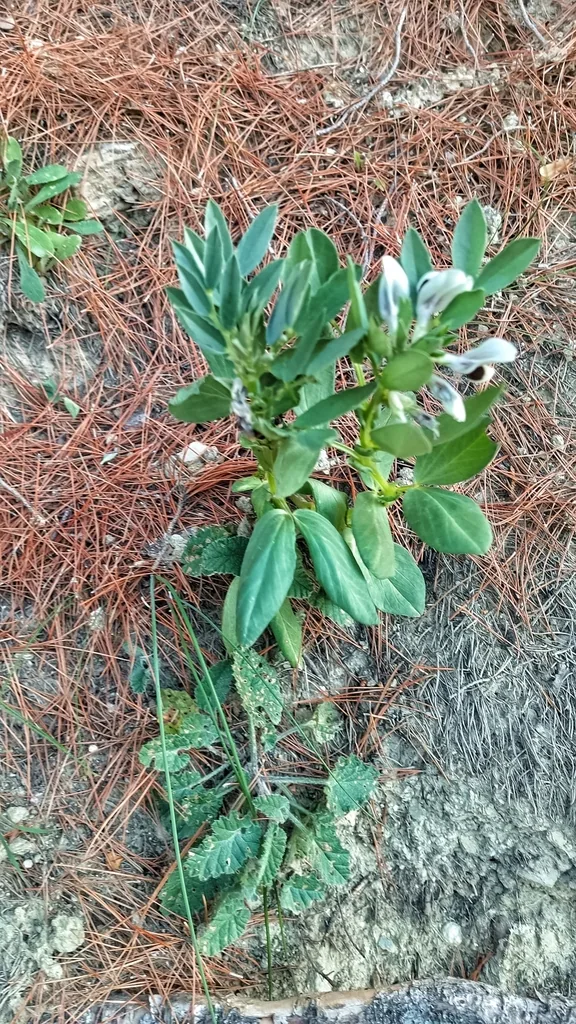

How to Grow and Care for Faba Bean
Vicia faba
Written by Emilio Marruso · last checked
Toxic to: People · Why
At a glance
Fava beans are an easy, rewarding crop: sow the big seeds straight into the ground, give them full sun, and they shrug off dry spells once established. Four to five months later you pick thick, glossy green pods full of plump beans, and small pods can be eaten whole. They even grow happily in a container on a sunny patio.
- Sun
Full sun: 6 or more hours a day
What the sources say (1)
Light: Full sun (6 or more hours of direct sunlight a day)
Light: Full sun (6 or more hours of direct sunlight a day)
— Vicia faba (Bell Bean, Broad Bean, English Bean, Faba Bean, Fava Bean, Field Bean, Horse Bean, Pidgeon Bean, Tick Bean, Windsor Bean) | North Carolina Extension Gardener Plant Toolbox [1] - Water
Likes moist soil; once settled in, it handles dry spells
What the sources say (1)
Watering: Prefers moist loams; drought tolerant once established
prefers moist loams but is tolerant of clay and saline soils and once established, drought.
— Vicia faba (Bell Bean, Broad Bean, English Bean, Faba Bean, Fava Bean, Field Bean, Horse Bean, Pidgeon Bean, Tick Bean, Windsor Bean) | North Carolina Extension Gardener Plant Toolbox [1] - Soil
Moist soil that drains well
What the sources say (2)
Watering notes: Well-drained soils are best suited
faba bean can grow in a wide range of soils, but well-drained and slightly acidic soils with pH around 6.0 are the best suited for faba production
— Faba Bean: A Multipurpose Specialty Crop for the Mid-Atlantic USA | VCE Publications | Virginia Tech [4] Watering: Prefers moist loams; drought tolerant once established
prefers moist loams but is tolerant of clay and saline soils and once established, drought.
— Vicia faba (Bell Bean, Broad Bean, English Bean, Faba Bean, Fava Bean, Field Bean, Horse Bean, Pidgeon Bean, Tick Bean, Windsor Bean) | North Carolina Extension Gardener Plant Toolbox [1] - Spacing
Sow seeds 3–5 in apart, then thin to 8–10 in
What the sources say (1)
Spacing: Thin to 20.3-25.4 cm (8 to 10 inches) apart; seeds sown 7.6-12.7 cm (3 to 5 inches) apart
direct seed 3 to 5 inches apart in February or in August to September, possibly into October depending on your microclimate. Thin to 8 to 10 inches apart.
— Fava Beans | UC Master Gardeners of Santa Clara County [6] - Harvest
4–5 months after sowing, when pods are green, thick and glossy; small pods can be eaten whole
What the sources say (9)
Harvest: Four to five months after sowing; pods for fresh shelling when beans are plump and pods are green, thick and glossy; small pods can be eaten whole
According to NC State Extension: Four to five months are needed between sowing seed and harvesting.
— Vicia faba (Bell Bean, Broad Bean, English Bean, Faba Bean, Fava Bean, Field Bean, Horse Bean, Pidgeon Bean, Tick Bean, Windsor Bean) | North Carolina Extension Gardener Plant Toolbox [1] Santa Clara County, California (fall-planted): Fall-planted beans typically begin producing in early spring.
— Fava Beans | UC Master Gardeners of Santa Clara County [6] Santa Clara County, California (February-planted): February-planted beans will typically produce in late spring.
— Fava Beans | UC Master Gardeners of Santa Clara County [6] Four to five months are needed between sowing seed and harvesting.
— Vicia faba (Bell Bean, Broad Bean, English Bean, Faba Bean, Fava Bean, Field Bean, Horse Bean, Pidgeon Bean, Tick Bean, Windsor Bean) | North Carolina Extension Gardener Plant Toolbox [1] Harvest pods for fresh shelling when beans are plump and the pods are green, thick, and have a glossy sheen.
— Fava Beans | UC Master Gardeners of Santa Clara County [6] Pods can also be harvested when small for eating whole.
— Fava Beans | UC Master Gardeners of Santa Clara County [6] How to harvest: Harvest pods for fresh shelling when the beans are plump and the pods are green, thick and glossy; for dried beans leave the pods on the stalks until dried, then shell.
Harvest pods for fresh shelling when beans are plump and the pods are green, thick, and have a glossy sheen.
— Fava Beans | UC Master Gardeners of Santa Clara County [6] For dried beans, leave pods on stalks until dried, then shell.
— Fava Beans | UC Master Gardeners of Santa Clara County [6] Days to maturity: 4-5 months from sowing to harvest
Four to five months are needed between sowing seed and harvesting. This cool season crop can be grown in most climates,
— Vicia faba (Bell Bean, Broad Bean, English Bean, Faba Bean, Fava Bean, Field Bean, Horse Bean, Pidgeon Bean, Tick Bean, Windsor Bean) | North Carolina Extension Gardener Plant Toolbox [1] - Pests
Black aphids; ladybug larvae and tiny wasps often eat them
What the sources say (3)
Pests: aphids (black bean aphid)
Both beneficial and pest insects feed on the nectar. Susceptible to damage from aphids.
— Vicia faba (Bell Bean, Broad Bean, English Bean, Faba Bean, Fava Bean, Field Bean, Horse Bean, Pidgeon Bean, Tick Bean, Windsor Bean) | North Carolina Extension Gardener Plant Toolbox [1] Being a host to some aphid species, such as black bean aphid, it can be used in integrated
— Faba Bean: A Multipurpose Specialty Crop for the Mid-Atlantic USA | VCE Publications | Virginia Tech [4] The most common pest for favas are aphids which typically appear as the weather warms in the spring.
— Fava Beans | UC Master Gardeners of Santa Clara County [6] - Watch out
Days above the mid 70s °F mean a poor harvest: plant when the weather is mild
- Size
2 to 6 ft tall
What the sources say (1)
Mature height: 61-183 cm (2-6 ft)
It is a stiffly erect plant that grows 2-6 feet tall and prefers moist loams but is tolerant of clay and saline soils
— Vicia faba (Bell Bean, Broad Bean, English Bean, Faba Bean, Fava Bean, Field Bean, Horse Bean, Pidgeon Bean, Tick Bean, Windsor Bean) | North Carolina Extension Gardener Plant Toolbox [1] - Propagation
Grows from seed
What the sources say (1)
Propagation: Seed
Life Cycle: Annual Recommended Propagation Strategy: Seed Country Or Region Of Origin: Middle East
— Vicia faba (Bell Bean, Broad Bean, English Bean, Faba Bean, Fava Bean, Field Bean, Horse Bean, Pidgeon Bean, Tick Bean, Windsor Bean) | North Carolina Extension Gardener Plant Toolbox [1] - Sowing
In mild climates, sow in February or from August to September
What the sources say (4)
Sowing: February or August to September, possibly into October depending on microclimate (Santa Clara County, California); as a cover crop at any time of year
Santa Clara County, California: direct seed 3 to 5 inches apart in February or in August to September, possibly into October depending on your microclimate.
— Fava Beans | UC Master Gardeners of Santa Clara County [6] as a cover crop: As a cover crop, favas can be planted at any time of year
— Fava Beans | UC Master Gardeners of Santa Clara County [6] direct seed 3 to 5 inches apart in February or in August to September, possibly into October depending on your microclimate.
— Fava Beans | UC Master Gardeners of Santa Clara County [6] As a cover crop, favas can be planted at any time of year
— Fava Beans | UC Master Gardeners of Santa Clara County [6] - Containers
Grows in containers too
What the sources say (1)
In containers: Yes
Landscape Location: Container Landscape Theme: Edible Garden Pollinator Garden
— Vicia faba (Bell Bean, Broad Bean, English Bean, Faba Bean, Fava Bean, Field Bean, Horse Bean, Pidgeon Bean, Tick Bean, Windsor Bean) | North Carolina Extension Gardener Plant Toolbox [1] - Safety
Some people have an inherited condition: the beans or pollen can cause severe anemia (favism)
Overview
Faba bean is a self-fertile annual legume grown for its nutritious seeds and pods. [1] It is a cool-season crop that needs four to five months from sowing to harvest. [1] Raw seeds or pollen can cause favism in genetically predisposed people. [1]
Faba Bean care
How to water Faba Bean
Watering
Prefers moist loams; drought tolerant once established
What the sources say (1)
prefers moist loams but is tolerant of clay and saline soils and once established, drought.Watering notes
Well-drained soils are best suited
What the sources say (1)
faba bean can grow in a wide range of soils, but well-drained and slightly acidic soils with pH around 6.0 are the best suited for faba productionHow much light Faba Bean needs
Full sun (6 or more hours of direct sunlight a day)
What the sources say (1)
Light:
Full sun (6 or more hours of direct sunlight a day)Where to grow Faba Bean
In containers
Yes
What the sources say (1)
Landscape Location:
Container
Landscape Theme:
Edible Garden
Pollinator GardenSpacing
Thin to 20.3-25.4 cm (8 to 10 inches) apart; seeds sown 7.6-12.7 cm (3 to 5 inches) apart
What the sources say (1)
direct seed 3 to 5 inches apart in February or in August to September, possibly into October depending on your microclimate. Thin to 8 to 10 inches apart.How to propagate Faba Bean
Seed
What the sources say (1)
Life Cycle:
Annual
Recommended Propagation Strategy:
Seed
Country Or Region Of Origin:
Middle EastHow to grow Faba Bean
The plant
Life cycle
annual
What the sources say (2)
Genus: Vicia Species: faba Family: Fabaceae Uses (Ethnobotany): A fiber extracted from the stems is used for making soap. Life Cycle: AnnualFaba bean or broad bean is a self-fertile, widely cultivated annual legume in the Fabaceae (bean) family.Family
Fabaceae
What the sources say (2)
Genus: Vicia Species: faba Family: Fabaceae Uses (Ethnobotany): A fiber extracted from the stems is used for making soap. Life Cycle: AnnualFaba bean or broad bean is a self-fertile, widely cultivated annual legume in the Fabaceae (bean) family.Mature height
61-183 cm (2-6 ft)
What the sources say (1)
It is a stiffly erect plant that grows 2-6 feet tall and prefers moist loams but is tolerant of clay and saline soilsSowing and growth
Days to maturity
4-5 months from sowing to harvest
What the sources say (1)
Four to five months are needed between sowing seed and harvesting. This cool season crop can be grown in most climates,Harvest and storage
How to harvest
Harvest pods for fresh shelling when the beans are plump and the pods are green, thick and glossy; for dried beans leave the pods on the stalks until dried, then shell.
What the sources say (2)
Harvest pods for fresh shelling when beans are plump and the pods are green, thick, and have a glossy sheen.For dried beans, leave pods on stalks until dried, then shell.Pests and diseases
Pests
aphids (black bean aphid)
What the sources say (3)
Both beneficial and pest insects feed on the nectar. Susceptible to damage from aphids.Being a host to some aphid species, such as black bean aphid, it can be used in integratedThe most common pest for favas are aphids which typically appear as the weather warms in the spring.Faba Bean pests and problems
Aphids
Symptom: Susceptible to damage from aphids.
What to do: Beneficial insects such as lady beetle larvae and parasitic wasps often feed on them.
What the sources say (2)
Both beneficial and pest insects feed on the nectar. Susceptible to damage from aphids.
— Vicia faba (Bell Bean, Broad Bean, English Bean, Faba Bean, Fava Bean, Field Bean, Horse Bean, Pidgeon Bean, Tick Bean, Windsor Bean) | North Carolina Extension Gardener Plant Toolbox [1] A wide variety of beneficial insects such as lady beetle larva and parasitic wasps often show up quickly to feast on them.
— Fava Beans | UC Master Gardeners of Santa Clara County [6] Heat
Symptom: Daytime temperatures above the mid 70s may result in poor yield.
What to do: Plant when temperatures are milder.
What the sources say (1)
In locations where the daytime temperatures exceed the mid 70's may result in poor yeild unless planted at a time when temperatures are milder.
— Vicia faba (Bell Bean, Broad Bean, English Bean, Faba Bean, Fava Bean, Field Bean, Horse Bean, Pidgeon Bean, Tick Bean, Windsor Bean) | North Carolina Extension Gardener Plant Toolbox [1]
Remedies
Each remedy shows what official sources say about it; traditional remedies without an official source are marked as such. Harmful ones are listed so you know to avoid them.
Treating the plant
aphids
strong jet of water Works
How: Sturdy plants can be sprayed with a strong jet of water to knock aphids from leaves.
sturdy plants can be sprayed with a strong jet of water to knock aphids from leaves;
— plantvillage.psu.edu [8] What the evidence says Encourage natural predators, spray strong water streams to dislodge insects, or use insecticidal soap.
— yardandgarden.extension.iastate.edu [9] pruning out infested leaves and shoots Official source, not independently tested
How: If aphid population is limited to just a few leaves or shoots then the infestation can be pruned out to provide control.
If aphid population is limited to just a few leaves or shoots then the infestation can be pruned out to provide control;
— plantvillage.psu.edu [8] insecticidal soap spray Works
always check the labels of the products for specific usage guidelines prior to use
— plantvillage.psu.edu [8] How: Insecticidal soaps or oils such as neem or canola oil are usually the best method of control; always check the labels of the products for specific usage guidelines prior to use.
insecticidal soaps or oils such as neem or canola oil are usually the best method of control; always check the labels of the products for specific usage guidelines prior to use
— plantvillage.psu.edu [8] What the evidence says Encourage natural predators, spray strong water streams to dislodge insects, or use insecticidal soap.
— yardandgarden.extension.iastate.edu [9] neem oil Partly works
always check the labels of the products for specific usage guidelines prior to use
— plantvillage.psu.edu [8] How: Insecticidal soaps or oils such as neem or canola oil are usually the best method of control.
insecticidal soaps or oils such as neem or canola oil are usually the best
— plantvillage.psu.edu [8] What the evidence says Neem oil is found in the seeds of the neem tree. The active component found in this biological pesticide reduces insect feeding, interferes with hormones -- making it hard to grow or lay eggs -- and acts as a repellent.
— extension.illinois.edu [10]
mexican bean beetle
handpicking larvae and adults Works
How: Handpick larvae and adults; brush eggs from leaves and destroy.
handpick larvae and adults; brush eggs from leaves and destroy;
— plantvillage.psu.edu [8] What the evidence says Scout regularly for yellow egg masses and larvae and remove them by hand.
— yardandgarden.extension.iastate.edu [9]
spider mites
strong jet of water Partly works
How: In the home garden, spraying plants with a strong jet of water can help reduce buildup of spider mite populations.
In the home garden, spraying plants with a strong jet of water can help reduce buildup of spider mite populations;
— plantvillage.psu.edu [8] What the evidence says Maintain adequate moisture and reduce plant stress. Wash foliage with water and apply insecticidal soap if needed.
— yardandgarden.extension.iastate.edu [9]
root knot nematodes
soil solarization Official source, not independently tested
How: Solarizing soil can reduce nematode populations in the soil and levels of inoculum of many other pathogens.
solarizing soil can reduce nematode populations in the soil and levels of inoculum of many other pathogens
— plantvillage.psu.edu [8]
Is Faba Bean poisonous?
Reported by the source, quoted verbatim. This is not medical or veterinary advice: if a person or an animal may have eaten this plant, contact a poison control centre or a veterinarian.
Ingestion can be poisonous to some individuals. Inhalation of the pollen or ingestion of the seeds may cause favism, which is a severe anemia destroying red blood cells.
[1]- Poisonous parts
Causes Contact Dermatitis: No Poison Part: Flowers Fruits
[1]- Toxic principle
Poison Toxic Principle: Cyanogenic glycosides Causes Contact Dermatitis: No
[1]- Symptoms
Inhalation of the pollen or ingestion of the seeds may cause favism, which is a severe anemia destroying red blood cells.
[1]- Severity
Poison Severity: Low Poison Symptoms: Persons ingesting numerous seeds
[1]
Persons ingesting numerous seeds and having a genetic predisposition to favism may develop a blood disorder (hemolytic anemia) by eating the beans, or even by walking through a field where the plants are in flower.
[1]- Poisonous parts
Causes Contact Dermatitis: No Poison Part: Flowers Fruits
[1]- Toxic principle
Poison Toxic Principle: Cyanogenic glycosides Causes Contact Dermatitis: No
[1]- Symptoms
Persons ingesting numerous seeds and having a genetic predisposition to favism may develop a blood disorder (hemolytic anemia) by eating the beans, or even by walking through a field where the plants are in flower.
[1]- Severity
Poison Severity: Low Poison Symptoms: Persons ingesting numerous seeds
[1]
Warning: Some people have a hereditary enzyme deficiency which can cause a severe reaction, called favism , to fava beans or pollen.
[6]
Calendar
Sowing
February or August to September, possibly into October depending on microclimate (Santa Clara County, California); as a cover crop at any time of year
What each source says
Santa Clara County, California: February or August to September, possibly into October depending on microclimate
as a cover crop: Any time of year
What the sources say (4)
Santa Clara County, California: direct seed 3 to 5 inches apart in February or in August to September, possibly into October depending on your microclimate.as a cover crop: As a cover crop, favas can be planted at any time of yeardirect seed 3 to 5 inches apart in February or in August to September, possibly into October depending on your microclimate.As a cover crop, favas can be planted at any time of yearHarvest
Four to five months after sowing; pods for fresh shelling when beans are plump and pods are green, thick and glossy; small pods can be eaten whole
What each source says
According to NC State Extension: Four to five months between sowing and harvesting
Santa Clara County, California (fall-planted): Begin producing in early spring
Santa Clara County, California (February-planted): Produce in late spring
What the sources say (6)
According to NC State Extension: Four to five months are needed between sowing seed and harvesting.Santa Clara County, California (fall-planted): Fall-planted beans typically begin producing in early spring.Santa Clara County, California (February-planted): February-planted beans will typically produce in late spring.Four to five months are needed between sowing seed and harvesting.Harvest pods for fresh shelling when beans are plump and the pods are green, thick, and have a glossy sheen.Pods can also be harvested when small for eating whole.Months as given by the sources, which are mostly from the United States (northern hemisphere). In the southern hemisphere they shift by about six months.
Edibility
Reported by the source, quoted verbatim. Do not eat a plant on the basis of this page alone: identification mistakes can be dangerous.
The dry, mature seeds are popular in dishes throughout the Middle East, Mediterranean countries, China and Ethiopia and in many other countries the green immature seeds and pods are eaten as a vegetable.
[1]It is also used in animal feed for pigs, horses, poultry and pigeons.
[1]Faba beans can be used as feed for cattles, bulls, and pigs, too.
[4]
Indicative values
Values from a secondary source, not checked word for word like the rest of this page. Use them as a starting point.
- Soil
- Well-drainedIndicative value, adapt it to your climate · Secondary source
- Soil pH
- 6-7Indicative value, adapt it to your climate · Secondary source
- Care level
- MediumIndicative value, adapt it to your climate · Secondary source
- Growth rate
- HighIndicative value, adapt it to your climate · Secondary source
- Pruning
- April, MayIndicative value, adapt it to your climate · Secondary source
Similar plants
- Hairy Vetch Vicia villosa
- Vetch Vicia sativa
- Lentil Vicia lens
- Wood Vetch Vicia caroliniana
- Blister vetch Vicia ervilia
- American hogpeanut Amphicarpaea bracteata
- Bean Phaseolus vulgaris
- Black Locust Robinia pseudoacacia
Sources
Every value above is quoted from these documents. Links lead to the original publisher.
- Vicia faba (Bell Bean, Broad Bean, English Bean, Faba Bean, Fava Bean, Field Bean, Horse Bean, Pidgeon Bean, Tick Bean, Windsor Bean) | North Carolina Extension Gardener Plant Toolbox · plants.ces.ncsu.edu, consulted
- Fava Bean - Vicia faba | North Carolina Extension Gardener Plant Toolbox · plants.ces.ncsu.edu, consulted
- Faba Bean - Vicia faba | North Carolina Extension Gardener Plant Toolbox · plants.ces.ncsu.edu, consulted
- Faba Bean: A Multipurpose Specialty Crop for the Mid-Atlantic USA | VCE Publications | Virginia Tech · pubs.ext.vt.edu, consulted
- Field Bean - Vicia faba | North Carolina Extension Gardener Plant Toolbox · plants.ces.ncsu.edu, consulted
- Fava Beans | UC Master Gardeners of Santa Clara County · ucanr.edu, consulted
- Horse Bean - Vicia faba | North Carolina Extension Gardener Plant Toolbox · plants.ces.ncsu.edu, consulted
- plantvillage.psu.edu · plantvillage.psu.edu
- yardandgarden.extension.iastate.edu · yardandgarden.extension.iastate.edu
- extension.illinois.edu · extension.illinois.edu
Written by Emilio Marruso · last checked