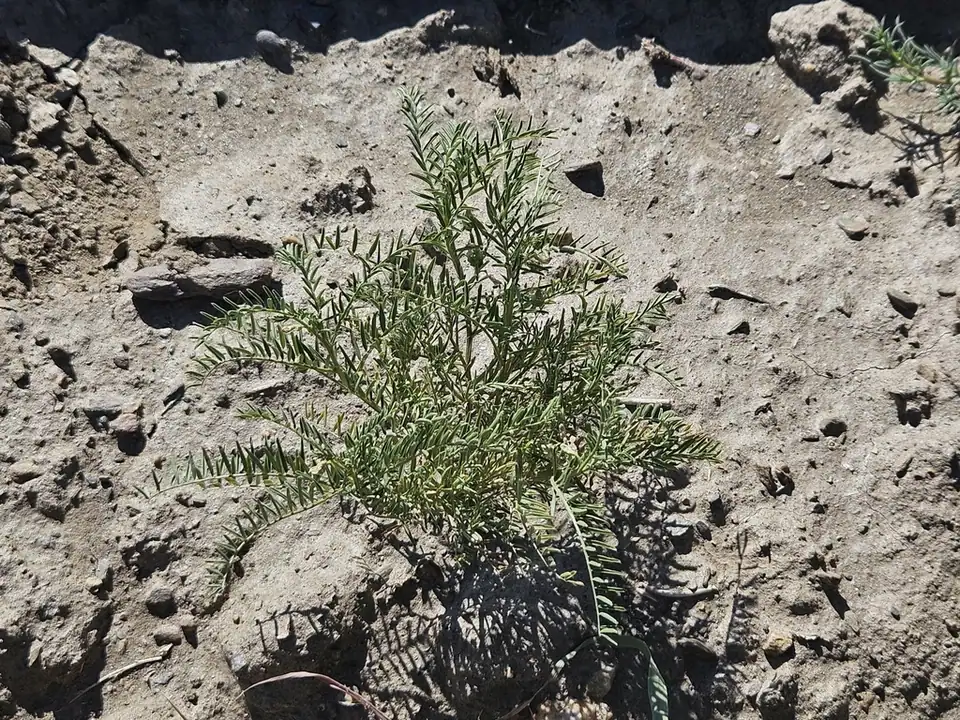
How to Grow and Care for Blister vetch
Vicia ervilia
Written by Emilio Marruso · last checked
Toxic to: Cattle, Animals · Why
At a glance
Bitter vetch is a tough, easygoing plant: it stands up to drought, even while it is young, and it grows in a wide range of soils, from pH 5.6 to 8.2. Sow the seeds right where they will grow, in spring or fall. It is grown mainly as feed for sheep, both as green fodder and for its grains.
- Water
Handles drought well, even when the plants are young
What the sources say (1)
Watering notes: Resistant to drought, even during the early growing period
The plant is resistant to drought even during the early growing period
— Vicia ervilia - Useful Temperate Plants [1] - Soil
Grows in slightly acidic to alkaline soil, pH 5.6–8.2
- Harvest
Grown mainly as feed for sheep, as green fodder or grain
- Propagation
By seed; nicking the hard seed coat can help it sprout faster
What the sources say (1)
Propagation: Seed, sown in situ; scarification of the hard seedcoat may speed germination
The seed has a hard seedcoat and may benefit from scarification before sowing in order to speed up and improve germination.
— Vicia ervilia - Useful Temperate Plants [1] - Sowing
Sow in spring or fall, right where it will grow
What the sources say (2)
Sowing: Spring or autumn (sown in situ)
Seed - sow in situ in spring or autumn.
— Vicia ervilia - Useful Temperate Plants [1] Propagation: Seed, sown in situ; scarification of the hard seedcoat may speed germination
The seed has a hard seedcoat and may benefit from scarification before sowing in order to speed up and improve germination.
— Vicia ervilia - Useful Temperate Plants [1] - Safety
Seeds are poisonous to pigs and dangerous to cattle when the pods are nearly ripe and still moist
Overview
Bitter vetch is a minor crop in the Mediterranean and Near East, used mainly as animal forage and formerly also as human food. [2] Its seeds are reported poisonous to pigs and dangerous to cattle when the pods near maturity. [1] It tolerates a soil pH of 5.6-8.2 and is sown in place in spring or autumn. [1]
This record is incomplete: the sources we read do not cover every field yet.
Not yet covered by our sources: Watering, Light, Harvest, Spacing
Blister vetch care
How to water Blister vetch
Watering
Not stated in the sources we read.
Watering notes
Resistant to drought, even during the early growing period
What the sources say (1)
The plant is resistant to drought even during the early growing periodHow much light Blister vetch needs
Not stated in the sources we read.
Best soil for Blister vetch
Soil pH, minimum
5.6
What the sources say (1)
Prefers a pH in the range 7 - 7.5, tolerating 5.6 - 8.2Soil pH, maximum
8.2
What the sources say (1)
Prefers a pH in the range 7 - 7.5, tolerating 5.6 - 8.2Where to grow Blister vetch
Not stated in the sources we read.
How to propagate Blister vetch
Seed, sown in situ; scarification of the hard seedcoat may speed germination
What the sources say (1)
The seed has a hard seedcoat and may benefit from scarification before sowing in order to speed up and improve germination.Remedies
The sources we checked give no remedies for this plant.
Is Blister vetch toxic to pets?
Reported by the source, quoted verbatim. This is not medical or veterinary advice: if a person or an animal may have eaten this plant, contact a poison control centre or a veterinarian.
Calendar
Sowing
Spring or autumn (sown in situ)
What the sources say (1)
Seed - sow in situ in spring or autumn.Harvest
Not stated in the sources we read.
Months as given by the sources, which are mostly from the United States (northern hemisphere). In the southern hemisphere they shift by about six months.
Edibility
Reported by the source, quoted verbatim. Do not eat a plant on the basis of this page alone: identification mistakes can be dangerous.
Similar plants
- Faba Bean Vicia faba
- Hairy Vetch Vicia villosa
- Lentil Vicia lens
- Vetch Vicia sativa
- Wood Vetch Vicia caroliniana
- Aaron's Beard Hypericum calycinum
- Abraham Trachystemon orientalis
- Abyssinian banana Ensete ventricosum
Sources
Every value above is quoted from these documents. Links lead to the original publisher.
- Vicia ervilia - Useful Temperate Plants · temperate.theferns.info, consulted
- Ervilia sativa — Pl@ntUse · uses.plantnet-project.org, consulted
Written by Emilio Marruso · last checked